
Critical Thinking Normal Life Science Worksheets for 8-Year-Olds
3 filtered results
Difficulty Level
Grade
Age
-
From - To
Subject
Activity
Standards
Explore our collection of Critical Thinking Life Science Worksheets designed specifically for 8-year-olds! These engaging and interactive activities encourage young learners to develop essential critical thinking skills while exploring fascinating concepts in life science. Each worksheet includes thought-provoking questions and hands-on activities that stimulate curiosity and inspire discovery. From understanding ecosystems to the life cycles of plants and animals, children will strengthen their analytical skills and build a solid foundation in science. Perfect for classroom use or at-home learning, our worksheets make learning fun and effective. Empower your child to think deeply about the world around them with our vital resources!
Favorites
With answer key
Interactive
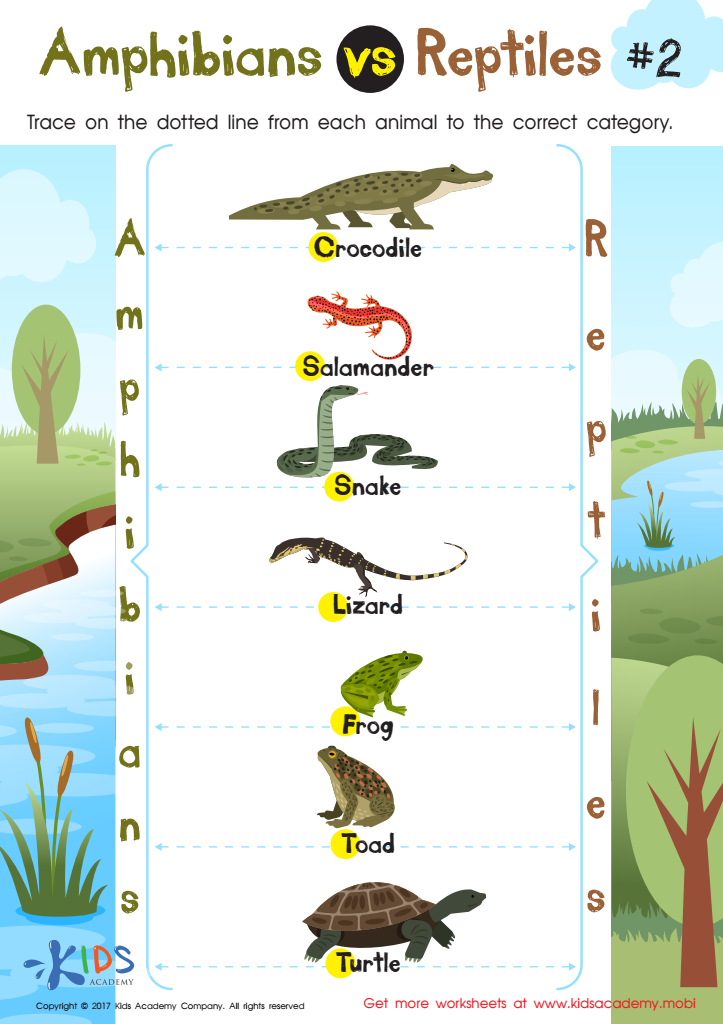
Amphibians vs Reptiles Worksheet for 3rd Grade
Let your 3rd grader challenge themselves and have fun by distinguishing between reptiles and amphibians. With this cool worksheet, they'll explore vivid pictures and learn about these fascinating creatures!
 Assign to My Students
Amphibians vs Reptiles Worksheet for 3rd Grade
Worksheet
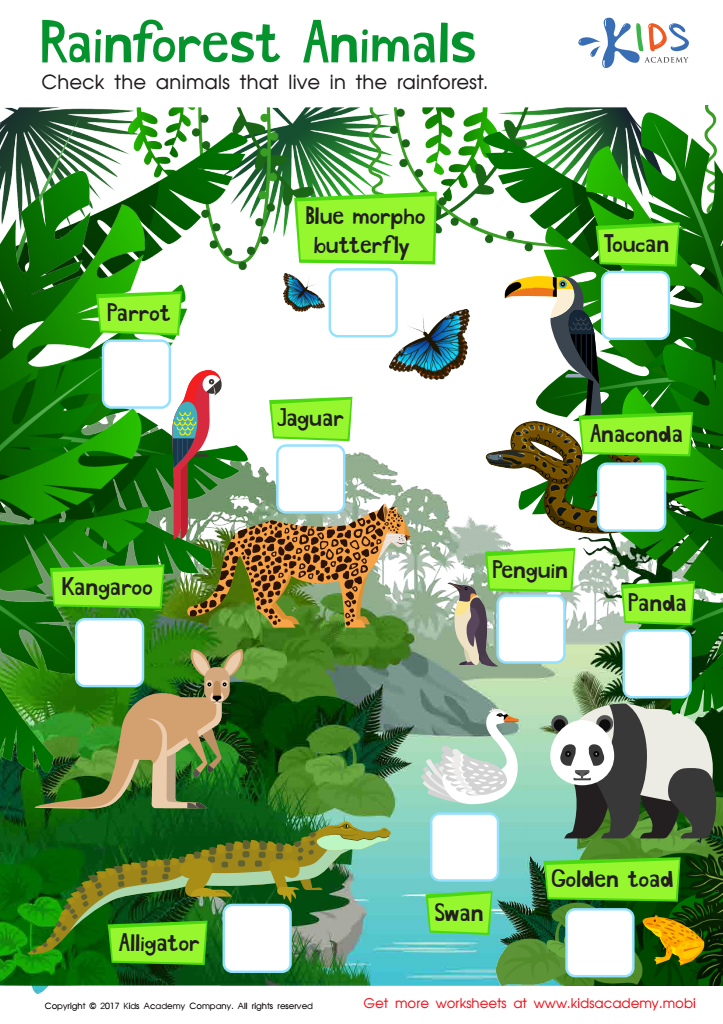
Rainforest Animals Worksheet
Kids love the bright, vivid pics of rainforest animals in this worksheet. It fuels their interest in life science and brings joy to their learning. It encourages them to study these animals in detail.
Rainforest Animals Worksheet
Worksheet
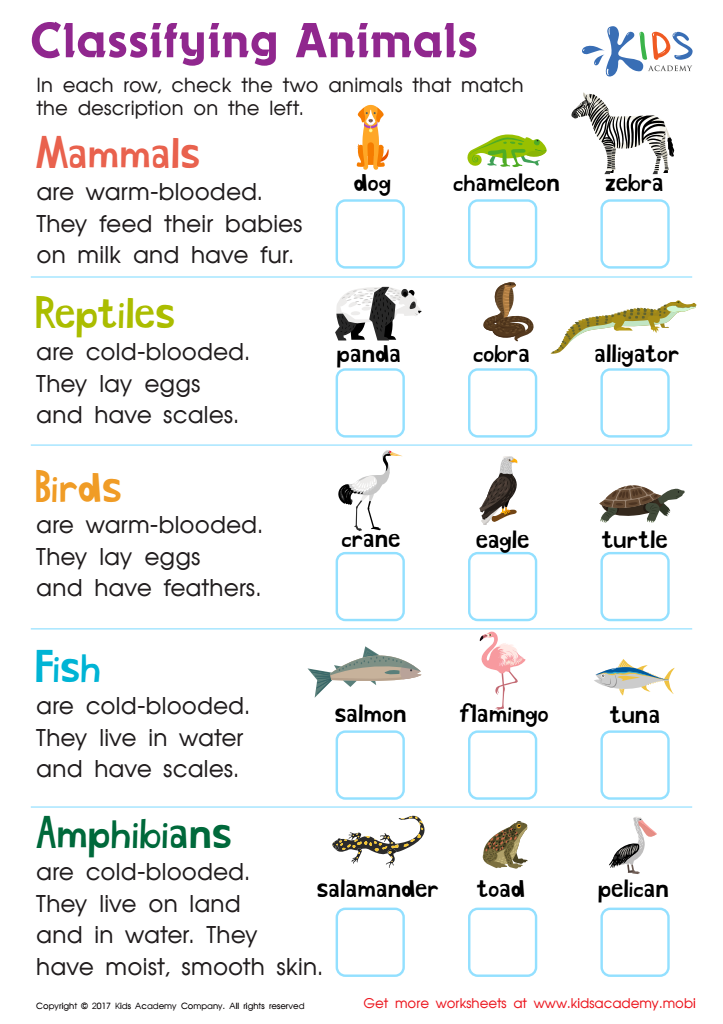
Classifying Animals Worksheet
Print the 2nd grade animal classification worksheet and help kids study the differences between mammals, reptiles, birds, fish and amphibians. Let them pick two examples from the options given.
Classifying Animals Worksheet
Worksheet
Join Kids Academy for Free
Who is primarily going to use this learning content?







Critical Thinking Normal Life Science is essential for 8-year-olds as it lays the foundation for holistic education and development. At this age, children are naturally curious about the world around them, and integrating critical thinking within life science nurtures that curiosity through exploration and inquiry.
When parents and teachers encourage critical thinking skills, children learn to ask questions, make observations, and draw conclusions based on evidence. This process not only deepens their understanding of life science concepts—like ecosystems, human anatomy, and nutrition—but also promotes essential skills such as problem-solving, analysis, and decision-making which are applicable in all aspects of life.
Moreover, critical thinking helps children evaluate information critically, essential in a world overflowing with data. They become discerning thinkers who can differentiate between fact and opinion and respond thoughtfully to challenges. By fostering these skills early, parents and teachers prepare children for future academic success and responsible citizenship.
Ultimately, implementing critical thinking in life science cultivates a curious mindset and a love for learning that can inspire future generations to innovate, advocate for sustainability, and make informed decisions that positively impact their lives and communities.








