Understanding pollination Normal Plants and Animals Worksheets for 8-Year-Olds
3 filtered results
-
From - To
Discover the fascinating world of pollination with our "Understanding Pollination - Normal Plants and Animals Worksheets" for 8-year-olds. Engaging and educational, these worksheets from Kids Academy help young learners explore the essential process of pollination, uncovering how plants and animals interact in ecosystems. Designed to foster curiosity and knowledge in science, these age-appropriate activities provide insights into the roles of bees, flowers, and more. Fun illustrations and hands-on tasks make learning about pollination an exciting adventure, perfect for budding scientists. Equip your child with a deeper understanding of the natural world through our expertly crafted worksheets.
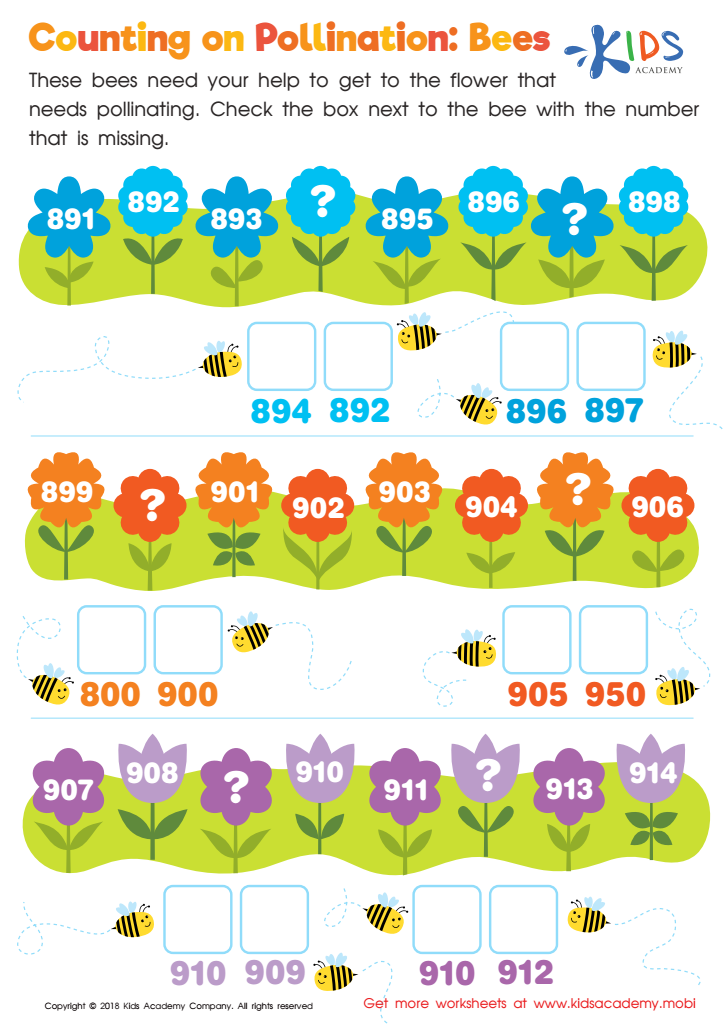
Counting on Pollination: Bees Worksheet
 Assign to My Students
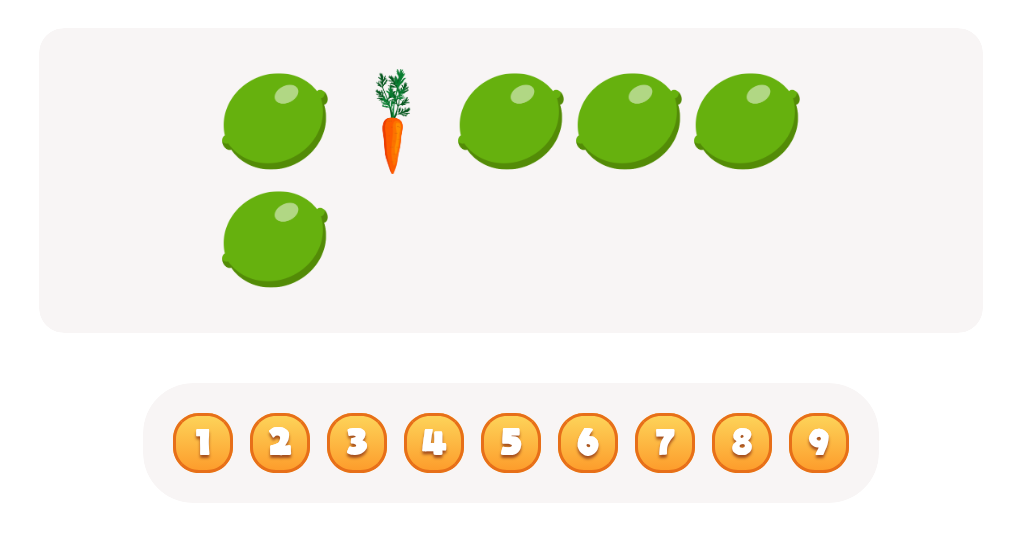

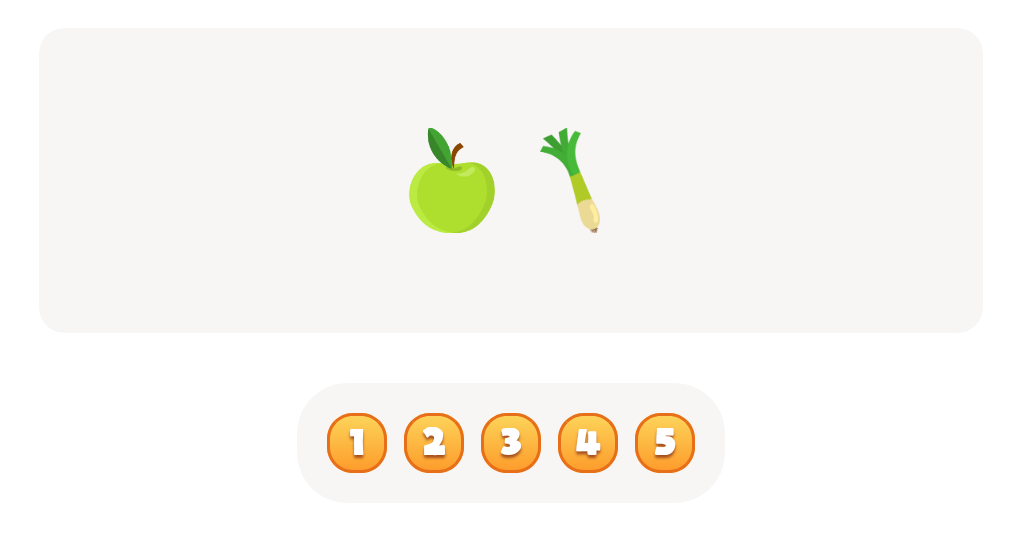
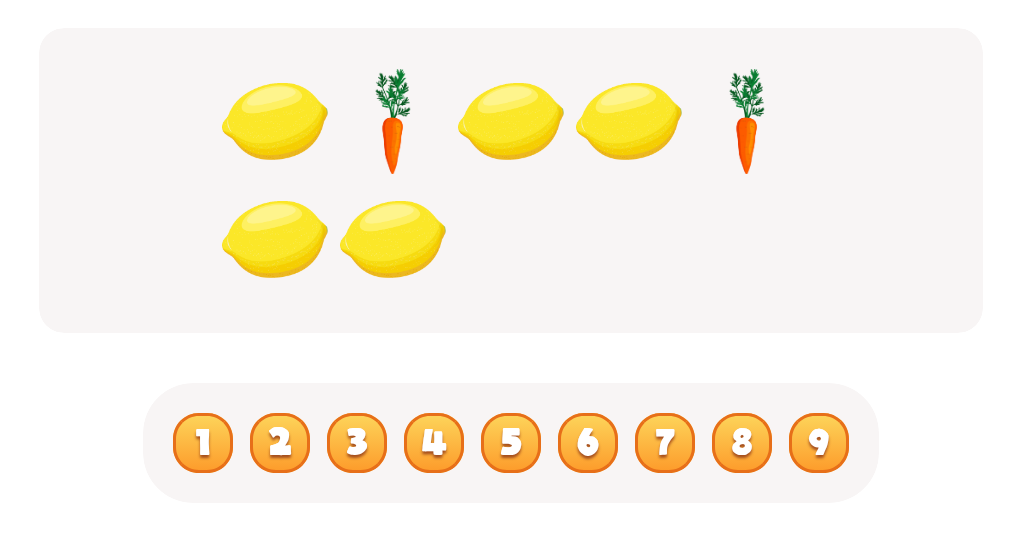
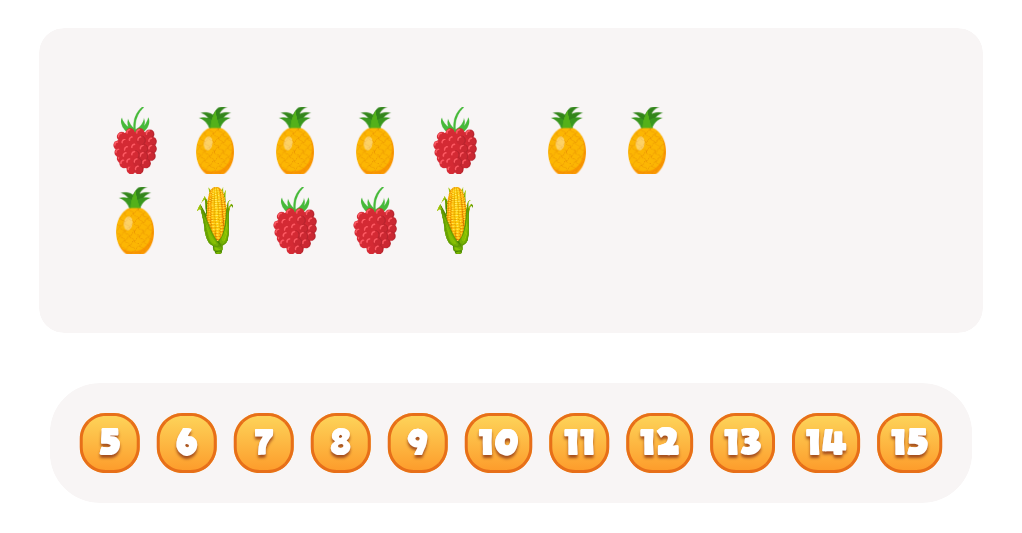
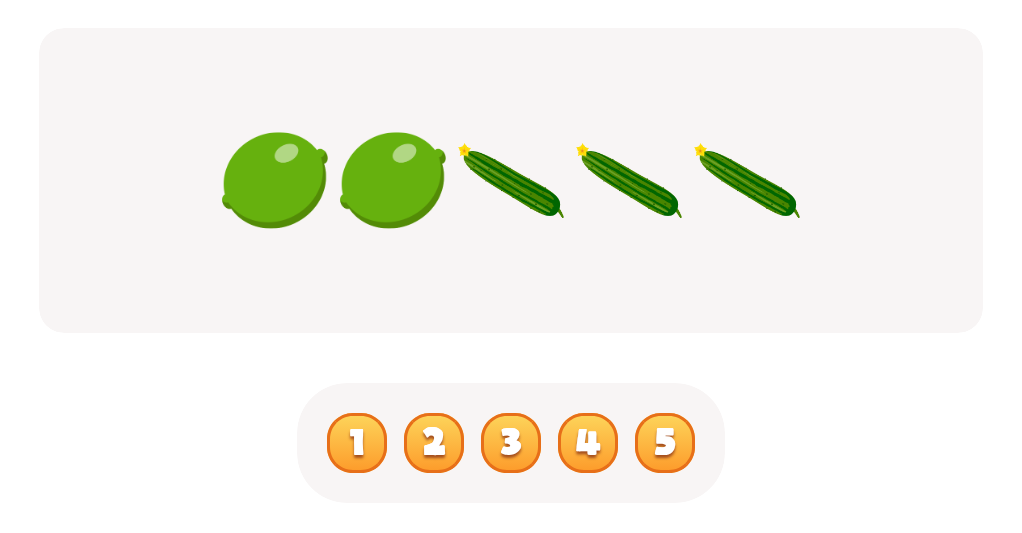
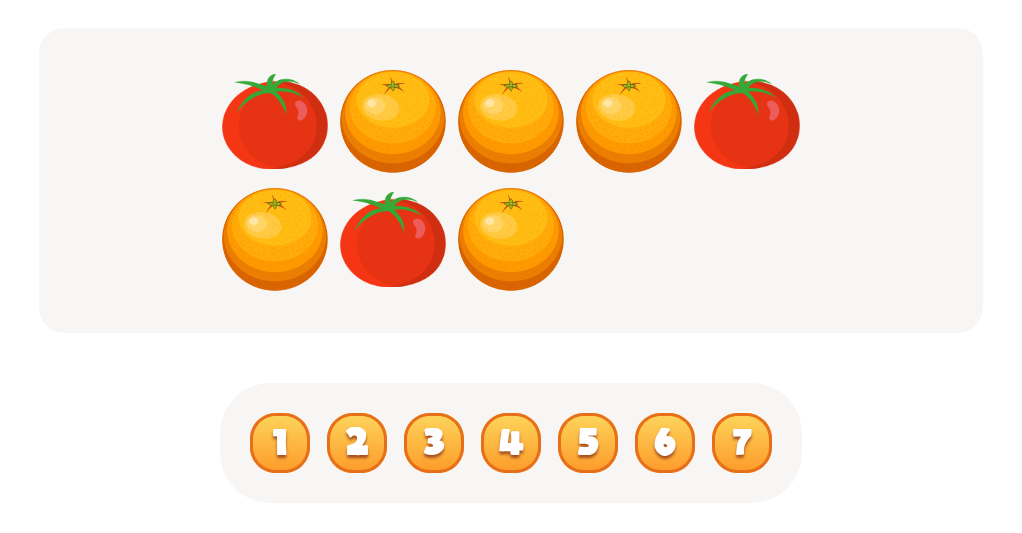
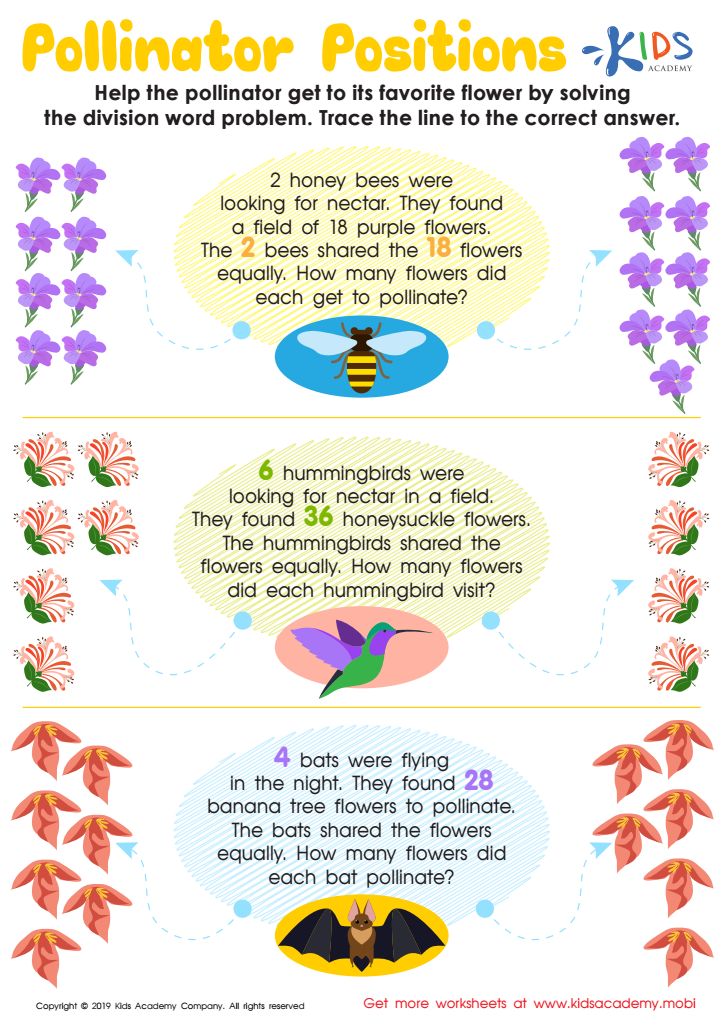
Pollinator Positions Worksheet
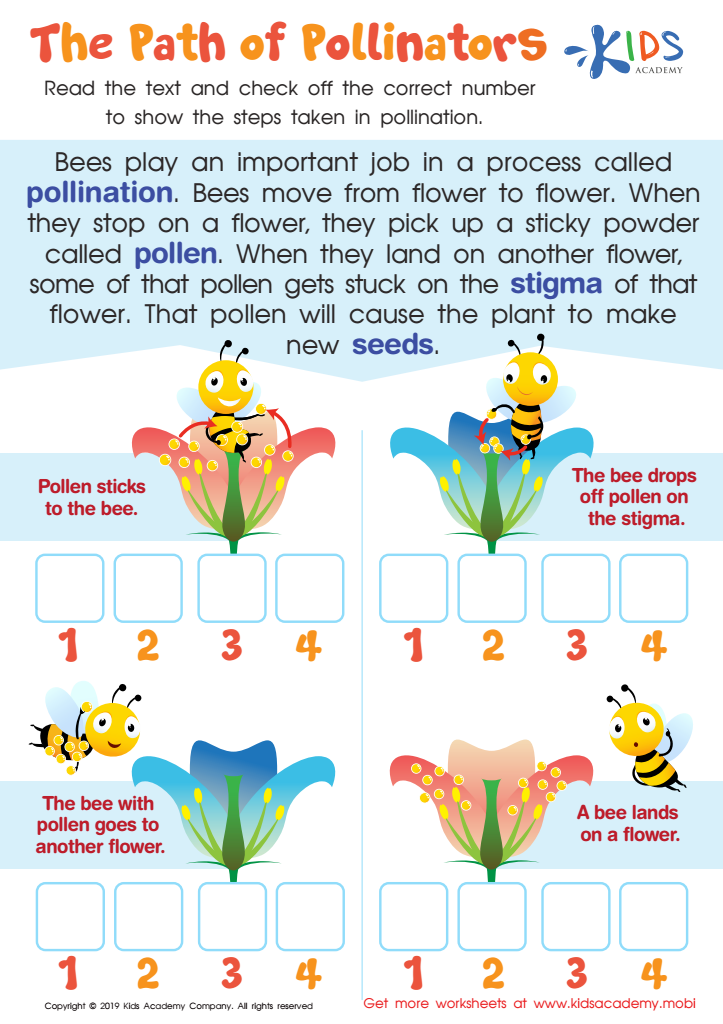
The Path of Pollinators Worksheet







Understanding pollination is crucial for 8-year-olds, as it lays the foundation for their knowledge of natural processes and environmental stewardship. Pollination – the transfer of pollen from one flower to another – is essential for plants to produce fruits and seeds. This process directly impacts the availability of fruits, vegetables, and other flora, relevant to the food chain that both humans and animals depend on.
Teaching children about pollination helps them appreciate the interconnectedness of ecosystems. They start to understand how insects like bees, butterflies, and birds play vital roles in the environment. This early awareness can foster a sense of responsibility towards biodiversity and conservation. Moreover, by learning about the mutualistic relationships between plants and pollinators, kids can develop an early respect for nature and its complexities.
For parents and teachers, engaging students in subjects like pollination can stimulate interest in science and help develop critical thinking skills. Activities like garden planting or observing insects can encourage a hands-on learning approach, which reinforces classroom lessons.
By growing up knowledgeable about these natural processes, children are more likely to become environmentally-conscious adults. Hence, integrating lessons on pollination into early education can inspire a lifelong appreciation for science and nature.