Analytical thinking Normal History Worksheets for 8-Year-Olds
3 filtered results
Difficulty Level
Grade
Age
-
From - To
Subject
Activity
Standards
Enhance your 8-year-old's analytical thinking with our thoughtfully crafted Normal History Worksheets! These engaging printables are designed to foster critical thinking and help young learners understand historical contexts in a fun and interactive way. Each worksheet presents age-appropriate historical scenarios and questions that challenge children to analyze information, draw conclusions, and develop problem-solving skills. Our worksheets cover a variety of topics, ensuring a comprehensive approach to learning history and thinking critically about the past. Perfect for both at-home learning and classroom use, these resources make history exciting and educational for young minds.
Favorites
With answer key
Interactive
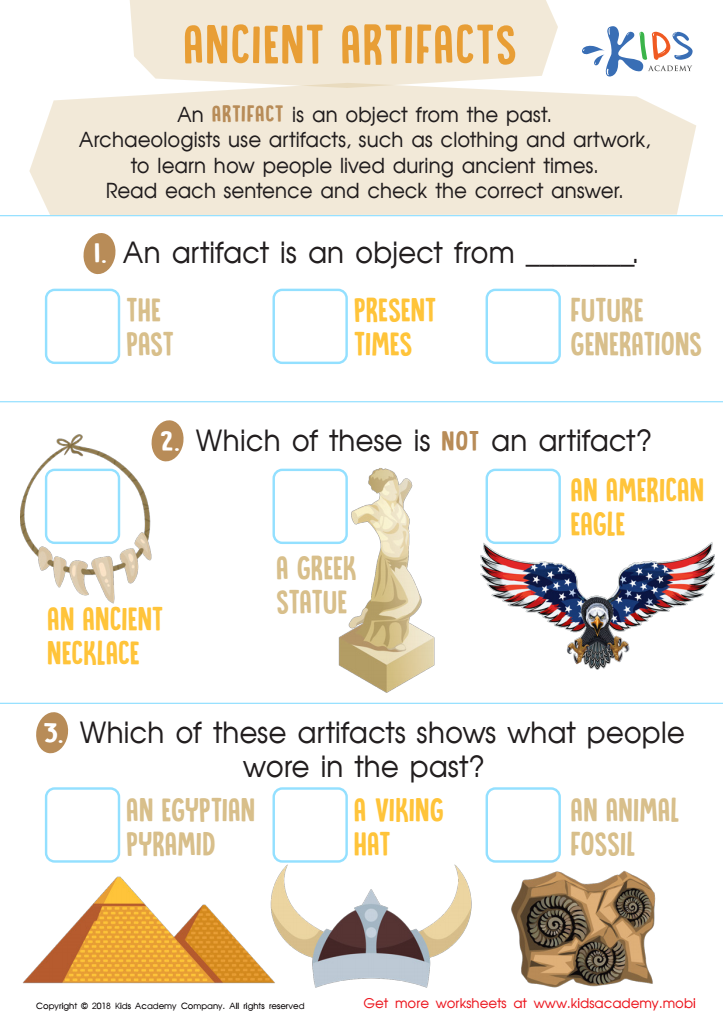
Ancient Artifacts Worksheet
This free worksheet helps kids understand ancient artifacts, from statues to necklaces to fossils. They'll read comprehension questions and select answers from multiple choice options, with pictures to help them grasp the concept. It's a great way for children to learn about artifacts and what they may look like.
 Assign to My Students
Ancient Artifacts Worksheet
Worksheet
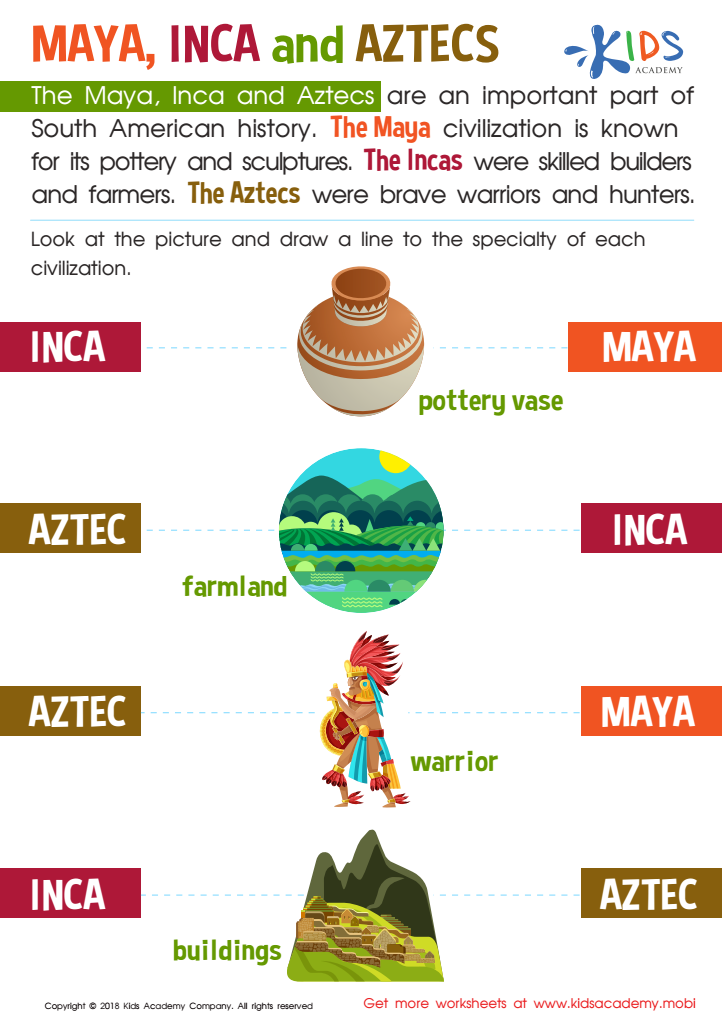
Maya, Inca and Aztecs Worksheet
This worksheet introduces your child to the thrilling histories of the Mayan, Incan and Aztec cultures, teaching them about their warriors, sculptors and farmers. With traceable lines and colorful imagery, they'll connect each culture with its correct associated picture - great for cementing concepts!
Maya, Inca and Aztecs Worksheet
Worksheet
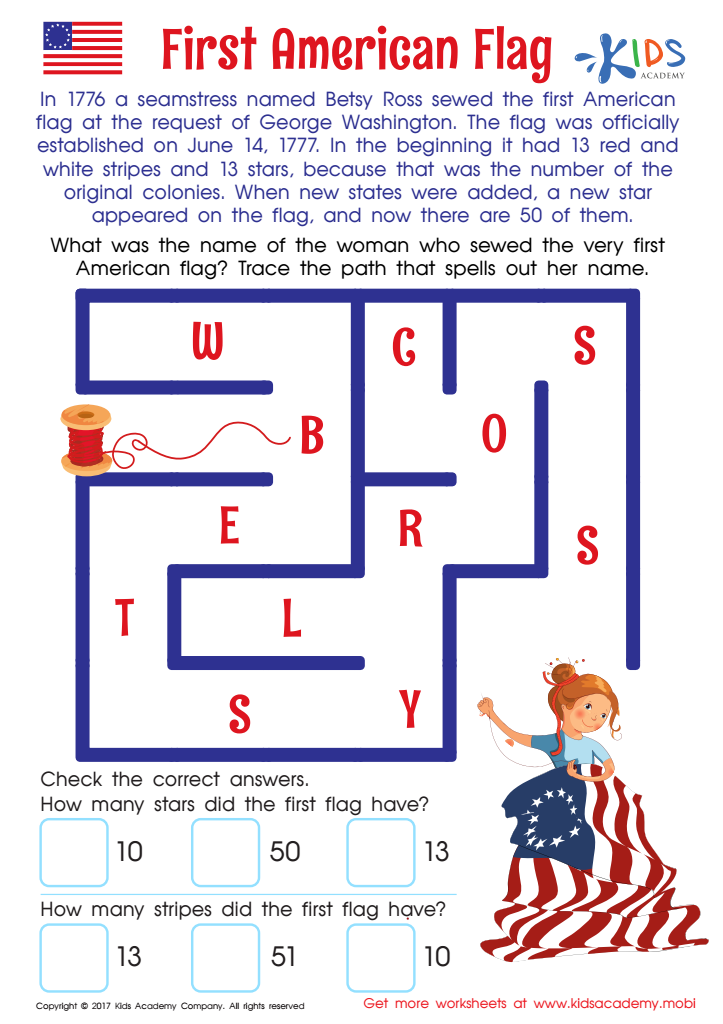
First American Flag Worksheet
Betsy Ross sewed the first American flag at the request of George Washington. This worksheet helps kids learn about this milestone in U.S. history, plus the design and origins of the flag.
First American Flag Worksheet
Worksheet
Join Kids Academy for Free
Who is primarily going to use this learning content?








Parents and teachers should prioritize fostering analytical thinking in 8-year-olds because it lays a foundational skill for lifelong learning and problem-solving. At this age, children are highly curious and eager to understand the world around them. Encouraging analytical thinking helps them develop the ability to break down complex information, identify patterns, and make informed decisions—a skill that's essential not only in academics, such as math and science, but in everyday life as well.
Moreover, as children learn to analyze history, they gain a deeper understanding of how past events influence the present. This comprehension makes them more aware citizens, capable of critical thinking about the world around them. It also instills a sense of empathy, as they begin to understand diverse perspectives and the complexities of human behavior.
Therefore, nurturing these skills can lead to better academic performance and a more critical, thoughtful approach to everyday situations. It also forms the basis for advanced reasoning skills they'll need in higher education and in their professional lives. Teachers and parents play a crucial role by providing stimulating challenges that encourage analysis, offering guidance, and reinforcing the importance of understanding 'why' things happen, not just 'what' happens. Investing in analytical thinking development in young children equips them with vital tools for success.