Multiplication practice Normal History Worksheets for 8-Year-Olds
3 filtered results
Difficulty Level
Grade
Age
-
From - To
Subject
Activity
Standards
Enhance your child's multiplication skills with our engaging Normal History Worksheets designed specifically for 8-year-olds! These worksheets combine fun historical themes with essential math practice, making learning both enjoyable and educational. Each worksheet features a variety of multiplication problems that cater to different learning levels, ensuring that every child can build confidence in their math abilities. As students solve these problems, they’ll also discover interesting historical facts that broaden their knowledge. Perfect for homeschooling or classroom use, our multiplication practice worksheets are a fantastic resource for reinforcing math concepts while sparking an interest in history. Get started today!
Favorites
With answer key
Interactive
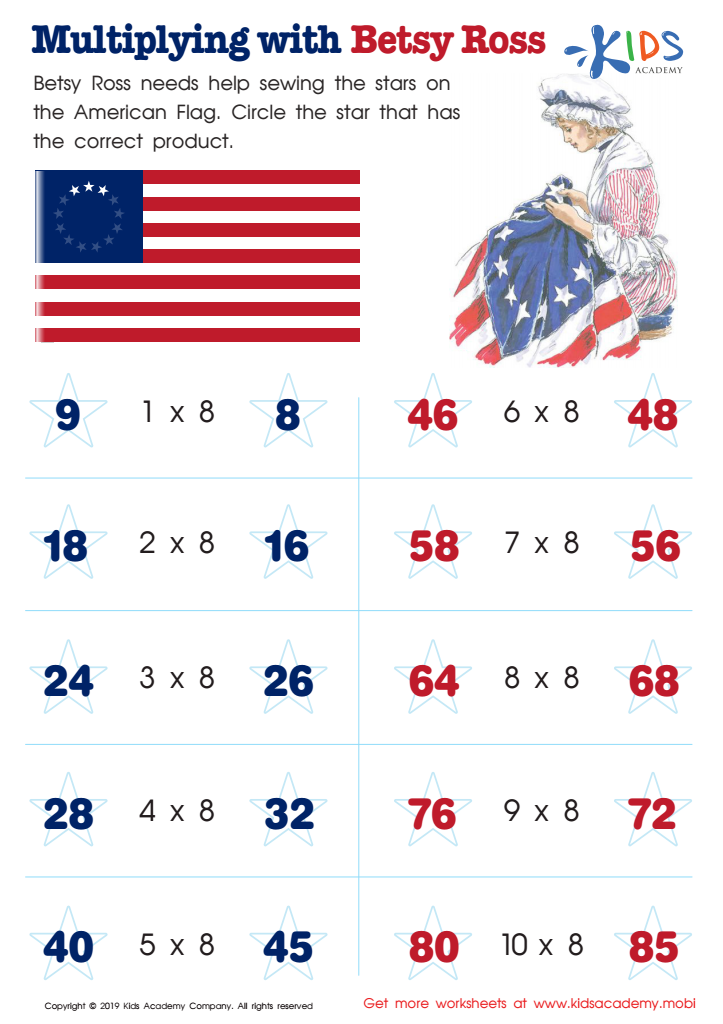
Multiplying with Betsy Ross Worksheet
Before getting into the worksheet, have your students take a quick history lesson on Betsy Ross. Ask them if they know her role in American history. On the printout, ask your kids to identify what Betsy Ross is doing - sewing the stars on the American Flag. Have them circle the star that has the correct pattern.
 Assign to My Students
Multiplying with Betsy Ross Worksheet
Worksheet
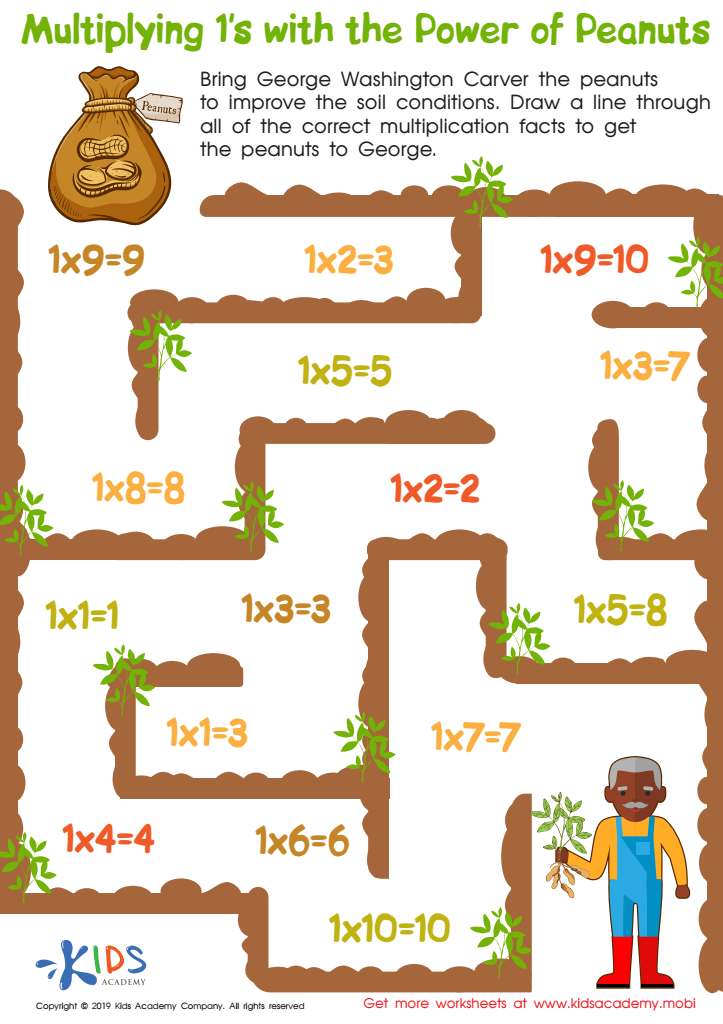
Multiplying 1’s With the Power of Peanuts Worksheet
Help your kids learn about George Washington Carver with this fun worksheet! Assist them in bringing peanuts to Carver by drawing a line through the correct multiplication facts. Introduce them to Carver's genius creations and show them how he used peanuts to improve the soil condition.
Multiplying 1’s With the Power of Peanuts Worksheet
Worksheet
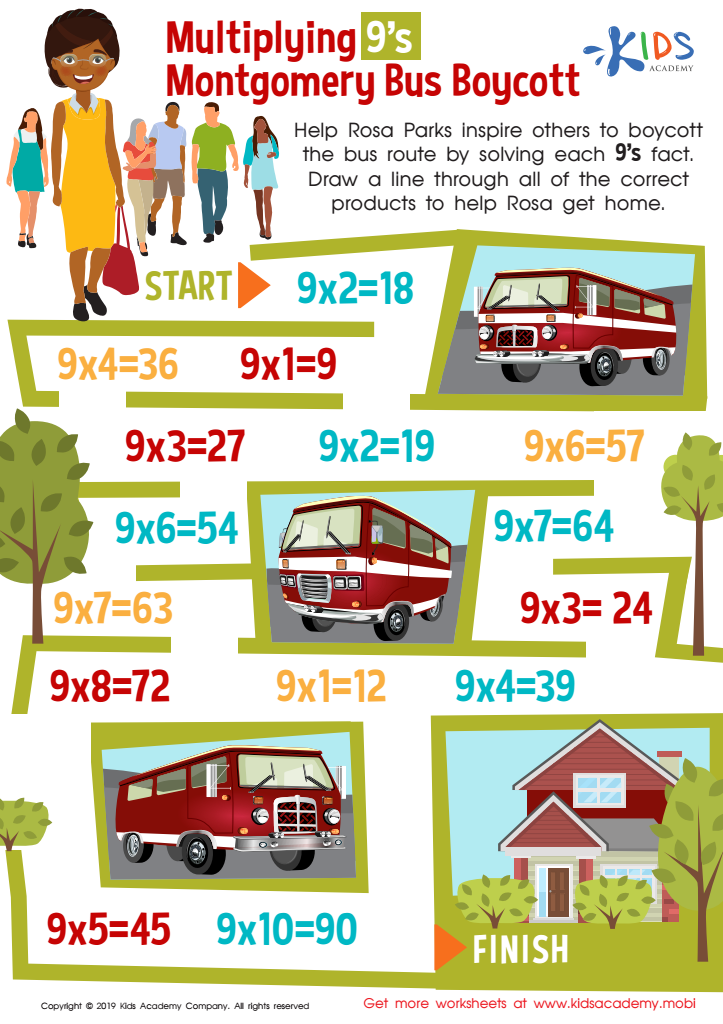
Multiplying 9’s Montgomery Bus Boycott Worksheet
As your students learn math, the numbers get bigger. This worksheet is great for learning the nine times table. Help Rosa Park get home - ask them to solve each multiplication fact, then draw a line through the correct products. Encourage your students to stand up for what's right!
Multiplying 9’s Montgomery Bus Boycott Worksheet
Worksheet
Join Kids Academy for Free
Who is primarily going to use this learning content?








Parents and teachers should prioritize multiplication practice for 8-year-olds as it lays a foundation for essential mathematical skills needed in everyday life and future learning. At this age, children typically begin to shift from basic arithmetic to more complex concepts. A strong grasp of multiplication is crucial, as it not only enhances problem-solving abilities but also promotes cognitive development.
Multiplication is a pivotal skill in various areas of mathematics, including division, fractions, and even higher-level concepts like algebra. By mastering multiplication facts, children can increase their confidence and fluency in math, which lowers anxiety when tackling new challenges. Additionally, multiplication fosters logical thinking and concentration, traits beneficial in all academic subjects.
Moreover, practices rooted in history and real-world contexts encourage engagement and relevance. Understanding the historical significance of numbers could inspire curiosity in students, making learning enjoyable. Activities that involve both multiplication and historical context can enhance comprehension and retention.
Overall, fostering multiplication practice in children promotes not only their academic success but also a love for learning, equipping them with essential skills for their futures. Parents and teachers play a pivotal role in this early stage of educational development.