Map reading skills Normal Social Studies Worksheets for 8-Year-Olds
4 filtered results
Difficulty Level
Grade
Age
-
From - To
Subject
Activity
Standards
Enhance your child's navigation and problem-solving abilities with our Map Reading Skills Social Studies Worksheets, tailor-made for 8-year-olds. These engaging worksheets from Kids Academy are designed to help young learners understand geographical concepts, identify map features, and develop critical thinking by interpreting various types of maps. Your child will explore directions, symbols, and scales, allowing them to build essential skills for future learning. Our grade-appropriate activities make learning enjoyable and effortless, ensuring students gain confidence in their map-reading capabilities. Let your child embark on a fascinating journey of discovery with our expertly crafted educational resources.
Favorites
With answer key
Interactive
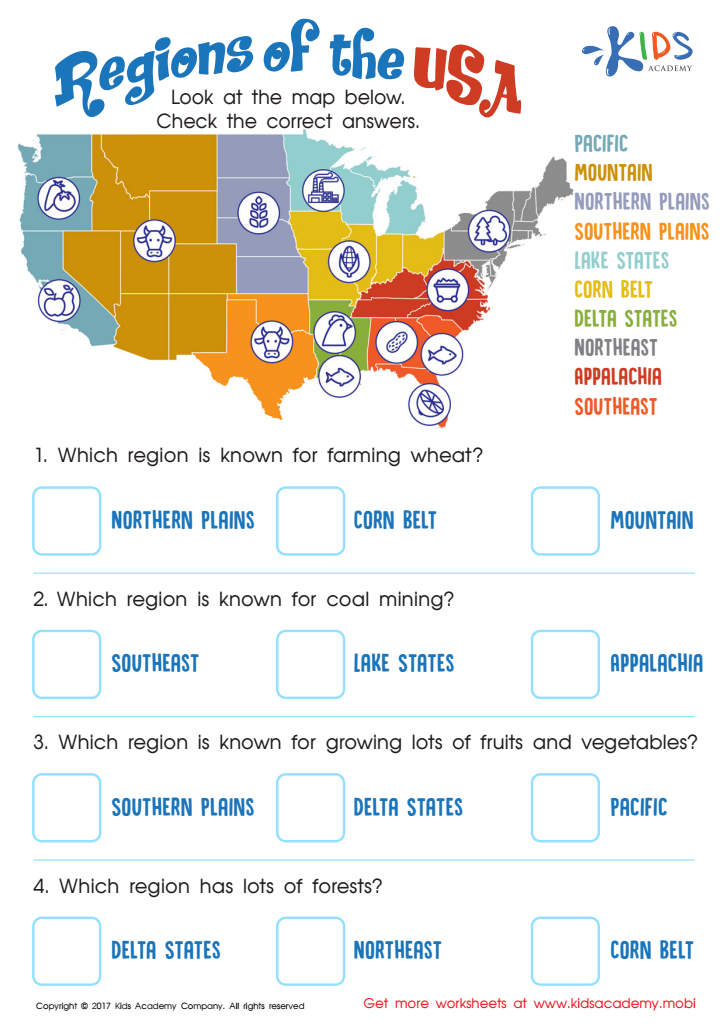
Regions of the USA Worksheet
Help your child explore the US with this regions of the United States worksheet! They'll learn about the diverse cultures, climates and purposes of each region. Make geography and US history fun with this educational exercise!
 Assign to My Students
Regions of the USA Worksheet
Worksheet
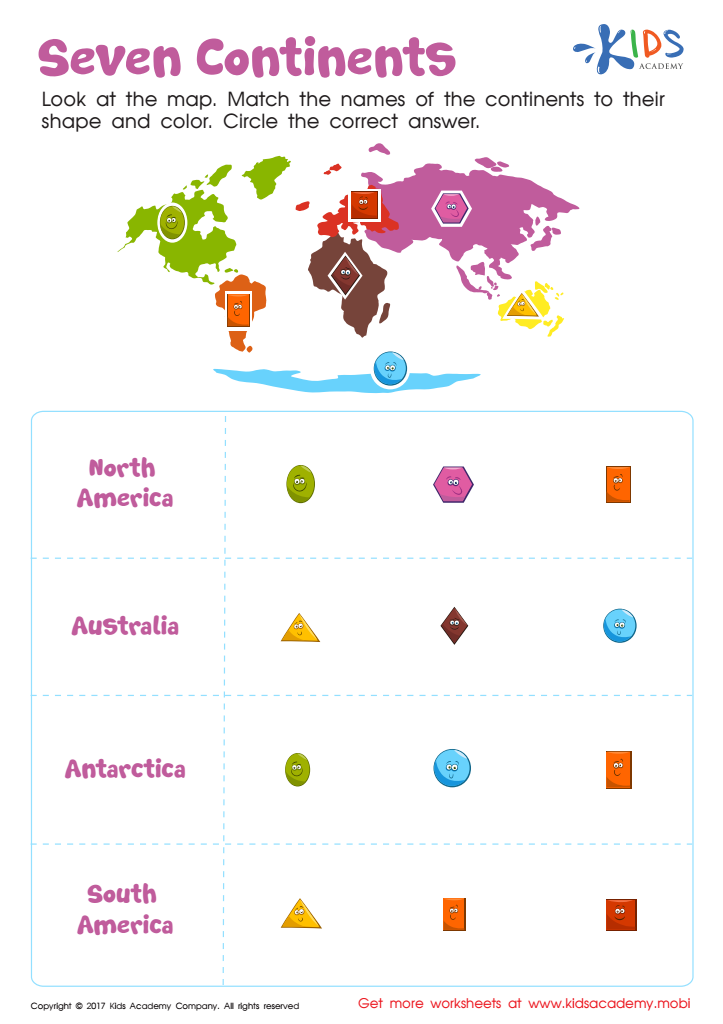
Seven Continents Worksheet
Geography teaches kids about the world! Encourage exploration with a seven continents worksheet - it'll help your child identify each continent using fun shapes.
Seven Continents Worksheet
Worksheet
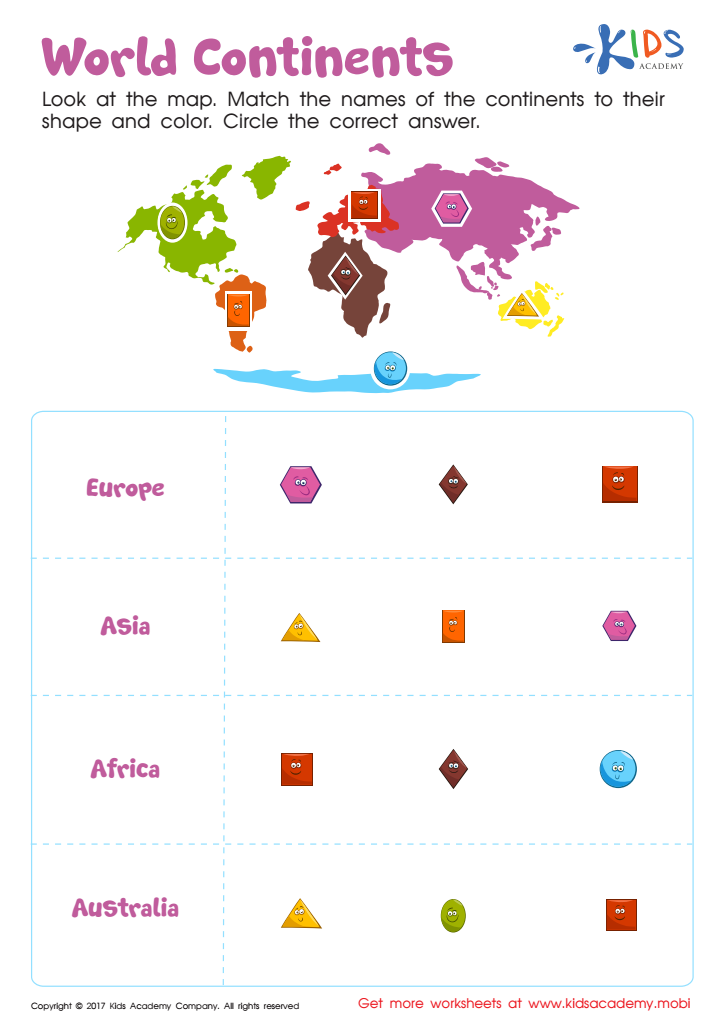
World Continents Worksheet
Help expand your child's knowledge of the world with this fun worksheet! It features goofy shapes to identify each continent, making learning the seven continents fun and memorable.
World Continents Worksheet
Worksheet
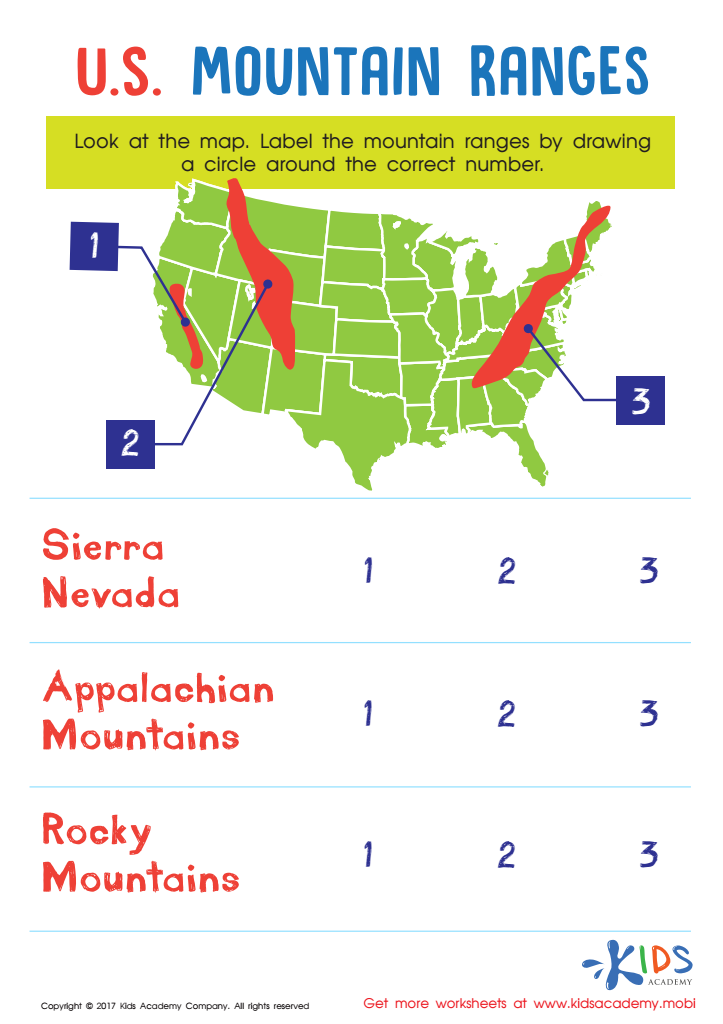
US Mountain Ranges Worksheet
Introduce your little one to the U.S. with this Mountain Ranges worksheet! It'll help them recognize the major ranges and locate them on a map, sharpening their map skills.
US Mountain Ranges Worksheet
Worksheet
Join Kids Academy for Free
Who is primarily going to use this learning content?








Map reading skills are essential for 8-year-olds as they provide foundational geographic knowledge and foster important cognitive and life skills. Learning to interpret maps enhances spatial awareness, helping children understand their world and how different places relate to one another. This understanding is crucial not only for geography but also for everyday activities, such as navigating their community and comprehending global events.
For parents and teachers, incorporating map reading into social studies supports interdisciplinary learning. These skills enhance mathematical abilities through the concepts of scale and distance, and they foster critical thinking by requiring children to analyze symbols and synthesize information from different sources.
Social studies curricula that include map reading strategies also enrich history lessons. By locating significant historical events on maps, children make meaningful connections between timelines and geographic locations, deepening their understanding of historical context.
Moreover, map reading promotes independence and self-reliance, empowering children to venture beyond their immediate environment while being mindful of their positioning. In our increasingly globalized society, having robust map reading skills equips young learners with the tools needed for travel, cultural awareness, and even future educational pursuits.
In conclusion, teaching map reading not only bolsters academic achievement but also prepares children for the wider world, fostering well-rounded, capable young individuals.