Grammar skills improvement Normal Grammar Worksheets for 8-Year-Olds
4 filtered results
-
From - To
Enhance your child's grammar skills with our "Normal Grammar Worksheets for 8-Year-Olds"! Designed specifically for young learners, these engaging worksheets offer a variety of exercises that cover essential grammar concepts, including parts of speech, sentence structure, and punctuation. Each worksheet encourages critical thinking and reinforces learning through fun activities. Your 8-year-old will gain confidence in their writing abilities while developing a solid foundation in grammar. Perfect for supplementing classroom instruction or for home learning, these easy-to-use resources are a great way to make grammar enjoyable. Start your child's journey towards effective communication today with our comprehensive grammar worksheets!
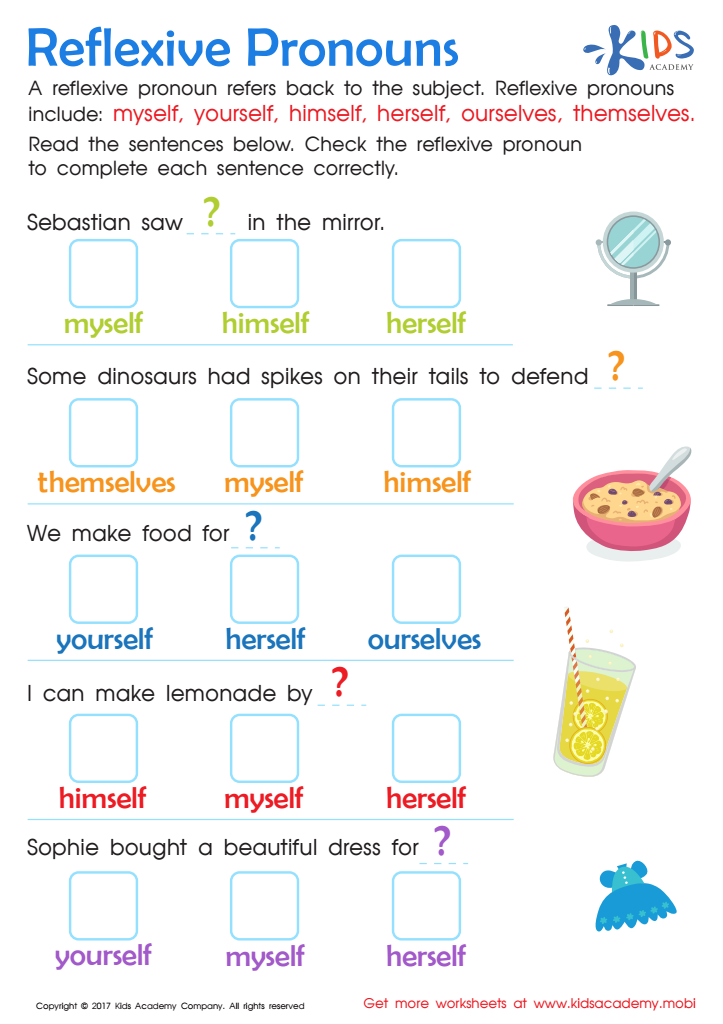
Reflexive Pronouns Worksheet
 Assign to My Students
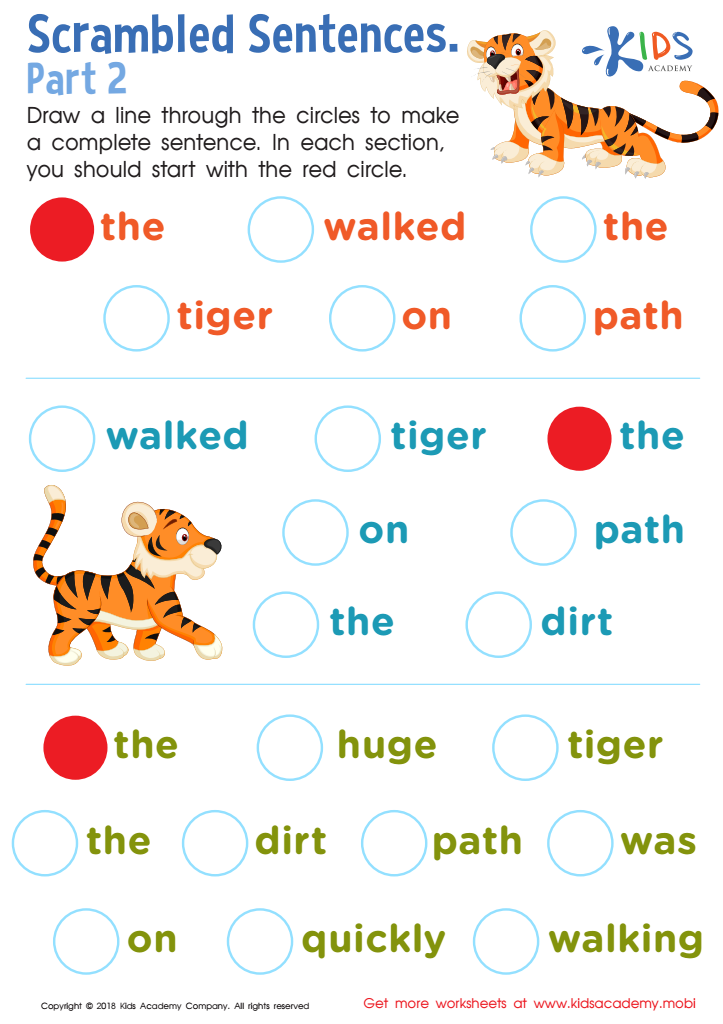
Scrambled Sentences Part 2 Worksheet
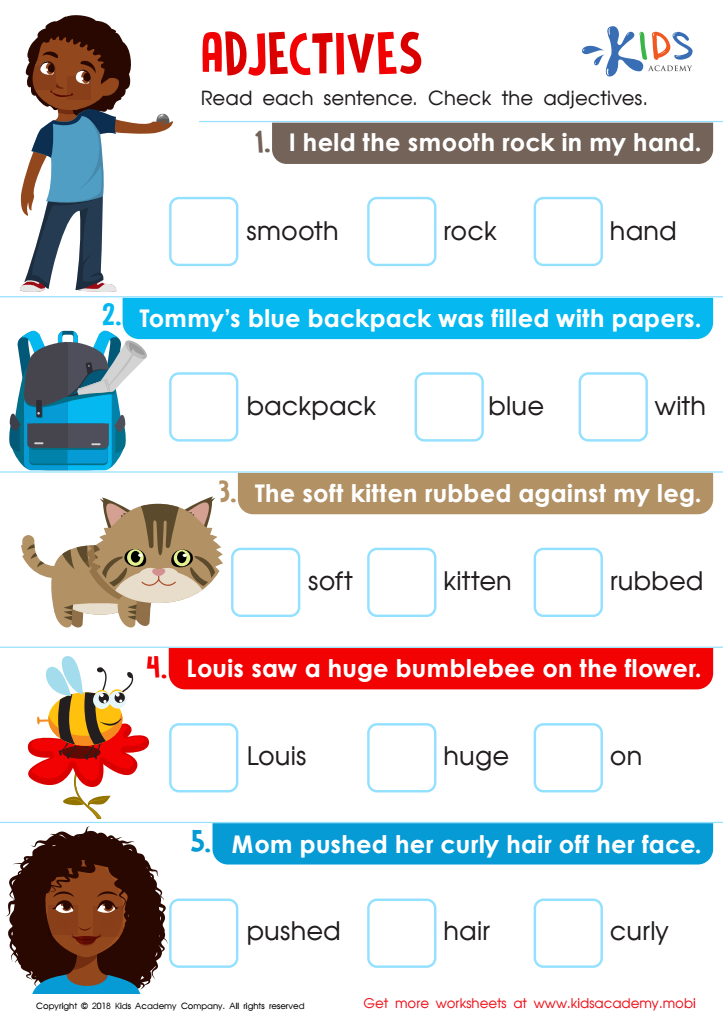
Adjectives Worksheet
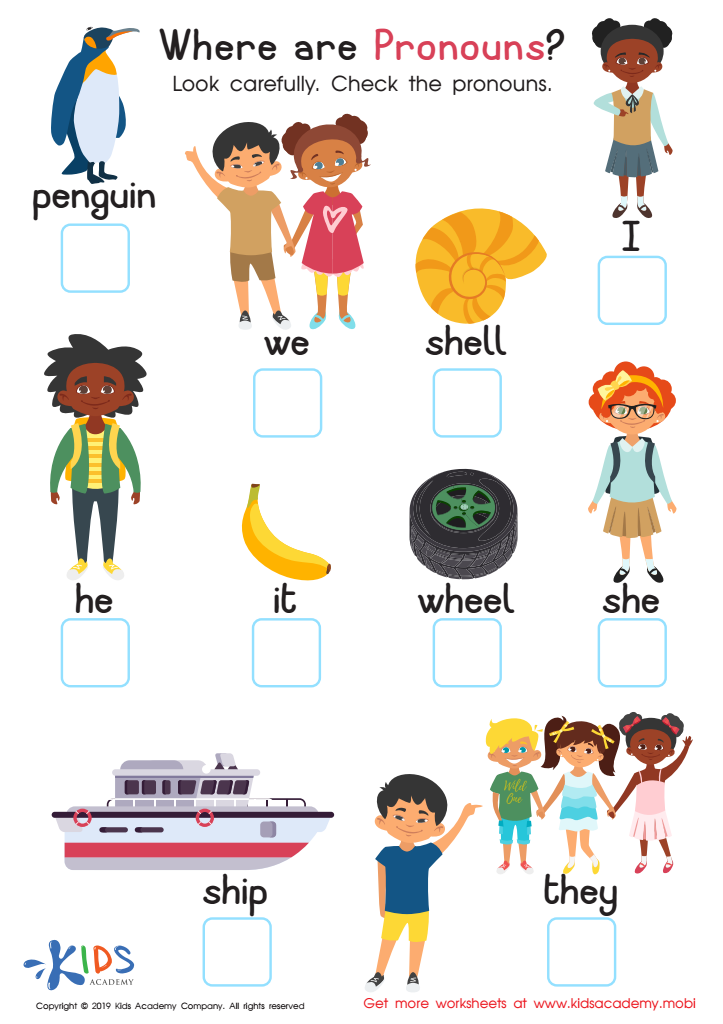
Where Are Pronouns? Worksheet








Parents and teachers should care about grammar skills improvement in 8-year-olds because effective communication is fundamental to a child’s academic success and social development. At this age, children are transitioning from learning to read and write to using these skills for deeper learning across subjects. Strong grammar comprehension allows them to articulate their thoughts clearly and participate confidently in discussions, enabling them to express their ideas and feelings more effectively.
Furthermore, a solid foundation in grammar aids in reading comprehension. As children encounter more complex texts, understanding sentence structure and syntax becomes crucial for grasping the material. This not only supports their literacy skills but also fosters a love for reading, which is critical for lifelong learning.
Additionally, grammar plays a significant role in writing. Children learn to organize their thoughts, using proper punctuation and sentence formation, contributing to clearer and more impactful written work. This skill is invaluable not just in school assignments but also later in their professional lives.
Ultimately, nurturing grammar skills at this age cultivates confident communicators who can navigate various social and academic contexts, setting them up for success in the future. Thus, investment in grammar improvement is an investment in a child’s overall development.