Understanding adjectives Normal Writing Worksheets for 8-Year-Olds
3 filtered results
-
From - To
Explore "Understanding Adjectives: Normal Writing Worksheets for 8-Year-Olds" designed to enhance children's writing skills. These interactive and engaging worksheets help young learners grasp the concept of adjectives, boosting their descriptive writing abilities. Perfect for 8-year-olds, the activities encourage creativity and detail, fostering a better understanding of how adjectives enrich sentences. Each worksheet is crafted to make learning fun and effective, ensuring kids can confidently identify and use adjectives in their writing. Whether for classroom use or extra practice at home, these worksheets are an excellent resource for developing essential language skills. Give your child a head start in writing today!
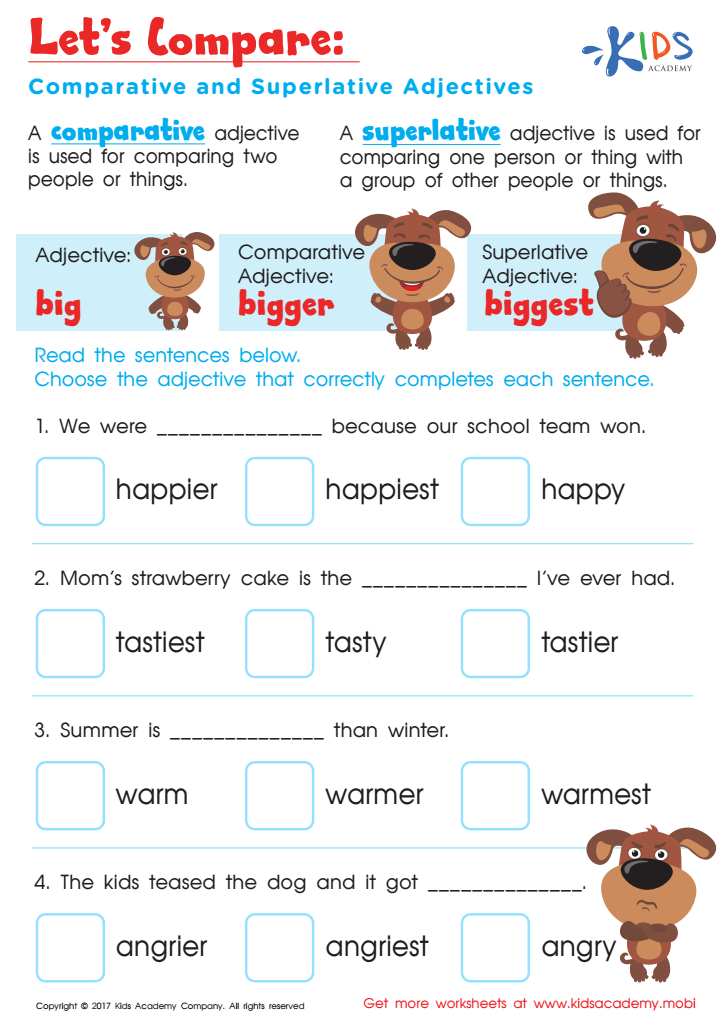
Comparative and Superlative Worksheet
 Assign to My Students
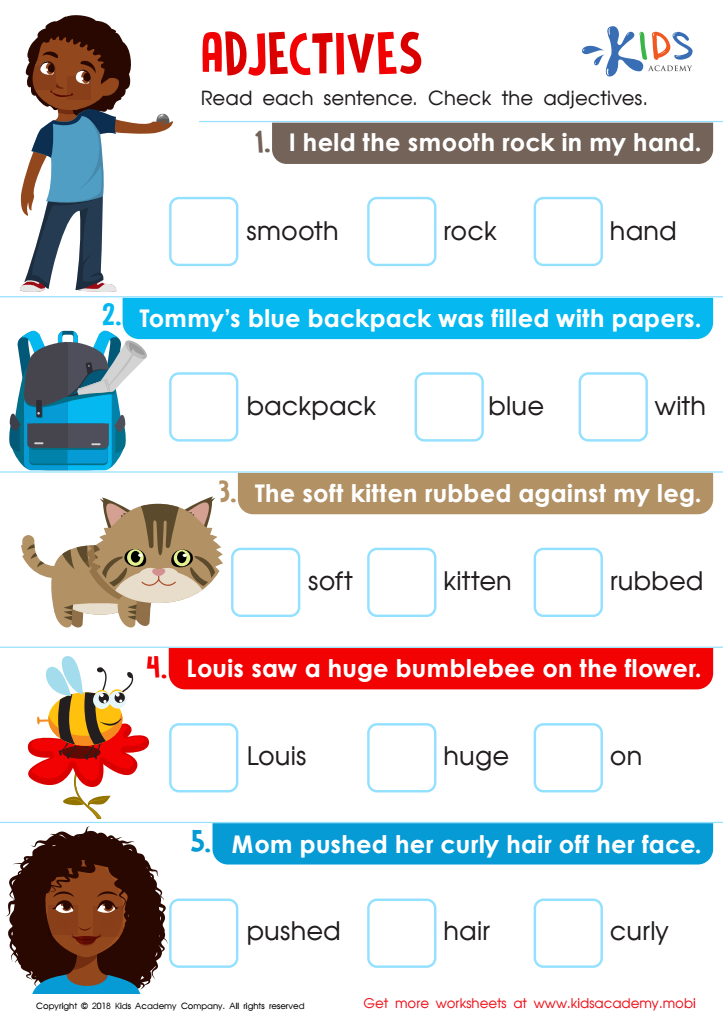
Adjectives Worksheet
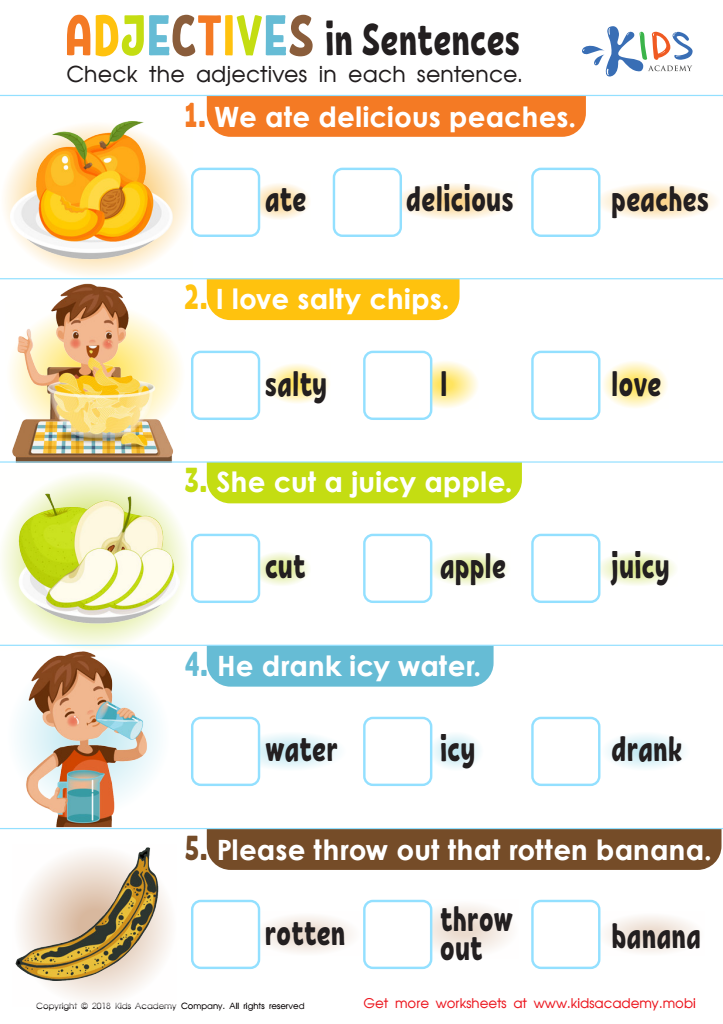
Adjectives in Sentences Worksheet







Parents and teachers should care about helping 8-year-olds understand adjectives because these descriptive words enrich a child's ability to express themselves clearly and creatively. When children learn about adjectives, they can describe the world around them with more precision and detail. Instead of saying, "I saw a dog," they can say, "I saw a big, fluffy, brown dog," which paints a vivid picture in the listener's mind.
Understanding adjectives also improves reading comprehension. When kids come across descriptive language in books, knowing what adjectives do helps them understand the story better. Descriptive words add color to the narratives and make stories more interesting and engaging.
Additionally, adjectives aid in building a child's vocabulary. The more adjectives they learn, the more words they have at their disposal. This enhanced vocabulary benefits them in both speaking and writing, allowing them to communicate more effectively.
Lastly, mastering adjectives can boost a child's confidence. When they can use descriptive words accurately, they feel proud of their communication skills. This confidence encourages them to participate more in classroom discussions and activities.
Overall, understanding adjectives is a small but significant step in a child's language development, making it an important focus for both parents and teachers.