
Spelling practice Normal Alphabet Worksheets for 9-Year-Olds
4 filtered results
Difficulty Level
Grade
Age
-
From - To
Subject
Activity
Standards
Enhance your child's spelling skills with our Spelling Practice Normal Alphabet Worksheets for 9-Year-Olds. Our carefully curated worksheets focus on fundamental spelling principles, guiding kids to master the alphabet and improve their vocabulary. Fun, engaging activities and exercises seamlessly integrate learning and enjoyment, making spelling practice instinctive and effective. Ideal for both homeschoolers and traditional classrooms, these worksheets provide a solid foundation in spelling essential for academic success. Explore spelling patterns, word construction, and language intricacies with resources designed to support young learners' growth and confidence in their linguistic abilities. Visit Kids Academy for more!
Favorites
With answer key
Interactive
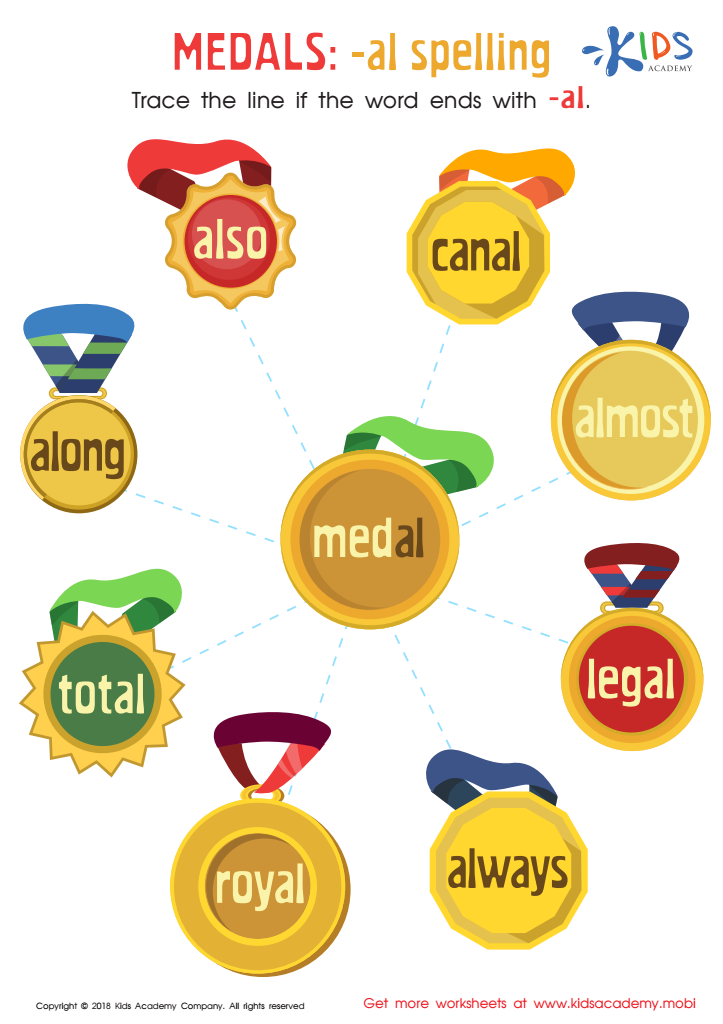
Medals: Al Spelling Worksheet
Have your students list common words ending with -al. See how many they can give and spell. Give examples of your own, assisting with spelling. Now review the words in the worksheet. Guide students to trace the line for each word ending with -al. 80 words
Medals: Al Spelling Worksheet
Worksheet
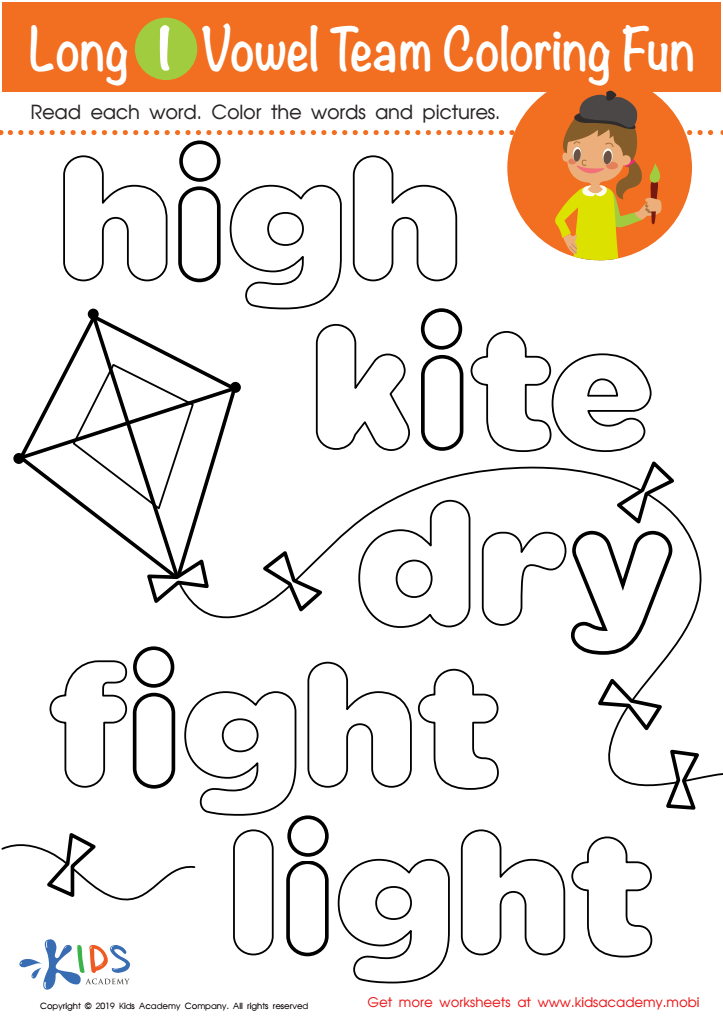
Long I Vowel Team Coloring Worksheet
This worksheet provides practice with letter combinations that make the long "i" sound while enhancing creativity and motor skills with a fun coloring activity. Unknowingly, new readers learn key phonics skills while having fun!
Download (PDF)
 Assign to My Students
Assign to My Students
Long I Vowel Team Coloring Worksheet
Worksheet
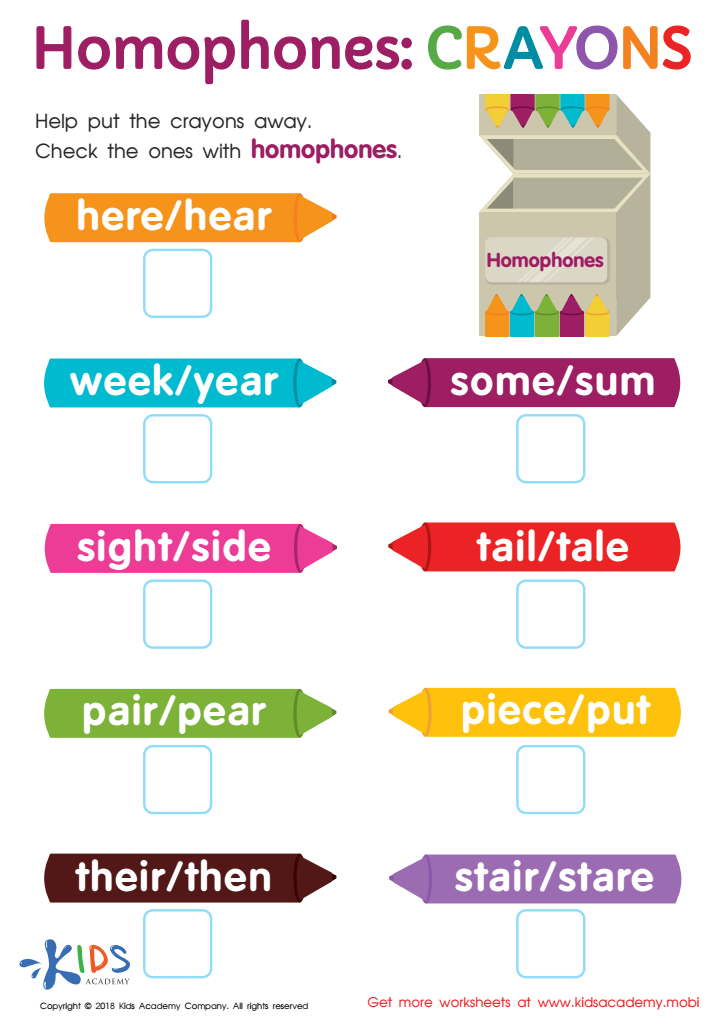
Homophones: Crayons Worksheet
Ask your kids: "What are homophones?" Explain that homophones are words that sound alike but have different meanings, like 'dare' and 'deer'. Ask them to identify homophones by putting the crayons in this printout away according to the words.
Homophones: Crayons Worksheet
Worksheet
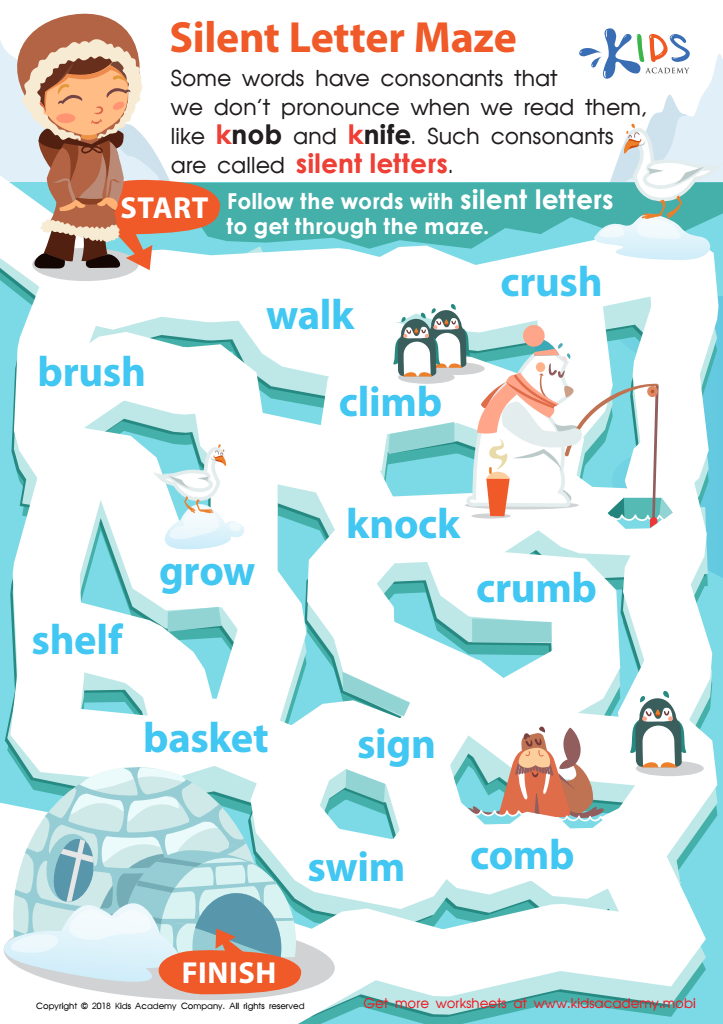
Silent Letter Maze Worksheet
Learning to read can be tricky, especially with words with irregular pronunciations. Explain to your child that some words have consonants we do not pronounce when reading. Ask them for examples like 'knife' and 'knob'. These consonants are called silent letters. Download this pdf to practice words with silent letters and complete the maze.
Silent Letter Maze Worksheet
Worksheet
Join Kids Academy for Free
Who is primarily going to use this learning content?






Spelling practice is crucial for 9-year-olds as it serves as a foundational element in their literacy development, which impacts their overall academic success. Mastering conventional alphabet spelling enables children to read and write proficiently, thereby bolstering their communication skills. Improved spelling enhances comprehension and fluency in reading, allowing children to decode new words efficiently and understand texts better.
For parents and teachers, consistent spelling practice helps to identify and address individual learning needs early on. Detecting and correcting spelling challenges promptly can prevent future struggles in more complex literacy tasks. Moreover, engaging in spelling exercises across various contexts enriches a child's vocabulary, empowering them to express their thoughts precisely and creatively in both written and oral communications.
Importantly, the confidence children gain through competent spelling encourages a positive attitude towards language arts, reducing frustration and promoting a sustained interest in learning. The ability to spell well is linked to academic confidence and motivation, propelling them towards continued academic success. In essence, paying attention to spelling practice isn't just about memorizing words; it's about equipping children with essential tools for lifelong learning and effective communication, making it a critical consideration for parents and teachers.







