Historical Knowledge Normal Math Worksheets for 9-Year-Olds
4 filtered results
-
From - To
Enhance your child’s math skills with "Historical Knowledge Normal Math Worksheets for 9-Year-Olds" from Kids Academy! These engaging worksheets integrate historical themes to make learning math exciting and relevant. Tailored to 9-year-old learners, each worksheet combines basic math concepts with fascinating historical facts, encouraging critical thinking and problem-solving. Perfect for home or classroom use, our printable resources support curriculum standards, ensuring a comprehensive and enriching educational experience. Provide your child with a unique opportunity to develop math proficiency while exploring intriguing historical contexts. Visit Kids Academy to download and start your child’s educational adventure today!
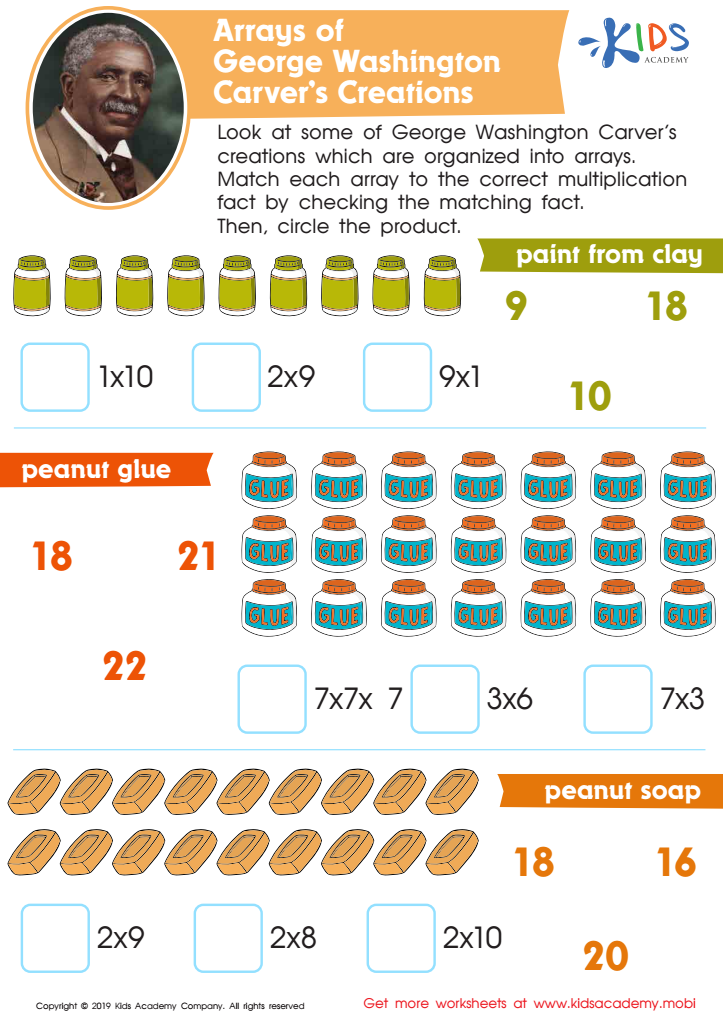
Arrays of George Washington Carver’s Creations Worksheet
 Assign to My Students
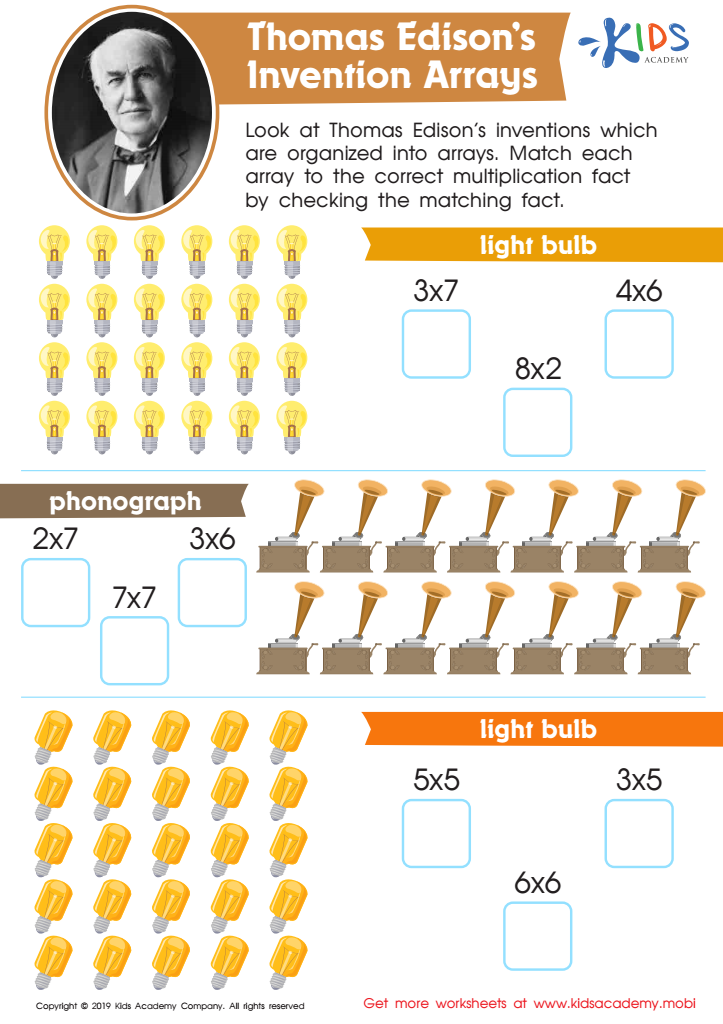
Thomas Edison’s Invention Arrays Worksheet
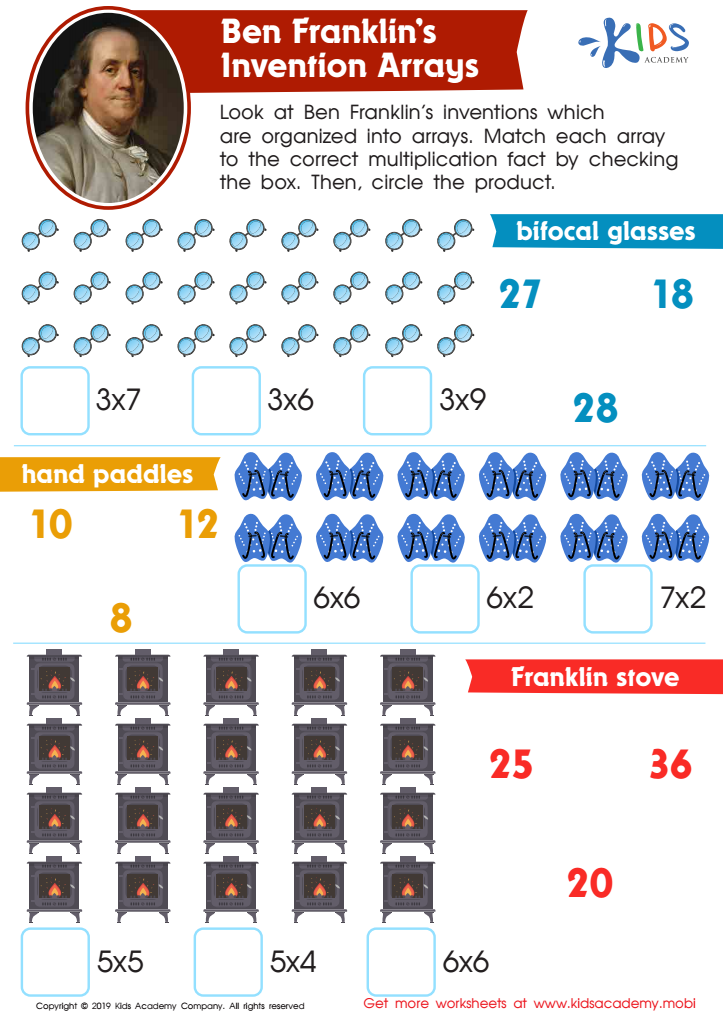
Ben Franklin’s Invention Arrays Worksheet
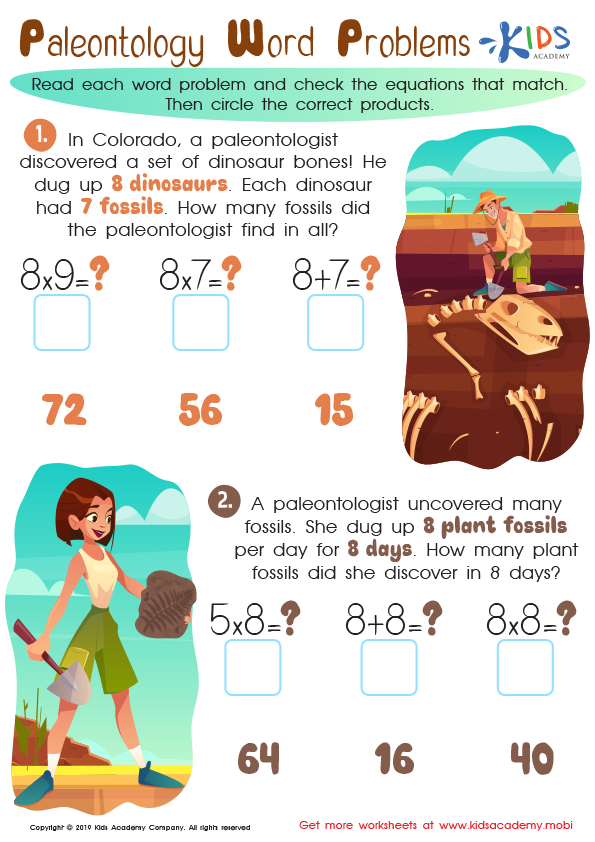
Archeology Word Problems Worksheet





Understanding historical knowledge and normal math concepts is crucial for a 9-year-old's development, and parents or teachers should care for several reasons. Firstly, historical knowledge fosters a child's sense of identity and belonging. Learning about different cultures, significant events, and influential figures helps children to understand the world and their place within it. It encourages empathy and broadens perspectives, promoting respect for diversity and improving social skills.
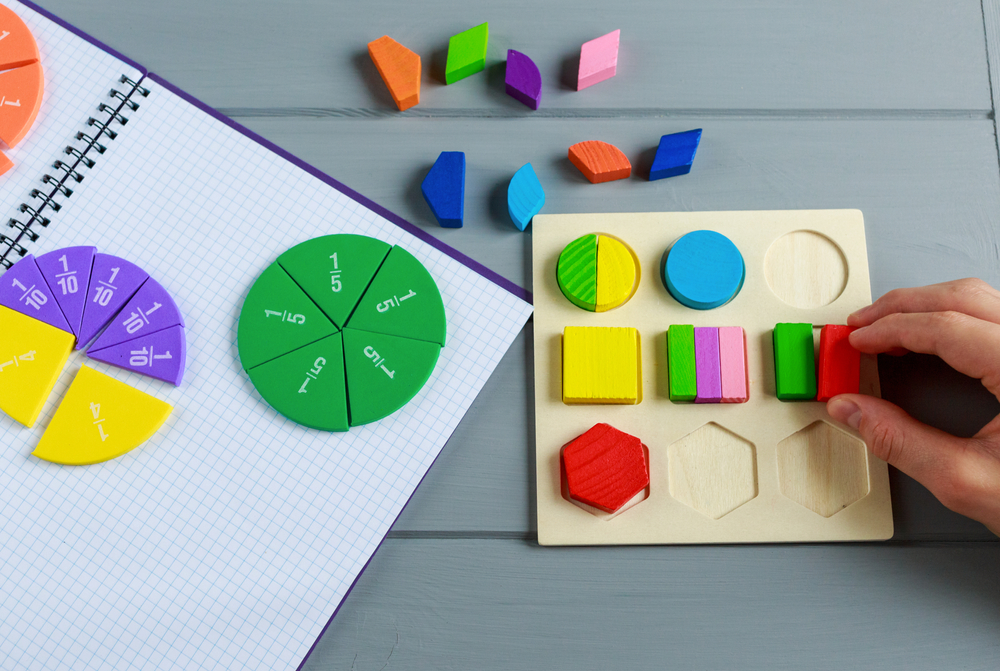
Secondly, math skills are fundamental to everyday life and future academic success. Normal math for 9-year-olds includes basic arithmetic (addition, subtraction, multiplication, and division), understanding fractions, and basic geometry. These skills build a strong foundation for advanced mathematics and critical thinking, essential in many future career paths.
Integrating historical knowledge with math, such as through timeline activities or counting historical artifacts, can make learning more engaging. This approach helps students see the relevance and practical application of math in real-world contexts, deepening their understanding and retention.
In summary, a well-rounded education that includes both history and math prepares children for personal and academic growth. Parents and teachers who prioritize these subjects help students develop into knowledgeable, empathetic, and capable individuals.








