Enhance your 9-year-old’s vocabulary skills with our engaging Vocabulary Development Normal Reading Worksheets! Designed specifically for children at this age, these worksheets provide a fun and interactive way to expand their word knowledge. Activities include matching words with definitions, filling in blanks, and using context clues. Our materials are tailored to stimulate curiosity and support literacy growth, ensuring that your child builds a robust vocabulary foundation. Ideal for home or classroom learning, these worksheets will not only improve reading comprehension but also boost overall communication skills. Download today and empower your child’s language abilities with captivating vocabulary exercises!

Check out this FREE Trial Lesson on Reading for age 9!

Greek Mythology

Favorites
With answer key
Interactive
  • 9
  • Vocabulary development
  • Reading
  • Normal
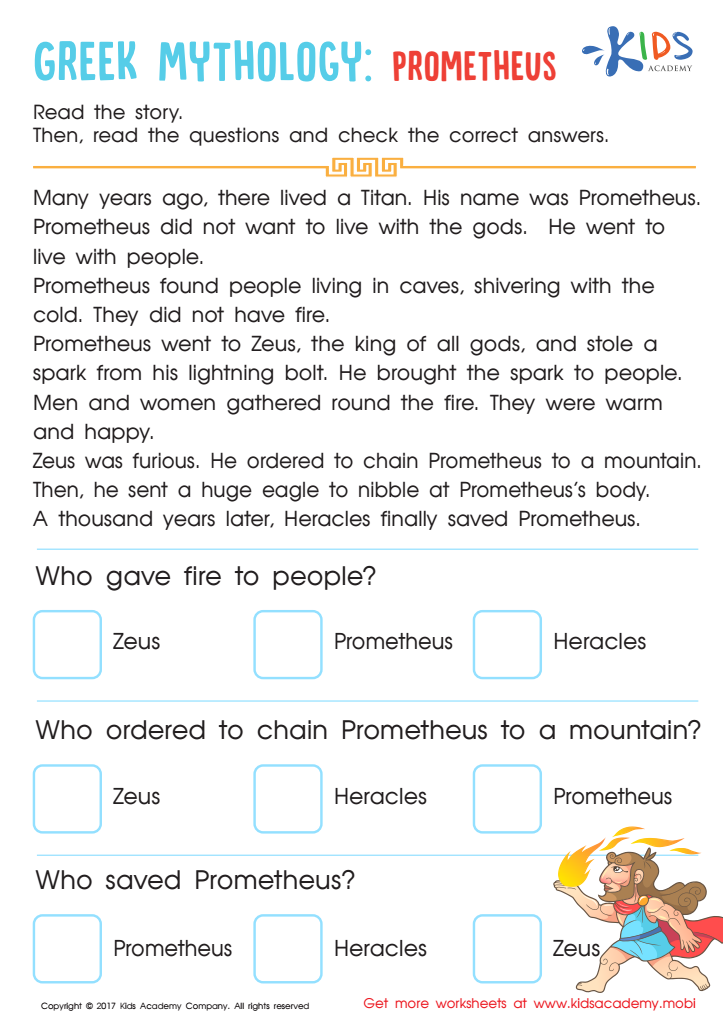
Prometheus story worksheet

Prometheus Story Worksheet

Help kids improve reading comprehension with this Prometheus story worksheet! Learn about this classic mythological tale and break down the plot into understandable parts. By doing so, children will understand the story each step of the way.
Prometheus Story Worksheet
Worksheet
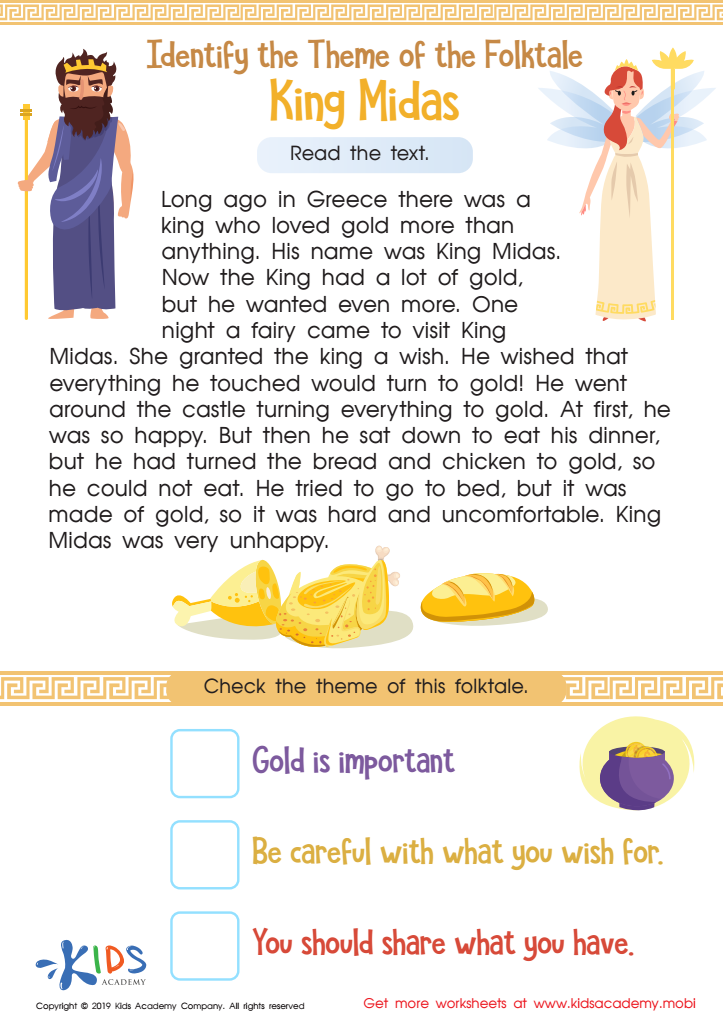
King Midas Worksheet

King Midas Worksheet

Read the ancient Greek history of King Midas to your kids. If they're into Greek gods and mythology, they'll be excited to complete the exercise. Read the text carefully, and if needed, twice. Help your kids locate the story's theme at the bottom of the page. 80 words.
King Midas Worksheet
Worksheet
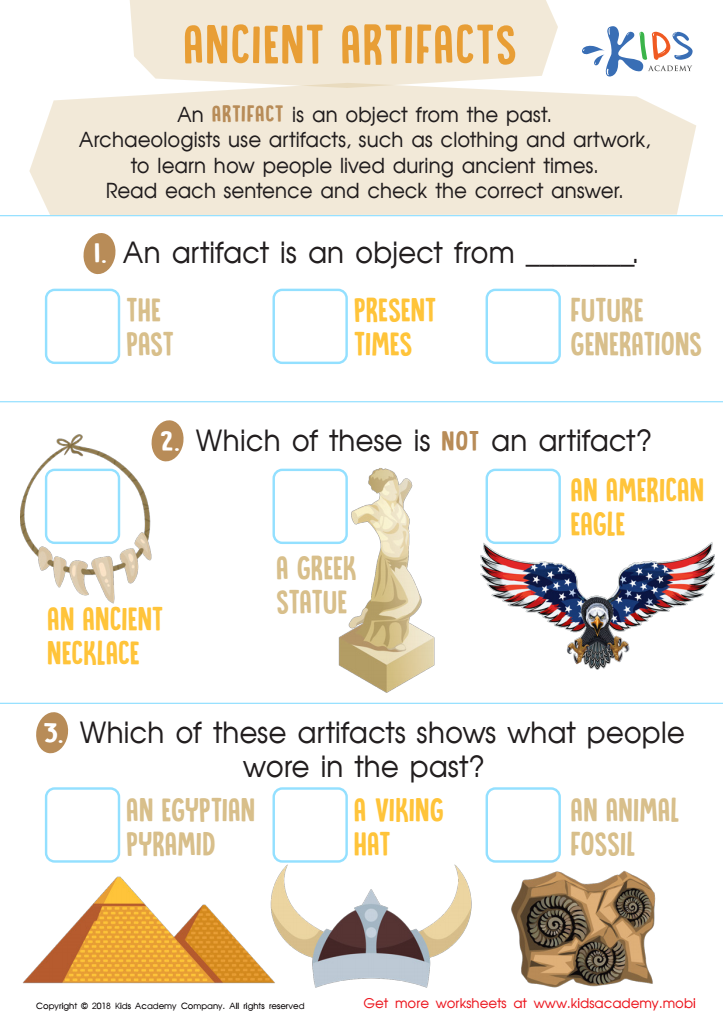
Ancient Artifacts Worksheet

Ancient Artifacts Worksheet

This free worksheet helps kids understand ancient artifacts, from statues to necklaces to fossils. They'll read comprehension questions and select answers from multiple choice options, with pictures to help them grasp the concept. It's a great way for children to learn about artifacts and what they may look like.
Ancient Artifacts Worksheet
Worksheet
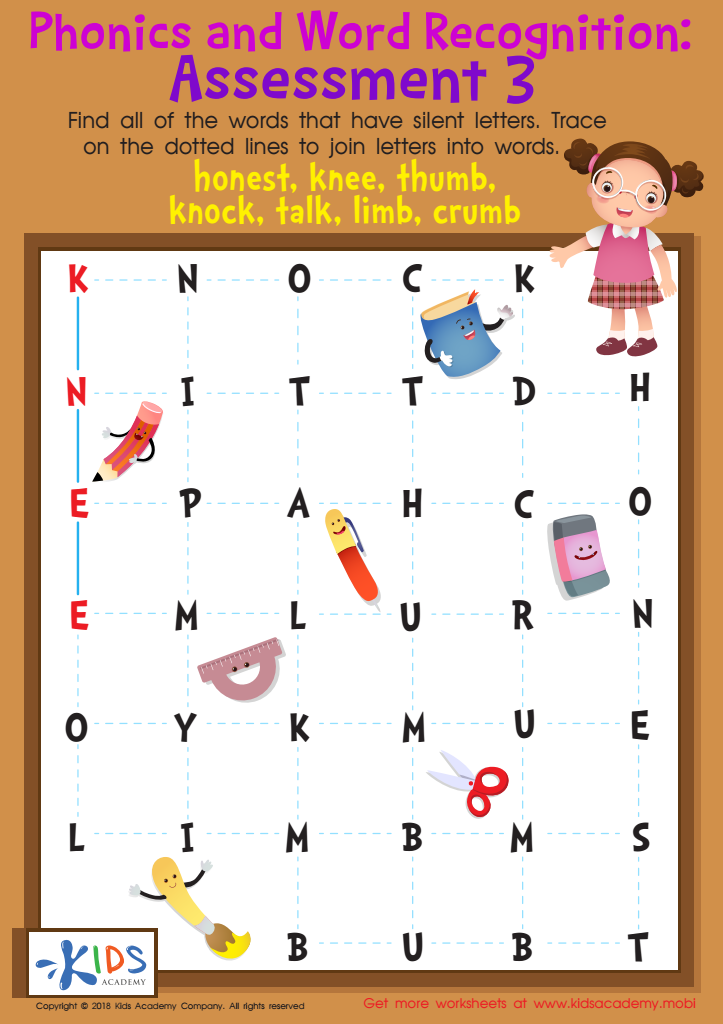
Phonics and Word Recognition: Assessment 3 Worksheet

Phonics and Word Recognition: Assessment 3 Worksheet

Silent letters can be tricky for kids learning to read and write. Show them how they work with words like 'knee' and 'dumb'. Then, challenge them to come up with their own. Give them a worksheet with silent letters and trace the lines to join the letters into words.
Phonics and Word Recognition: Assessment 3 Worksheet
Worksheet
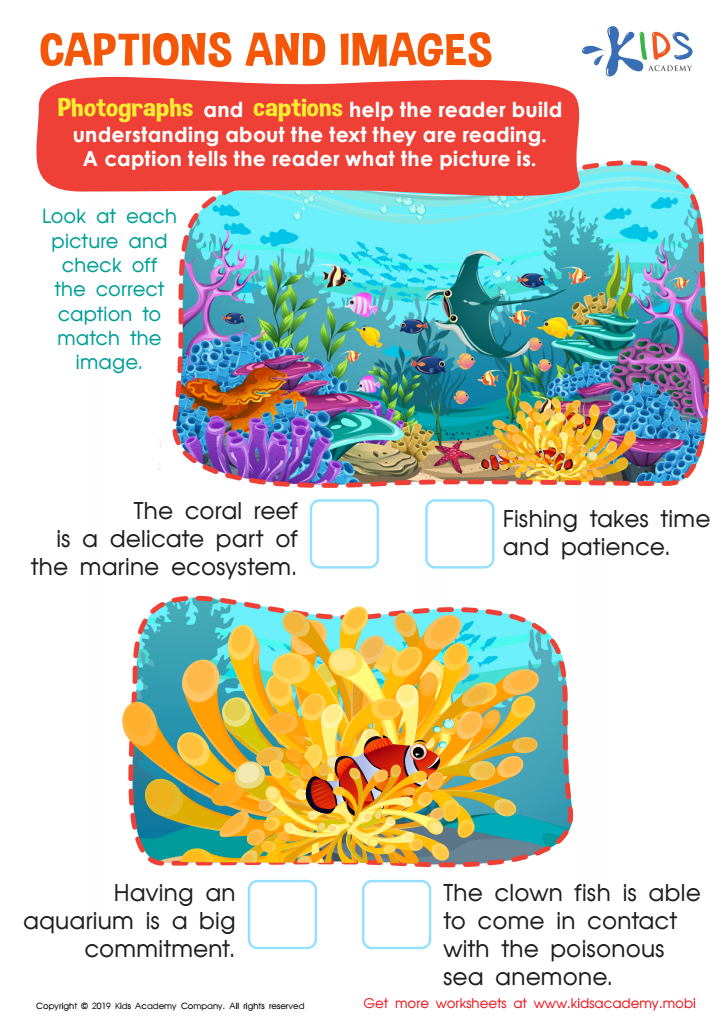
Captions and Images Worksheet

Captions and Images Worksheet

Pictures and captions can aid understanding. That's why many children's books have them. Have your kids look at the pictures in the worksheet, then help them match the right caption to each image. This will help them understand the story.
Captions and Images Worksheet
Worksheet
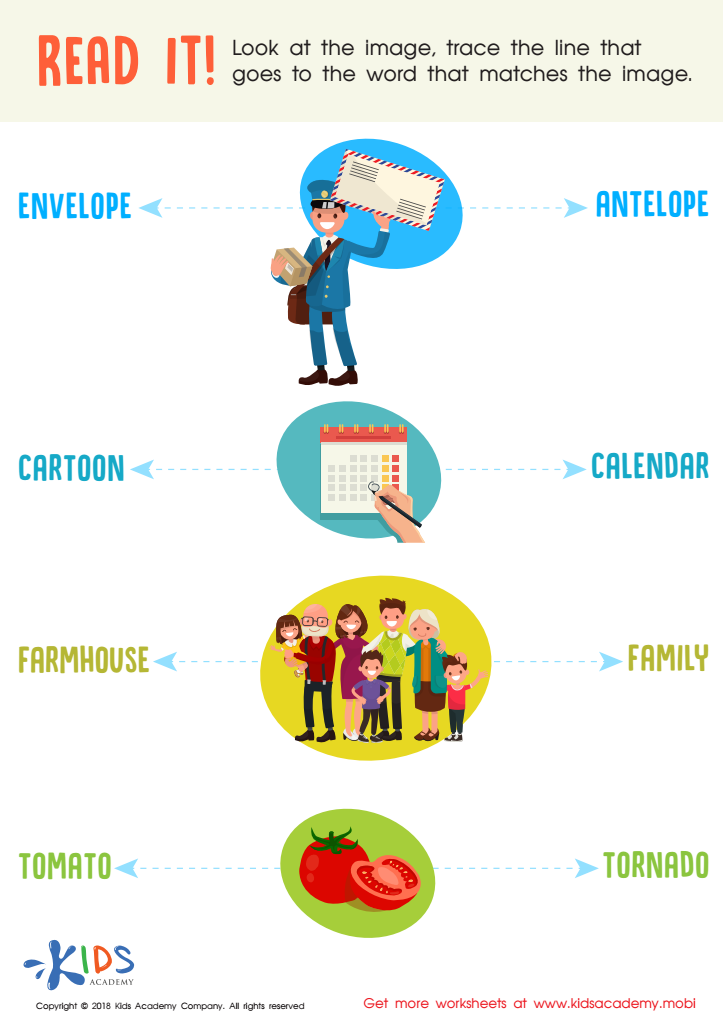
Read It! Worksheet
Read It! Worksheet

Read It! Worksheet

Point to each image on this worksheet, asking your child what it is. Read the 2 options then help your child trace the line to the correct word. It'll keep them engaged and provide visual stimulation.
Read It! Worksheet
Worksheet
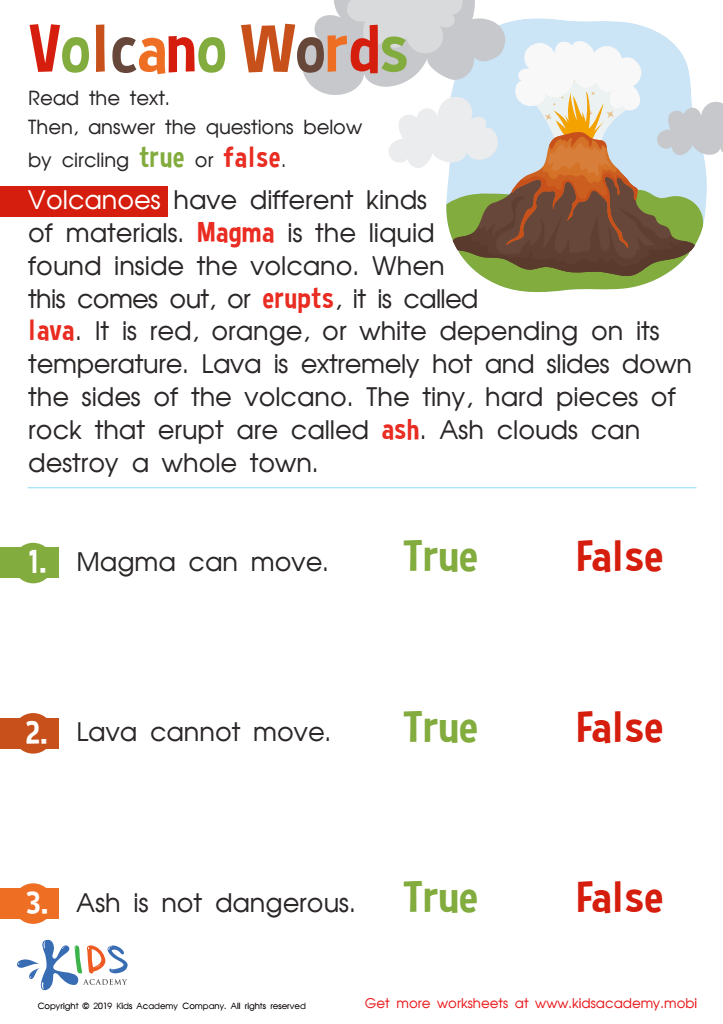
Volcano Words Worksheet

Volcano Words Worksheet

This worksheet helps kids focus and improve their reading comprehension skills. Start by reading a passage about volcanos and noting the bolded red words. Then answer true/false statements below, double-checking in the text if needed.
Volcano Words Worksheet
Worksheet
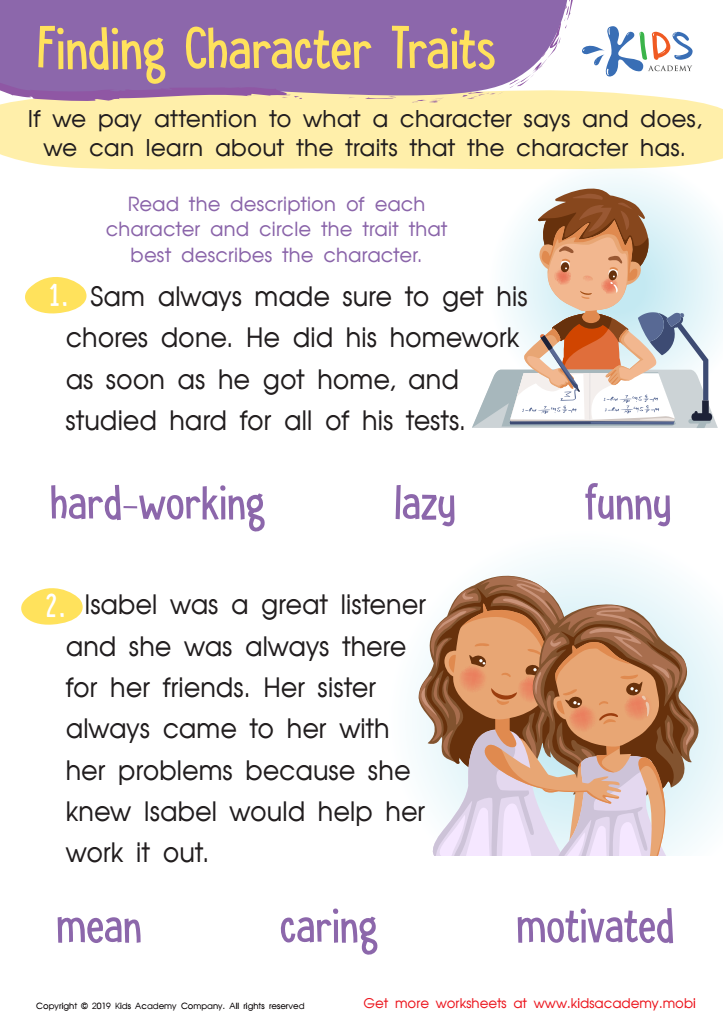
Finding Character Traits Worksheet


Finding Character Traits Worksheet

Before you start, make sure your kids know the difference between a character trait and a feeling. Traits are part of a character's entire personality and can be inferred from what they say and do in a story. Read the character descriptions on the worksheet and help your kids circle the best trait for each.
Finding Character Traits Worksheet

Worksheet


Vocabulary development in 9-year-olds is crucial for their overall academic success and cognitive growth. At this age, children transition from learning to read to reading to learn. A robust vocabulary enhances their ability to understand complex texts, engage in discussions, and express their thoughts clearly—skills that contribute significantly to their future learning experiences. Teachers and parents should care about vocabulary development as it fosters not only literacy skills, but also critical thinking and communication.

Moreover, a strong vocabulary is linked to better reading comprehension, which is vital across all subjects. Children with a well-developed vocabulary are more likely to participate actively in classroom discussions, ask thoughtful questions, and make meaningful connections to the material. This engagement boosts their confidence and motivation to learn.

Additionally, vocabulary skills open up broader learning opportunities. Exposure to diverse words enriches a child's knowledge base and cultural awareness. It prepares them for standardized assessments, which often emphasize vocabulary as a key component. Supporting vocabulary development through reading, conversations, and interactive activities helps create a solid foundation for a child's lifelong learning journey, ensuring they are well-equipped to succeed in school and beyond.