Phonics practice Normal Consonants Worksheets
5 filtered results
-
From - To
Enhance your child’s reading skills with our Phonics Practice Normal Consonants Worksheets! Designed for early learners, these engaging and interactive worksheets focus on foundational consonant sounds crucial for decoding words. Kids will enjoy various activities that reinforce phonics concepts, such as identifying consonants, matching sounds to images, and practicing letter formation. Our worksheets provide colorful visuals and clear instructions to make learning fun and effective. Perfect for home or classroom use, these resources help foster independence in reading. Give your child the tools to thrive in literacy with our thoughtfully crafted phonics worksheets tailored for young learners!
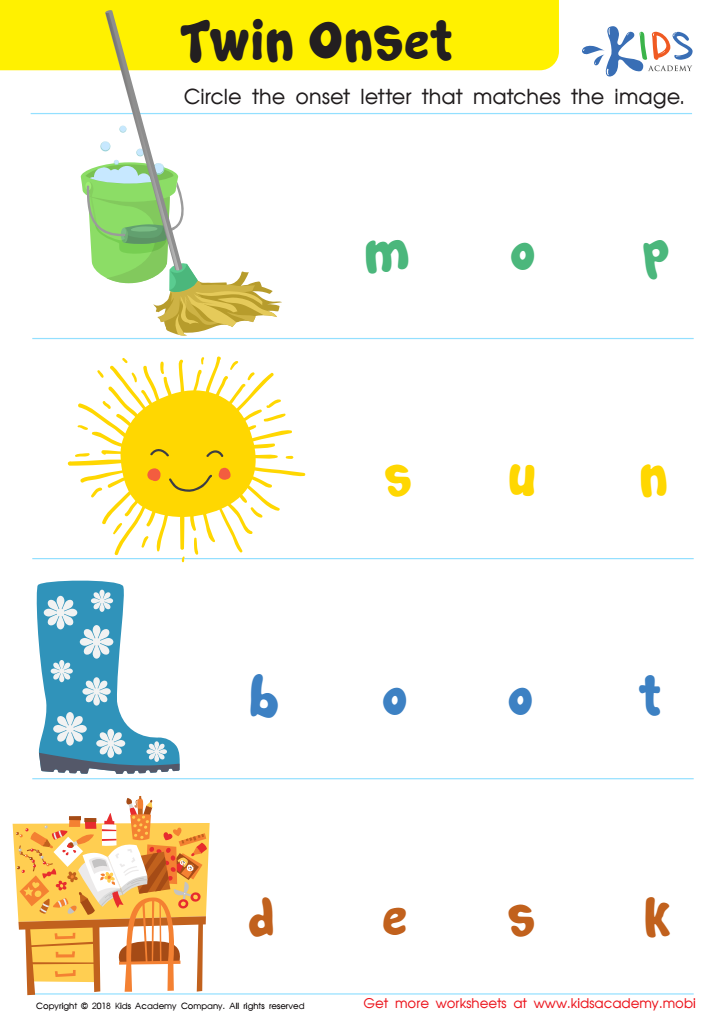
Twin Onset Worksheet
 Assign to My Students
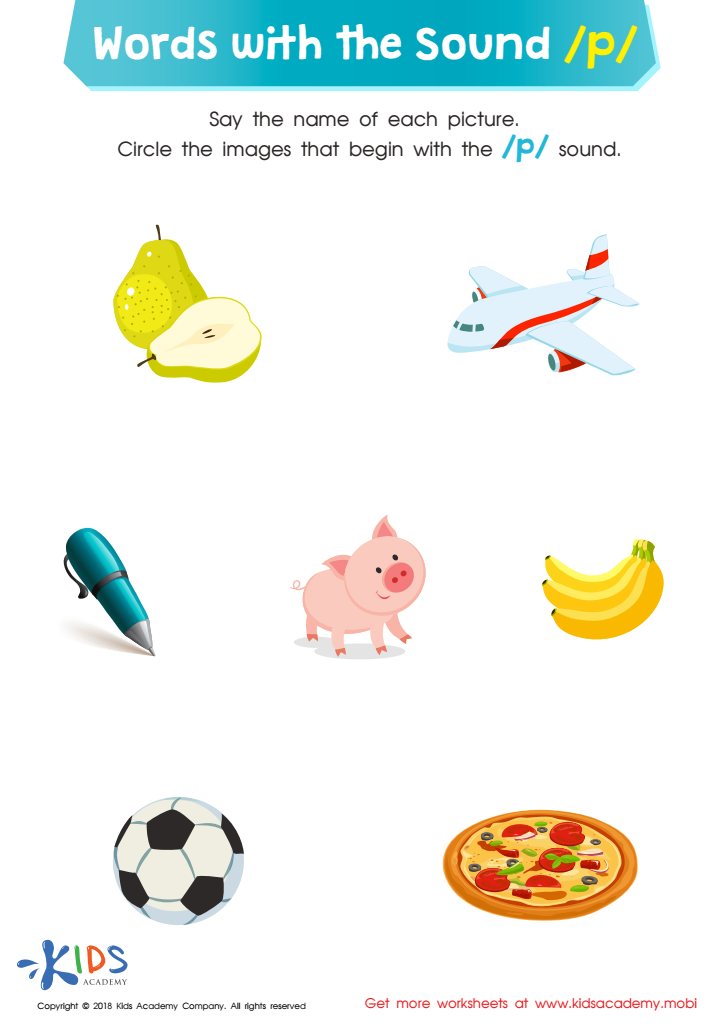
Words with sound p Reading Worksheet
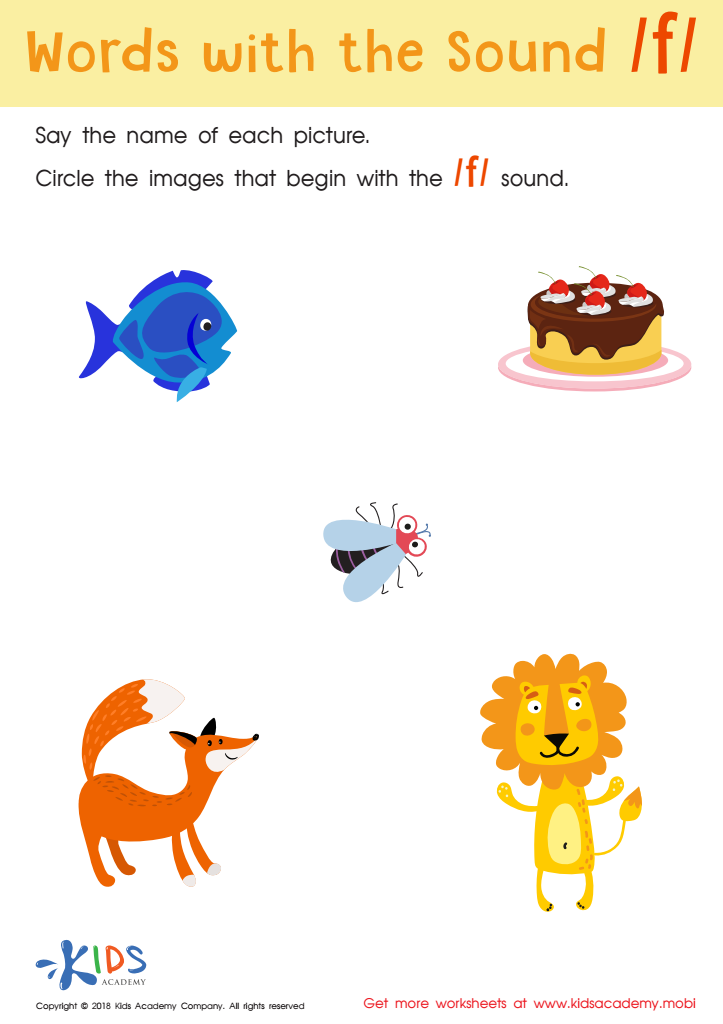
Words with sound f Reading Worksheet
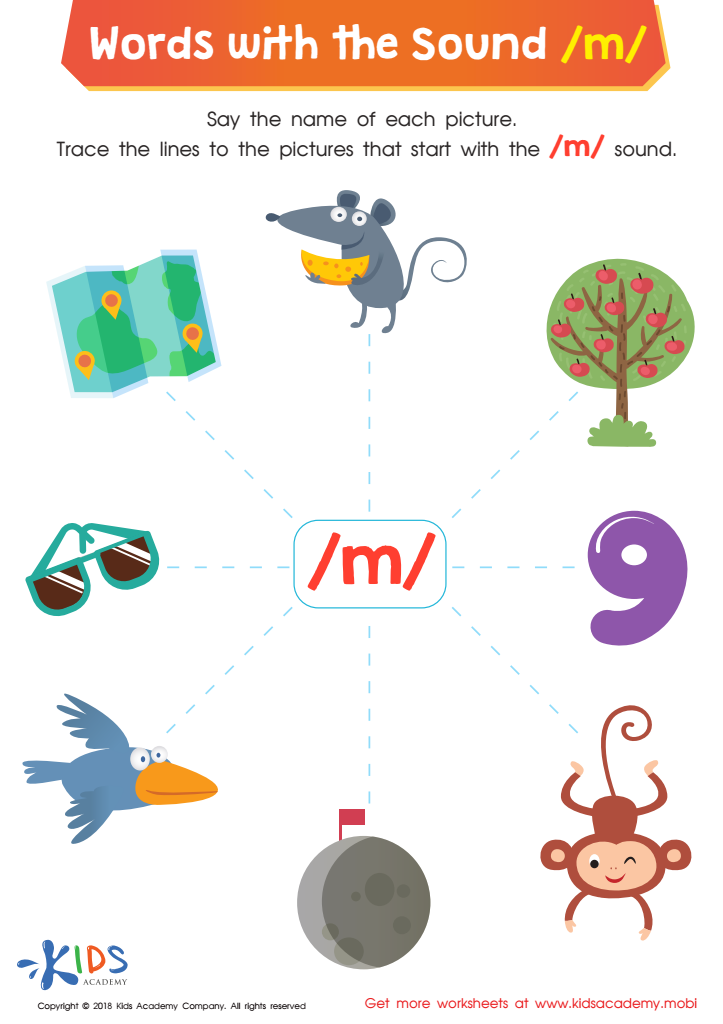
Words with Sound M Reading Worksheet
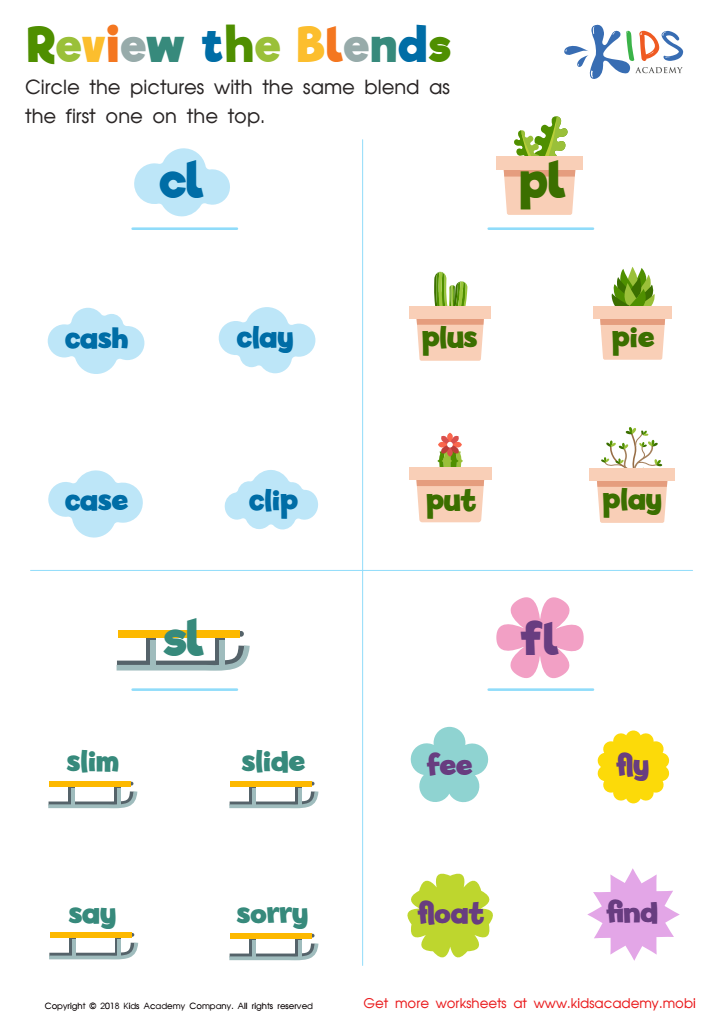
Review the Blends Worksheet



Phonics practice, particularly focusing on normal consonants, is essential for both parents and teachers in cultivating effective reading skills in early learners. Understanding consonants is foundational for decoding words. When children master the sounds and patterns associated with consonants, they gain the confidence to tackle reading independently.
Parents and teachers should care about this practice because it enhances phonemic awareness, a crucial skill for reading proficiency. By distinguishing various consonant sounds and blending them with vowels, students become adept at sounding out words, which fosters fluency and comprehension. This early literacy skill is vital for academic success across all subjects.
Moreover, phonics practice supports language development. It expands vocabulary, enabling children to express themselves better both verbally and in writing. Furthermore, a strong grounds in phonics can prevent future learning gaps, making it easier for students to adapt to more complex reading materials as they progress in their education.
Ultimately, consistent phonics practice involving normal consonants equips children with the tools needed for lifelong learning and communication. Investing time and resources in this area ensures that children are not just ready to read but excited about the possibilities that literacy can unlock.