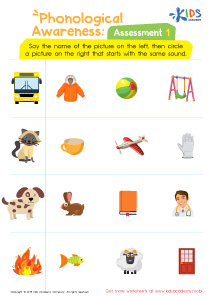
Word identification Normal Elementary Phonics Worksheets
3 filtered results
Difficulty Level
Grade
Age
-
From - To
Subject
Activity
Standards
Enhance your child's reading skills with our Word Identification Normal Elementary Phonics Worksheets! These engaging resources are designed to support young learners in mastering phonics and developing crucial word identification abilities. Each worksheet introduces phonetic concepts through fun exercises, helping students recognize and decode words effortlessly. Aligned with educational standards, our worksheets cater to different learning styles, promoting independent practice and boosting confidence. Perfect for at-home learning or classroom use, these worksheets are easy to print and provide endless opportunities for skill reinforcement. Unlock the joy of reading with our effective and enjoyable phonics worksheets that foster literacy in early education!
Favorites
With answer key
Interactive
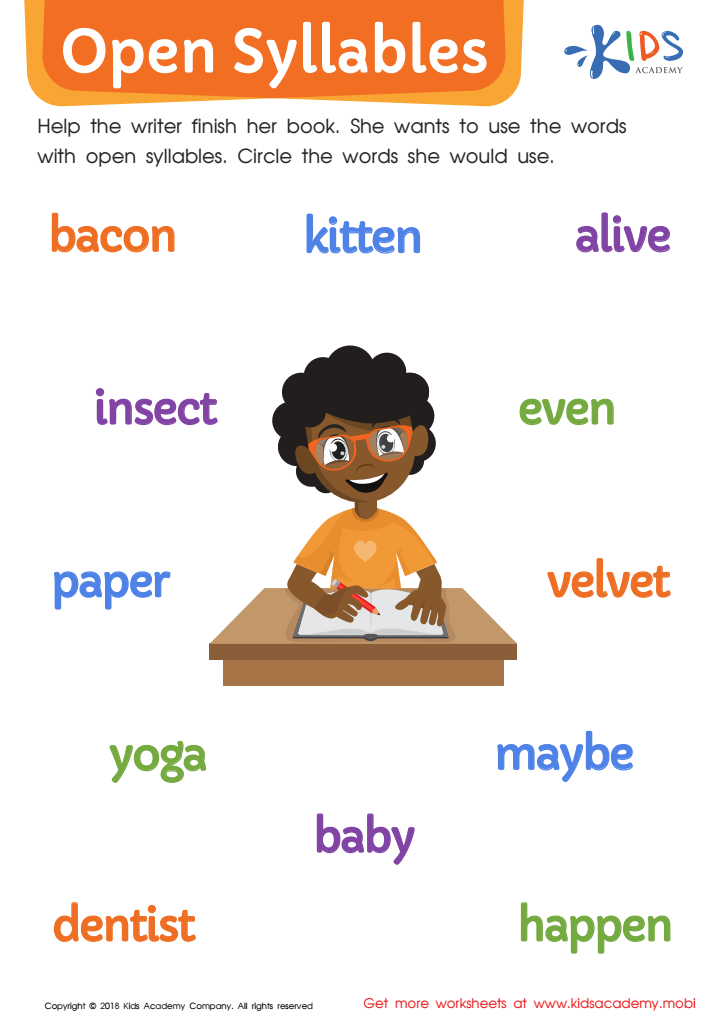
Open Syllables Worksheet
Before beginning this worksheet, make sure your child knows what open syllables are. If not, take time to teach them with examples. Then, help the writer finish her book by circling words with open syllables. She needs your child's help!
Open Syllables Worksheet
Worksheet
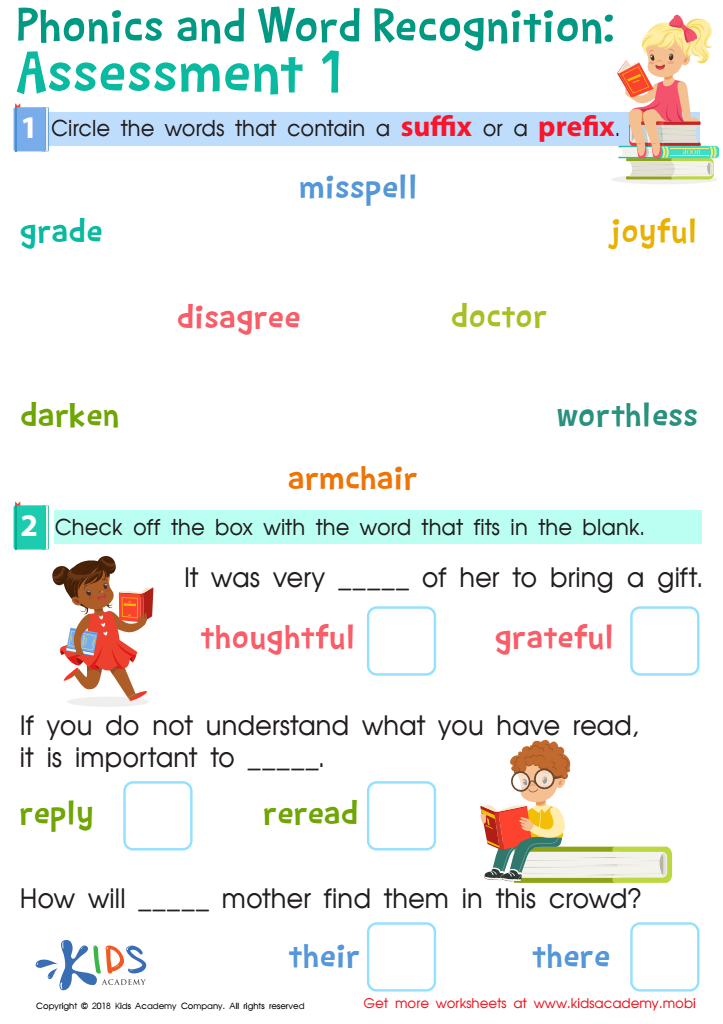
Phonics and Word Recognition: Assessment 1 Worksheet
Explain prefixes (words added to start of another word to give it a new meaning) and suffixes (added to end of word to change its meaning) to your kids with examples like 'unhappy' (prefix) and 'forgetful' (suffix). Now, help your child complete this worksheet, including circling words and checking boxes.
Phonics and Word Recognition: Assessment 1 Worksheet
Worksheet
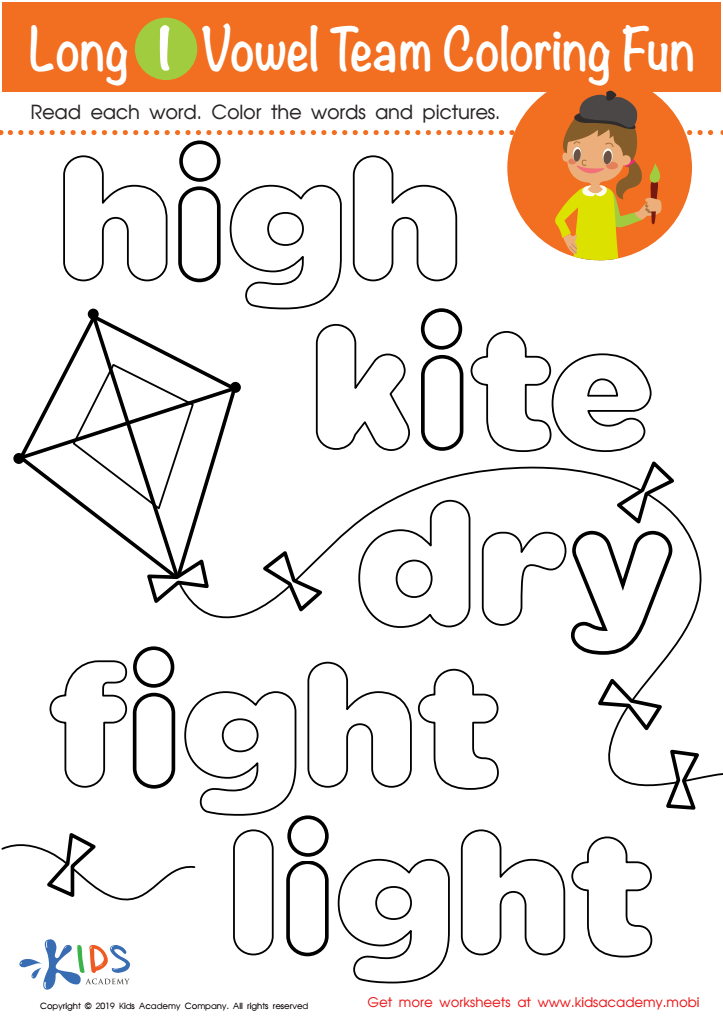
Long I Vowel Team Coloring Worksheet
This worksheet provides practice with letter combinations that make the long "i" sound while enhancing creativity and motor skills with a fun coloring activity. Unknowingly, new readers learn key phonics skills while having fun!
Download (PDF)
 Assign to My Students
Assign to My Students
Long I Vowel Team Coloring Worksheet
Worksheet
Join Kids Academy for Free
Who is primarily going to use this learning content?




Parents and teachers should prioritize Word Identification Normal Elementary Phonics as it is crucial for early literacy development. Mastering phonics helps children understand the relationship between sounds and their corresponding letters or groups of letters, enabling them to decode words effectively. This foundational skill is essential for reading fluency and comprehension, which are critical for overall academic success.
When students are proficient in phonics, they build confidence in their reading abilities, leading to a positive attitude towards learning. Additionally, phonics instruction supports the development of other language skills, such as spelling and writing, as children gain a better understanding of how sounds combine to form words.
Moreover, the advocacy for phonics instruction aligns with various educational research findings that highlight its effectiveness in helping students, especially those at risk of reading difficulties. It can level the playing field, ensuring that every child has the linguistic tools necessary for academic advancement.
Finally, by emphasizing phonics education, parents and teachers can actively engage in their children's learning journey. This collaboration fosters a supportive learning environment, encouraging lifelong reading habits that extend beyond the classroom, ultimately enriching children's lives and future opportunities.