
Letter-sound recognition Normal Alphabet Worksheets
4 filtered results
Difficulty Level
Grade
Age
-
From - To
Subject
Activity
Standards
Discover our engaging Letter-Sound Recognition Normal Alphabet Worksheets designed to enhance early literacy skills for young learners. Perfect for preschool and kindergarten kids, these worksheets provide fun exercises that help children connect letters with their corresponding sounds. By incorporating colorful visuals and interactive activities, children stay motivated while they practice essential phonics skills. Each worksheet is tailored to promote letter recognition and sound identification, supporting the foundation for solid reading capabilities. Whether in the classroom or at home, our resources are ideal for cultivating early literacy in a playful and effective way. Dive in and witness your child's confidence in reading grow!
Favorites
With answer key
Interactive
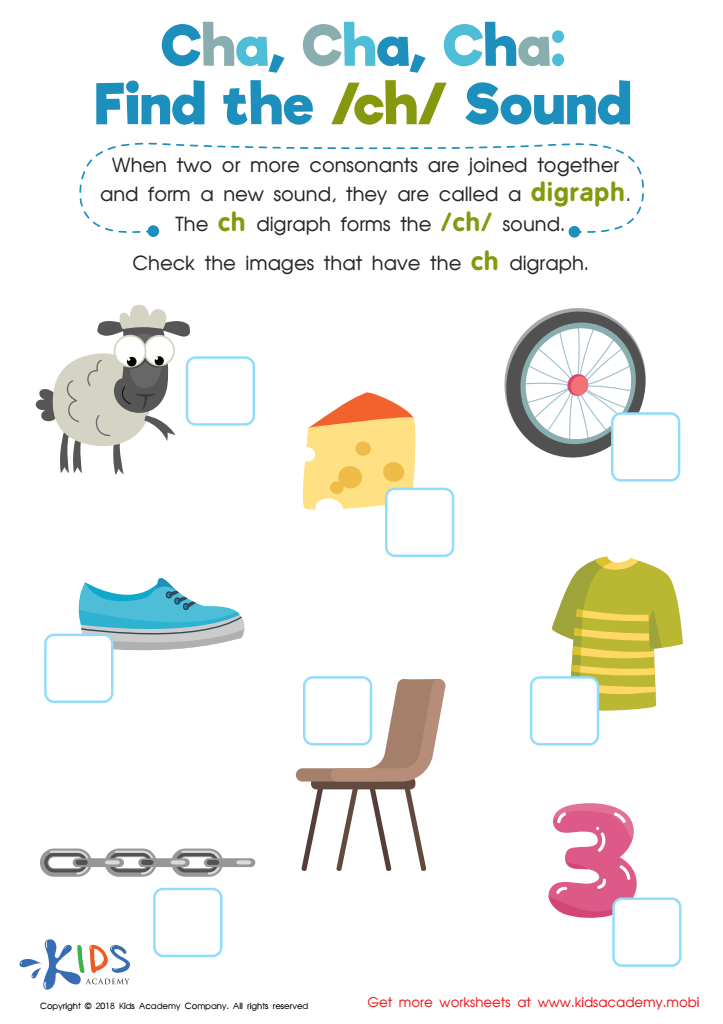
Cha, Cha, Cha: Find the /Ch/ Sound Worksheet
Have your students identify the objects in the images and if they struggle, help them check for the /ch/ digraph. This digraph forms a new sound when two or more consonants are combined, so it can be helpful to point it out to them in the colourful printout.
 Assign to My Students
Cha, Cha, Cha: Find the /Ch/ Sound Worksheet
Worksheet
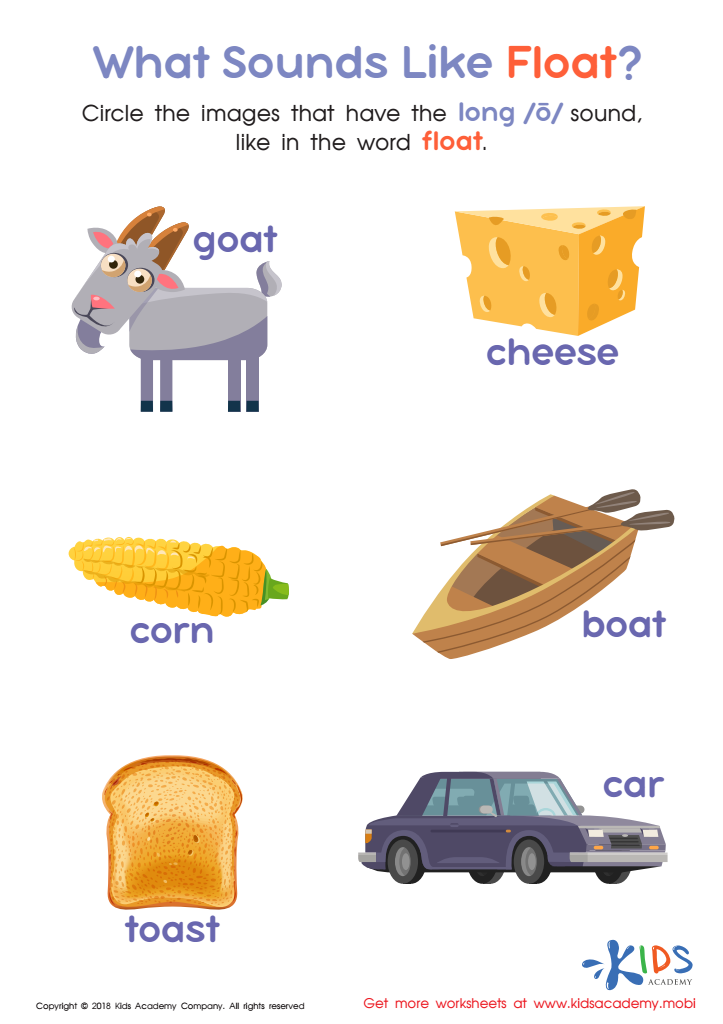
What Sounds Like Float? Worksheet
Help your kids practice the long /o/ sound with words such as 'boat', 'goat' and 'float'. Ask them to identify and circle the images in the worksheet that have the same sound. Award bonus points if they come up with more words with 'oa' spelling!
What Sounds Like Float? Worksheet
Worksheet
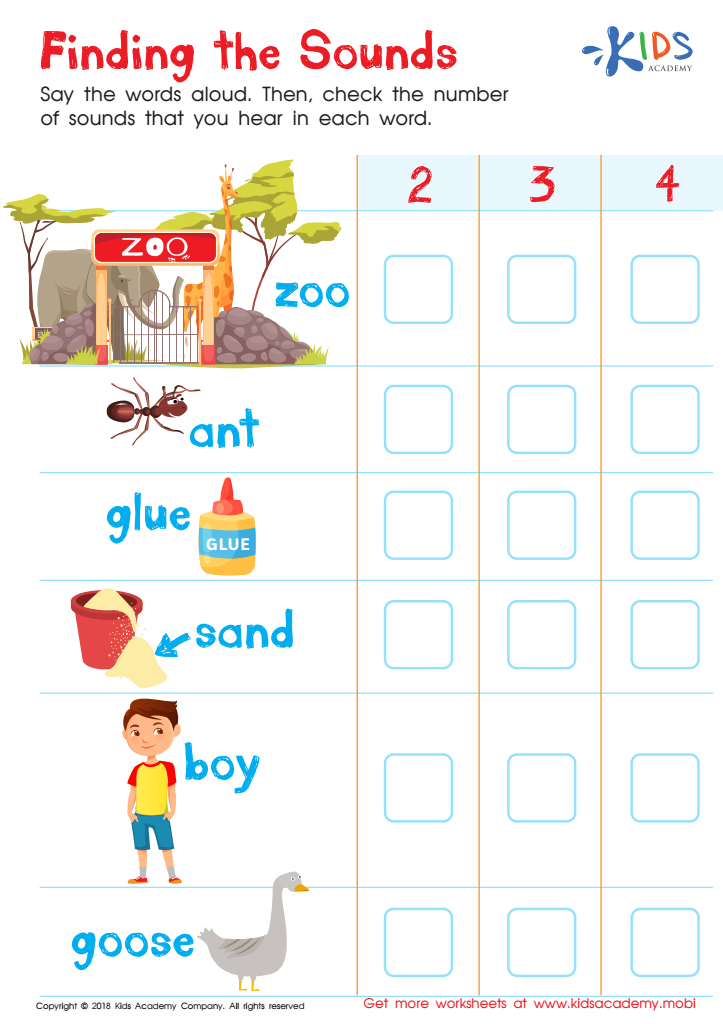
Finding the Sounds Worksheet
This free colorful worksheet assists children in learning words and breaking them down into sounds. It boosts auditory discrimination, phonological awareness and fine motor skills. Picture clues help them read confidently, and they can check the appropriate boxes to practice their reading skills.
Finding the Sounds Worksheet
Worksheet
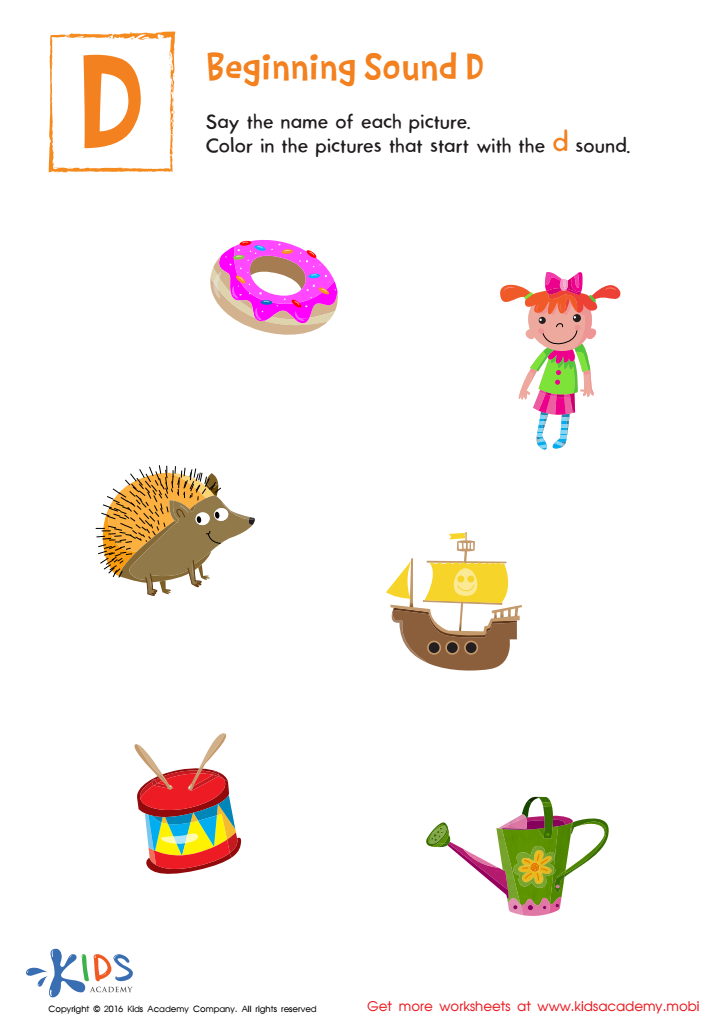
Beginning Sound D Worksheet
Reinforce phonics with this vibrant beginning sound d worksheet! Pictures help kids identify words beginning with 'd' and develop early reading skills. Sounding out each word increases literacy!
Beginning Sound D Worksheet
Worksheet
Join Kids Academy for Free
Who is primarily going to use this learning content?







Letter-sound recognition is a fundamental skill for early literacy development, making it essential for parents and teachers to prioritize this aspect of learning. When children understand the sounds associated with each letter of the alphabet, they lay the groundwork for reading and writing. This recognition enables them to decode words, facilitating the transition from sounding out letters to fluent reading.
Moreover, letter-sound recognition boosts a child's confidence and enthusiasm for reading. With a strong foundation, children are more likely to enjoy books and stories, promoting a lifelong love of reading. This love is crucial in an age where literacy skills are indispensable for academic success across all subjects.
Additionally, fostering this skill early helps identify potential challenges in literacy development. When parents and teachers are attuned to each child's progress, they can intervene promptly, ensuring that no child falls behind. Effective communication, engagement, and proactive strategies reinforce letter-sound connections in fun and interactive ways, enhancing children's learning experiences.
In summary, prioritizing letter-sound recognition creates a solid literacy foundation, increases confidence, cultivates a love for reading, and allows educators and parents to support lifelong learning effectively.







