Enhance your child's reading skills with our Phonics Recognition Normal Phonics Worksheets! Designed for early learners, these worksheets focus on helping children effectively recognize and sound out letters and their corresponding sounds. Engaging activities involve interactive phonics games, matching exercises, and colorful visuals that make learning fun. Our carefully crafted exercises cater to different skill levels, empowering children to build confidence as they progress. Perfect for classroom use or at-home learning, these worksheets support educators and parents in fostering essential literacy skills. Start your child's phonics journey today and set the foundation for lifelong reading success!

Check out this FREE Normal Trial Lesson on Phonics!

Letter Sound Relationship J-K

Favorites
With answer key
Interactive
  • Phonics recognition
  • Phonics
  • Normal
Letter K Sounds Worksheet

Letter K Sounds Worksheet

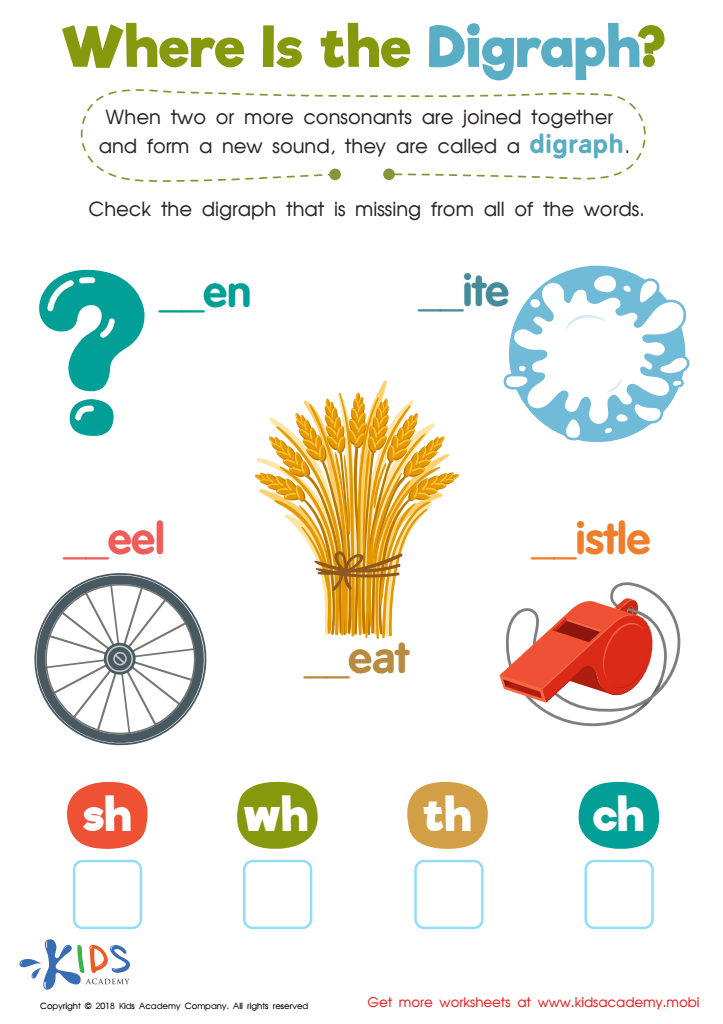
Help your child practice phonics with Kids Academy's illustrated worksheet! Have them look at the pictures, read the words and say them aloud. Only circle those that start with a hard 'K' sound. Perfect for preschoolers and kindergarteners! Plus, they'll learn the silent K used in a few words.
Letter K Sounds Worksheet
Worksheet
Letter Sounds: J Printable Worksheet

Letter Sounds: J Printable Worksheet

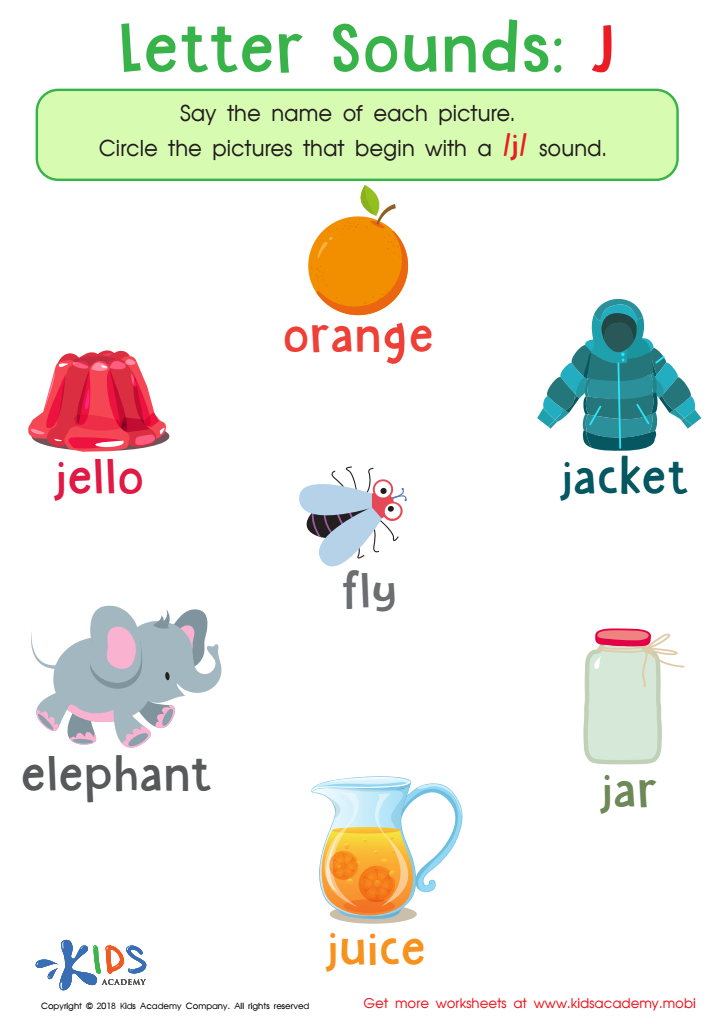
Preschoolers can learn to identify letter sounds by focusing on beginning sounds. This cute and colorful worksheet reviews the hard “j” sound. Kids can point it out by naming the words and circling only those starting with the “j” sound. Read the text out loud and listen closely!
Letter Sounds: J Printable Worksheet
Worksheet
Where Is the Digraph? Worksheet

Where Is the Digraph? Worksheet

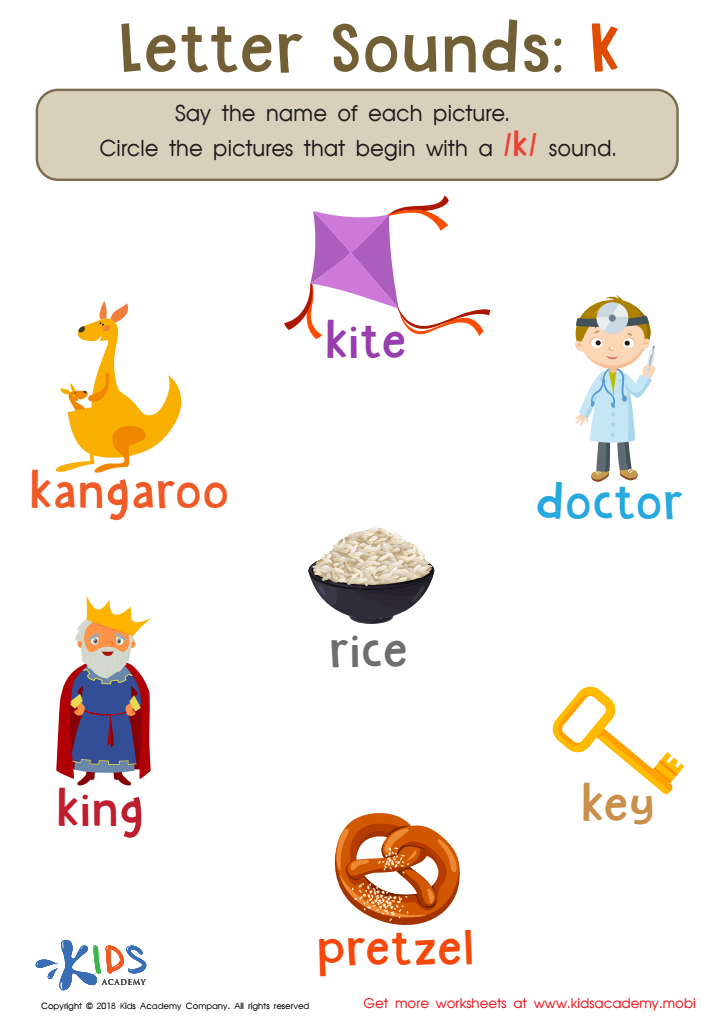
Teach your child about digraphs - two or more consonants that form one sound, like /wh/, /sh/, and /ch/. Show them words with these sounds and use this worksheet to help. Ask them which digraph is missing from the words and point out the pictures. 80 words.
Where Is the Digraph? Worksheet
Worksheet
Listen to the Sounds Worksheet

Listen to the Sounds Worksheet

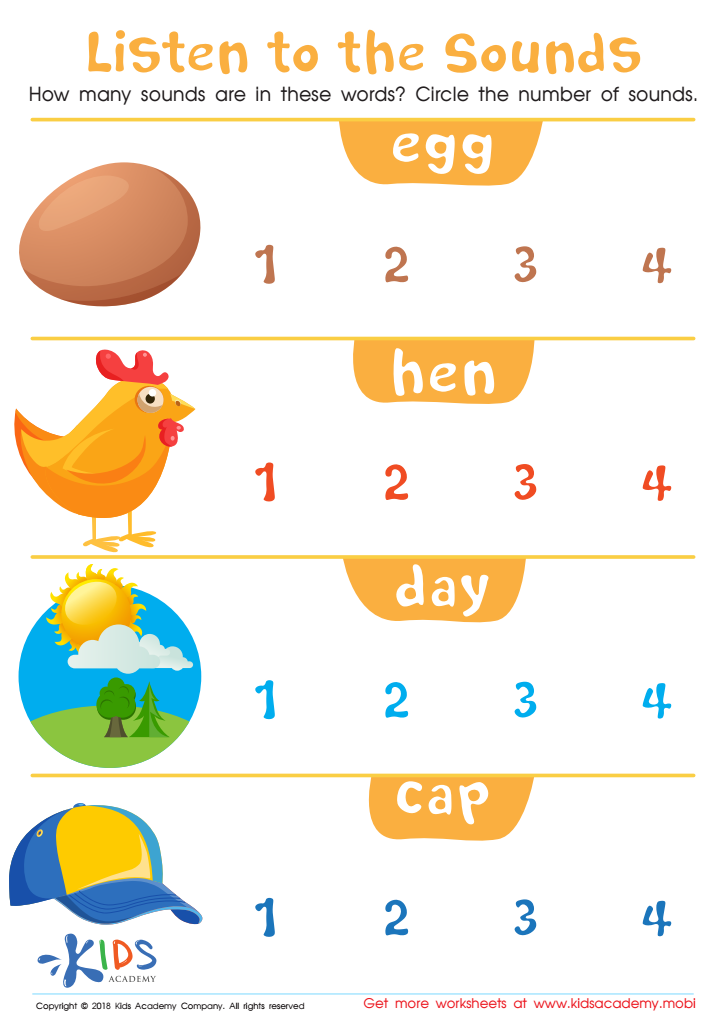
This worksheet builds emerging readers' skills in using sounds for reading and spelling. It helps strengthen auditory processing by having them count the sounds in each word, then trace the corresponding number. Fun and cheerful!
Listen to the Sounds Worksheet
Worksheet
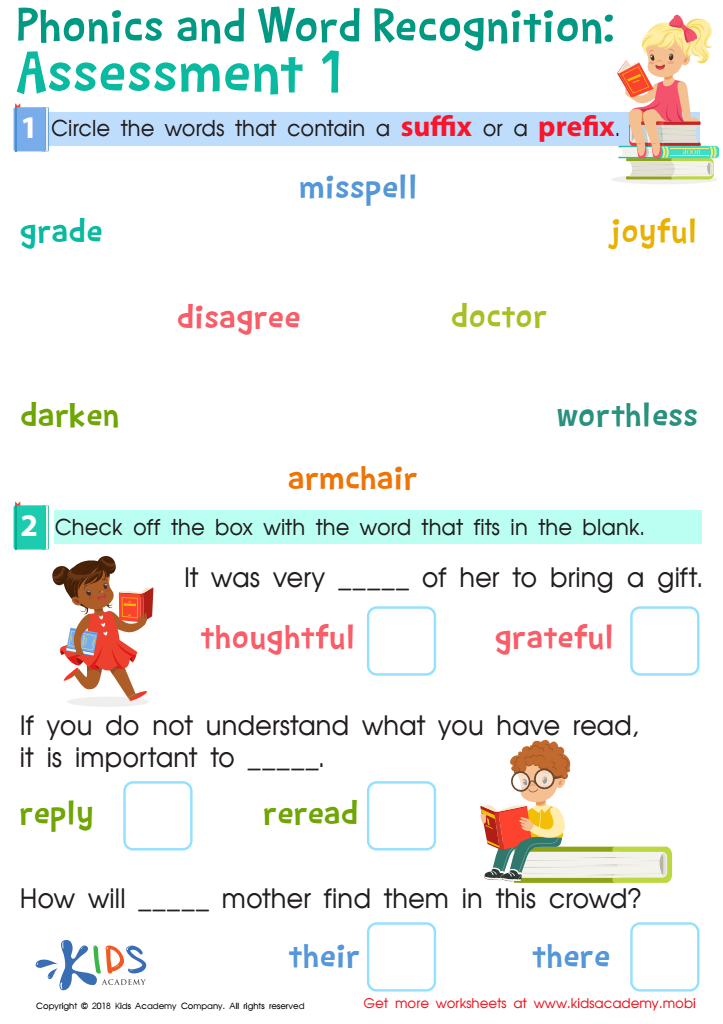
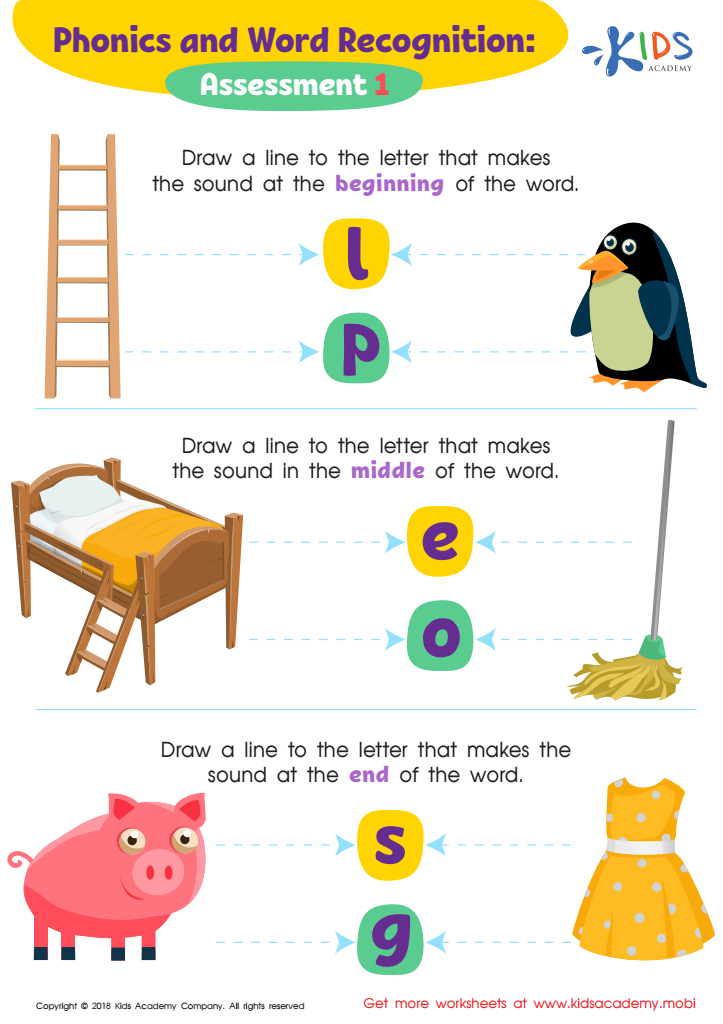
Phonics and Word Recognition: Assessment 1 Worksheet

Phonics and Word Recognition: Assessment 1 Worksheet

Explain prefixes (words added to start of another word to give it a new meaning) and suffixes (added to end of word to change its meaning) to your kids with examples like 'unhappy' (prefix) and 'forgetful' (suffix). Now, help your child complete this worksheet, including circling words and checking boxes.
Phonics and Word Recognition: Assessment 1 Worksheet
Worksheet
Matching Consonant Sounds - Part 3 Worksheet Preview

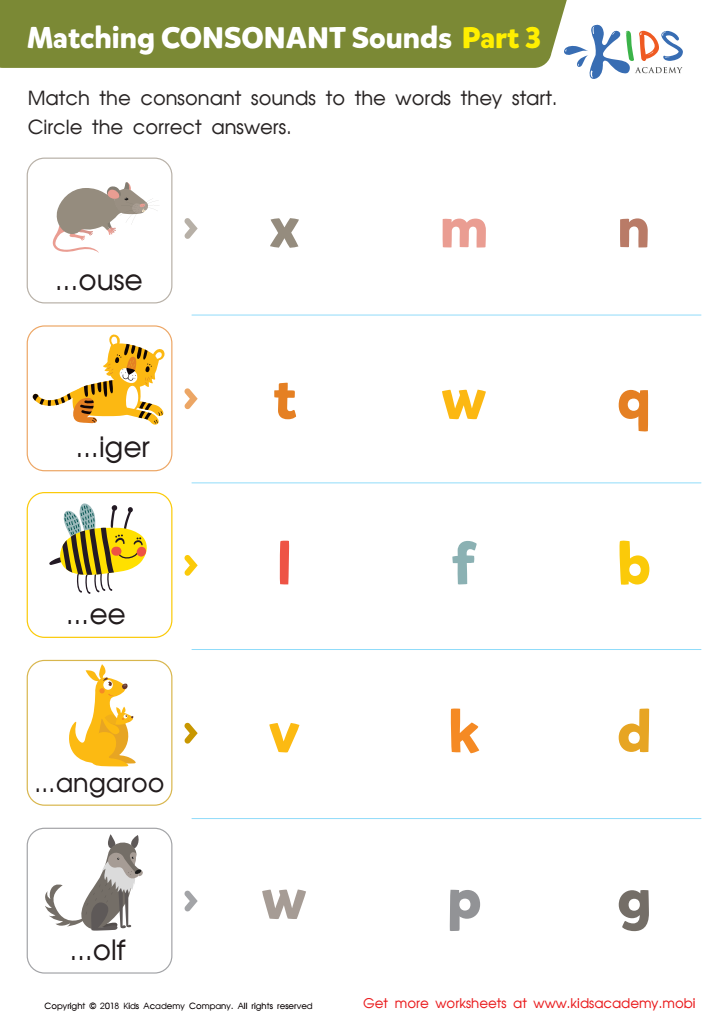
Matching Consonant Sounds: Part 3 Worksheet
Help your early learner match consonant sounds to words with this fun worksheet! Have them name the pictures and try out each letter in the corresponding column. When they hear the sound that matches, circle it. Have them write the letter in the box to complete the word. Work their way down the page until the critters' names all match with consonants!
Matching Consonant Sounds: Part 3 Worksheet
Worksheet
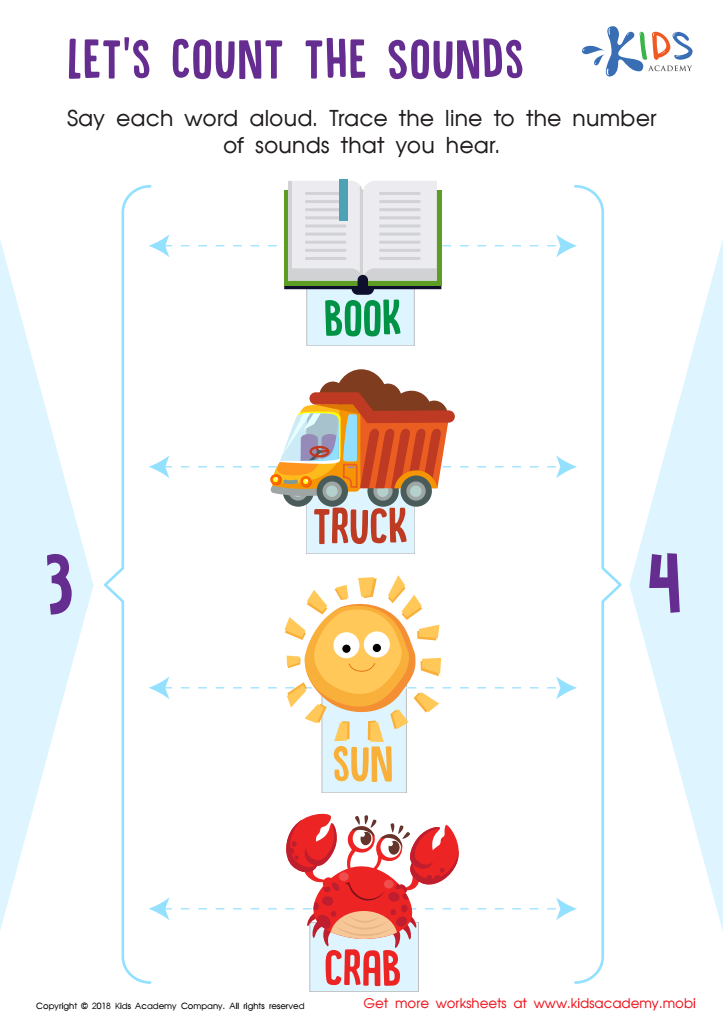
Let's Count the Sounds Worksheet

Let's Count the Sounds Worksheet

This bright and cheery traceable worksheet encourages children to practice auditory discrimination and phonological awareness. Using picture clues, they read each word and trace the line that represents the number of sounds heard. This builds decoding skills and helps them become successful readers.
Let's Count the Sounds Worksheet
Worksheet
Matching Consonant Sounds - Part 2 Worksheet Preview

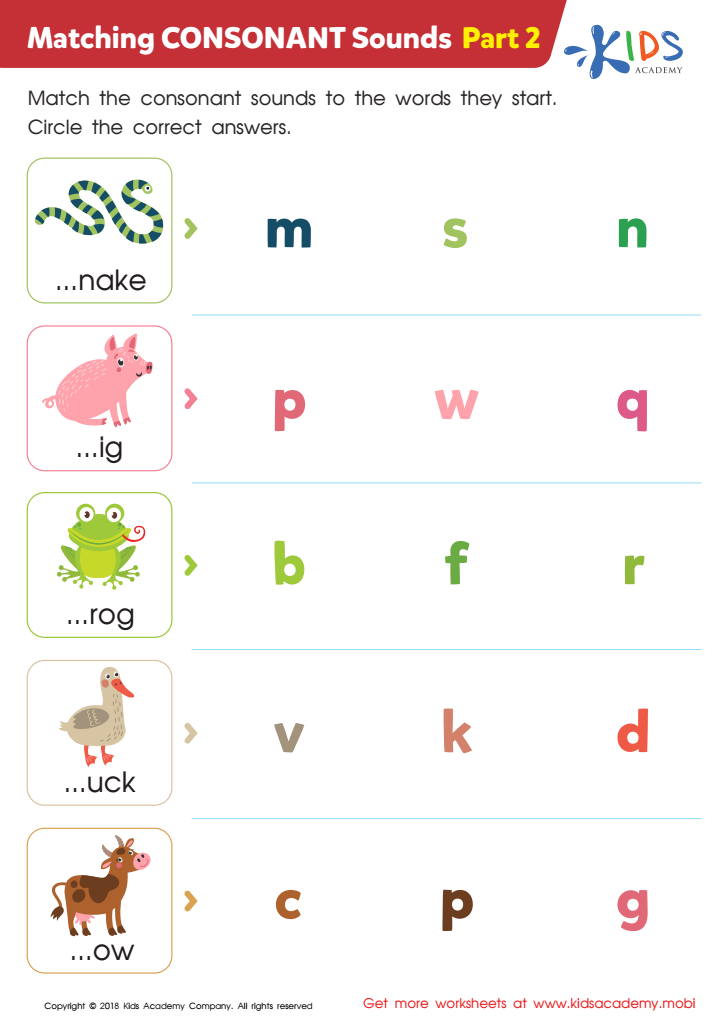
Matching Consonant Sounds: Part 2 Worksheet
Look at the picture, say the word and match the consonant sound with the letter. Coach your child to name the animal and complete the word. For extra challenge, write the missing letter in the box! This PDF worksheet helps kids learn to read words with familiar animal pictures.
Matching Consonant Sounds: Part 2 Worksheet
Worksheet
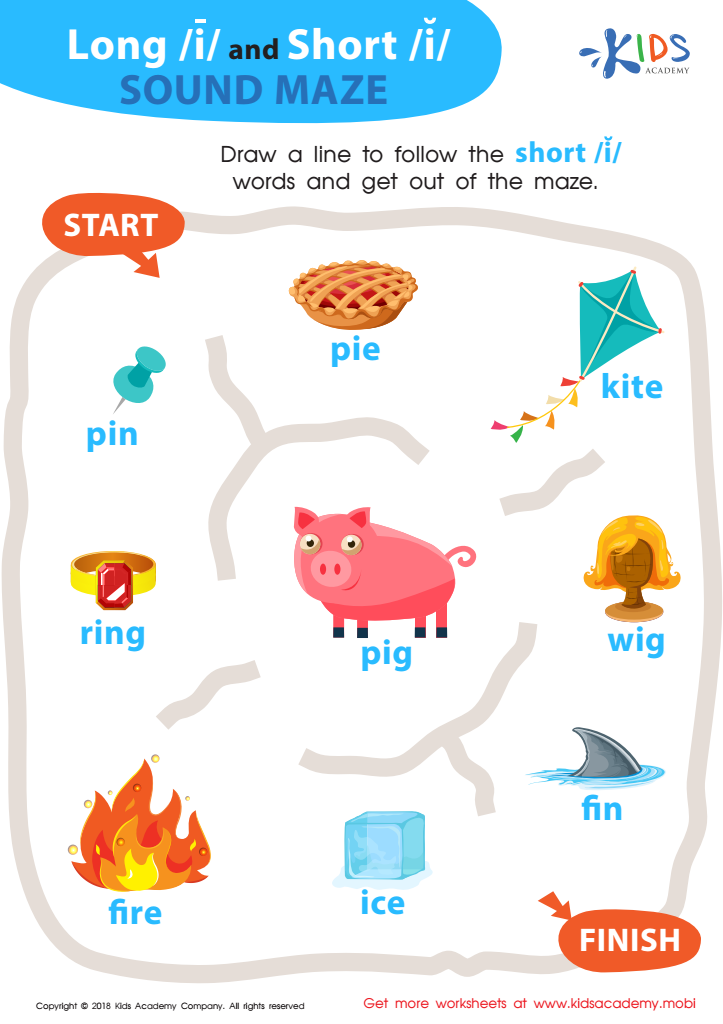
Reading: Long I and Short I Sound Maze Worksheet

Reading: Long I and Short I Sound Maze Worksheet

Question your students if the worksheet is entertaining. They may respond negatively! Nonetheless, this activity will bring satisfaction while learning the distinction between a long and short I sound. Students read the words in the maze and only follow the words with the short I sound to finish the exercise. Grasping the difference between long and short vowels is demanding, but this worksheet helps students understand this reading skill.
Reading: Long I and Short I Sound Maze Worksheet
Worksheet
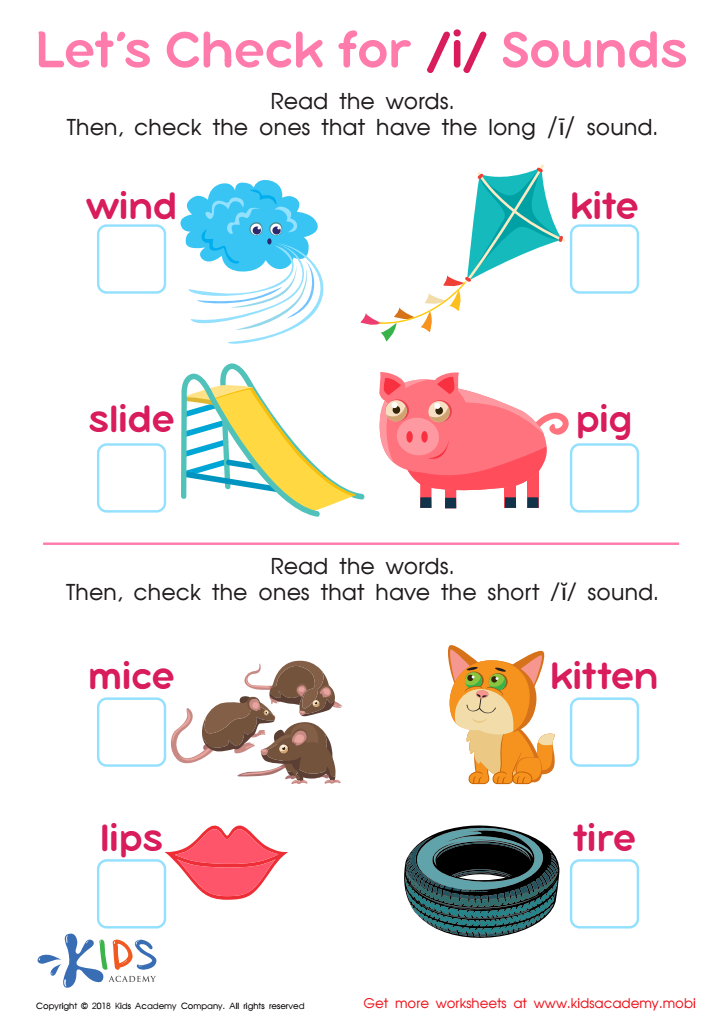
Let's Check for «i» Sounds Worksheet

Let's Check for «i» Sounds Worksheet

This fun worksheet with pictures boosts phonics skills - differentiating between long «ī» and short «i» sounds in 1- and 2-syllable words. Kids use picture clues to read words, then check off the correct ones. It's a great way for new readers to practice early reading skills and find success on their own.
Let's Check for «i» Sounds Worksheet
Worksheet
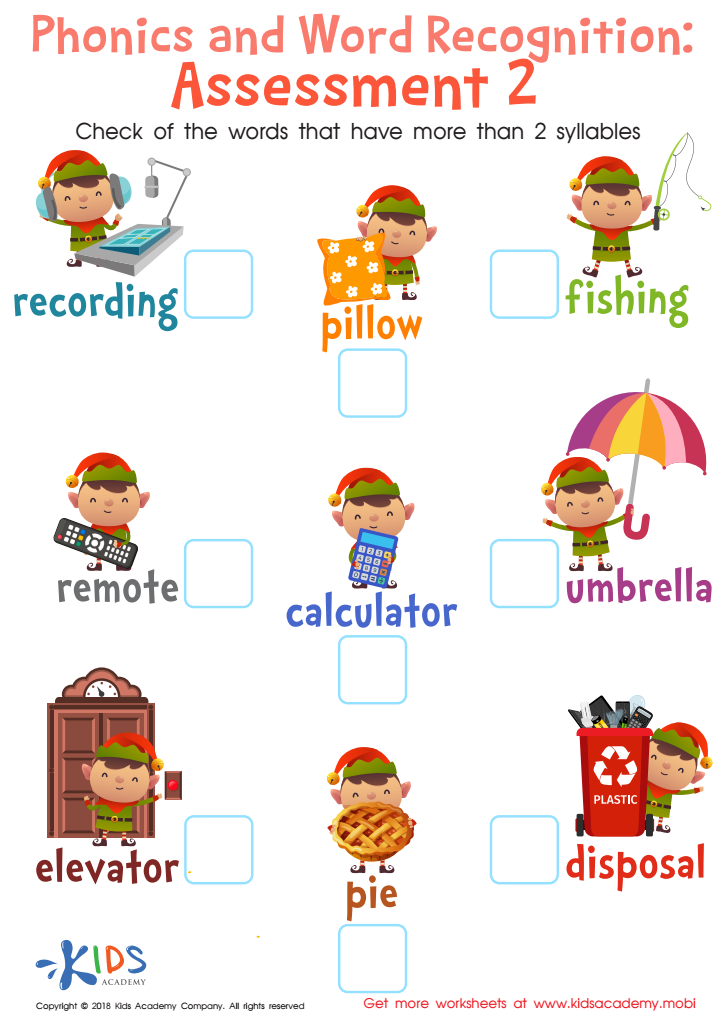
Phonics and Word Recognition: Assessment 2 Worksheet

Phonics and Word Recognition: Assessment 2 Worksheet

Help your kids learn proper pronunciation by counting syllables. Most words they'll encounter have 1-3 syllables, making them simple to say. Have them repeat the words in your worksheet after you. Focus on longer words with more than two syllables.
Phonics and Word Recognition: Assessment 2 Worksheet
Worksheet
Phonics and Word Recognition: Assessment 1 ELA Worksheet

Phonics and Word Recognition: Assessment 1 ELA Worksheet

This fun worksheet tests your child's sound recognition skills for each part of a word. Ask your child to name each image and trace the line to match it with the corresponding letter. Listen for beginning sounds on 1st, middle sounds on 2nd, and ending sounds on 3rd. Encourage learning with this colorful and interactive activity!
Phonics and Word Recognition: Assessment 1 ELA Worksheet
Worksheet
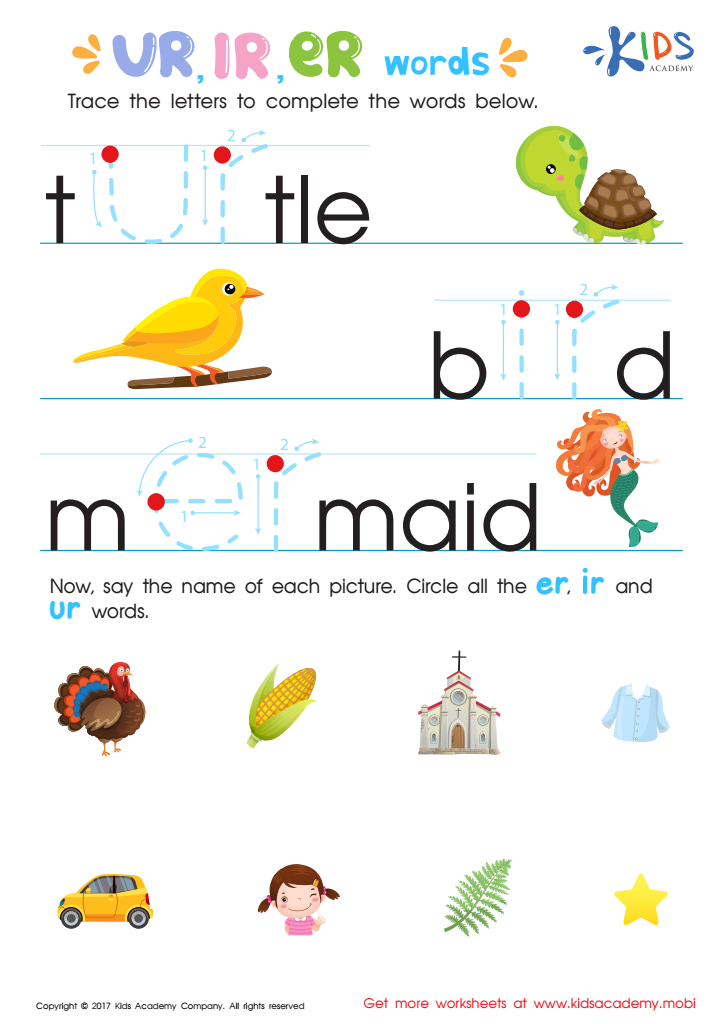
Ir ur er words worksheet

IR UR ER Words Worksheet

Trouble spelling words with the same initial vowel sound? Our worksheet is here to help! With its exercises to help your child learn to read and spell turtle, bird, and mermaid, it'll make differentiating these tricky digraphs a snap.
IR UR ER Words Worksheet
Worksheet


Phonics recognition is a foundational skill in reading that significantly impacts a child's literacy development. Parents and teachers should prioritize phonics because it equips young learners with the ability to decode words, facilitating the transition from spoken language to written text. Understanding the relationship between letters and sounds allows children to read with greater fluency, ultimately boosting their confidence in literacy.

By focusing on normal phonics, educators can provide structured instruction that systematically teaches letter-sound relationships. This approach helps children recognize patterns in language, enabling them to tackle unfamiliar texts more easily. Phonics also supports spelling, as learners begin to connect sounds with corresponding letters, fostering a well-rounded understanding of language.

Moreover, strong phonics skills correlate with improved comprehension. When children can decode words effectively, they can focus on grasping the meaning of sentences and stories. This aids in overall academic achievement across subjects.

Involvement from parents reinforces phonics learning through home reading practices, further enhancing children's progress. By emphasizing phonics recognition, parents and teachers cultivate a love for reading and set the stage for lifelong literacy skills, laying the groundwork for students' future academic success.