Word identification Normal Phonics Worksheets
6 filtered results
-
From - To
Discover our "Word Identification Normal Phonics Worksheets" designed to enhance early literacy skills! These engaging worksheets provide young learners with structured activities that focus on recognizing and identifying words connected to phonics principles. Each worksheet fosters critical thinking and phonemic awareness, helping students connect sounds to letters while expanding their vocabulary. Our easily downloadable resources are perfect for teachers and parents looking to reinforce reading skills in a fun and interactive way. With varied exercises, these worksheets pave the way for confidence and competence in reading, making them an essential tool in any early education curriculum. Empower your child’s learning journey today!
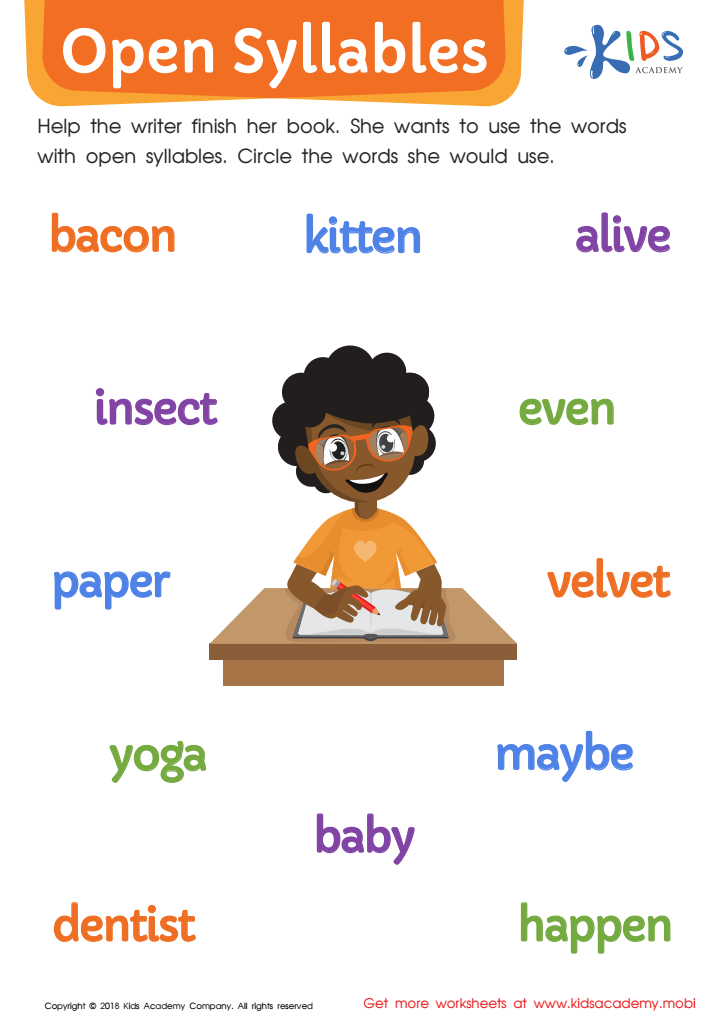
Open Syllables Worksheet
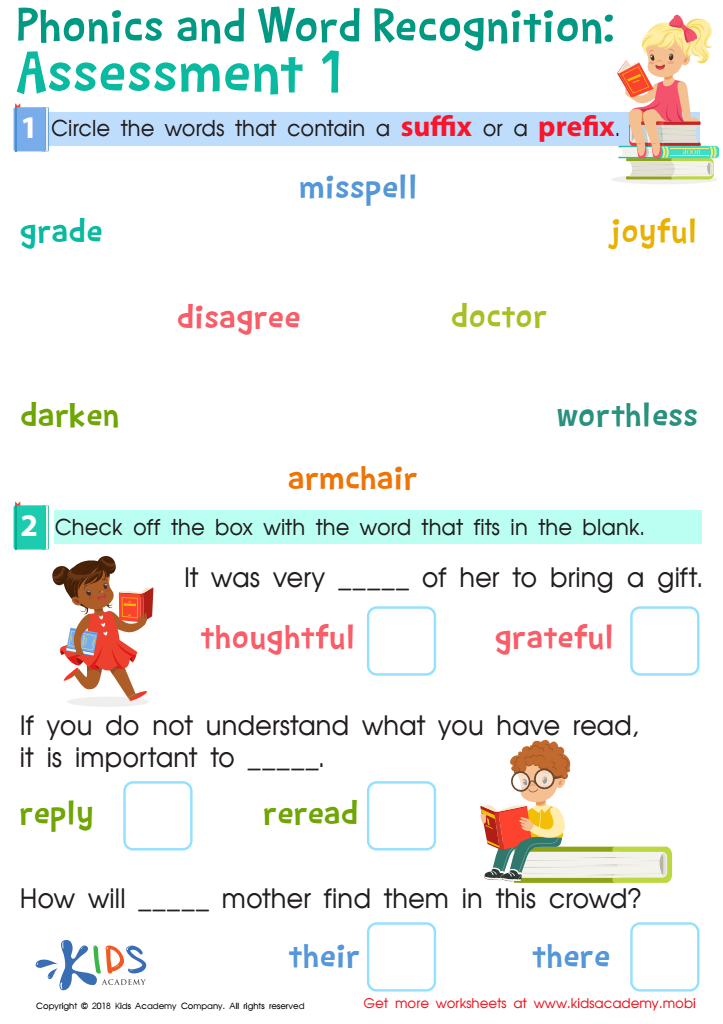
Phonics and Word Recognition: Assessment 1 Worksheet
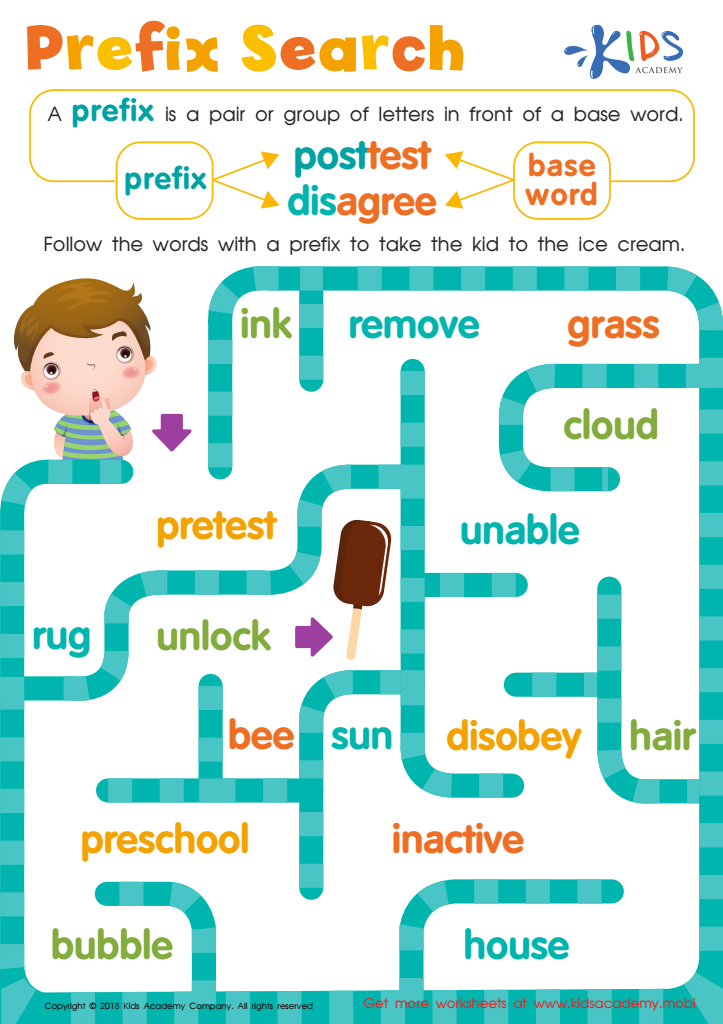
Reading: Prefix Search Worksheet
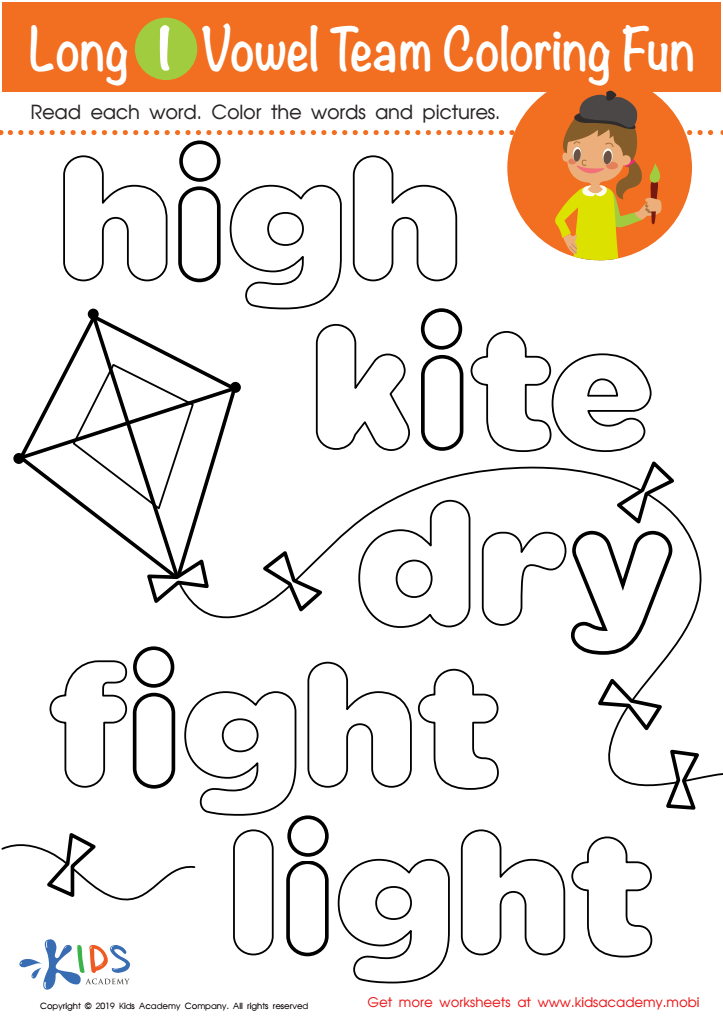
Long I Vowel Team Coloring Worksheet
 Assign to My Students
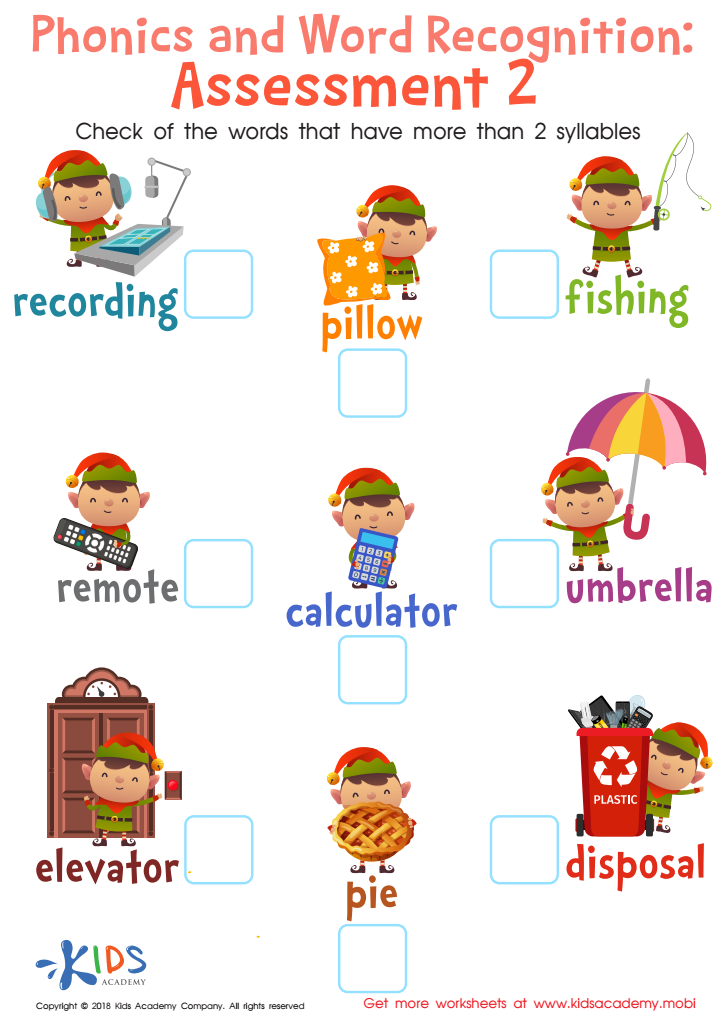
Phonics and Word Recognition: Assessment 2 Worksheet
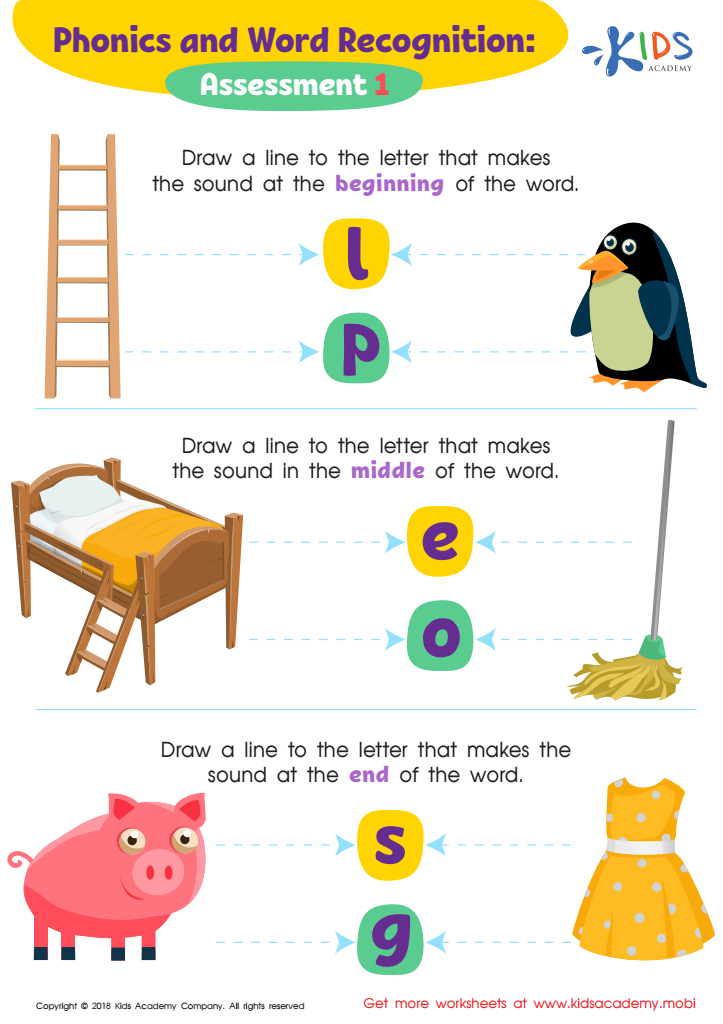
Phonics and Word Recognition: Assessment 1 ELA Worksheet








Parents and teachers should prioritize Word Identification Normal Phonics (WIN Phonics) because it serves as a foundational element in early literacy development. This systematic approach to teaching phonics empowers children to decode unfamiliar words, enhancing their reading skills and comprehension.
By understanding the connection between sounds and letters, students build essential skills that pave the way for fluent reading. Fluent readers can engage more meaningfully with text, fostering a love for reading and facilitating academic success across subjects. Moreover, WIN Phonics promotes spelling accuracy and vocabulary expansion, enabling children to express themselves effectively in writing and speech.
Investing in a robust phonics program also helps identify students who may struggle with reading. Early intervention through phonics instruction can prevent long-term reading difficulties, making it crucial for teachers to monitor progress through this method.
Ultimately, when parents and educators emphasize WIN Phonics, they support children's cognitive and emotional development. As children gain confidence in their reading abilities, their overall enthusiasm for learning increases, creating lifelong learners who appreciate the power of words. By nurturing these skills at a young age, parents and teachers play a pivotal role in shaping a child's educational journey and future success.







