Reading comprehension Normal Short Vowels Worksheets
7 filtered results
-
From - To
Unlock the joy of reading with our "Reading Comprehension Normal Short Vowels Worksheets" designed for young learners. These engaging worksheets help children master phonics by focusing on short vowel sounds, enhancing their reading skills step-by-step. Perfect for early graders, each worksheet integrates fun activities to reinforce letter recognition, sound identification, and word decoding. Interactive exercises make learning a delightful experience, encouraging kids to read independently while developing critical thinking and comprehension skills. Join us at Kids Academy and watch your child's confidence soar as they become enthusiastic, skillful readers. Start the exciting journey today!
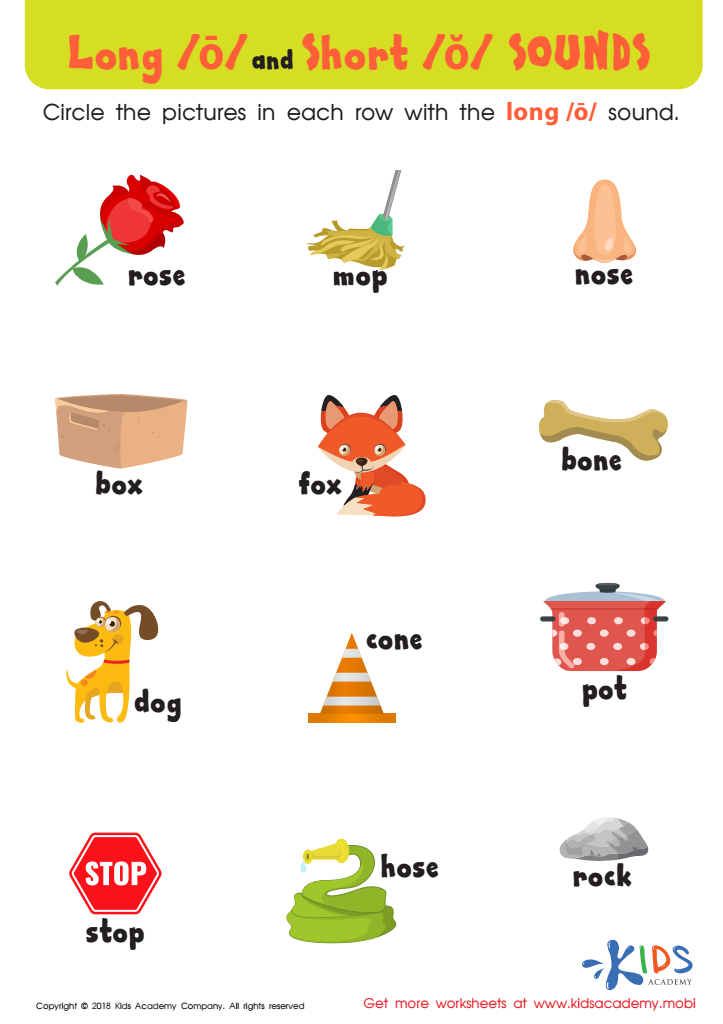
Reading: Long O and Short O Sounds Worksheet
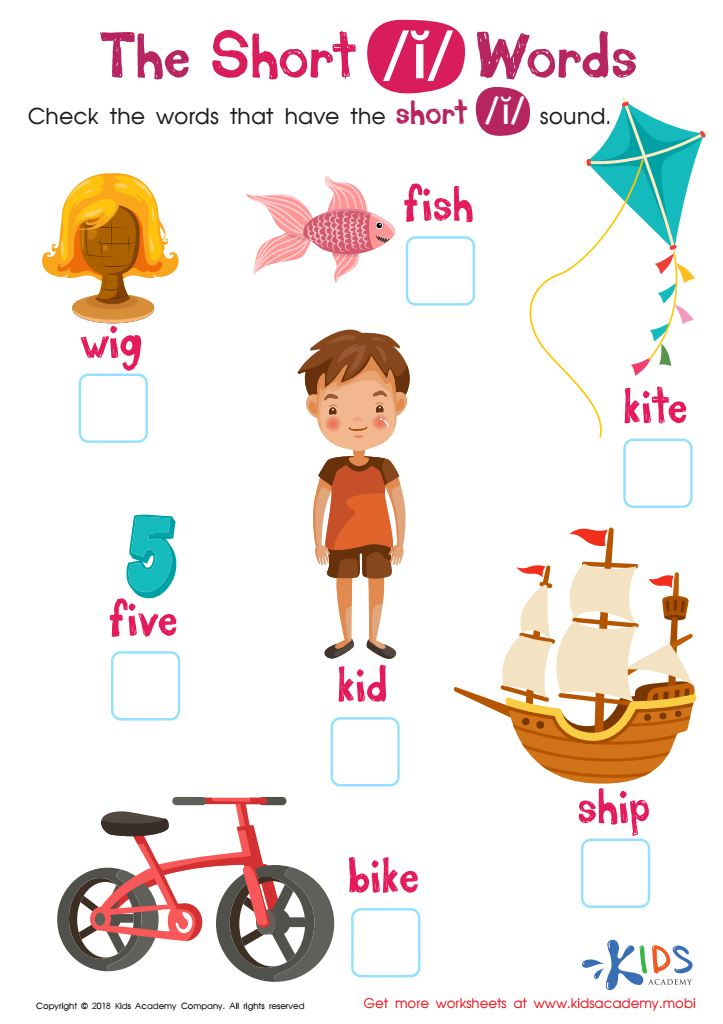
The Short I Words Reading Worksheet
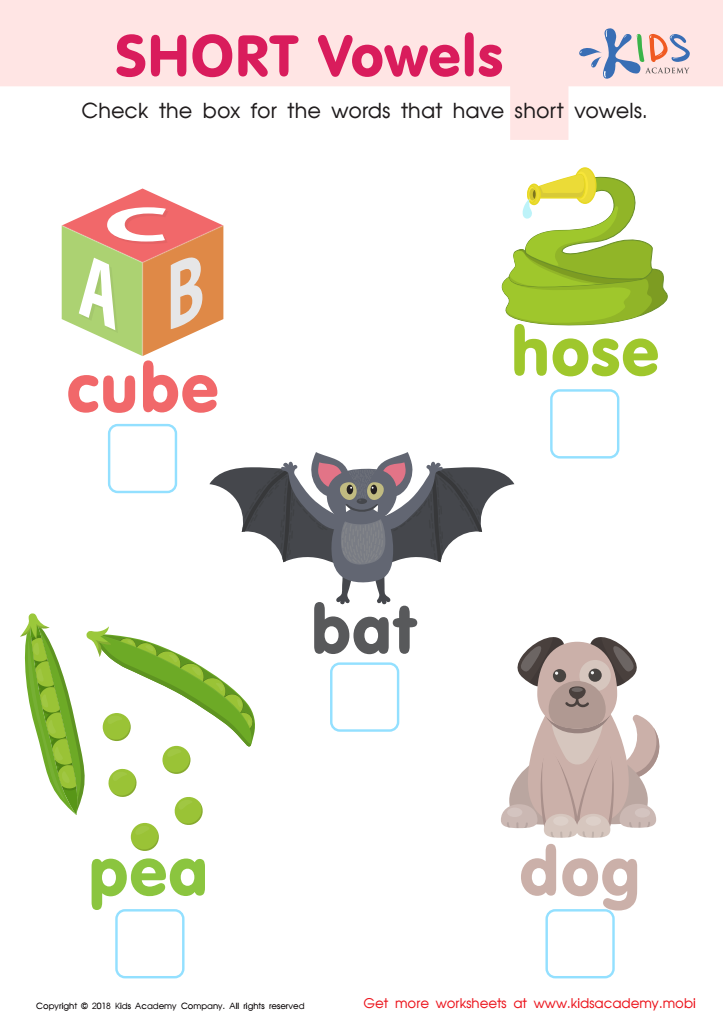
short vowels Worksheet
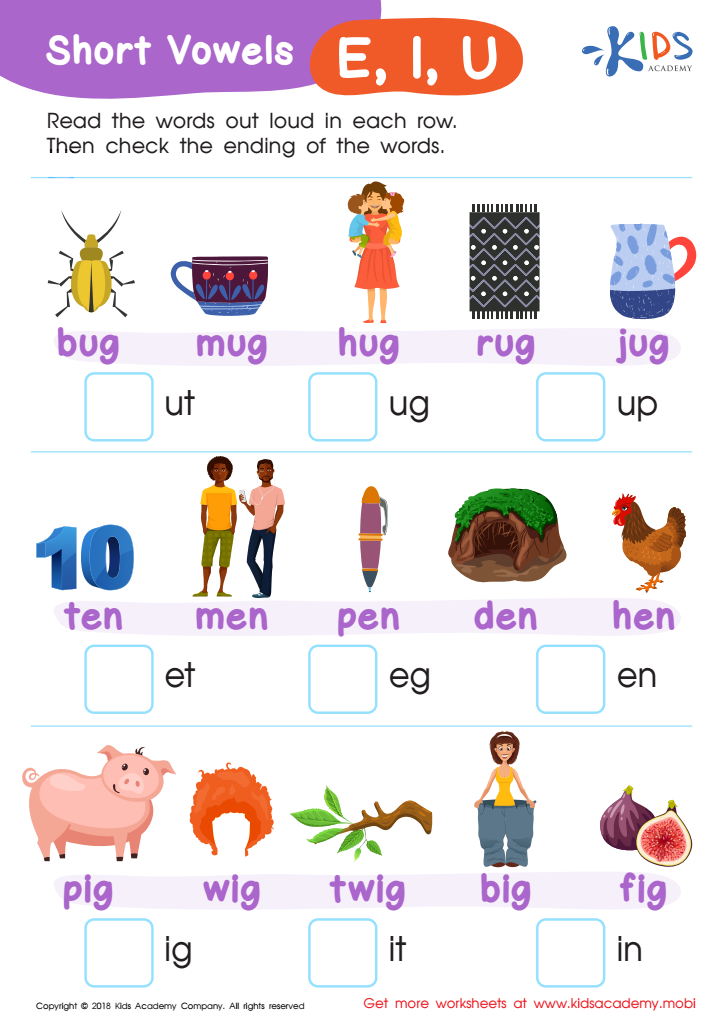
Short Vowels /e/, /i/, and /u/ Worksheet
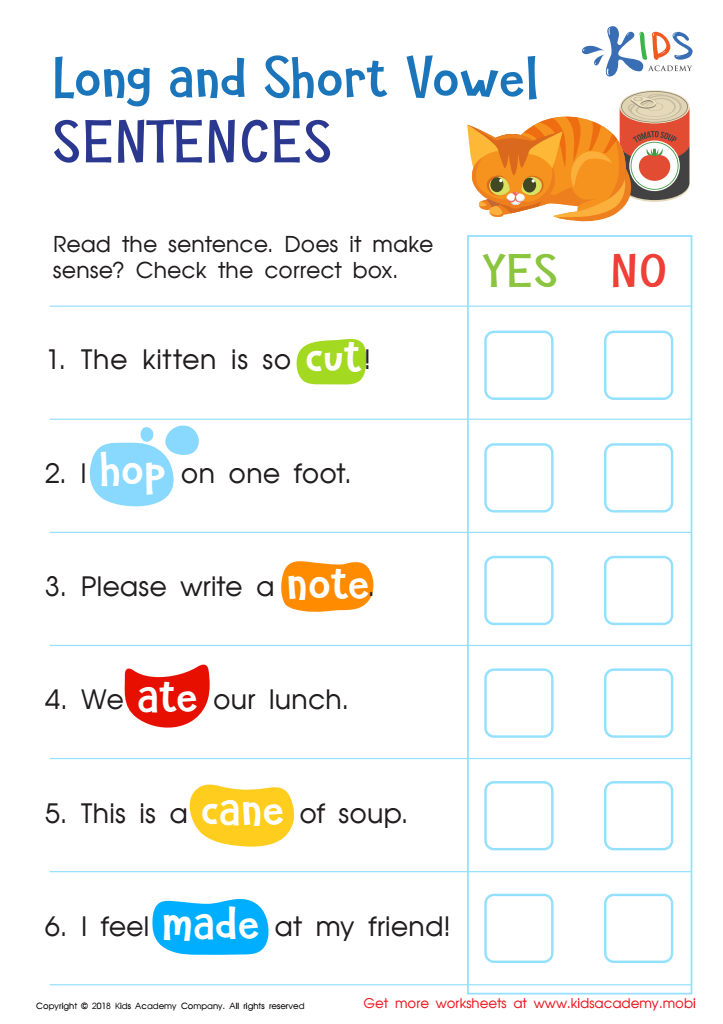
Long and Short Vowel Sentences: Assessment Worksheet
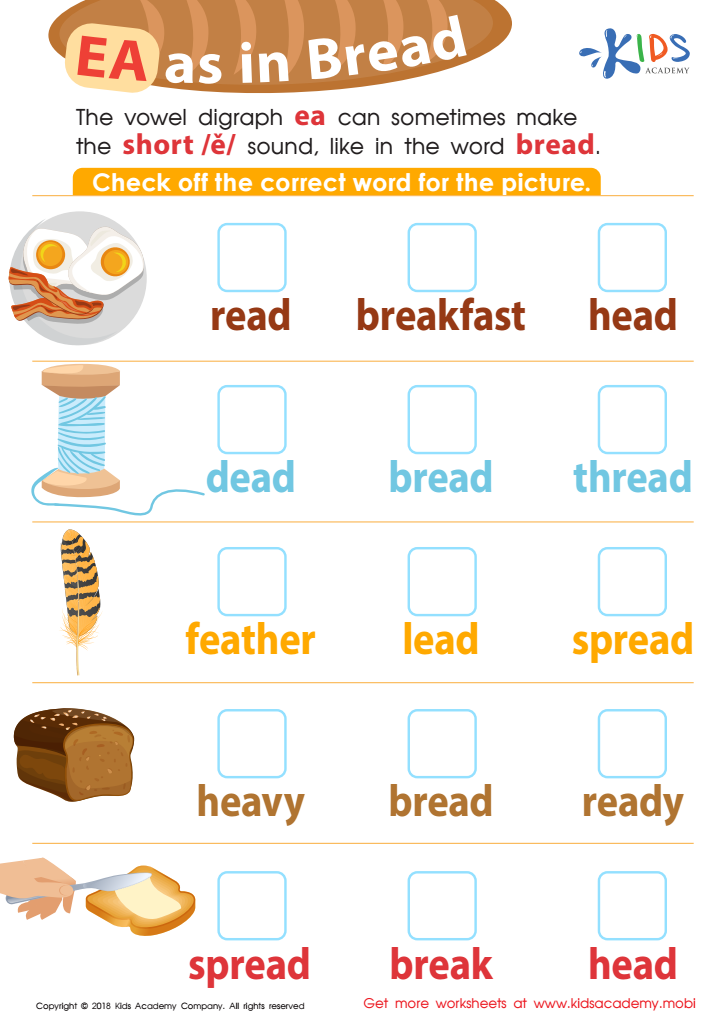
Reading: EA as in Bread Worksheet
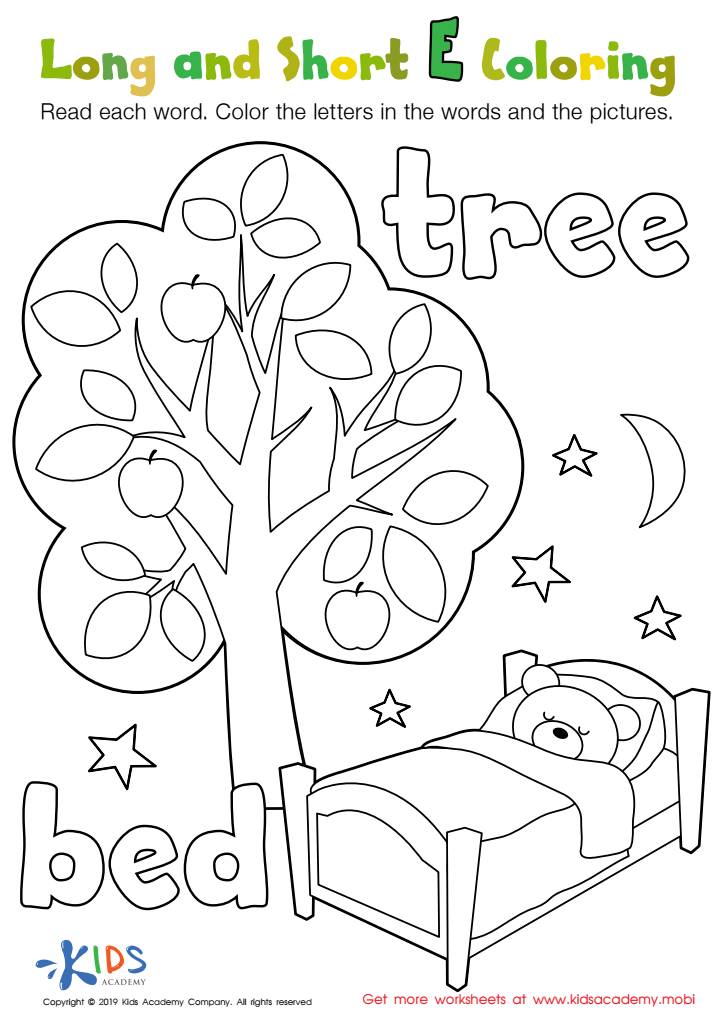
Long and Short E Worksheet
 Assign to My Students



Reading comprehension is foundational to a child’s educational journey and lifelong learning. Understanding normal short vowels (like "a" in "cat", "e" in "bed", "i" in "sit", "o" in "dot", and "u" in "cup") is crucial because these vowels are among the most basic elements of English phonics. Proficiency in short vowels allows children to decode words quickly and accurately, which is essential for fluent reading.
When children can easily recognize and pronounce short vowels, they are more likely to grasp the meaning of words and sentences. This skill directly contributes to better listening, speaking, reading, and writing abilities. Struggling with short vowels, however, can hinder their reading fluency, making it challenging to comprehend texts and enjoy stories, which is crucial for developing a love for reading.
Moreover, early success in reading builds confidence and encourages children to engage more with texts. This engagement nurtures their vocabulary and general knowledge. Parents and teachers should pay attention to teaching short vowels explicitly, using resources like phonics games, songs, and reading practice. By focusing on these foundational skills, we're setting children up for success in all academic areas and helping them become lifelong learners. In essence, mastering short vowels is a small step that plays a big role in a child's overall reading development and academic success.