
Letter formation Normal Tracing Letters Worksheets
3 filtered results
Difficulty Level
Grade
Age
-
From - To
Subject
Activity
Standards
Discover our "Letter Formation Normal Tracing Letters Worksheets" designed to support early grade learners in mastering the basics of handwriting. These engaging, expertly crafted worksheets focus on helping children practice the proper formation of uppercase and lowercase letters. Each worksheet offers detailed tracing activities that reinforce muscle memory and letter recognition. Perfect for classroom or at-home use, our worksheets ensure a fun and interactive learning experience. Enhance your child's literacy skills with a reliable resource that combines education with enjoyment. Visit Kids Academy for our comprehensive collection of letter formation tracing worksheets.
Favorites
With answer key
Interactive
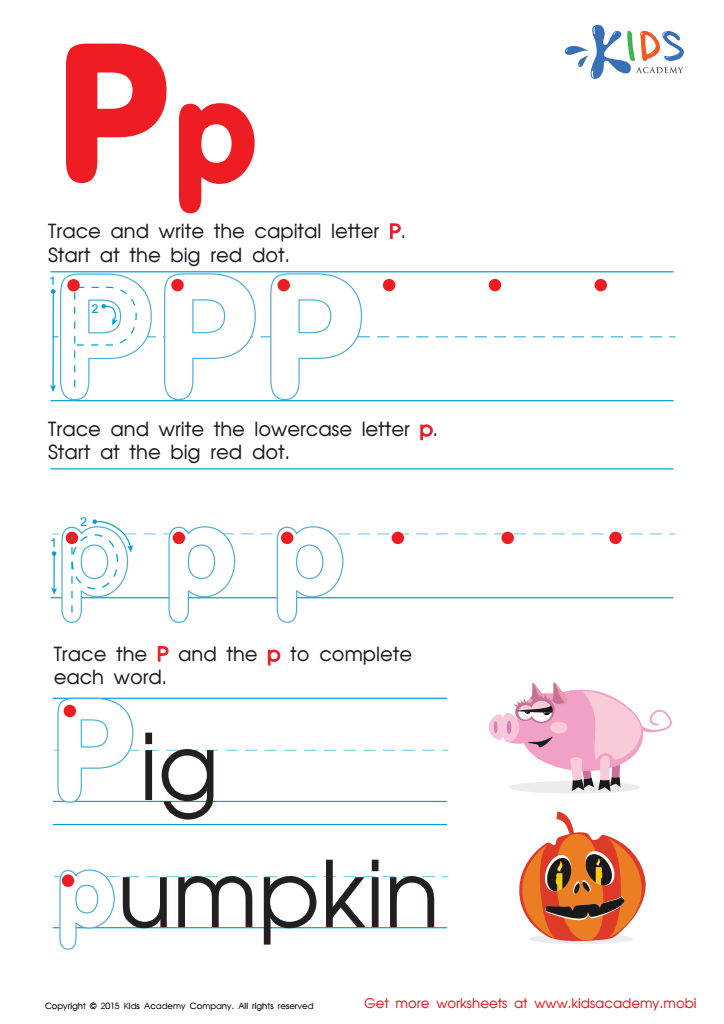
Letter P Tracing Page
Trace the lines from the red dot to learn to write "P"! Then practice this letter with the fun activities: complete the word "Pig" and "Pumpkin". Check out Kids Academy to get more free ABC worksheets.
 Assign to My Students
Letter P Tracing Page
Worksheet
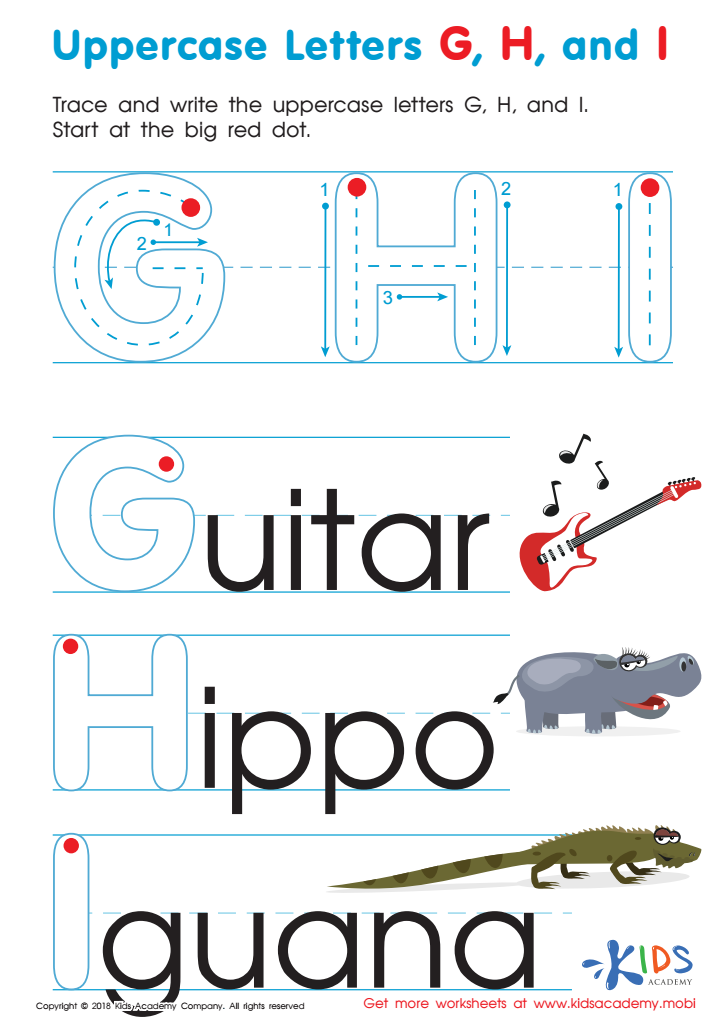
Uppercase Letters G, H, and I Worksheet
Trace each letter with the big red dot, connecting them to sounds as you go. Then write G to I. Congrats on a job well done! Rock on with a cute hippo and iguana while working on this delightful kindergarten worksheet!
Uppercase Letters G, H, and I Worksheet
Worksheet
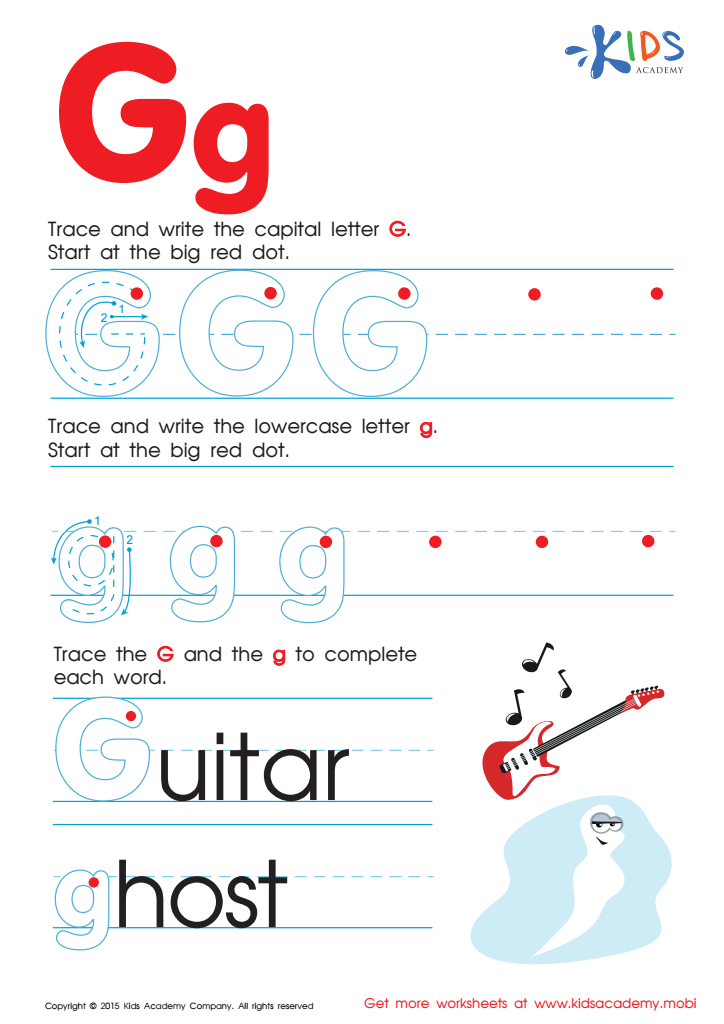
Letter G Tracing Page
Get ready to trace the letter "G" – with a big red spot as the starting point, trace the lines and watch the letter appear. Uppercase and lowercase letters are both easy and fun to write. Give it a go and finish the word "go". Play the guitar and say "hello" to a funny ghost!
Letter G Tracing Page
Worksheet
Join Kids Academy for Free
Who is primarily going to use this learning content?








Letter formation normal tracing letters are crucial in early childhood education, forming the foundation for effective handwriting skills. Parents and teachers should care about this because it directly impacts a child's ability to write legibly and efficiently.
First, proper letter formation ensures that children can communicate their ideas clearly and without frustration. This clarity is essential not only in academic settings but also in everyday life, enabling children to complete schoolwork more quickly and less stressfully.
Second, tracing letters offers significant benefits to motor development. The fine motor skills required to trace letters enhance hand-eye coordination, finger dexterity, and the muscle memory necessary for writing. These skills are also transferable to other tasks like typing, playing musical instruments, and participating in sports.
Furthermore, learning to trace letters can boost cognitive development. It reinforces the visual recognition of letters, which aids in reading fluency. It helps children understand that written symbols correspond to specific sounds, paving the way for stronger phonics skills.
Finally, tracing letters can foster a sense of accomplishment and self-confidence in young learners. Successfully forming letters the "normal" way provides a clear and accessible benchmark of progress, encouraging children to take pride in their abilities and motivating them to tackle more advanced writing tasks.








