
Alphabet Recognition Normal Upper & Lowercase Letters Worksheets
19 filtered results
Difficulty Level
Grade
Age
-
From - To
Subject
Activity
Standards
Enhance your child's alphabet mastery with our Alphabet Recognition Worksheets for both uppercase and lowercase letters. These engaging, expertly designed activities boost young learners' recognition and understanding of each letter, fostering a strong reading foundation. Perfect for preschool and early grade students, these printable worksheets combine fun illustrations with effective exercises to make learning enjoyable. Help your child develop essential literacy skills, confidence, and a love for learning by incorporating these worksheets into their daily routine. Ideal for at-home practice or classroom use, discover the difference our quality resources can make in your child's educational journey.
Favorites
With answer key
Interactive
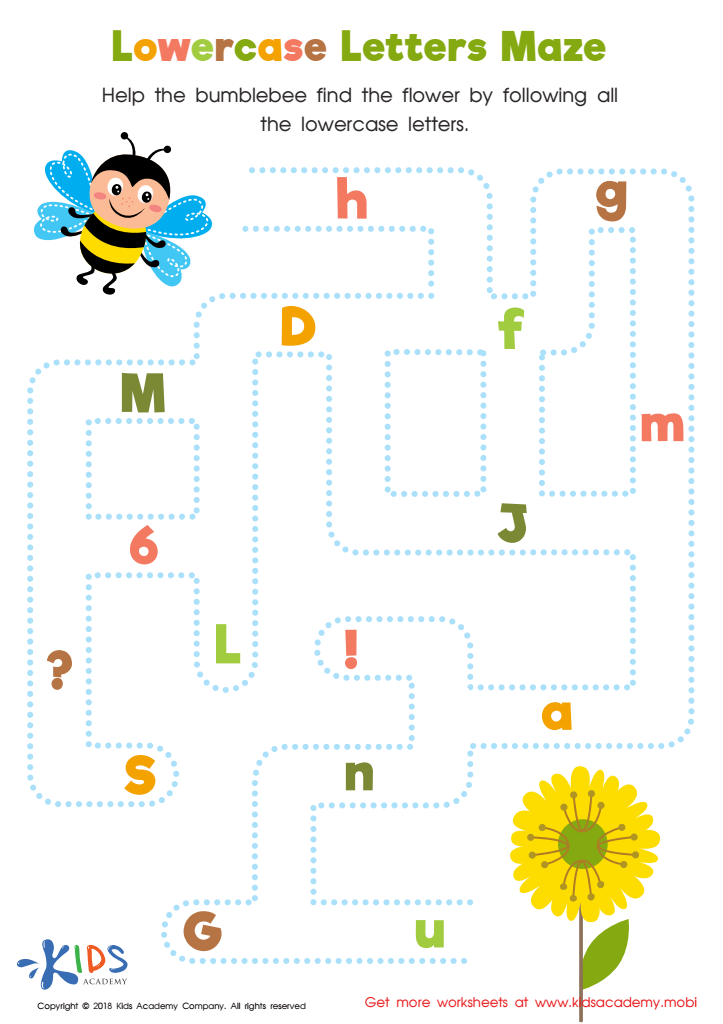
Lowercase Letters Maze Worksheet
Traceable pages can be great learning tools for children. For example, have them trace the path of lowercase letters to help a bumblebee pollinate flowers. Students will quickly learn the difference between uppercase and lowercase letters and numbers, and have fun doing it!
 Assign to My Students
Lowercase Letters Maze Worksheet
Worksheet


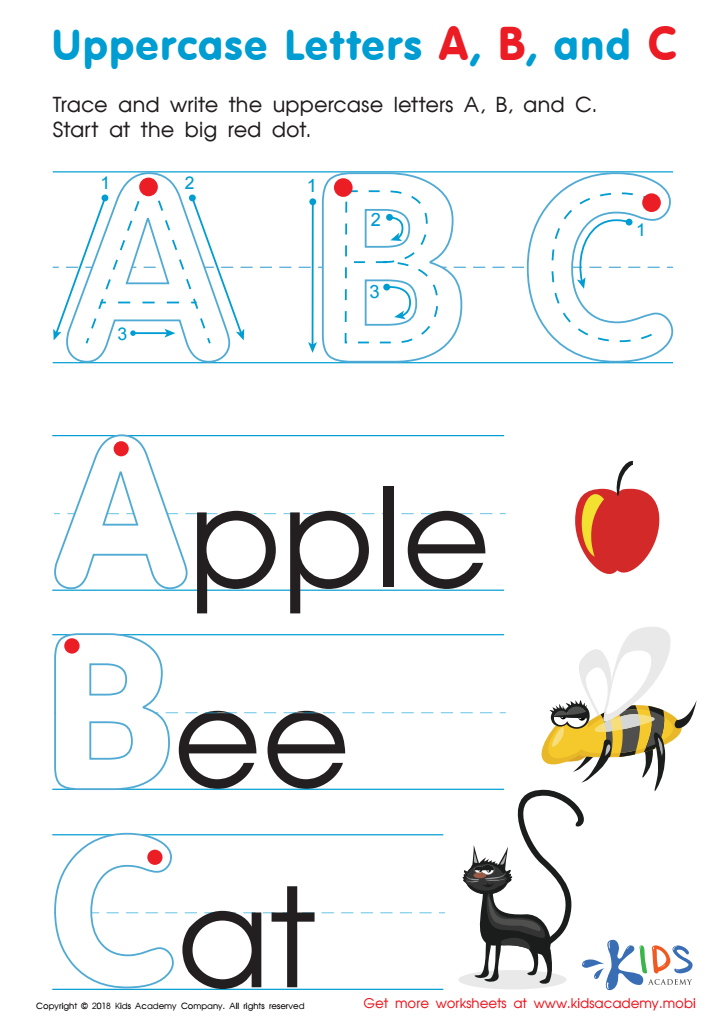
Uppercase Letters A, B, and C Worksheet
See that big red dot? Have your child use it as a guide to trace A, B and C on this fun worksheet. It features lively pictures to help link letter sounds. Have them practice proper pencil strokes on the letters at the top, then write beside each graphic. Let the learning and fun begin! 80 words
Uppercase Letters A, B, and C Worksheet
Worksheet
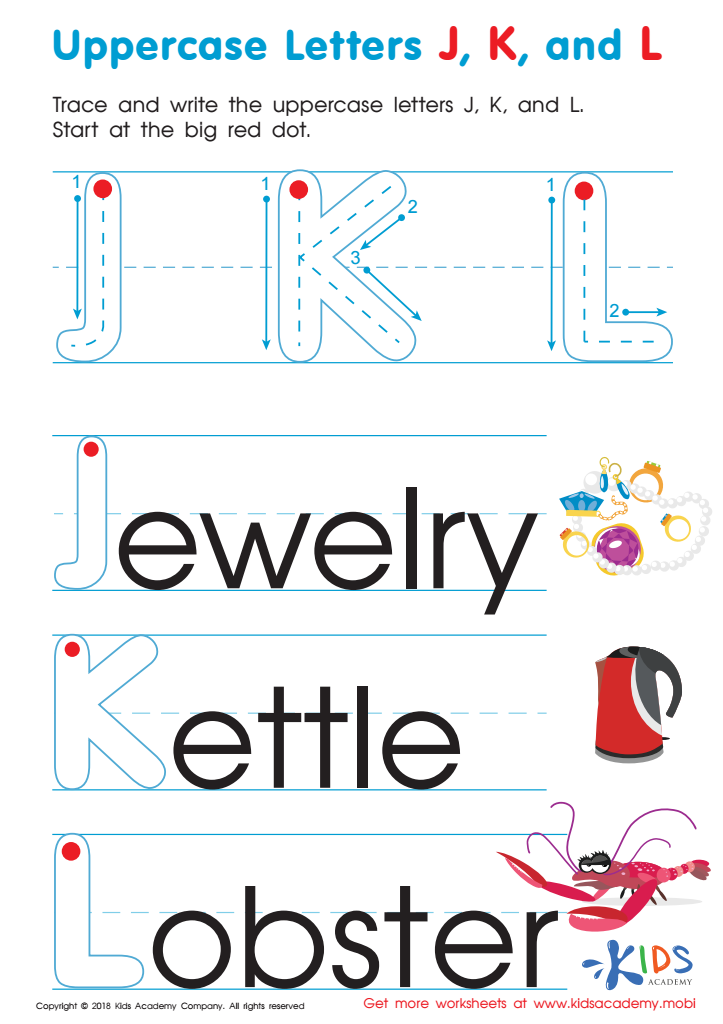
Uppercase Letters J, K, and L Worksheet
Jewelry, kettle and lobster share a common trait: their names start with J, K and L, 3 letter neighbors found in the middle of the alphabet. This traceable worksheet helps kids learn letter sounds and practice writing. Arrows and tracing lines make it easy to form neat pencil strokes. Red dot shows where kids should start. Perfect for preschoolers and kindergarteners!
Uppercase Letters J, K, and L Worksheet
Worksheet
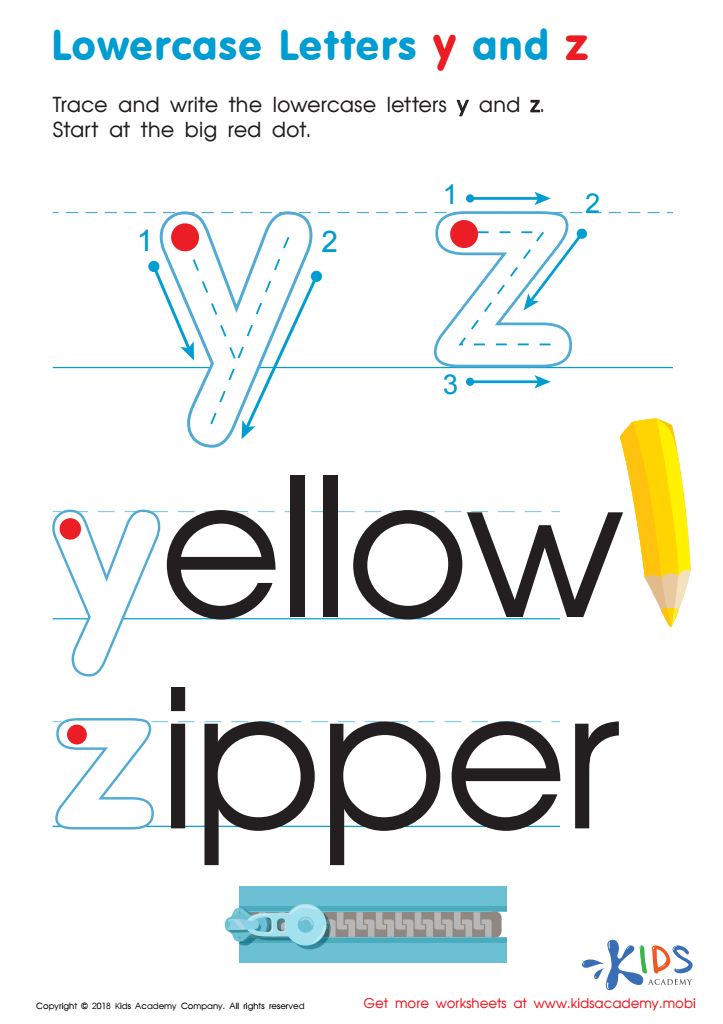
Lowercase Letters y z Worksheet
Help your child get a good start in writing and reading by tracing and writing the lowercase letters y and z. With this activity, they will learn the alphabet, which is essential for literacy success. Guide them through the worksheet and make sure they form the letters correctly. This will help them learn the basics needed to write and read fluently.
Lowercase Letters y z Worksheet
Worksheet
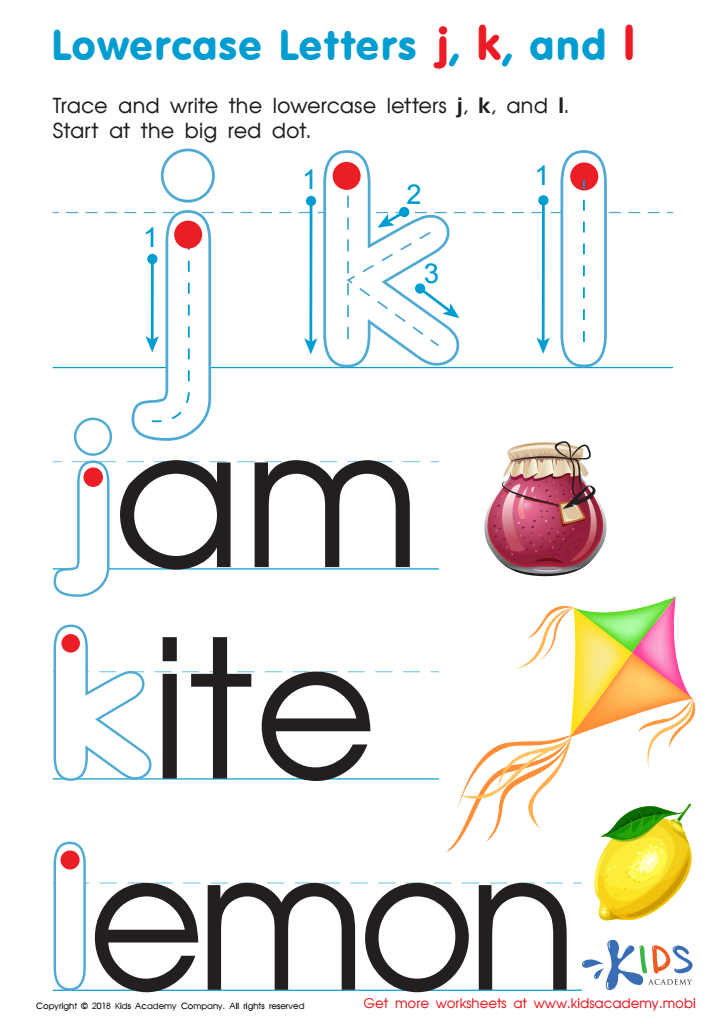
Lowercase Letters j k l Worksheet
Teach your child the difference between uppercase and lowercase letters. Have them trace and write the lowercase letters j, k, and l, starting at the red dot. Guide your child's hand to form the letters correctly.
Lowercase Letters j k l Worksheet
Worksheet
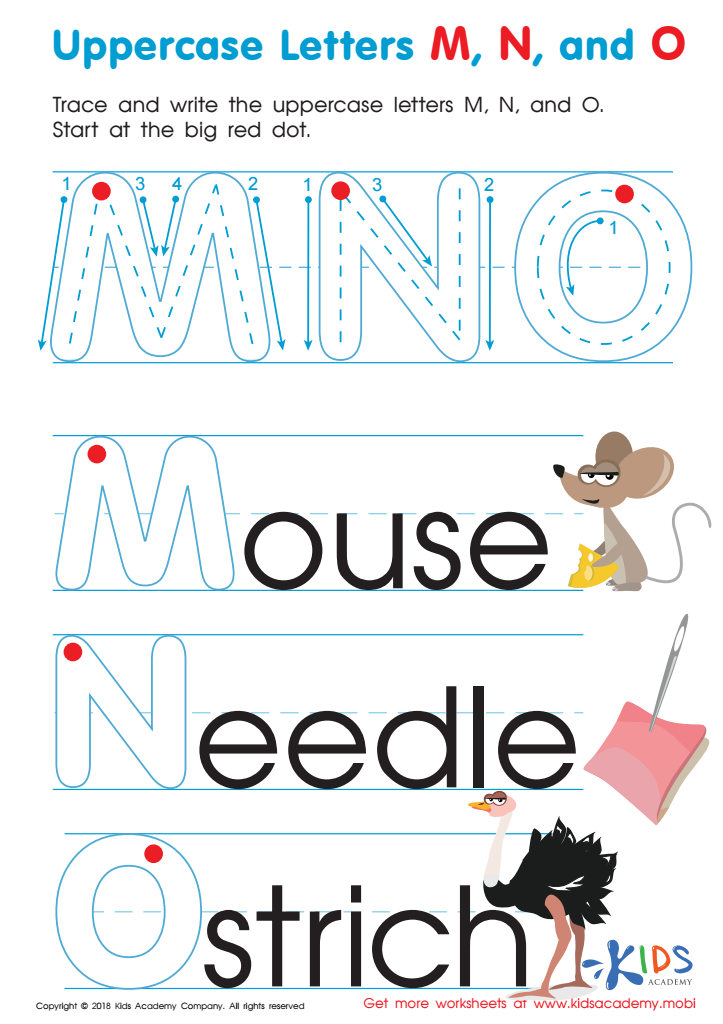
Uppercase Letters M, N, and O Worksheet
Download our easy-to-understand worksheet to help kids write M and N with ease! They'll trace dotted lines and follow arrows as they fill in the letters using a big red dot as a guide. The cute graphics will help them remember sounds too! Get your child writing quickly and confidently with this fun activity.
Uppercase Letters M, N, and O Worksheet
Worksheet
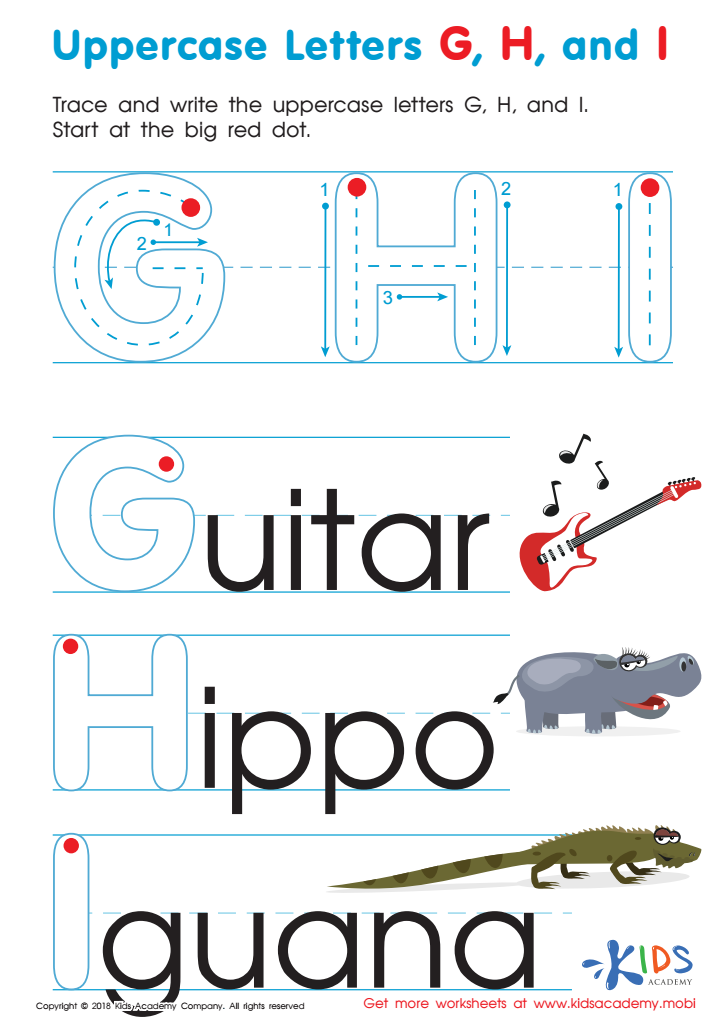
Uppercase Letters G, H, and I Worksheet
Trace each letter with the big red dot, connecting them to sounds as you go. Then write G to I. Congrats on a job well done! Rock on with a cute hippo and iguana while working on this delightful kindergarten worksheet!
Uppercase Letters G, H, and I Worksheet
Worksheet
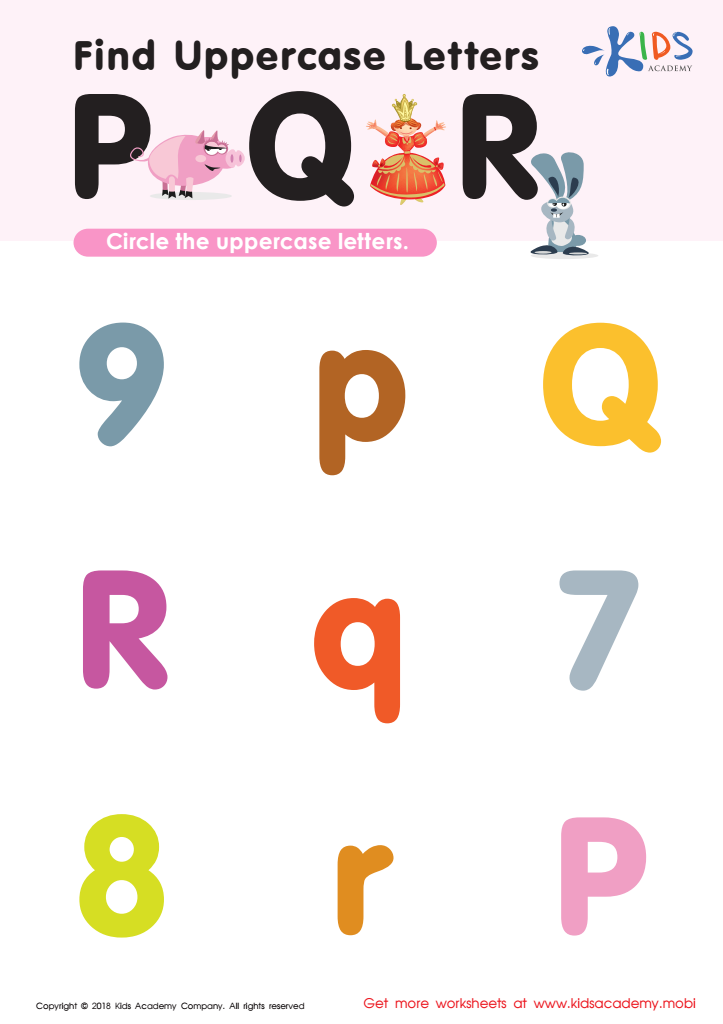
Find Uppercase Letters P, Q, and R Worksheet
Kids learn best when they can make connections. This free printable worksheet guides kids to solve the puzzle using the example letters P, Q, and R, supported by graphics and colors. Point out the page is pink, like the pig (which starts with P!) and solve by finding and circling the uppercase letters – be careful of the numbers!
Find Uppercase Letters P, Q, and R Worksheet
Worksheet
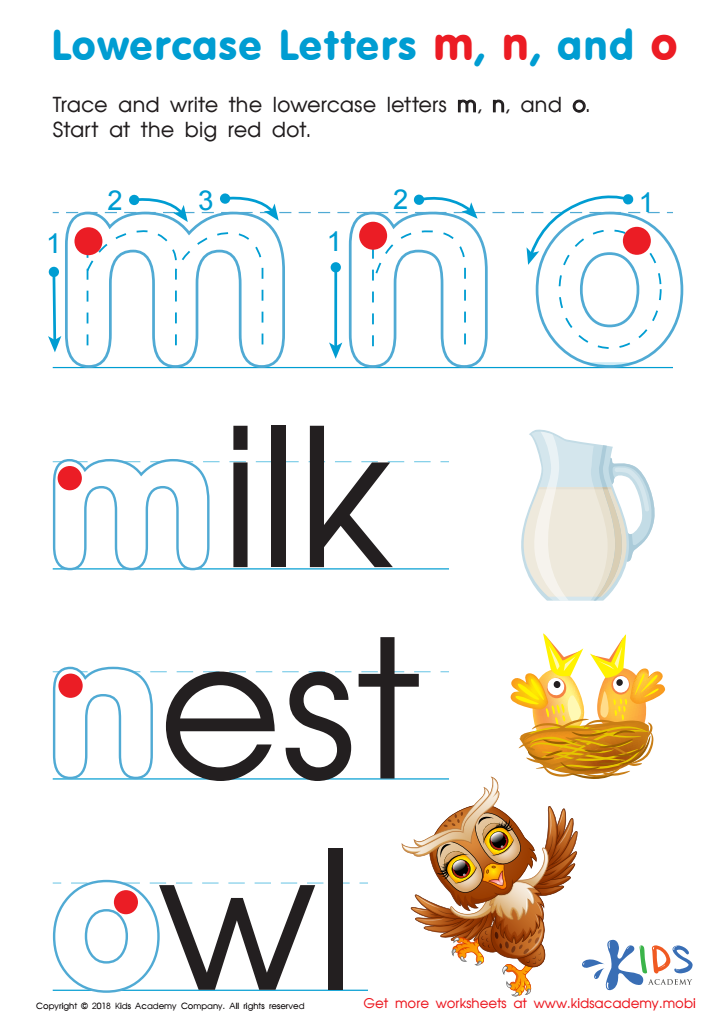
Lowercase Letters m n o Worksheet
Help your child learn the alphabet with letter tracing. Show them the difference between uppercase and lowercase letters by working through this free worksheet, tracing and writing lowercase m, n and o.
Lowercase Letters m n o Worksheet
Worksheet
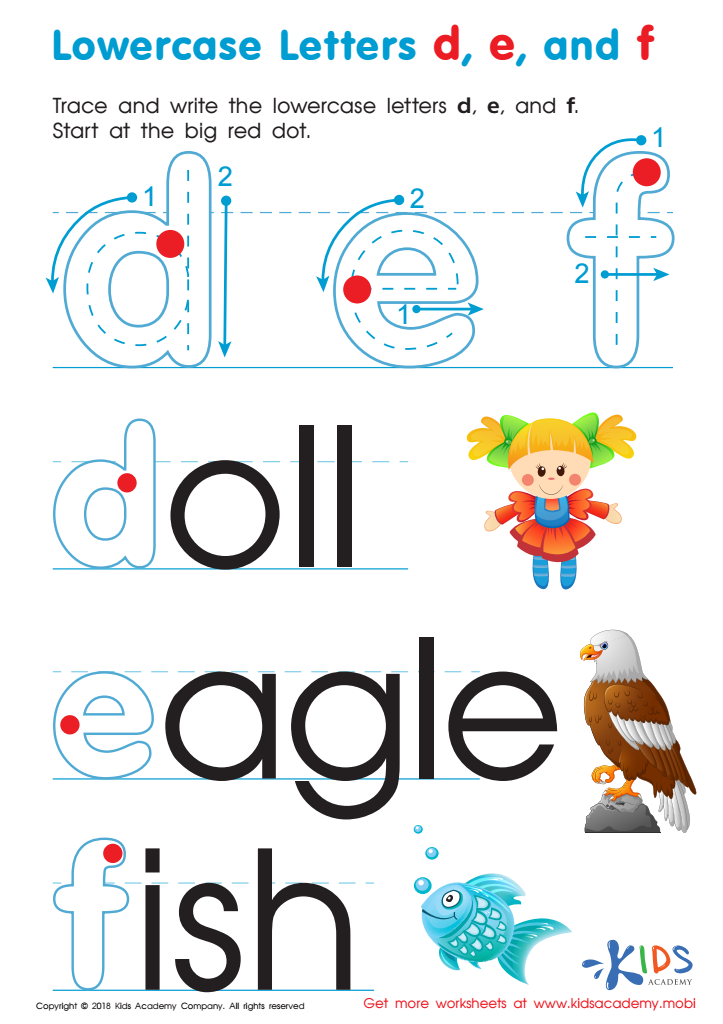
Lowercase Letters d e f Worksheet
Help your child learn the alphabet letters by tracing and writing the lowercase letters d, e, and f. Begin at the big red dot and follow the dots. This worksheet will help your little one gain a better understanding of the letters.
Lowercase Letters d e f Worksheet
Worksheet
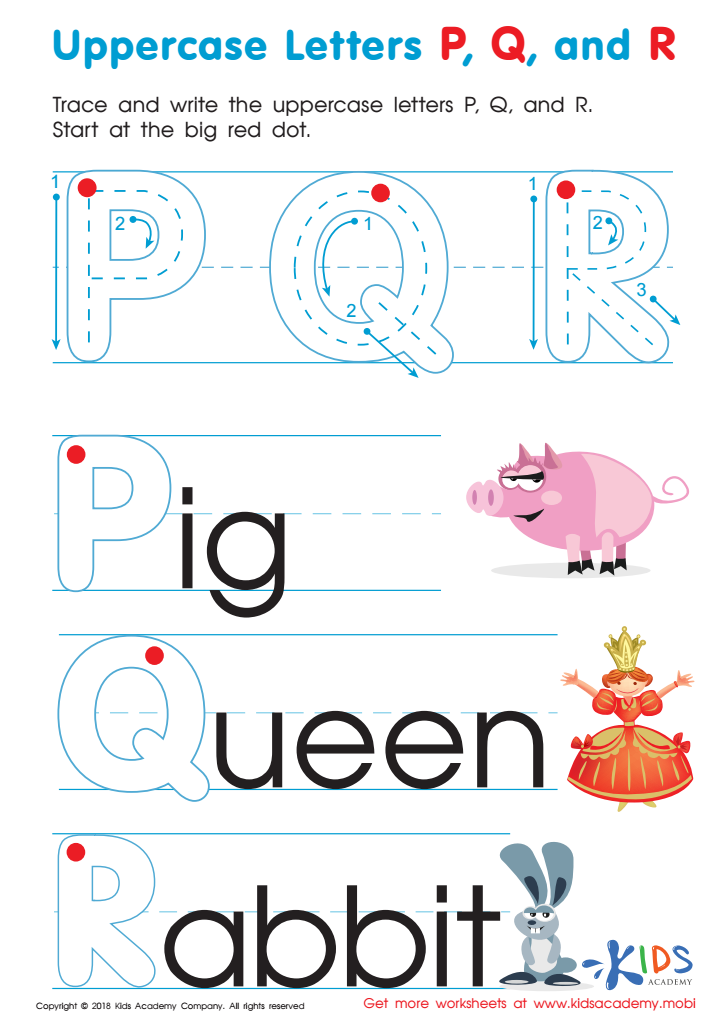
Uppercase Letters P, Q, and R Worksheet
Cute images of a pig, queen and rabbit make it fun to learn letter sounds. Follow the arrows to learn the strokes, then trace each letter from the big red dot. Perfect for kids to learn how to read and write P, Q, and R!
Uppercase Letters P, Q, and R Worksheet
Worksheet
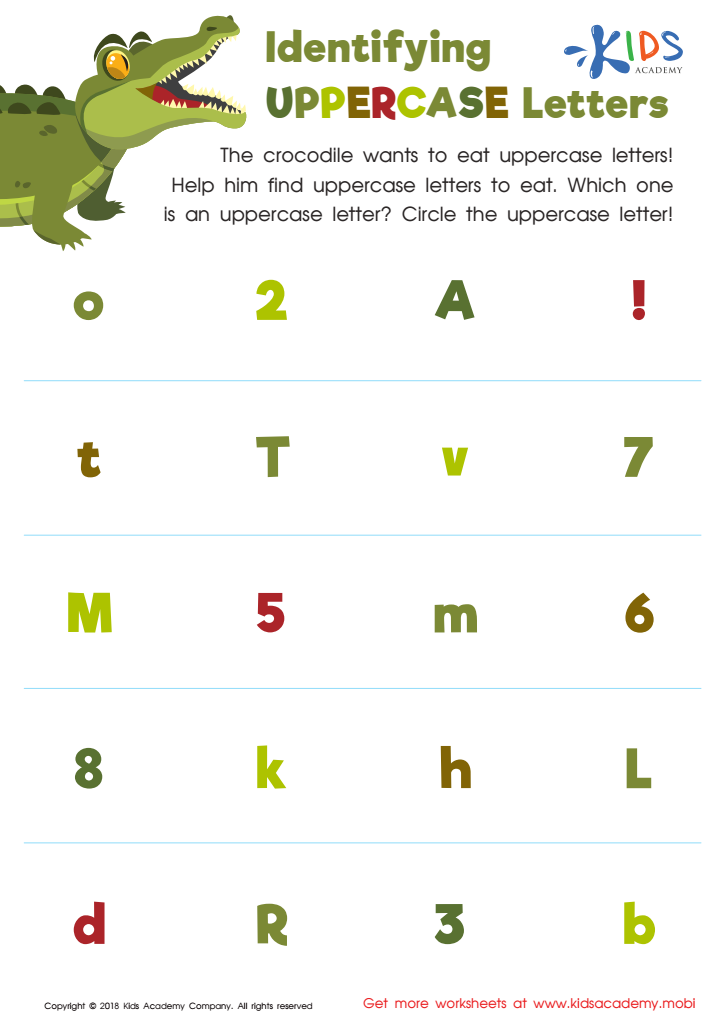
Identifying Uppercase Letters Worksheet
It's essential for kindergarteners to know the distinction between uppercase and lowercase letters. This skill will aid them when starting to write. They can practice by selecting the uppercase letters among a mix of lowercase, uppercase letters and numbers. Whatever their level of learning, give your child confidence with this PDF!
Identifying Uppercase Letters Worksheet
Worksheet
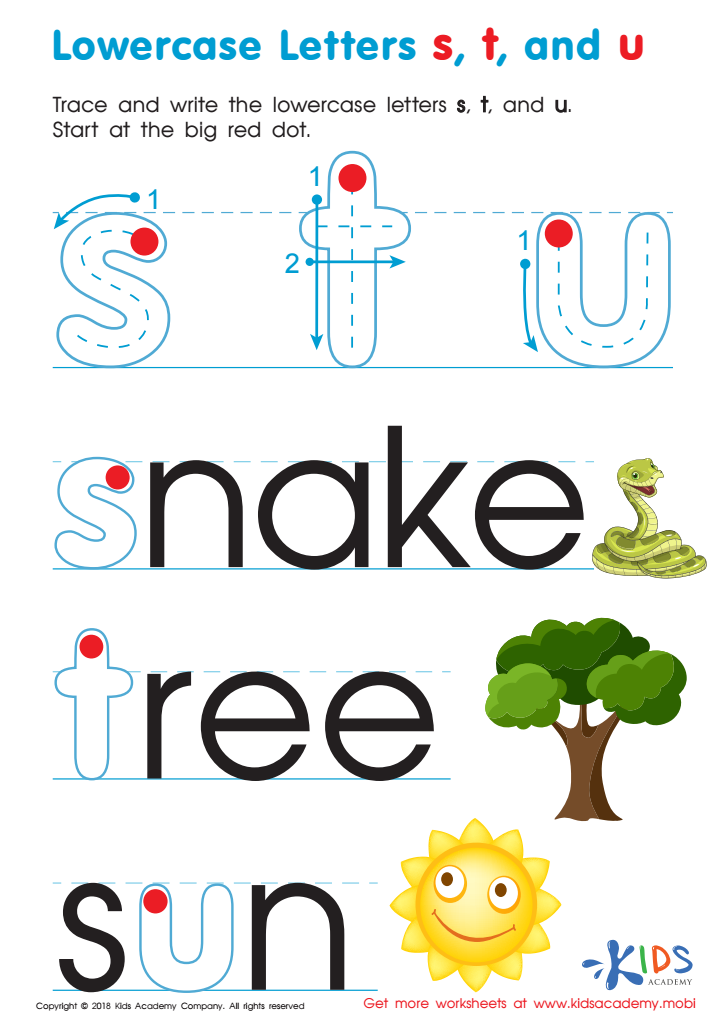
Lowercase Letters s t u Worksheet
Help your child trace lowercase letters s, t and u. Ask questions like: "What word starts with 's'? What about 't' and 'u'? Point out the snake, tree and sun pictures. Start tracing from the big red dot.
Lowercase Letters s t u Worksheet
Worksheet
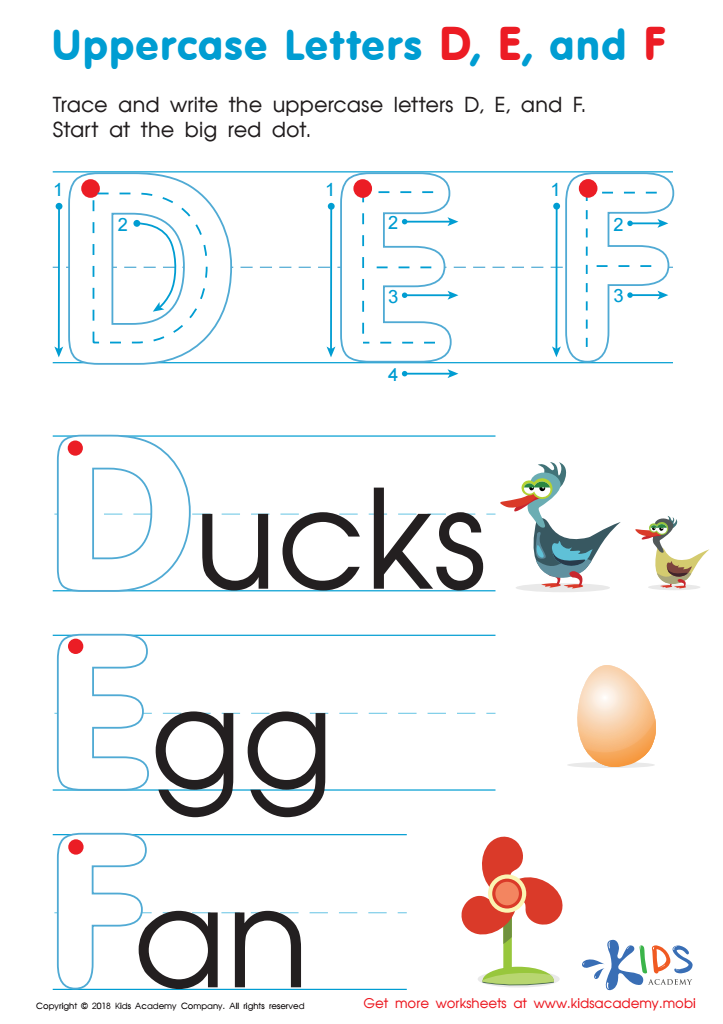
Uppercase Letters D, E, and F Worksheet
A-F are important letters! Get kids tracing with this free printable worksheet. Help them learn the right pencil strokes by following the tracing lines, starting at the big red dot. Reinforce letter sounds with the colorful pictures. 80 words.
Uppercase Letters D, E, and F Worksheet
Worksheet
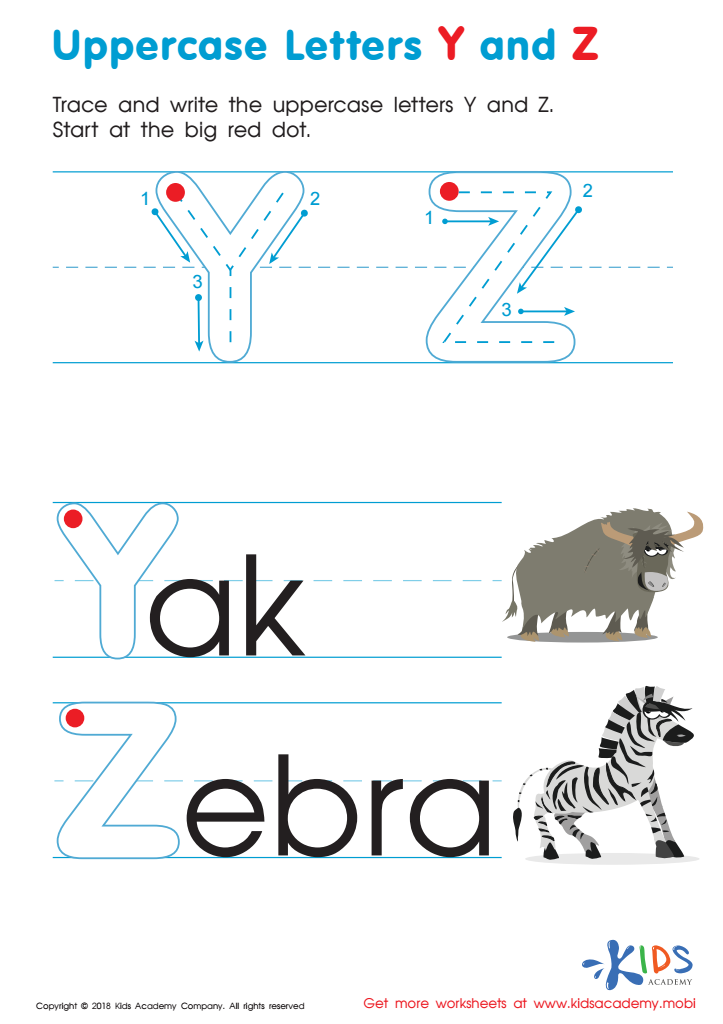
Uppercase Letters Y Z Worksheet
Help your child learn their ABCs with this fun tracing activity! They must trace and write Y and Z in uppercase form, starting from the red dot. Kids will love the fun images for extra engagement. Guiding their hand carefully will help them practice and perfect their writing skills.
Uppercase Letters Y Z Worksheet
Worksheet
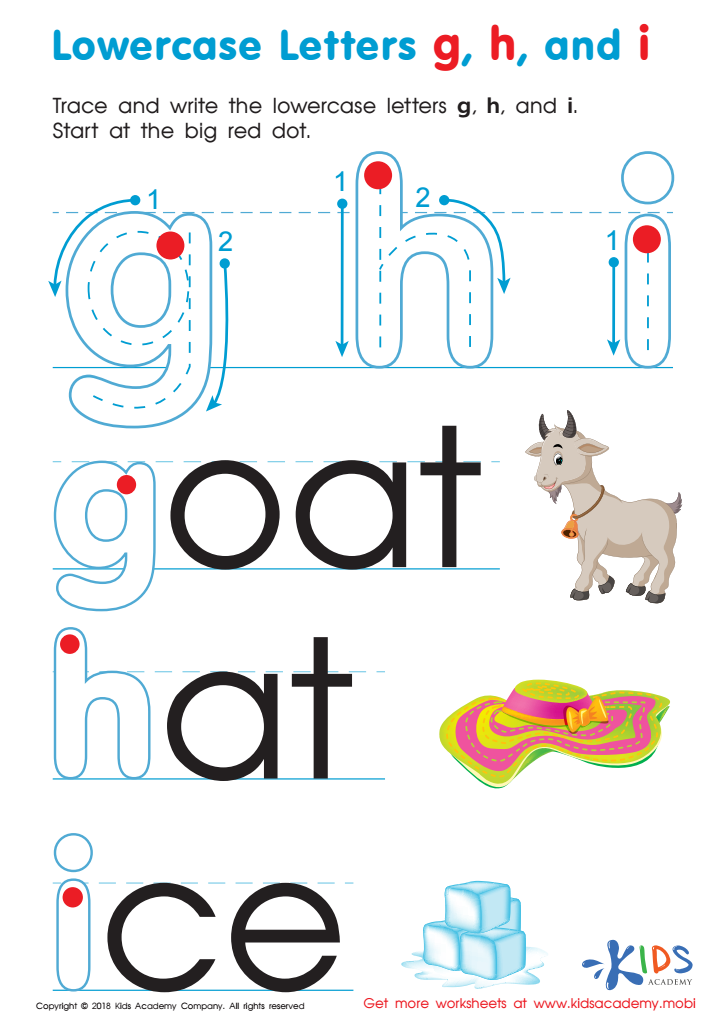
Lowercase Letters g h i Worksheet
Learning is fun for your youngster with color and an enjoyable exercise. Help them build their understanding of the alphabet by starting at the big red dot drawn on each letter and carefully following the dotted lines to draw g, h, and i.
Lowercase Letters g h i Worksheet
Worksheet
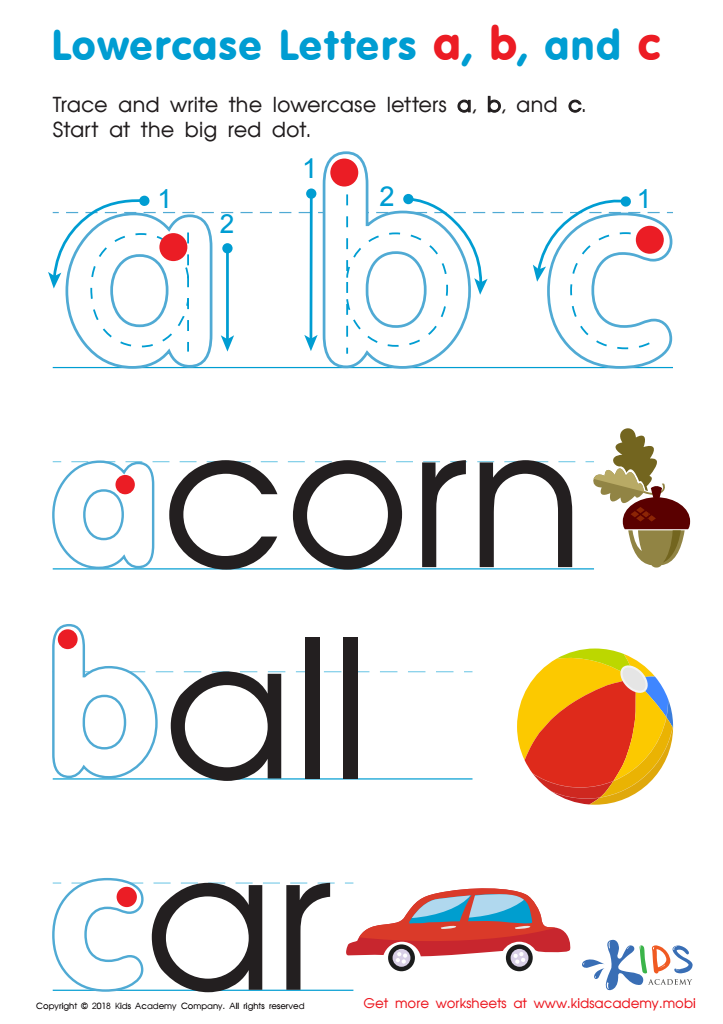
Lowercase Letters a b c Worksheet
Help your child trace and write the lowercase letters of the alphabet with this fun worksheet. Start by following the arrows and directions from the red dot, and watch them improve their writing skills! Vibrant illustrations make it easy and enjoyable.
Lowercase Letters a b c Worksheet
Worksheet
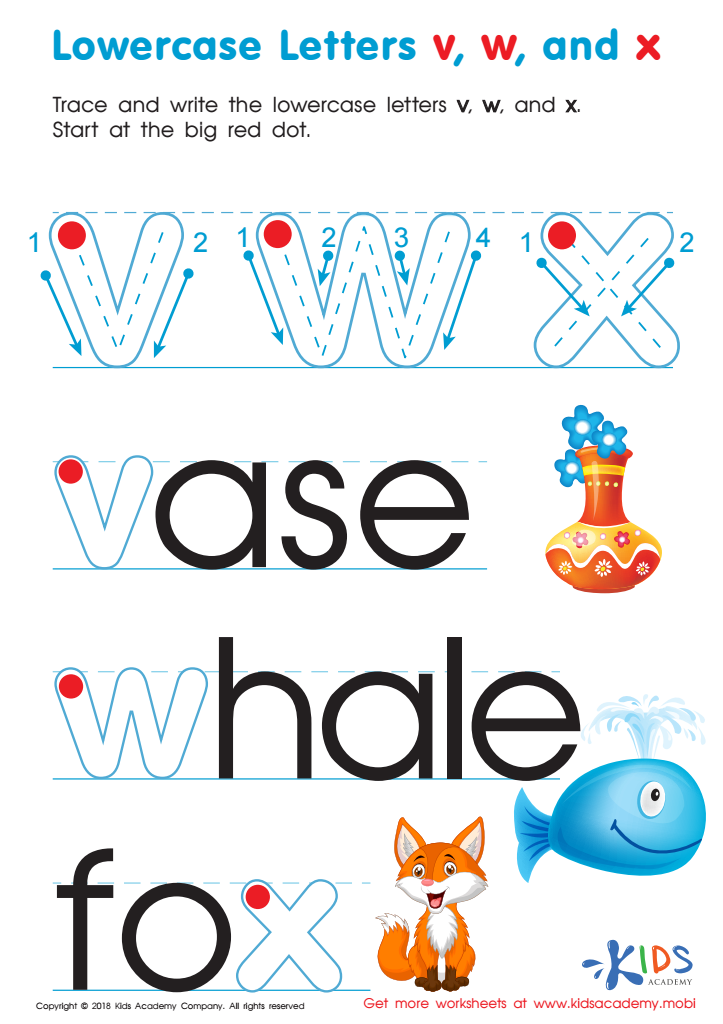
Lowercase Letters v w x Worksheet
Help your child learn to write lowercase letters v, w, and x, starting at the big red dot. This activity will help them develop writing skills and correctly identify the letters. Guide them as they trace the letters and enjoy watching them improve!
Lowercase Letters v w x Worksheet
Worksheet
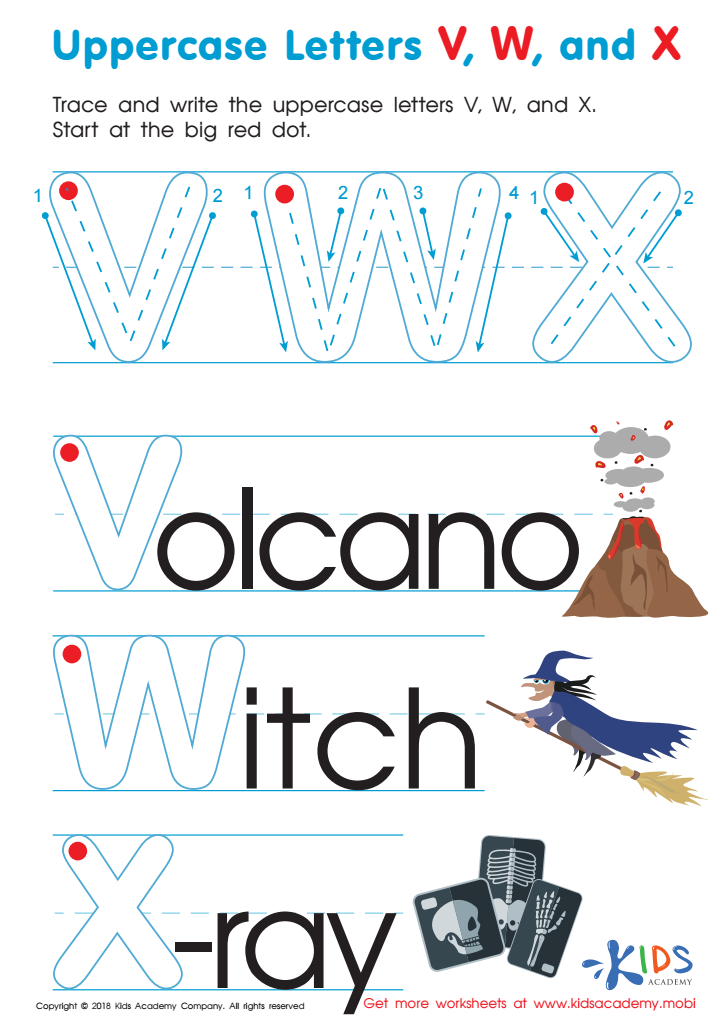
Uppercase Letters V, W, and X Worksheet
This worksheet is perfect for kids struggling to write uppercase letters V, W, and X. Warm up their brains first by having them name words starting with these letters. Then, help them trace and write each letter from the big red dot. With your assistance, they will quickly sharpen their writing skills.
Uppercase Letters V, W, and X Worksheet
Worksheet
Join Kids Academy for Free
Who is primarily going to use this learning content?






Alphabet recognition is a fundamental milestone in early literacy, vital for children's reading and writing skills development. As both parents and teachers emphasize this skill, they lay the groundwork for educational success. Recognizing both upper and lowercase letters with proficiency ensures that a child can seamlessly transition between different forms of print, such as in books, handwritten notes, and digital texts.
Strong alphabet recognition aids in phonemic awareness, where children learn the sounds associated with each letter, a critical step in decoding words during reading. This skill is directly linked to a child’s ability to spell and expand vocabulary. Moreover, children with adept letter recognition can more easily grasp basic concepts like alphabetical order, enhancing their understanding of language structure and efficient dictionary use.
For parents, engaging in activities that promote this recognition—like alphabet songs, puzzles, and flashcards—can support bonding while providing a valuable educational foundation. Teachers can build on this home-based knowledge by incorporating diverse and interactive classroom activities, ensuring every child meets literacy benchmarks. In essence, strong alphabet recognition is a cornerstone skill that propels children into fluent reading and effective communication, impacting lifelong learning and literacy. Therefore, it is imperative for parents and teachers to prioritize and nurture this fundamental part of early education.







