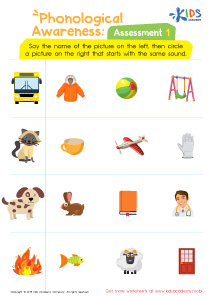
Vowel Recognition Normal Vowels and Consonants Worksheets
6 filtered results
-
From - To
Enhance your child's reading skills with our Vowel Recognition Worksheets! Designed for early learners, these engaging resources focus on identifying normal vowels and consonants. Each worksheet offers fun exercises that help young students differentiate between vowels and consonants, fostering essential phonemic awareness. With colorful illustrations and simple instructions, kids will enjoy practicing their recognition skills while developing a strong foundation for reading. Perfect for preschool and kindergarten educators, these printable worksheets are easy to integrate into any lesson plan. Support your child's literacy journey and boost their confidence in recognizing letters with our tailored vowel and consonant activities!
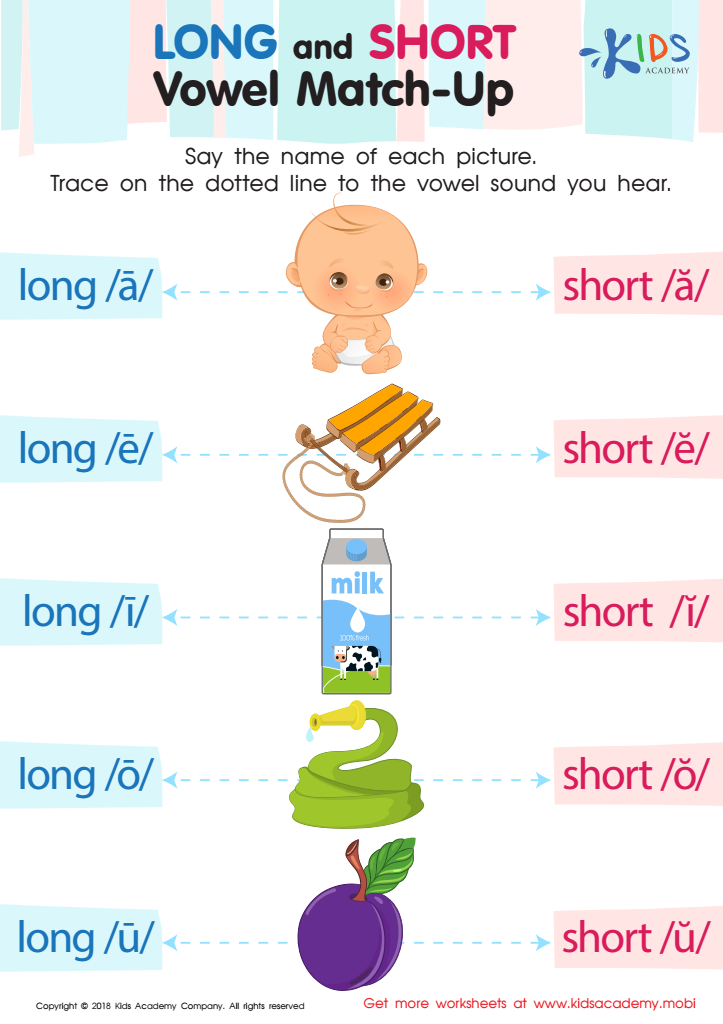
Long and Short Vowel Match up Reading Worksheet
 Assign to My Students
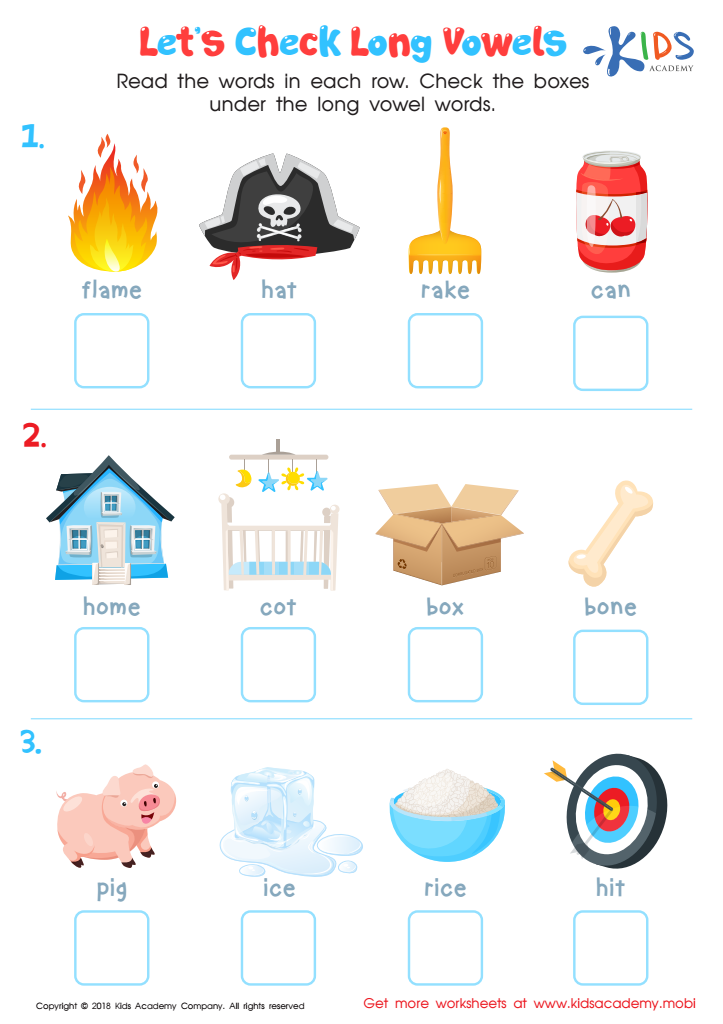
Let's Check Long Vowels: Assessment Worksheet
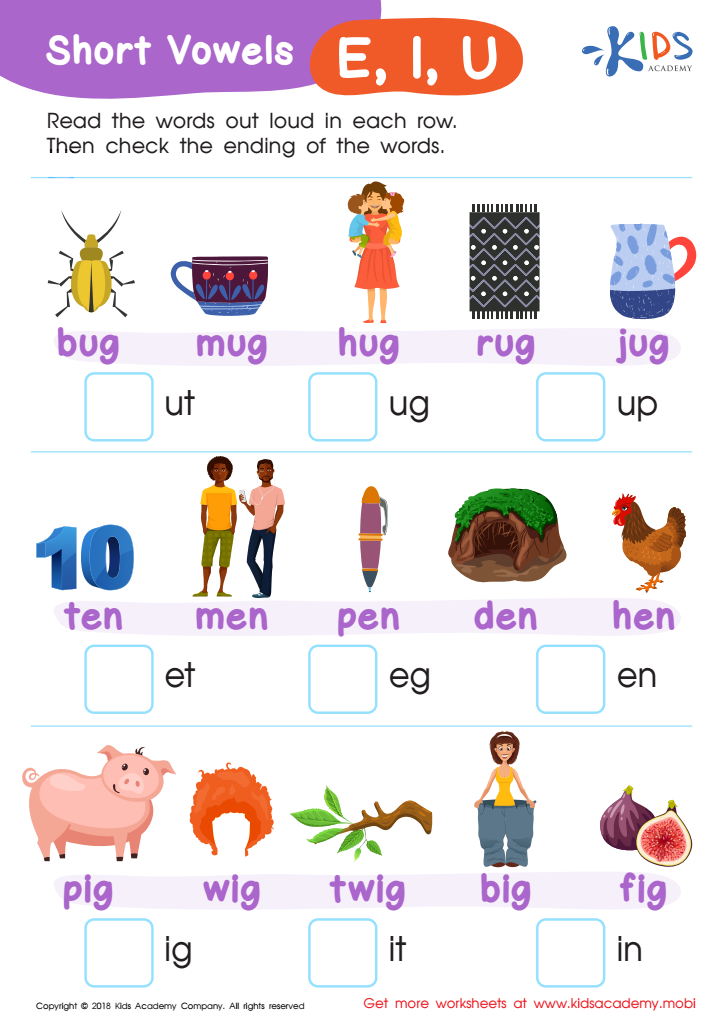
Short Vowels /e/, /i/, and /u/ Worksheet
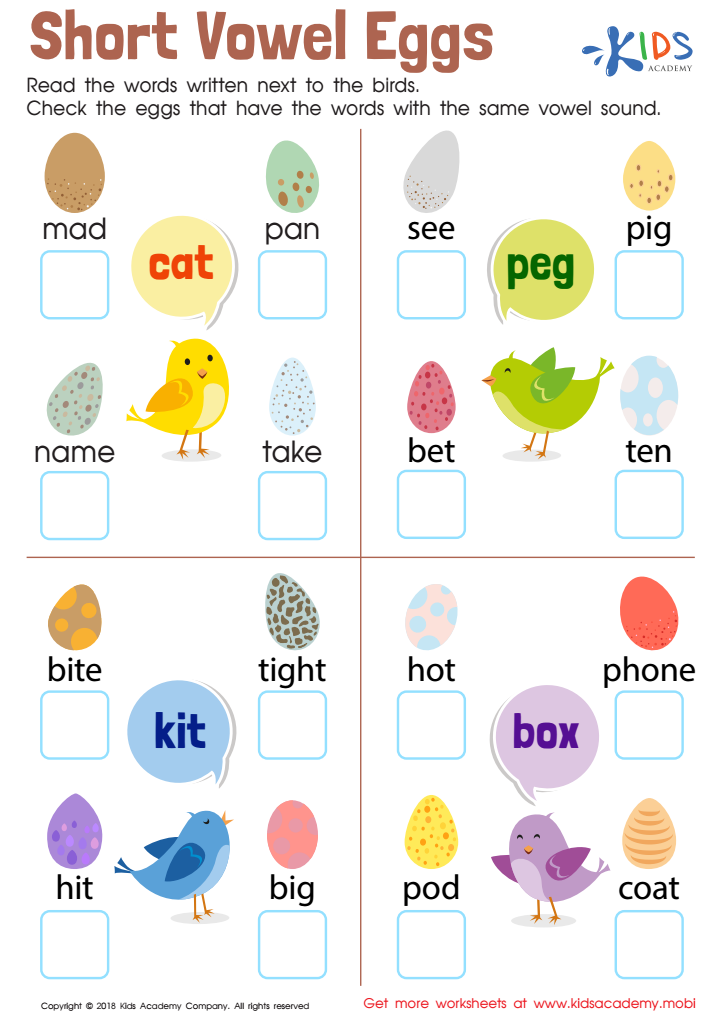
Short Vowel Eggs Worksheet
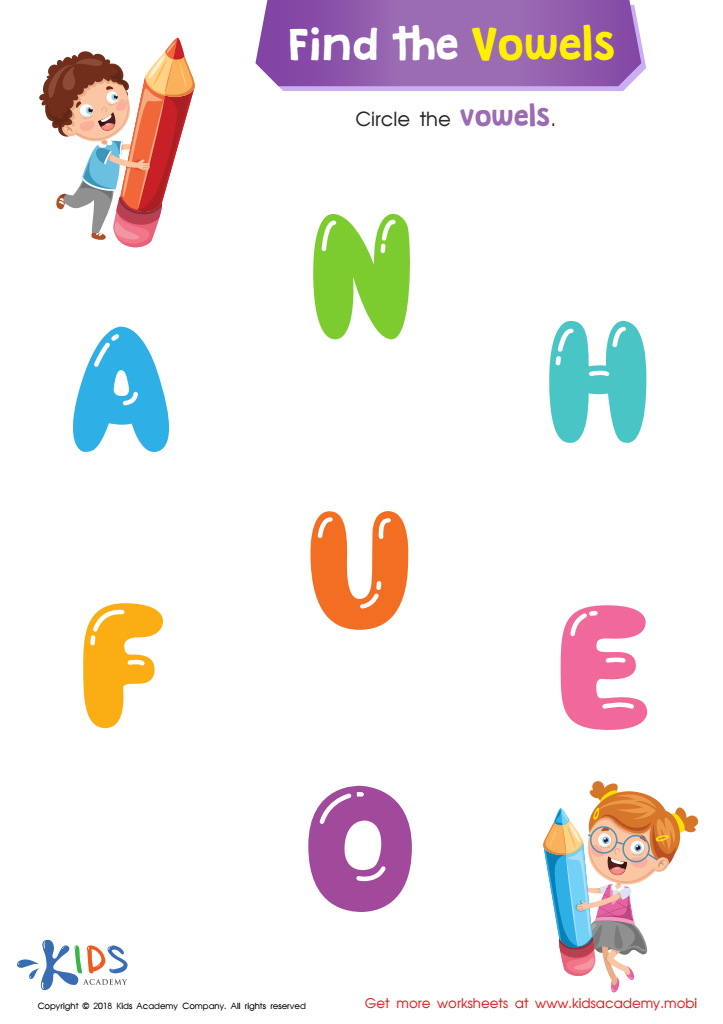
Find the Vowels Reading Worksheet
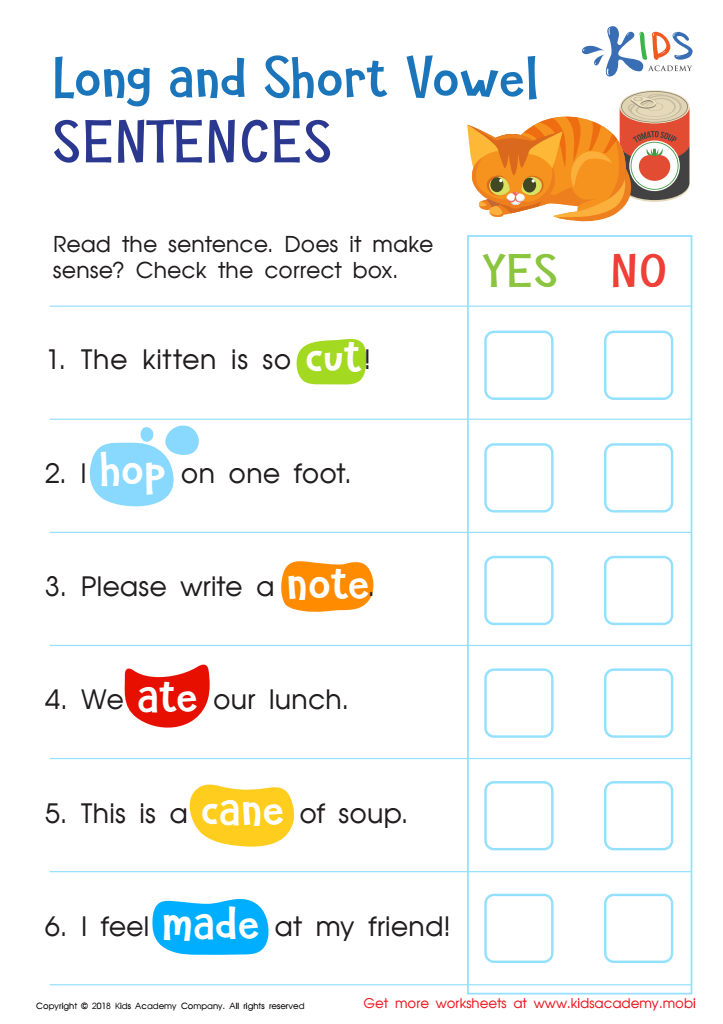
Long and Short Vowel Sentences: Assessment Worksheet



Vowel recognition, along with an understanding of normal vowels and consonants, is crucial for foundational literacy skills in young learners. Parents and teachers play a pivotal role in nurturing these skills, as they lay the groundwork for reading and writing success.
Vowels form the core of word structures, and recognizing them enables children to decode and construct words accurately. When children can easily identify vowels, they gain confidence in their ability to read, which promotes a positive learning experience. Understanding the difference between vowels and consonants further enriches their phonemic awareness, essential for developing strong spelling and pronunciating skills.
Moreover, recognizing vowels is linked to enhanced vocabulary development. Children can experiment with combinations of letters, forming various words and sentences, which deepens their comprehension of language. Active participation from adults in this learning process fosters an encouraging environment and emphasizes the importance of literacy.
In summary, prioritizing vowel recognition and the distinction between vowels and consonants is vital. It equips students with essential tools for academic success while also nurturing a lifelong love for reading, facilitating their overall cognitive and social development. Engaged parents and teachers can significantly impact a child’s early educational journey.