Sound differentiation Normal Vowels Worksheets
3 filtered results
-
From - To
Explore our engaging "Sound Differentiation Normal Vowels Worksheets" designed to enhance early literacy skills for young learners. These worksheets provide a fun and interactive way for kids to identify and differentiate between normal vowel sounds. Each activity promotes phonemic awareness, aiding children in recognizing vowel sounds in various words. Perfect for classroom or home use, our resources help students practice pronunciation and develop reading readiness. Jump into a world of learning through exciting exercises that make mastering vowel sounds an enjoyable adventure. Download our worksheets today and empower your child's journey toward effective communication and reading proficiency!
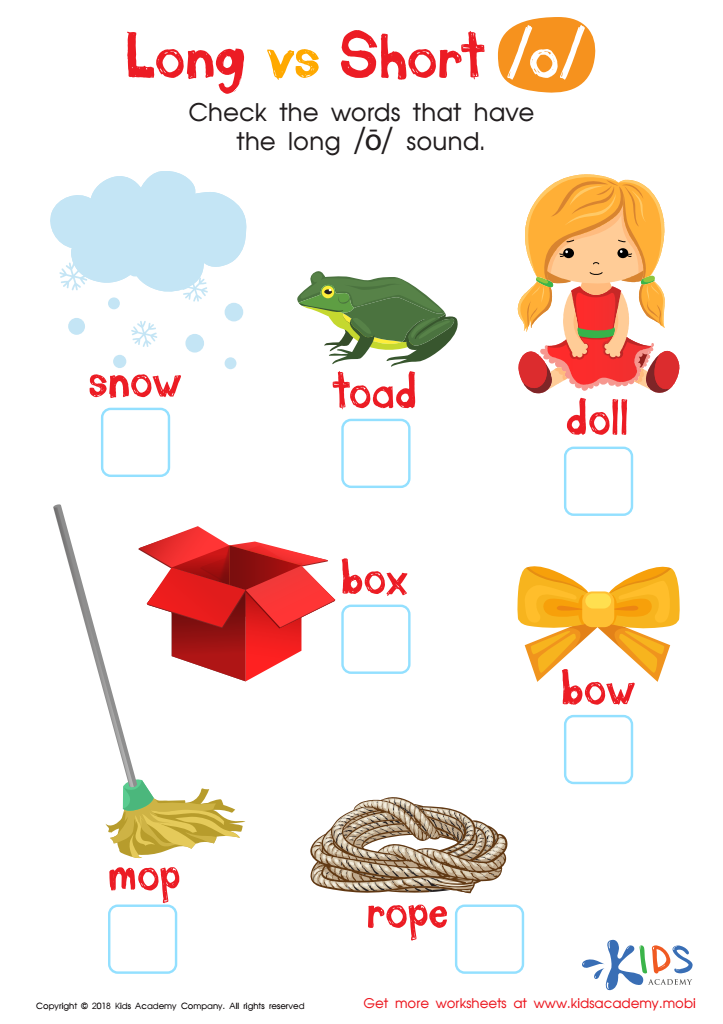
Long vs Short O Reading Worksheet
 Assign to My Students
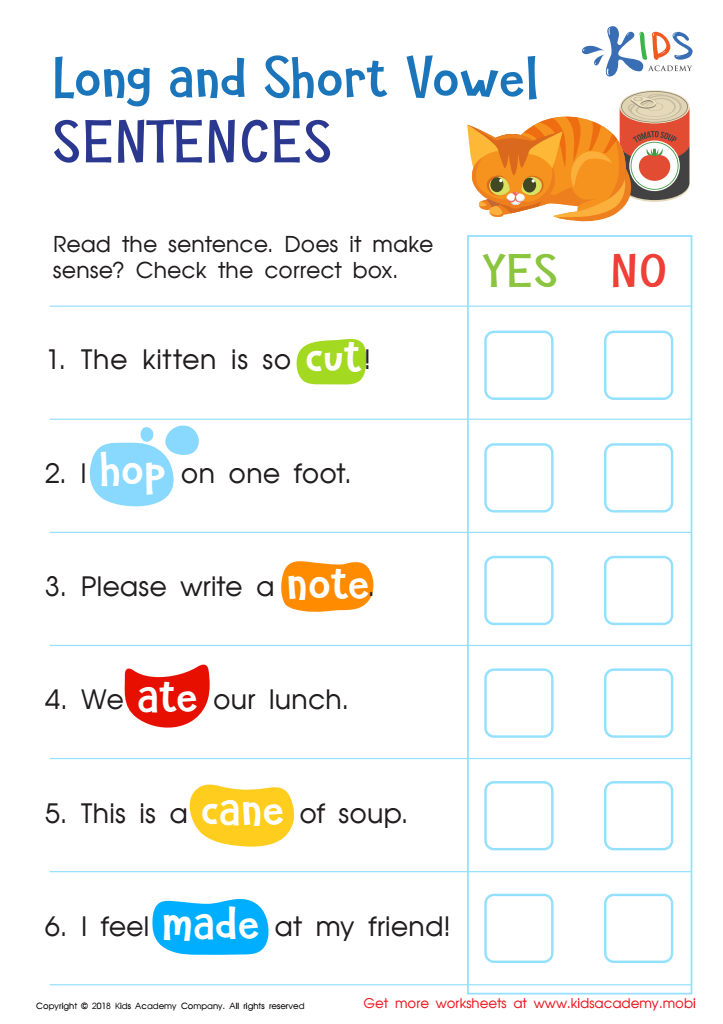
Long and Short Vowel Sentences: Assessment Worksheet
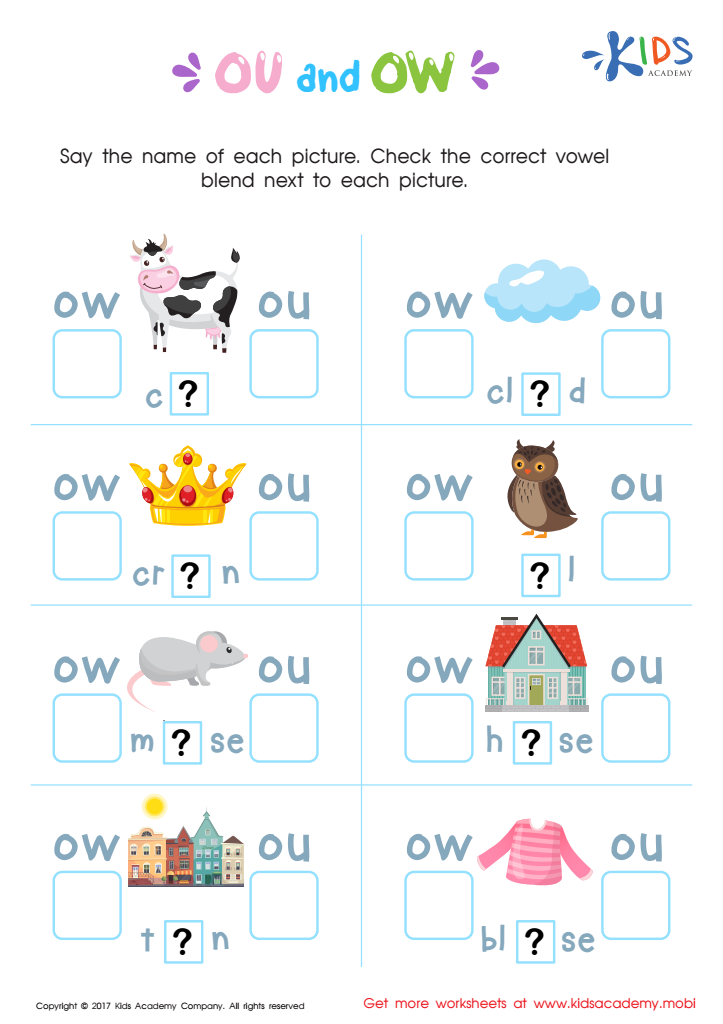
OU and OW Words Worksheet





Sound differentiation of normal vowels is crucial for young learners' language and literacy development. Understanding vowel sounds lays the foundation for reading and writing fluency. Proper pronunciation aids in phonemic awareness, which is the ability to recognize and manipulate vowel sounds—a skill essential for decoding words and building vocabulary.
Parents and teachers should care about this aspect of learning because it directly influences a child's ability to communicate effectively. When children can differentiate vowel sounds, they become more adept at spelling, as many spelling rules are influenced by vowel combinations. Additionally, mastering vowel sounds can boost a child's confidence in their speaking and reading abilities, fostering a love for literacy.
Moreover, in today's multicultural classrooms, children encounter diverse dialects and accents. Fostering sound differentiation equips children with the skills to comprehend and appreciate variations, promoting inclusivity. As young readers expand their phonetic awareness, they learn to tackle more advanced texts, preparing them for academic success in the years ahead. Ultimately, attention to sound differentiation not only supports language acquisition but also aids in overall cognitive development, setting the stage for lifelong learning.






