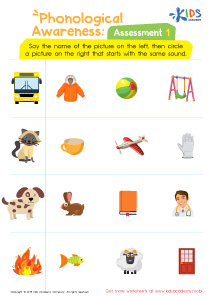
Sound recognition Normal Vowels Worksheets
5 filtered results
-
From - To
Boost your child's reading and pronunciation skills with our Sound Recognition Normal Vowels Worksheets, designed to make learning both fun and effective. These carefully crafted worksheets help young learners identify and differentiate sounds of common vowels, enhancing their phonetic awareness. Our engaging exercises include vibrant images, easy word matching, and interactive activities tailored to support early literacy development. Perfect for classrooms and homeschooling, these resources align with early grade learning standards. Unlock the joy of reading from the alphabet's core sounds and give your child the confidence to excel in their literacy journey. Visit now and explore our free printable worksheets!
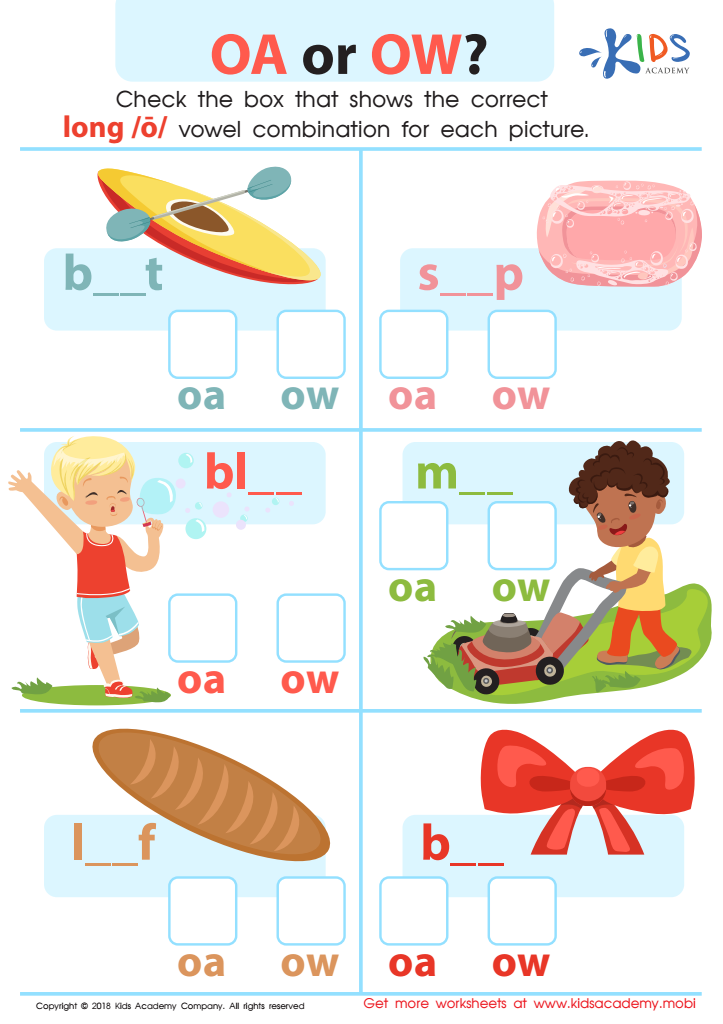
Reading: OA or OW Worksheet
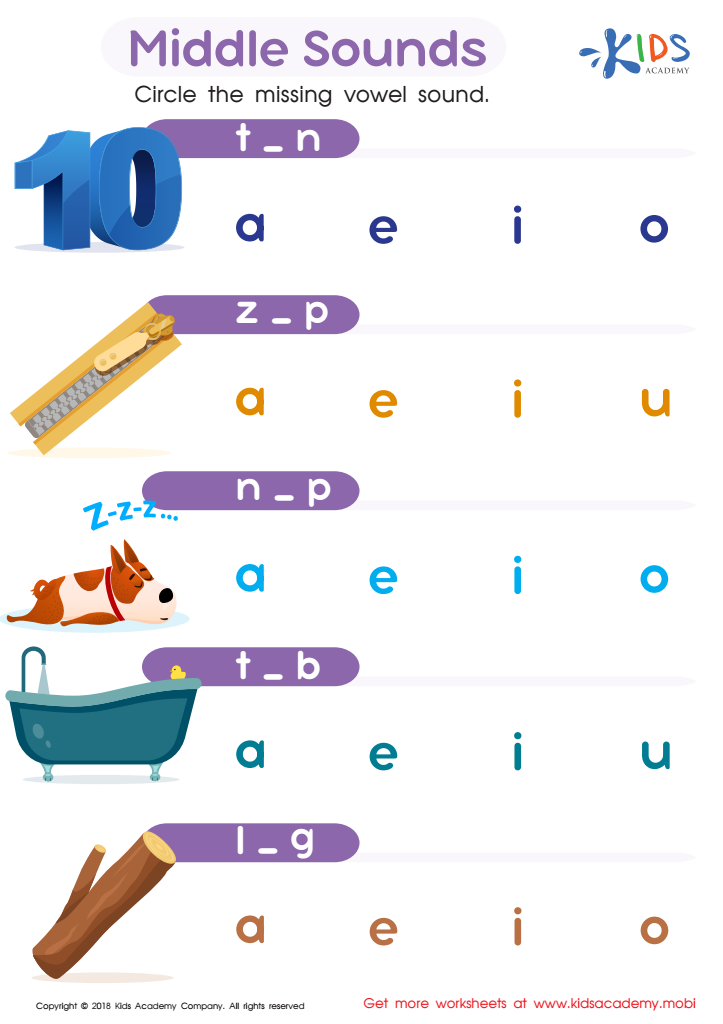
Middle Sounds Worksheet

Long and Short U Worksheet
 Assign to My Students
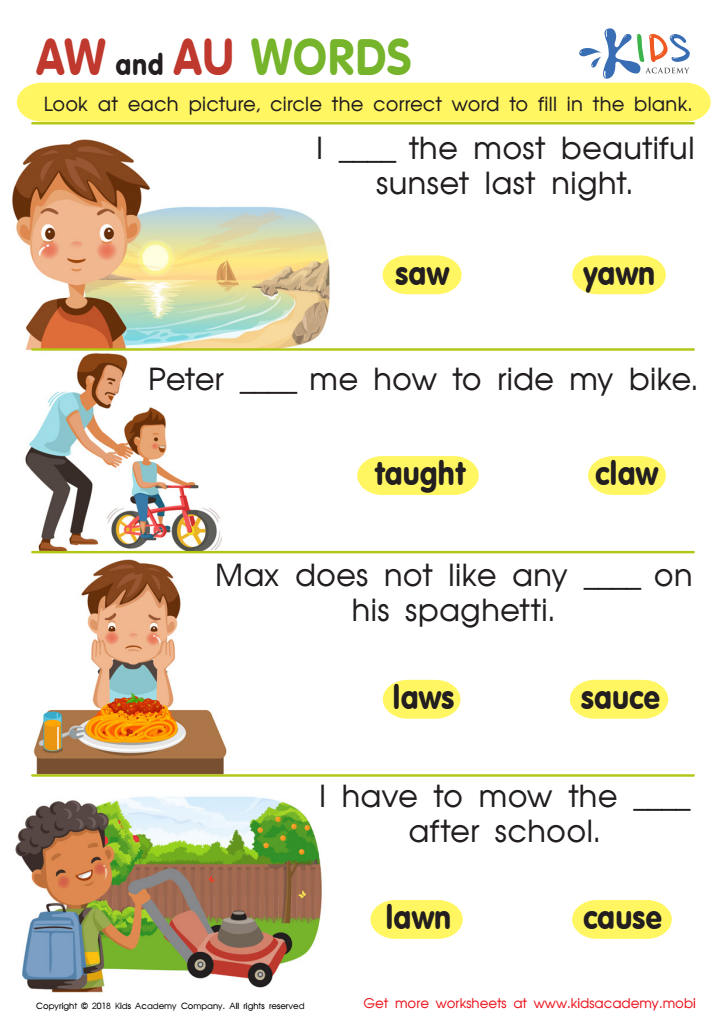
Reading: AW and AU Words Worksheet
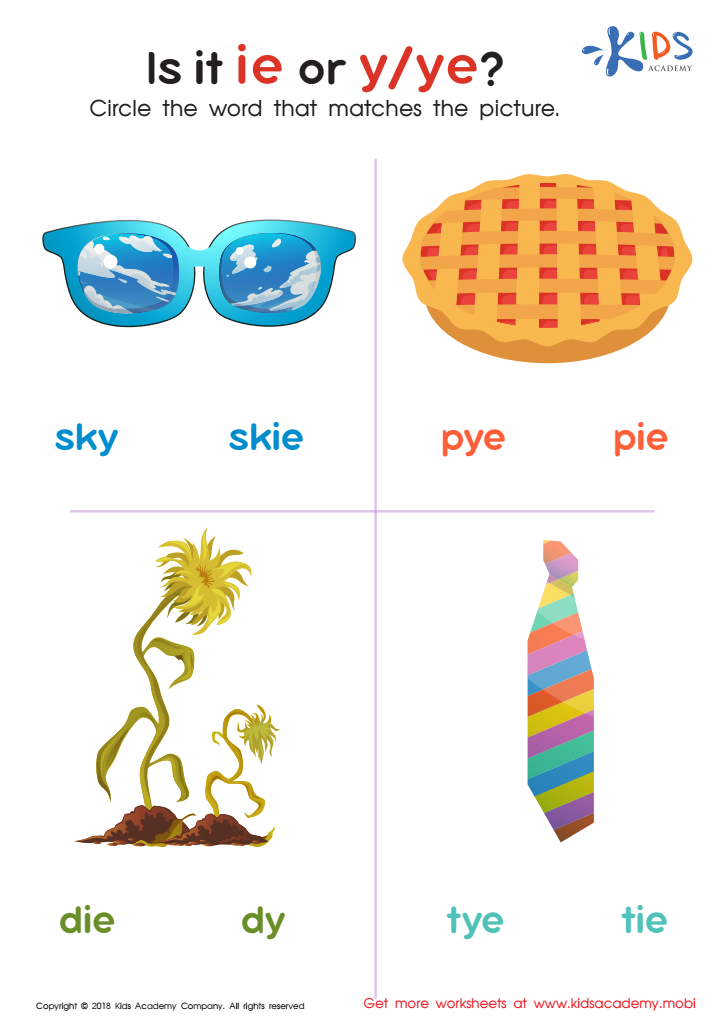
Is It IE or Y/Ye? Worksheet





Parents and teachers should prioritize sound recognition, particularly normal vowels, because it is fundamental to early literacy development. Vowels form the core of phonemic awareness, which is the ability to hear, identify, and manipulate individual sounds in spoken words. Mastery in this skill is crucial for learning to read and spell effectively.
Understanding vowels enhances a child's ability to decode words, making it easier to sound out new words when reading. This kind of phonetic proficiency leads to more fluent reading, which in turn boosts comprehension and fosters a love for reading. Additionally, accurate vowel recognition supports vocabulary development, as children are better equipped to learn and remember new words.
For young learners, vowels can be tricky because they have multiple sounds (short and long vowels), but teaching these variations systematically helps children better navigate the complexities of the English language. Moreover, early difficulties in distinguishing vowel sounds can lead to persistent reading challenges. Addressing these issues early can prevent long-term academic, emotional, and social difficulties related to reading failures.
In summary, focusing on sound recognition and normal vowels lays a robust foundation for overall linguistic skills, setting children on a successful path in their educational journey. Investing time and resources in this area benefits both immediate learning and long-term academic outcomes.