Reading comprehension Normal Grade 1 Consonant Digraphs Worksheets
6 filtered results
-
From - To
Enhance your first grader's reading skills with our "Reading Comprehension Normal Grade 1 Consonant Digraphs Worksheets." Designed to build a strong foundation in phonics, these worksheets focus on common consonant digraphs such as "sh," "ch," "th," and "wh." By blending these digraphs with familiar words, students will improve their decoding and reading comprehension abilities. Each worksheet includes engaging activities and stories that make learning interactive and fun. Perfect for reinforcing classroom lessons or providing additional practice at home. Help your child confidently navigate the world of reading with our expertly crafted consonant digraphs worksheets.
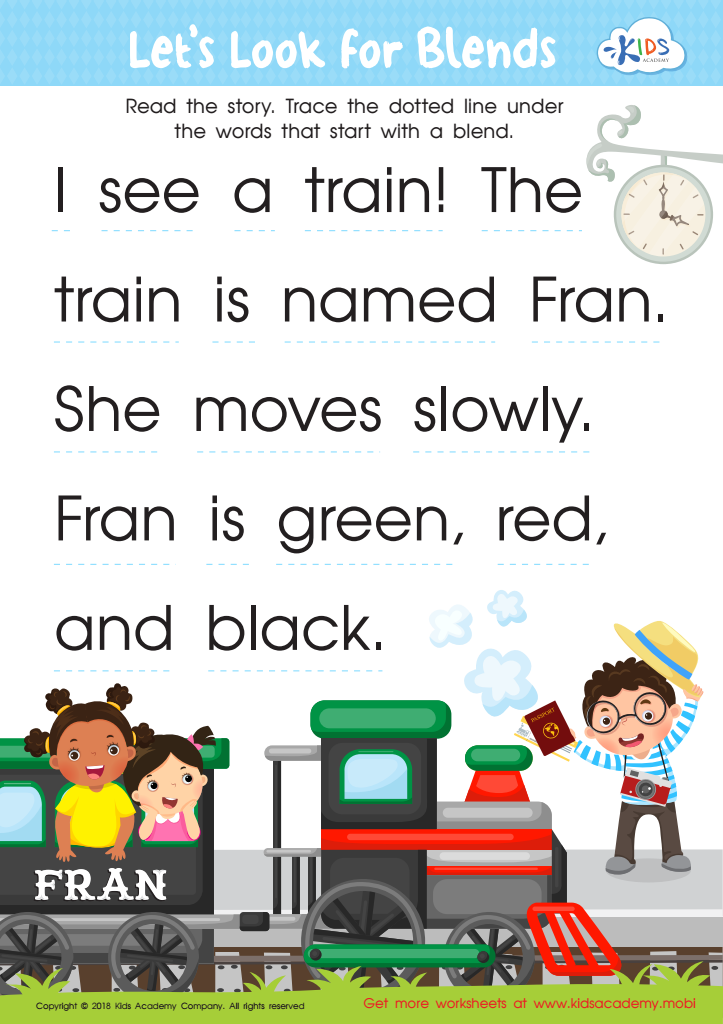
Let's Look for Blends Worksheet
 Assign to My Students
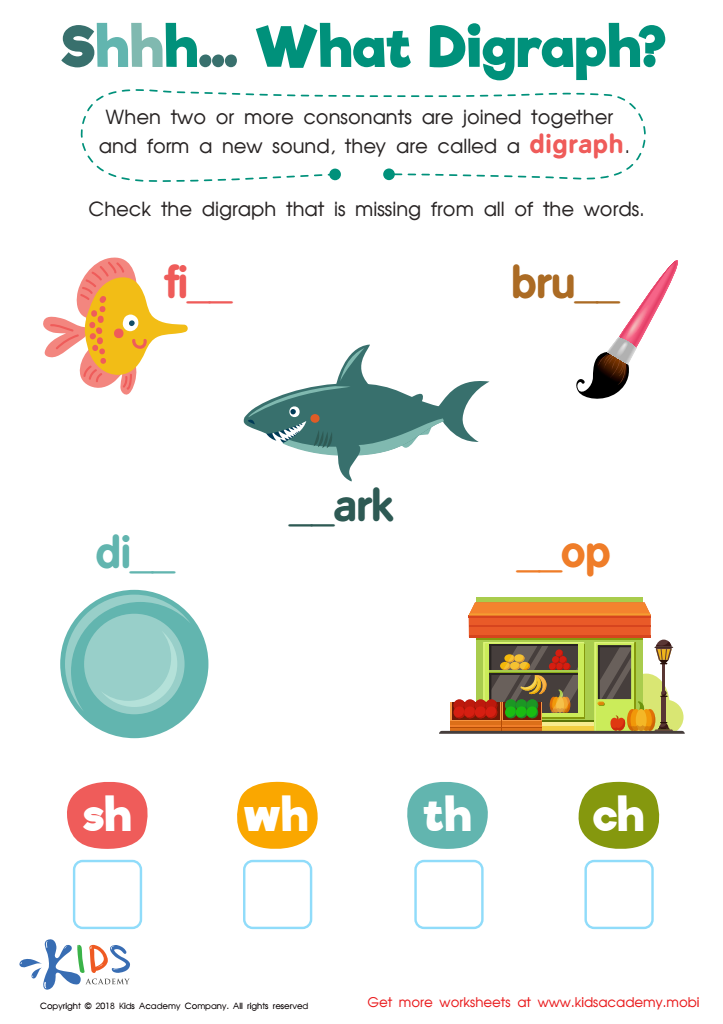
Shhh... What Digraph? Worksheet
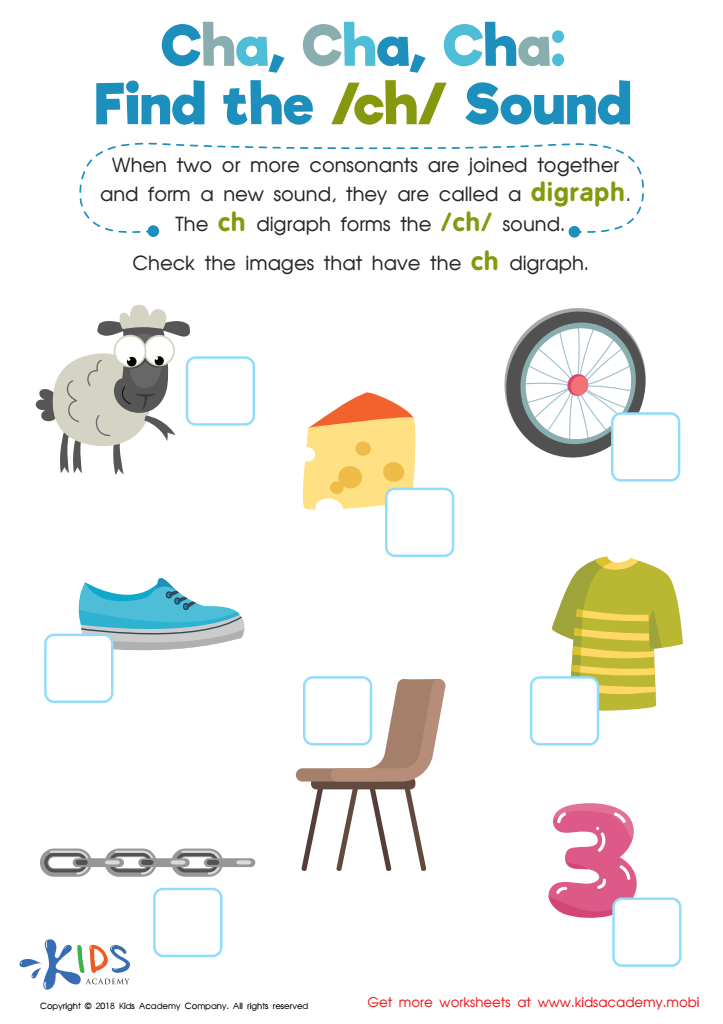
Cha, Cha, Cha: Find the /Ch/ Sound Worksheet
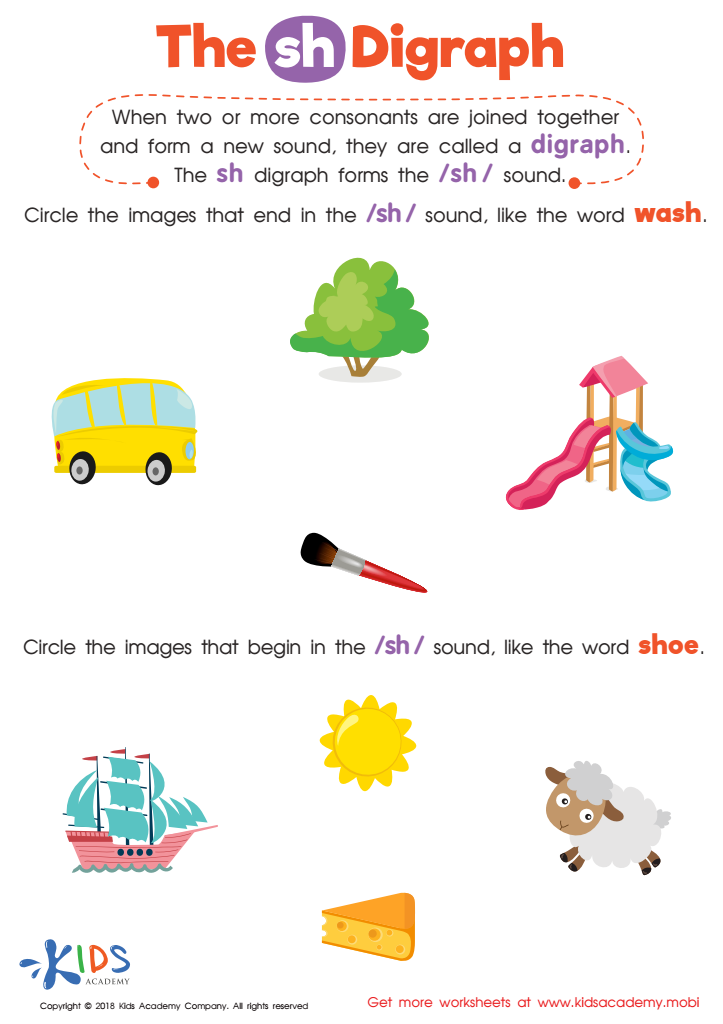
The SH Digraph Worksheet
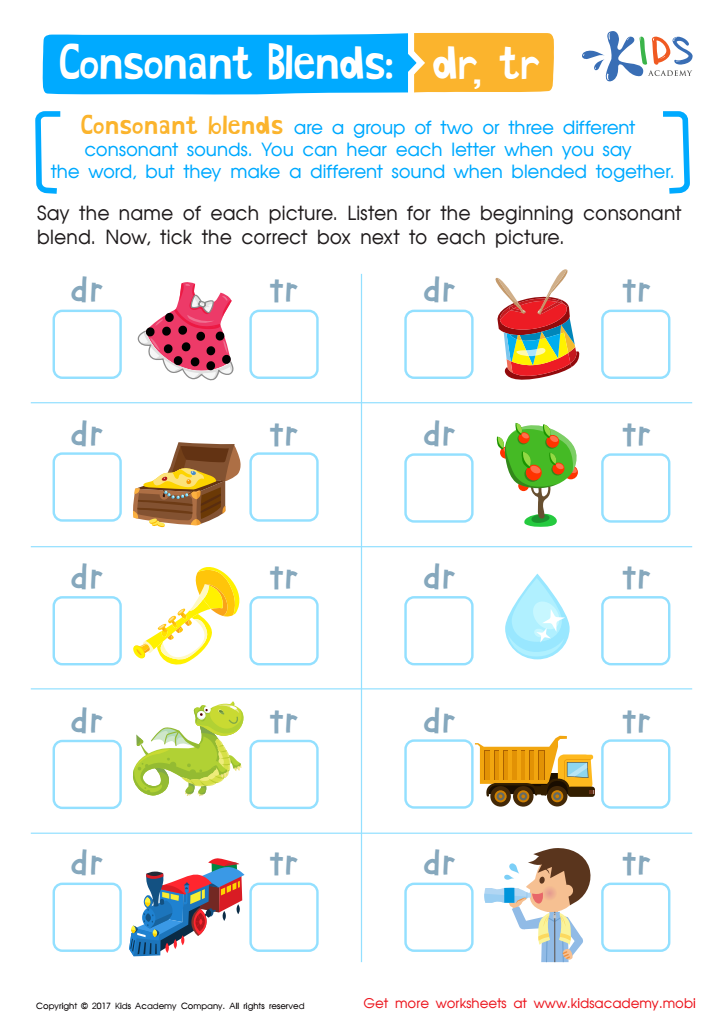
Consonant Blends: "Dr" and "Tr" Printable
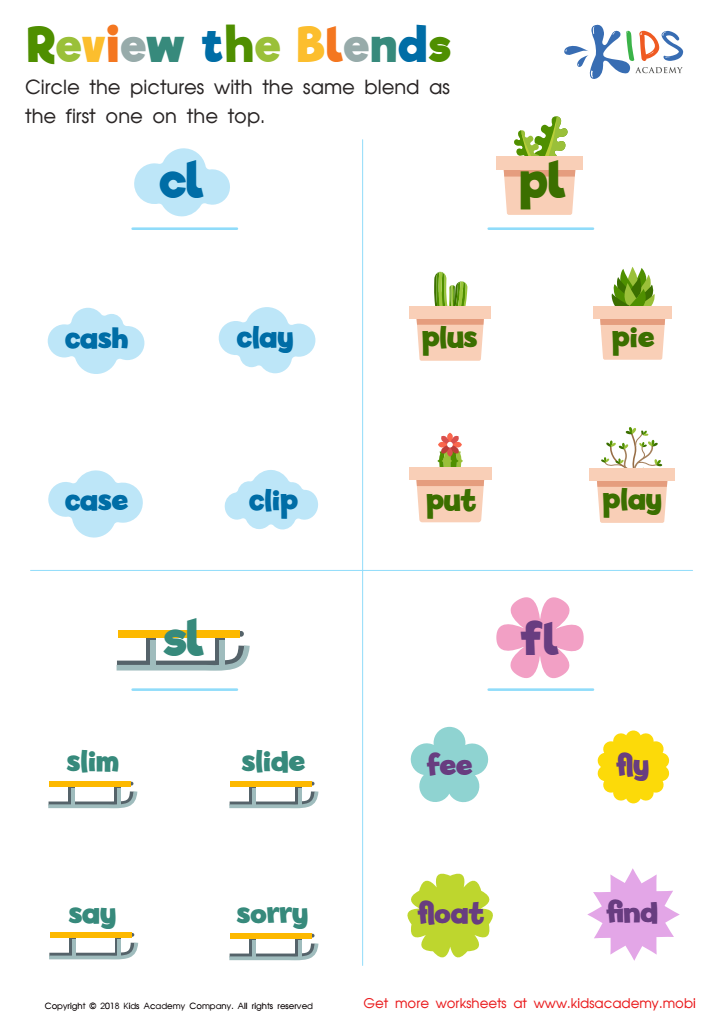
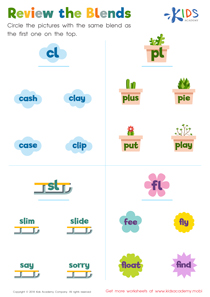
Review the Blends Worksheet


Reading comprehension is an essential skill for young learners, laying the foundation for their future academic success and overall literacy. One key aspect of reading development in Grade 1 is mastering consonant digraphs, which are pairs of consonants that create a single sound, like "sh" in "ship" or "ch" in "chicken." Understanding and recognizing these digraphs is crucial for several reasons.
Firstly, consonant digraphs help children decode words more accurately, enhancing their ability to read fluently. Accurate decoding strategies directly impact reading comprehension, allowing children to understand and interpret the text better. When students can identify and pronounce words correctly, they spend less mental energy on decoding, which enables them to focus on the meaning of the text.
Secondly, familiarizing with consonant digraphs expands a child's vocabulary. Encountering new words becomes less intimidating as children learn the consistent patterns in which certain letter combinations occur. This growing vocabulary further enriches comprehension as children encounter new texts.
Moreover, early mastery of consonant digraphs contributes to spelling skills. As children become proficient readers, they also learn to spell words that include these digraphs accurately, reinforcing their reading and writing abilities.
Parents and teachers should prioritize consonant digraphs in Grade 1 as it equips children with the tools they need for effective reading comprehension, paving the way for long-term academic progress and instilling lifelong love for reading.