Word Recognition Normal Grade 1 Consonant Digraphs Worksheets
5 filtered results
-
From - To
Boost your first grader's reading skills with our Word Recognition Normal Grade 1 Consonant Digraphs Worksheets! Designed to help young learners master essential phonics, these worksheets focus on common consonant digraphs like 'sh', 'ch', 'th', and 'wh'. Engaging activities and colorful illustrations make learning fun and effective, allowing children to recognize and pronounce new words with ease. Ideal for both classroom use and home practice, these worksheets provide the foundational skills needed for confident reading. Help your child excel in literacy with our expertly crafted consonant digraphs worksheets today!
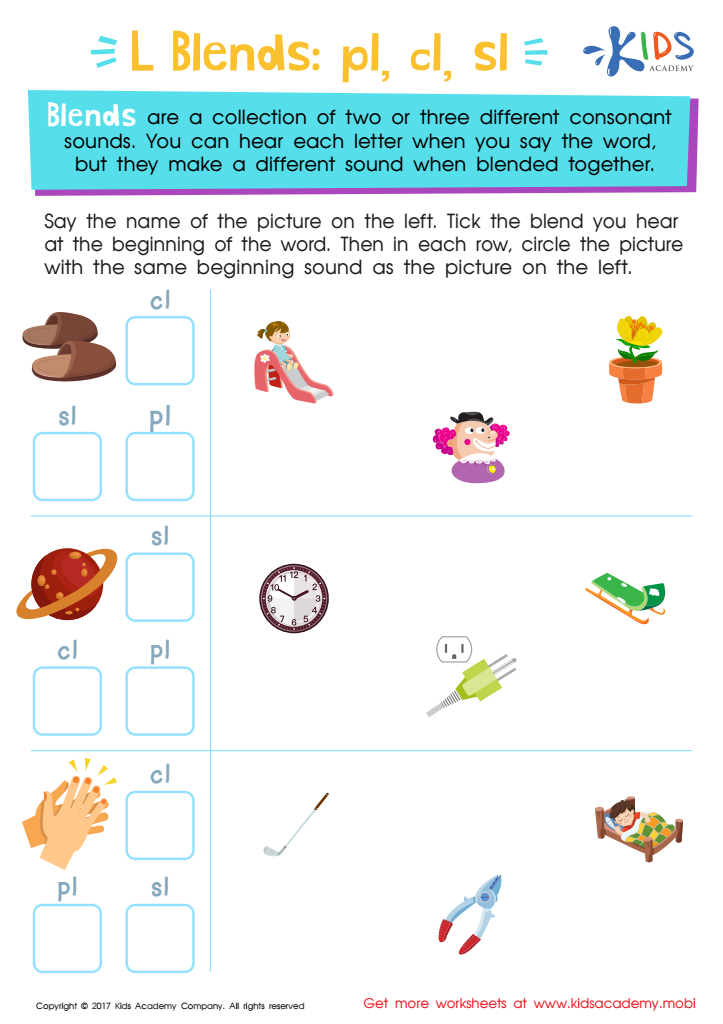
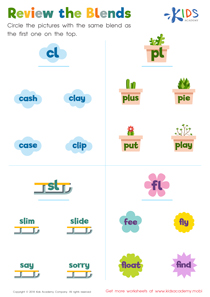
L Blends: "Pl", "Cl" and "Sl" Printable
 Assign to My Students
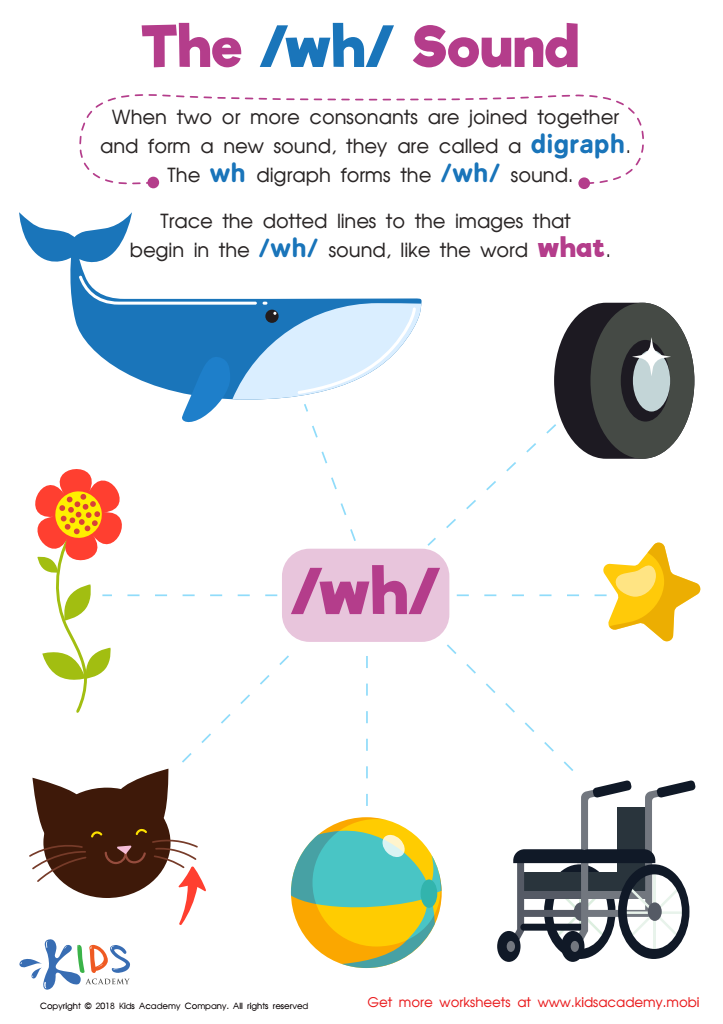
The /wh/ Sound Worksheet
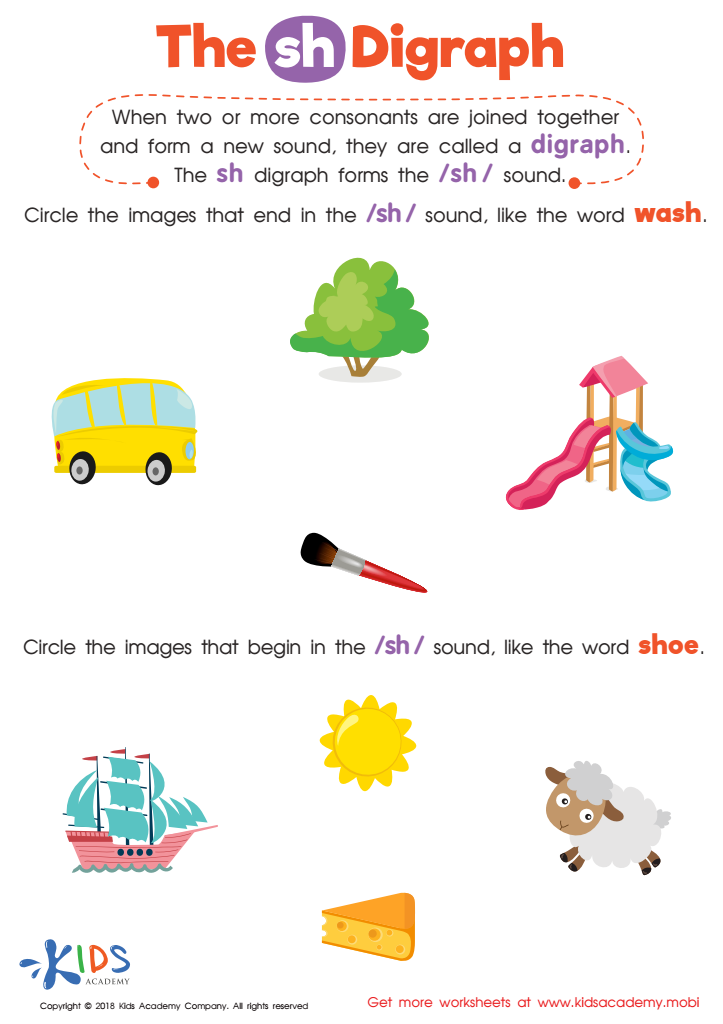
The SH Digraph Worksheet
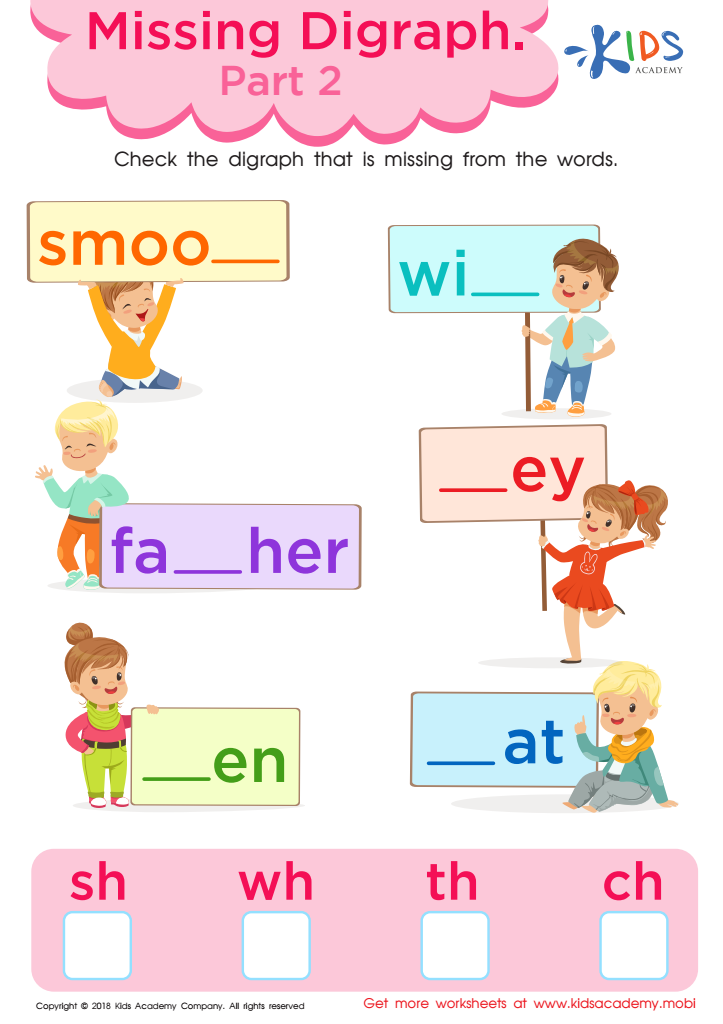
Missing Digraph: Part 2 Worksheet
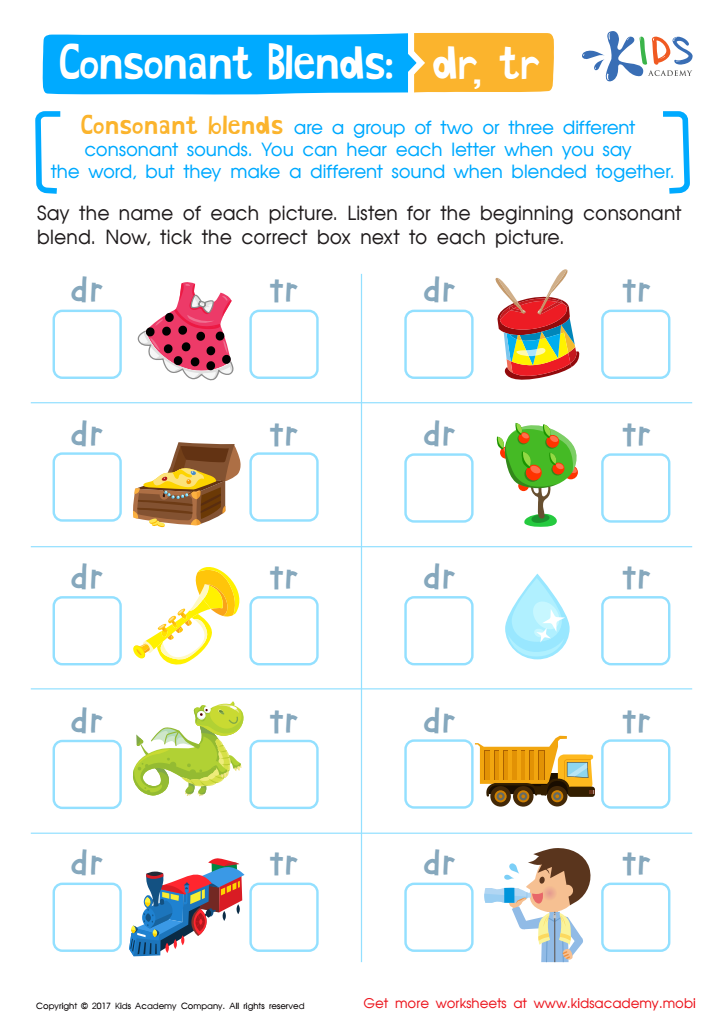
Consonant Blends: "Dr" and "Tr" Printable


Consonant digraphs – pairs of consonants that together represent a single sound, like "ch," "sh," "th," and "ph" – are crucial building blocks in early literacy development. Understanding these digraphs is a key aspect of word recognition in first-grade readers, and both parents and teachers should be invested in ensuring children master them.
Firstly, early and accurate recognition of consonant digraphs enhances children’s phonemic awareness, enabling them to decode words more efficiently. This leads to smoother and more fluent reading, an important milestone for young learners. Without a clear grasp of these diagraphs, students may struggle with reading comprehension and face difficulties in other subjects due to reading challenges.
Secondly, developing knowledge in consonant digraphs boosts spelling skills. When children learn to identify and employ these letter combinations, they are better able to spell words correctly, reinforcing their overall literacy.
Moreover, early success in reading builds confidence and fosters a love for reading. Children who find reading enjoyable and manageable are more likely to become lifelong learners, enthusiatic about exploring new texts.
By paying attention to word recognition and consonant digraphs, parents and teachers pave the way for academic success and a lasting appreciation for literacy. This investment early in education reaps long-term benefits as it equips children with necessary skills for their educational journey and beyond.