Reading comprehension Normal Grade 1 Consonants Worksheets
6 filtered results
-
From - To
Enhance your first grader's reading skills with our "Reading Comprehension Normal Grade 1 Consonants Worksheets"! These engaging and educational worksheets from Kids Academy focus on consonant recognition and usage, providing young learners with valuable practice. Each worksheet combines fun activities with essential reading comprehension exercises, designed to build a strong foundation in reading. Perfect for classroom or home use, these worksheets will help your child develop critical thinking skills, improve their ability to decode words, and gain confidence in reading. Make learning enjoyable with Kids Academy's expertly crafted blend of creativity and pedagogy.
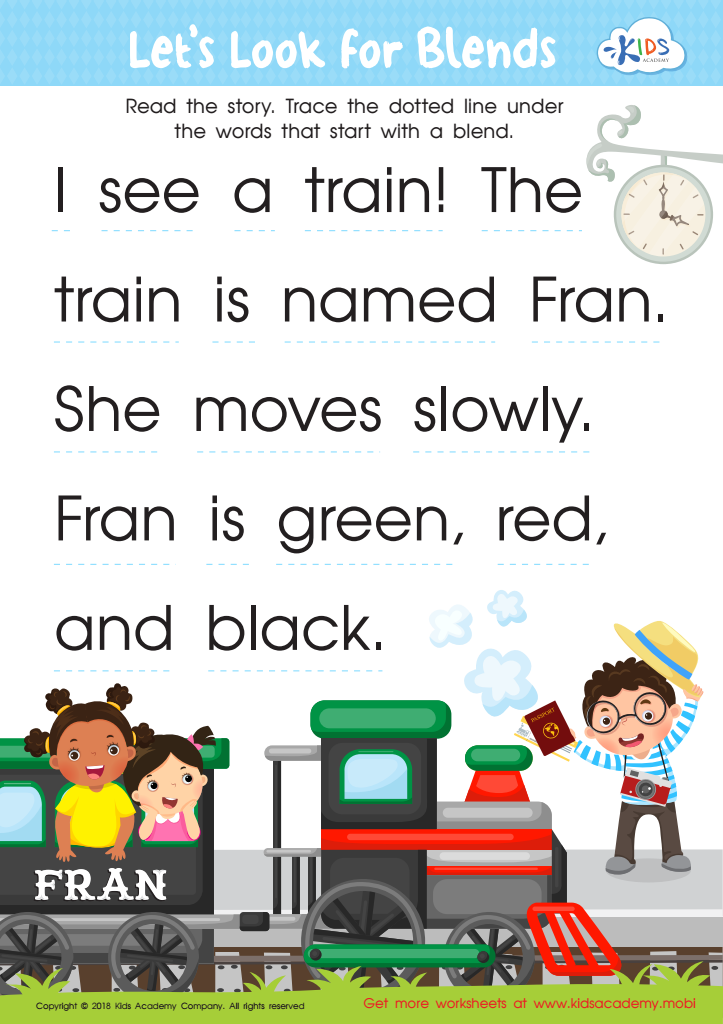
Let's Look for Blends Worksheet
 Assign to My Students
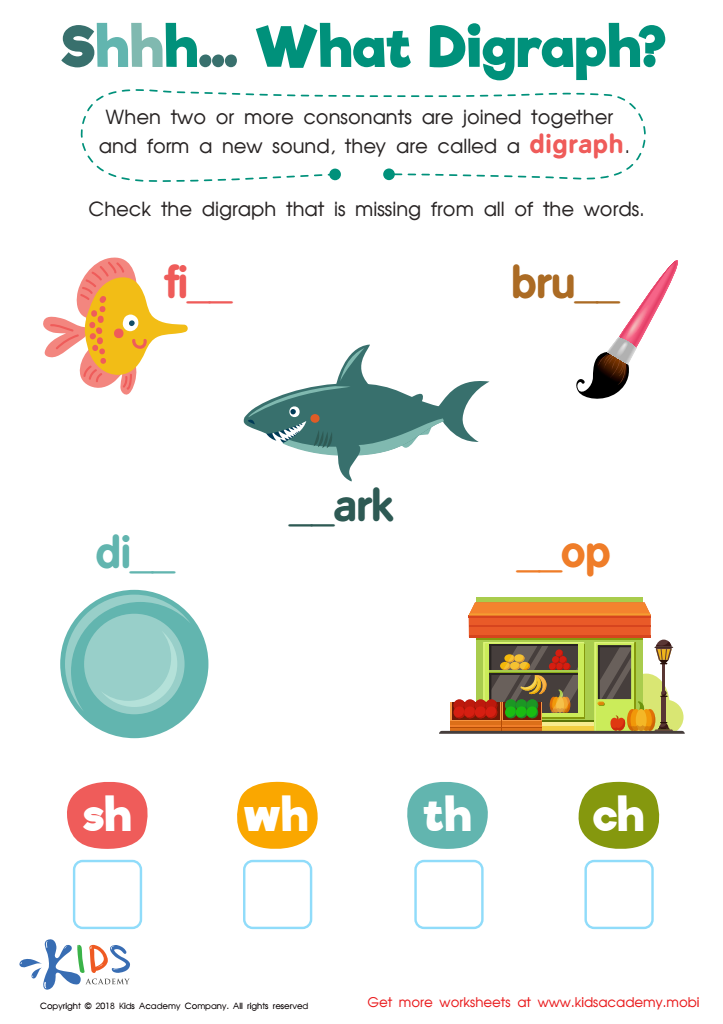
Shhh... What Digraph? Worksheet
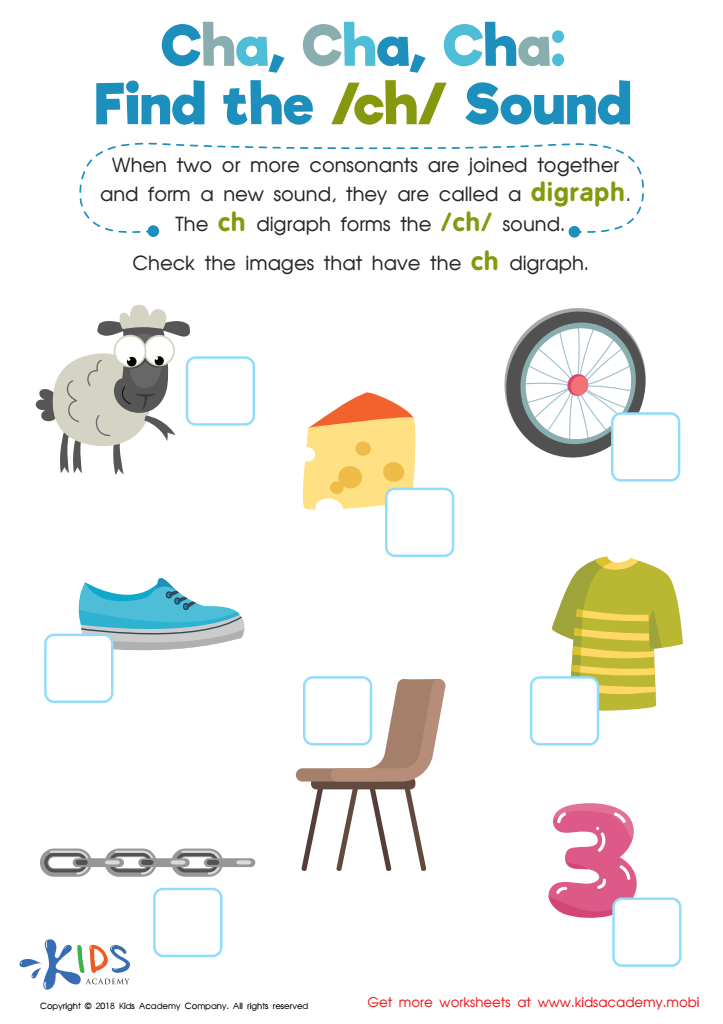
Cha, Cha, Cha: Find the /Ch/ Sound Worksheet
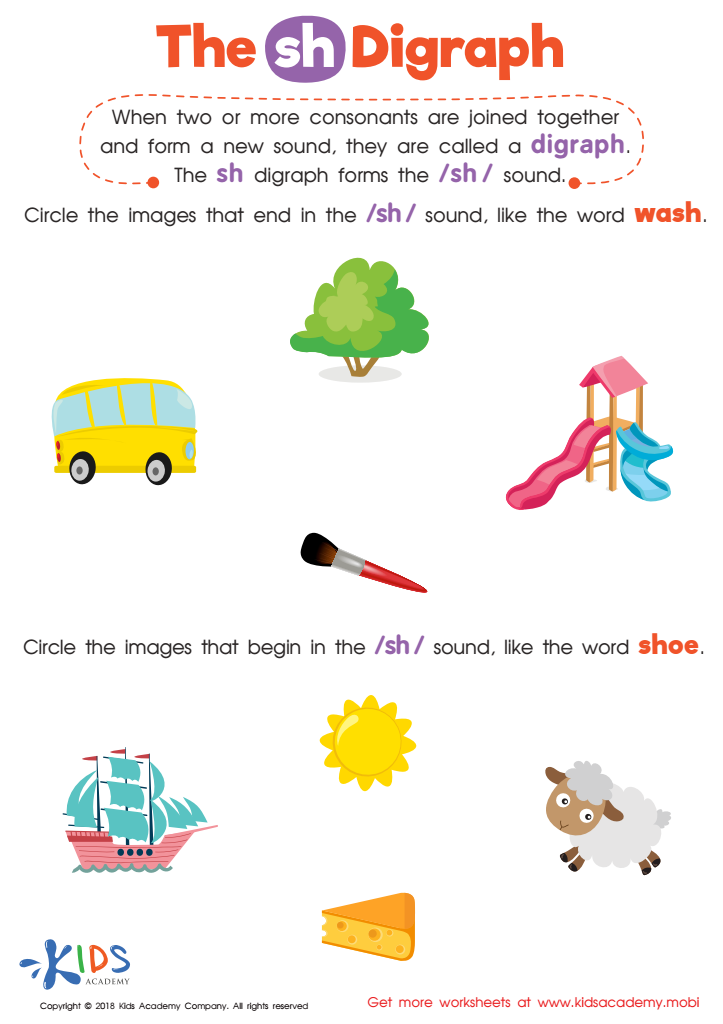
The SH Digraph Worksheet
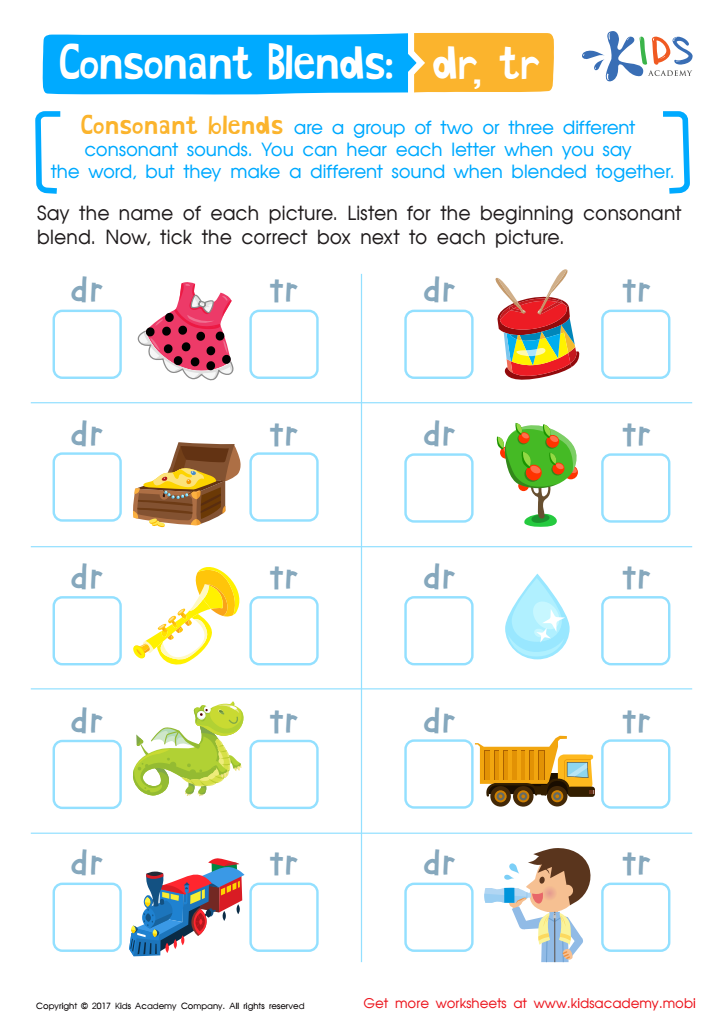
Consonant Blends: "Dr" and "Tr" Printable
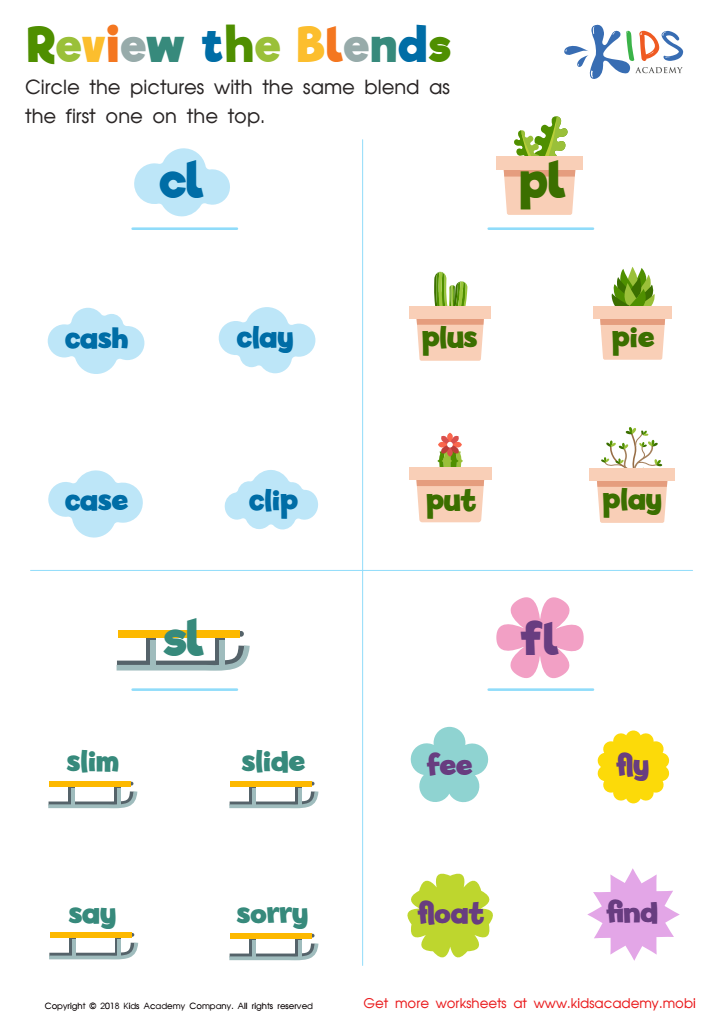
Review the Blends Worksheet


Reading comprehension is a fundamental skill that serves as the foundation for all future learning, making it crucial for parents and teachers to prioritize this aspect, especially in early grades like Grade 1. Developing a solid understanding of consonants is essential for young learners, as it forms the building blocks of phonics, which is pivotal in decoding words and understanding their meanings.
When children grasp consonants early on, they become more confident readers. This confidence feeds into their ability to read more fluidly, expanding their vocabulary and comprehension skills over time. Early reading proficiency has a direct correlation with academic success in other subjects. Children who have solid reading comprehension skills are better equipped to follow instructions, solve problems, and think critically.
Moreover, a strong foundation in early reading makes learning more enjoyable for children. When they can easily decode and comprehend text, they find reading more engaging and are less likely to fall behind. This early encouragement helps instill a lifelong love for reading and learning.
Parents and teachers play a pivotal role in nurturing these skills by providing an environment rich in phonetic learning opportunities and by reinforcing the practical importance of reading well. The more focused they are on teaching basic consonants, the better prepared children will be for future academic challenges.