Phonics Skills Normal Grade 1 Vowel Team Worksheets
4 filtered results
Difficulty Level
Grade
Age
-
From - To
Subject
Activity
Standards
Enhance your first grader's reading abilities with our engaging Phonics Skills Normal Grade 1 Vowel Team Worksheets. Tailored to typical first-grade proficiency levels, these printable worksheets focus on mastering vowel team combinations like 'ea', 'ai', and 'oa'. Through interactive and fun exercises, children learn to recognize, decode, and pronounce vowel teams, building a strong foundation for fluent reading. Each worksheet is thoughtfully designed to captivate young learners' interest while aligning with educational standards. Perfect for classroom use or extra practice at home, these resources support and reinforce critical phonics skills for early readers.
Favorites
With answer key
Interactive
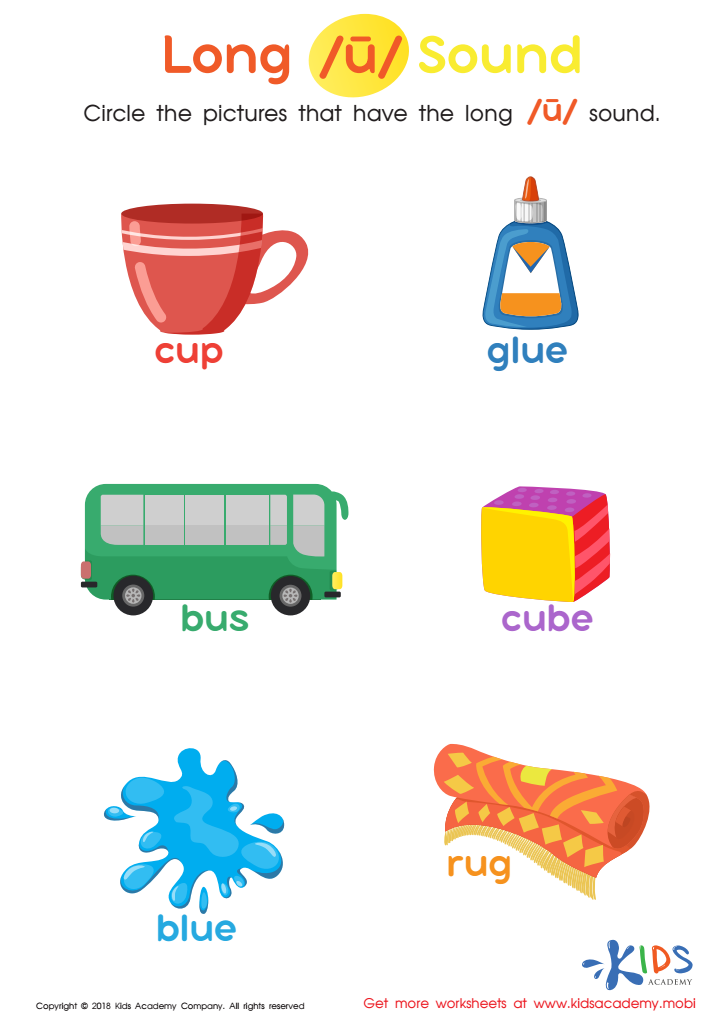
Long «u» Sound Worksheet
This fun and engaging free PDF worksheet teaches kids to differentiate between long and short «u» sounds. Through tracing circles around the correct words, they'll practice their fine motor skills while also recognizing patterns (silent-e for «ū» sound) in closed-syllable words. Bright and cheery pictures make it a great confidence booster for new readers!
Long «u» Sound Worksheet
Worksheet
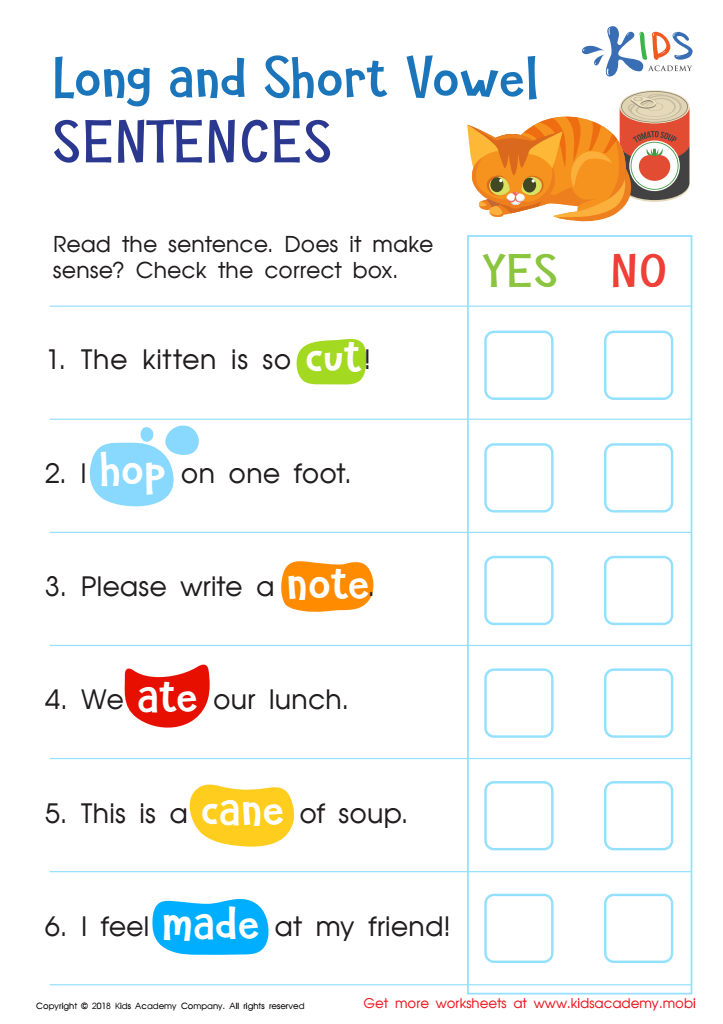
Long and Short Vowel Sentences: Assessment Worksheet
This printable worksheet helps kids practice differentiating between short and long vowel sounds. They'll use context clues to figure out which words make sense in simple sentences. A great way to build reading and writing skills!
Long and Short Vowel Sentences: Assessment Worksheet
Worksheet

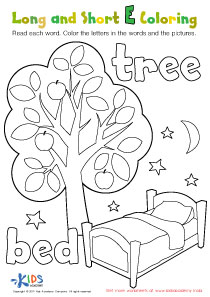
Long and Short E Worksheet
This fun printout makes learning phonics enjoyable for Grade 3 students. Get them to read the words “tree” and “bed” to recognize the different sounds of the letter “E”. After hearing the words they can color the words and the pictures to understand differences between long and short vowels.
Download (PDF)
 Assign to My Students
Assign to My Students
Long and Short E Worksheet
Worksheet
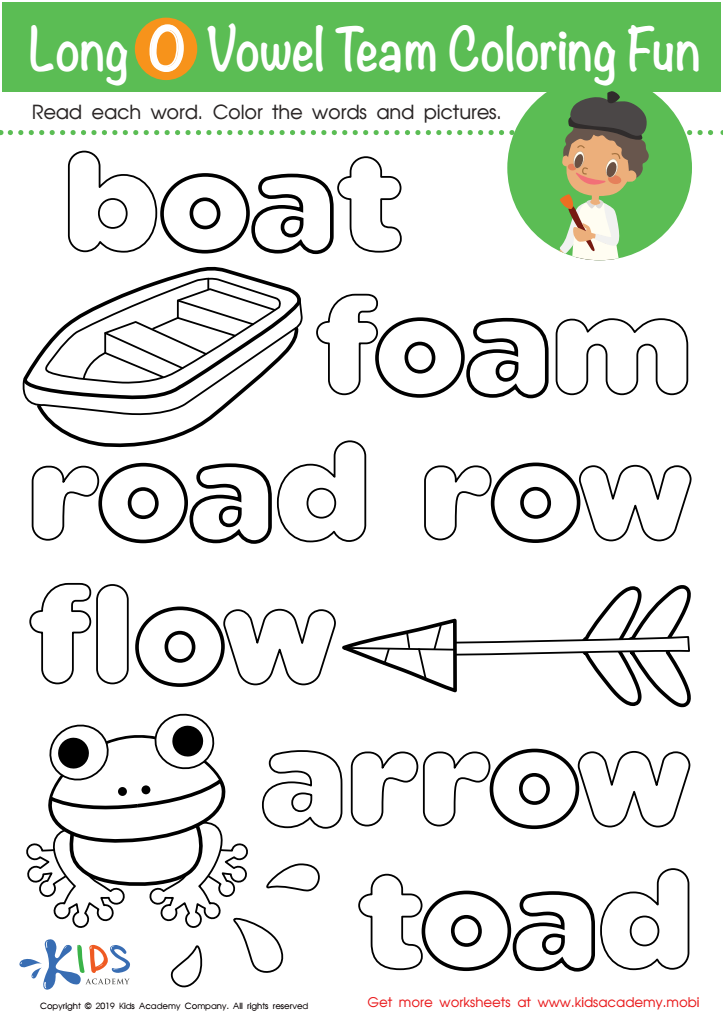
Long O Vowel Team Coloring Worksheet
Divide your class into teams and have them work together to identify and pronounce the long O sound in words like "boat" and "flow". As they read aloud, have the rest of the class listen attentively. Then let teams color in the words and matching pictures, reinforcing the lesson. This simple printout is perfect for phonics lessons and a fun way to energize your class.
Download (PDF)
Assign to My Students
Assign to My Students
Long O Vowel Team Coloring Worksheet
Worksheet
Join Kids Academy for Free
Who is primarily going to use this learning content?


Phonics is a fundamental building block in early literacy, and mastering phonics skills, including vowel teams, is crucial by Grade 1. Vowel teams in phonics refer to pairs of vowels that together create a single, distinct sound (like "ea" in "bread" or "rain" where "ai" makes a different sound). Here are key reasons why parents and teachers should care about these skills:
-
Reading Fluency: Vowel teams help children decode words more quickly and accurately, leading to smoother reading experiences. Proficiency in recognizing and using vowel teams allows young readers to instantly identify both common and new words, improving fluency.
-
Comprehension: Understanding vowel teams supports better word prediction and pronunciation. This, in turn, aids comprehension because children focus less on decoding individual words and more on understanding the story or informational text.
-
Spelling Skills: Knowledge of vowel teams enhances spelling abilities. It helps children predict the common patterns in words, reducing guesswork and errors.
-
Confidence: As children become adept at decoding words using vowel teams, their reading confidence grows. They are more likely to engage with texts and enjoy reading activities, fostering a lifelong love for books.
Ultimately, emphasizing phonics skills like vowel teams in Grade 1 lays a critical foundation for future academic success and literacy development, making it essential for both parents and teachers to prioritize.