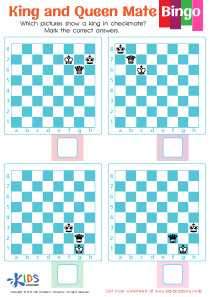
Memory enhancement Normal Grade 1 Chess Worksheets
3 filtered results
Difficulty Level
Grade
Age
-
From - To
Subject
Activity
Standards
Unlock your child's full potential with our Memory Enhancement Grade 1 Chess Worksheets! Perfectly tailored for first graders, these engaging and educational worksheets combine the strategic game of chess with activities designed to boost memory skills. Kids will enjoy fun, interactive exercises that foster critical thinking and concentration as they learn basic chess moves. Developed by education experts, these worksheets are a fantastic tool to enhance learning while ensuring your child has fun. Download now and watch your child's cognitive abilities soar to new heights with our Memory Enhancement Grade 1 Chess Worksheets!
Favorites
With answer key
Interactive
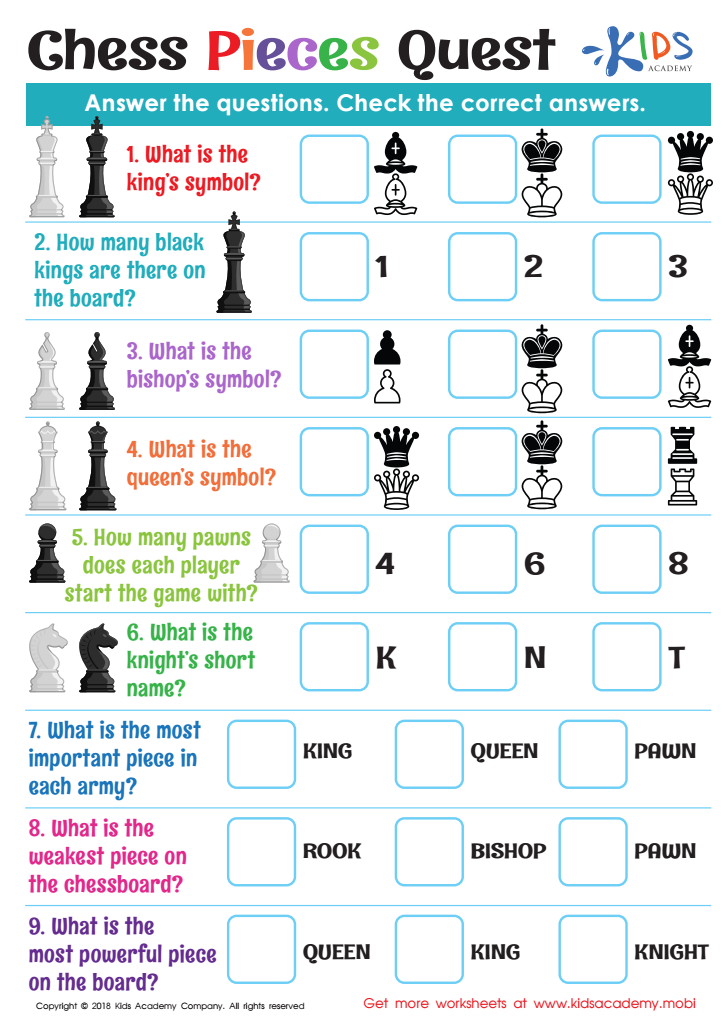
Chess Pieces Quest Worksheet
Help your child prepare for the chess quest by refreshing their knowledge of the symbols and characteristics of each chess piece. Then, have them try the 9 questions on this worksheet. These questions will assess their understanding of the symbols and how many pieces each player starts with.
 Assign to My Students
Chess Pieces Quest Worksheet
Worksheet
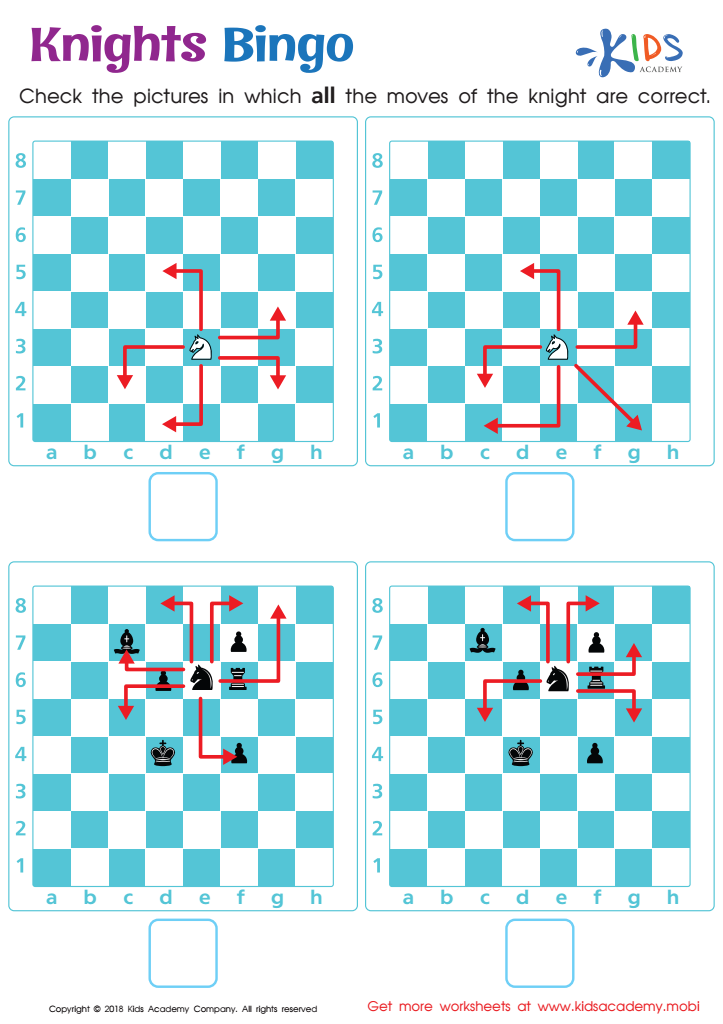
Knights Bingo Worksheet
Help your child identify legal knight moves in this easy worksheet. Review each picture with them, questioning if the knight moves are correct. Then have them verify pictures with correct moves.
Knights Bingo Worksheet
Worksheet
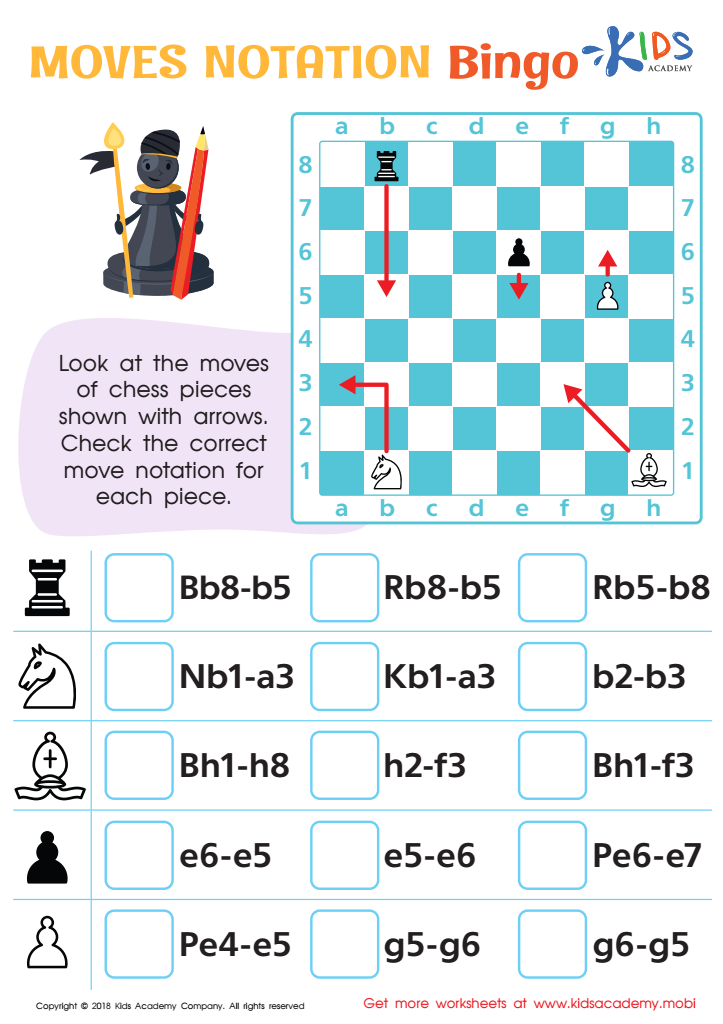
Moves Notation Bingo Worksheet
Test your child's chess notation skills with this simple worksheet. Download the PDF which shows a chess board and arrows pointing to pieces. Ask your child to identify the moves and note them down correctly. The notations needed are for bishop, pawn, rook and knight. Up to 80 words.
Moves Notation Bingo Worksheet
Worksheet
Join Kids Academy for Free
Who is primarily going to use this learning content?




Parents and teachers should care about Memory Enhancement Normal Grade 1 Chess because it offers substantial cognitive and educational benefits. Chess is a strategic game that requires critical thinking and problem-solving skills. Introducing it to first graders can significantly enhance their memory and concentration. Engaging in chess taps into short-term memory to remember the positions of pieces and long-term memory for recalling rules and strategies. By regularly practicing and playing chess, youngsters can improve their ability to focus and remember important details in other academic pursuits.
Moreover, chess fosters important life skills such as patience, persistence, and the ability to think ahead. Children learn to weigh the consequences of their actions, which can translate to better decision-making in everyday life. The game also promotes creativity in developing strategies to overcome challenges.
Additionally, chess can be an inclusive and enjoyable way for young learners to build social skills, as it often involves group activities and teaches sportsmanship. Overall, fostering an early interest in chess improves cognitive skills, supports academic achievement, and cultivates emotional and social development, making it a valuable addition to the educational experience of first graders.