Astronomy basics Normal Grade 1 Worksheets
3 filtered results
-
From - To
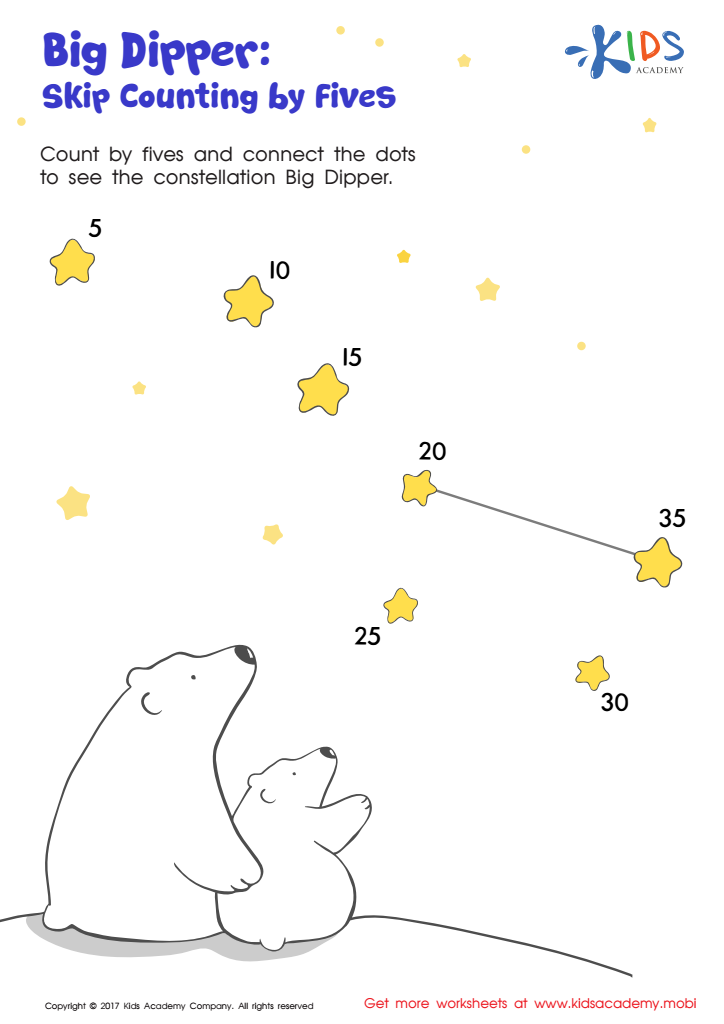
Introduce young learners to the wonders of space with our Astronomy Basics Normal Grade 1 Worksheets. Designed for first graders, these engaging and educational worksheets help students explore key space concepts, such as stars, planets, and the moon. Each worksheet features colorful illustrations and simple activities that cultivate curiosity and foundational knowledge in astronomy. Perfect for classroom use or at-home learning, these worksheets make the mysteries of the universe accessible and fun for early learners. Spark a love for space science with our thoughtfully crafted grade-appropriate materials from Kids Academy!
 Assign to My Students
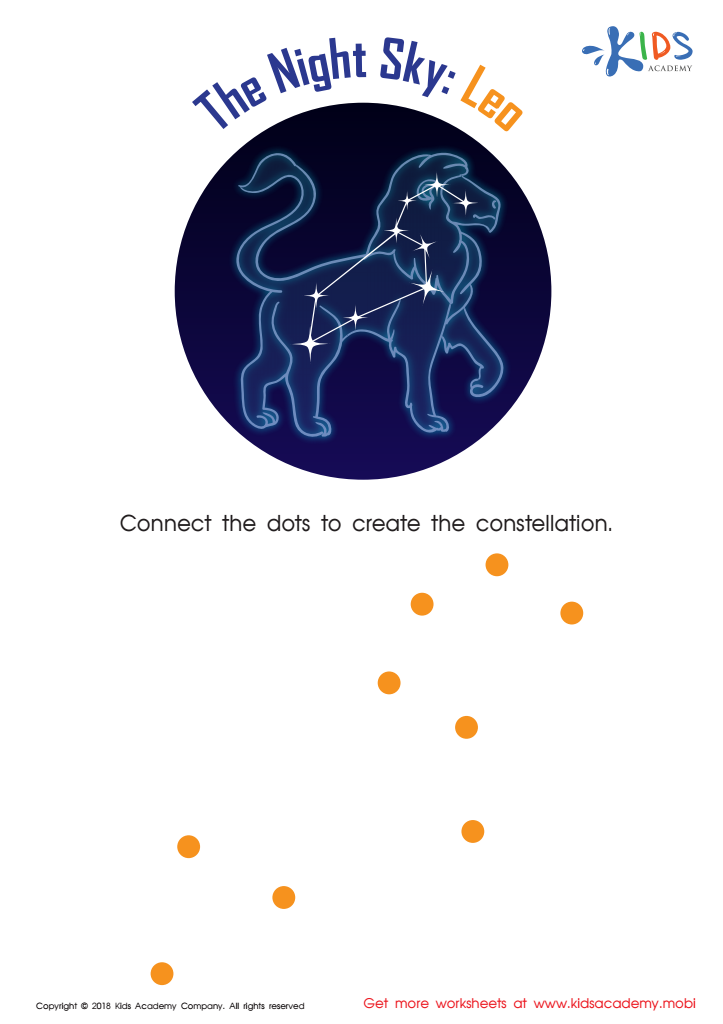
The Night Sky: Leo Worksheet
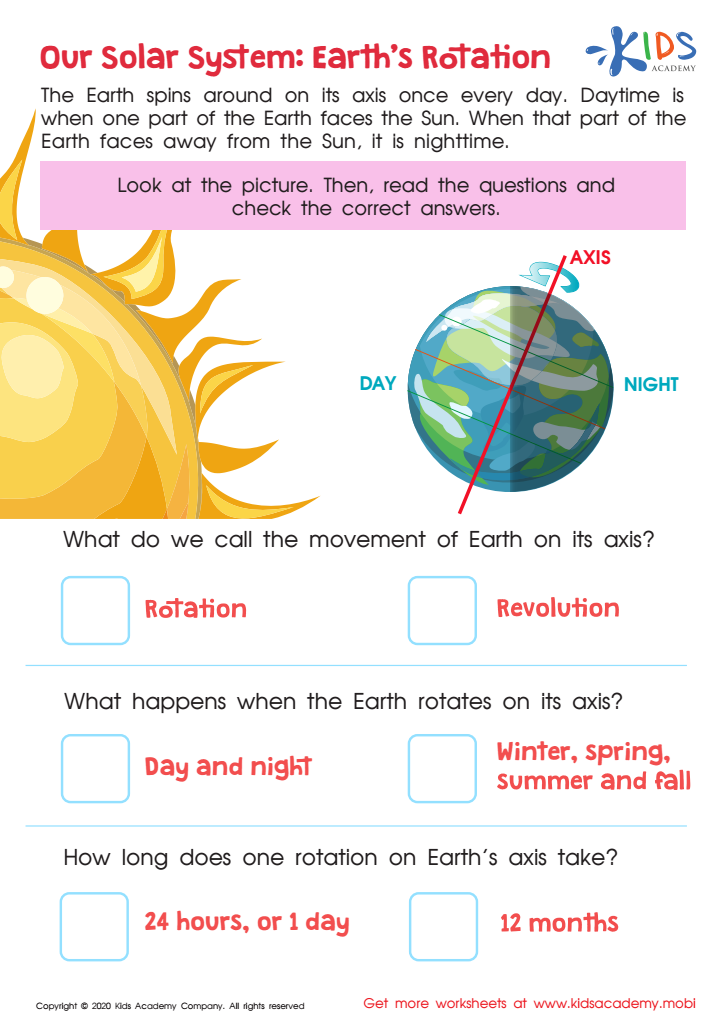
Our Solar System: Earth's Rotation Printable








For parents and teachers, introducing Grade 1 students to the basics of astronomy holds deep significance. At this early developmental stage, children are naturally curious about the world around them. By sparking their interest in astronomy, we nurture this innate curiosity and encourage a lifelong love for science and exploration.
Learning about astronomy allows young children to develop important observational skills. It stimulates their minds, prompting them to ask questions and seek answers, enhancing their critical thinking and problem-solving abilities. Understanding simple concepts like the phases of the moon, the difference between stars and planets, and how Earth orbits the Sun can deeply enhance their appreciation for the natural world.
Moreover, astronomy education at a young age fosters a sense of wonder and respect for the universe. It helps children comprehend their place in the vast cosmos, cultivating a sense of perspective and humility.
From an academic perspective, early exposure to astronomy builds foundational knowledge for future learning in science and related subjects. It incorporates elements of math, physics, and technology, providing a multifaceted educational experience.
In essence, caring about basic astronomy at Grade 1 creates a platform for intellectual growth, inspires a sense of awe, and lays the groundwork for interdisciplinary learning, making it an invaluable part of early education.