Categorizing objects Normal Grade 1 Worksheets
3 filtered results
Difficulty Level
Grade
Age
-
From - To
Subject
Activity
Standards
Welcome to our collection of Categorizing Objects Worksheets for Grade 1! Designed to enhance early learning skills, these engaging and interactive worksheets help young students sort and categorize various objects based on attributes such as color, shape, size, and function. By participating in these fun activities, children develop critical thinking and observational abilities essential for their academic growth. Each worksheet is crafted to appeal to first-graders, encouraging creativity while reinforcing fundamental concepts. Explore our diverse selection of printable worksheets and watch your child’s confidence and skills flourish as they master the art of categorization in a playful and educational environment!
Favorites
With answer key
Interactive
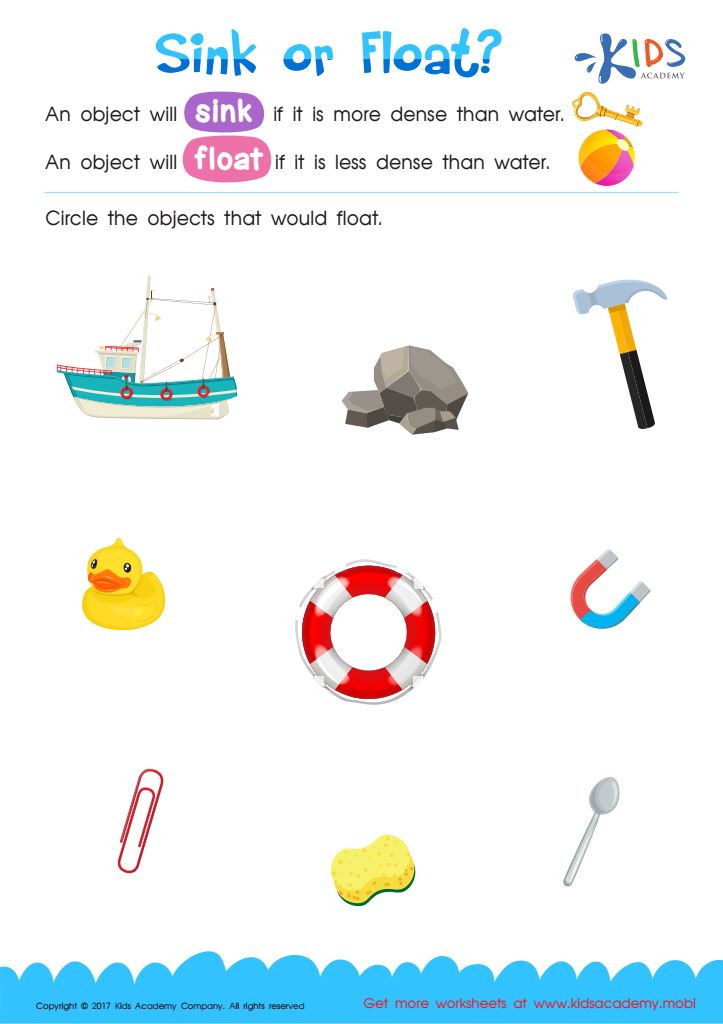
Sink or Float Printable
They'll learn why some things stay on the surface and others sink to the bottom. (80 words)
 Assign to My Students
Sink or Float Printable
Worksheet
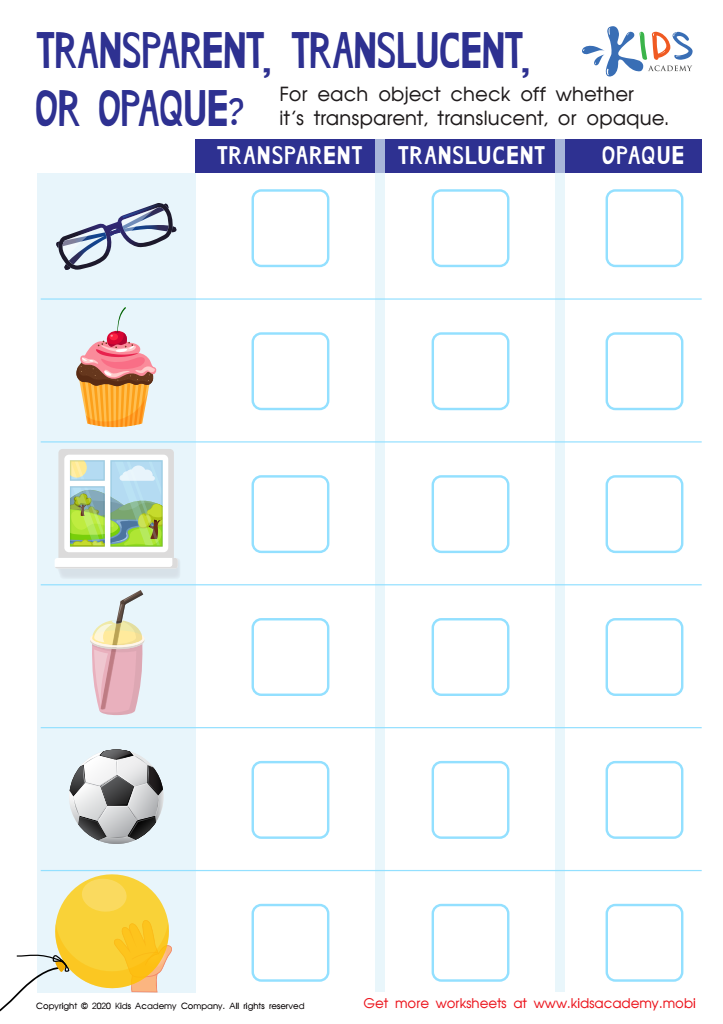
Transparent, Translucent, or Opaque Worksheet
Remind students that transparent objects allow us to see through them, translucent objects let some light pass through, and opaque objects block all light. Have them look at pictures and decide if each object is transparent, translucent, or opaque.
Transparent, Translucent, or Opaque Worksheet
Worksheet
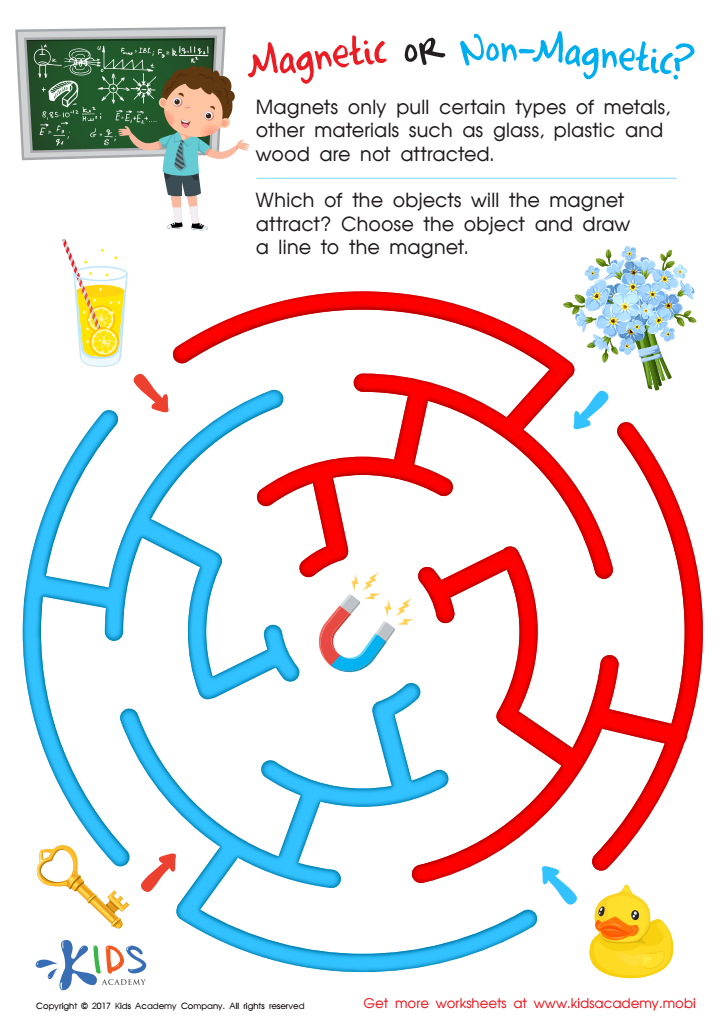
Magnetic or Non–Magnetic Worksheet
Introduce your child to magnetism with this fun maze! Read the summary to explain the concept, then help them find the magnetic object as they navigate the maze. It's a great way to learn and have fun!
Magnetic or Non–Magnetic Worksheet
Worksheet
Join Kids Academy for Free
Who is primarily going to use this learning content?



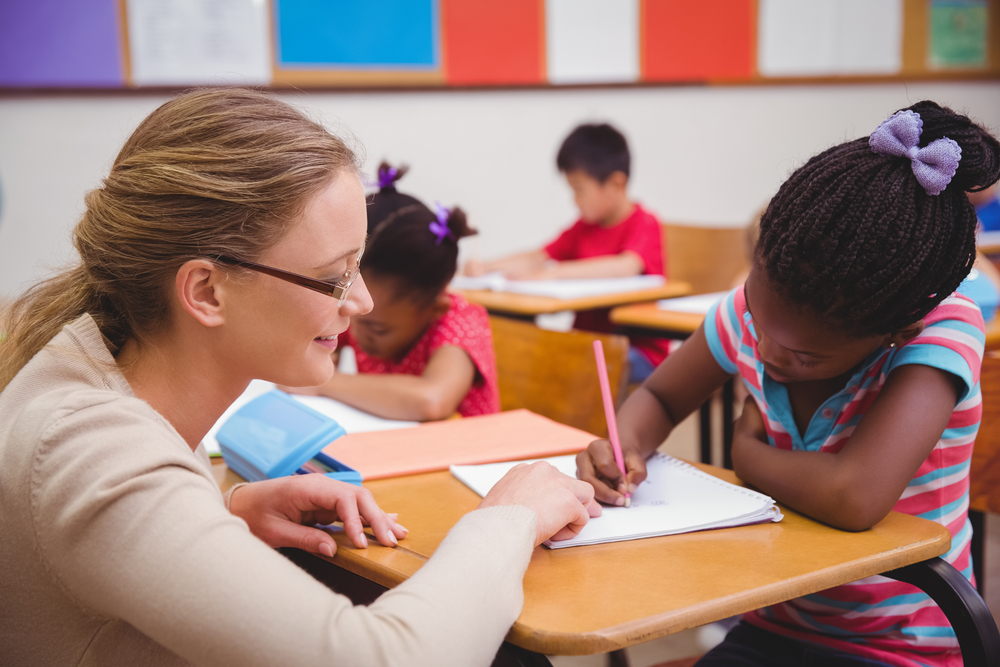



Categorizing objects is a fundamental skill in early childhood education that greatly benefits Grade 1 students. Parents and teachers should care about this skill for several reasons. First, categorizing helps children develop critical thinking and problem-solving skills. As they sort objects based on attributes like size, color, shape, or function, they learn to identify similarities and differences, which enhances their analytical abilities.
Additionally, categorization is essential for language development. When children describe how they group items, they expand their vocabulary and improve their communication skills. For instance, discussing categories like "fruits" or "vehicles" introduces them to specialized terms and language structure.
Furthermore, organizing objects fosters a sense of order and control. It helps children understand that the world is made up of various systems, teaching them to think logically and organize thoughts, an important precursor to more advanced subjects like math and science.
Lastly, encouraging children to categorize enhances their creativity. It promotes imaginative thinking as they come up with unique ways to classify objects. Overall, by fostering categorization skills, parents and teachers equip children with essential tools for learning, comprehension, and interaction in their environment, helping them thrive academically and socially.