Understanding chess rules Normal Grade 1 Worksheets
5 filtered results
-
From - To
Discover the exciting world of chess with our "Understanding Chess Rules Normal Grade 1 Worksheets"! Designed specifically for young learners, these engaging resources introduce the essential rules and strategies of chess in a fun and accessible manner. Each worksheet is crafted to build foundational skills, including piece movement, capturing, and basic tournament etiquette. Through colorful illustrations and interactive activities, students will develop critical thinking and problem-solving abilities while making learning enjoyable. Perfect for classroom use or at-home practice, our worksheets help young chess enthusiasts grasp the fundamentals, fostering a love for the game that will last a lifetime. Start their chess journey today!
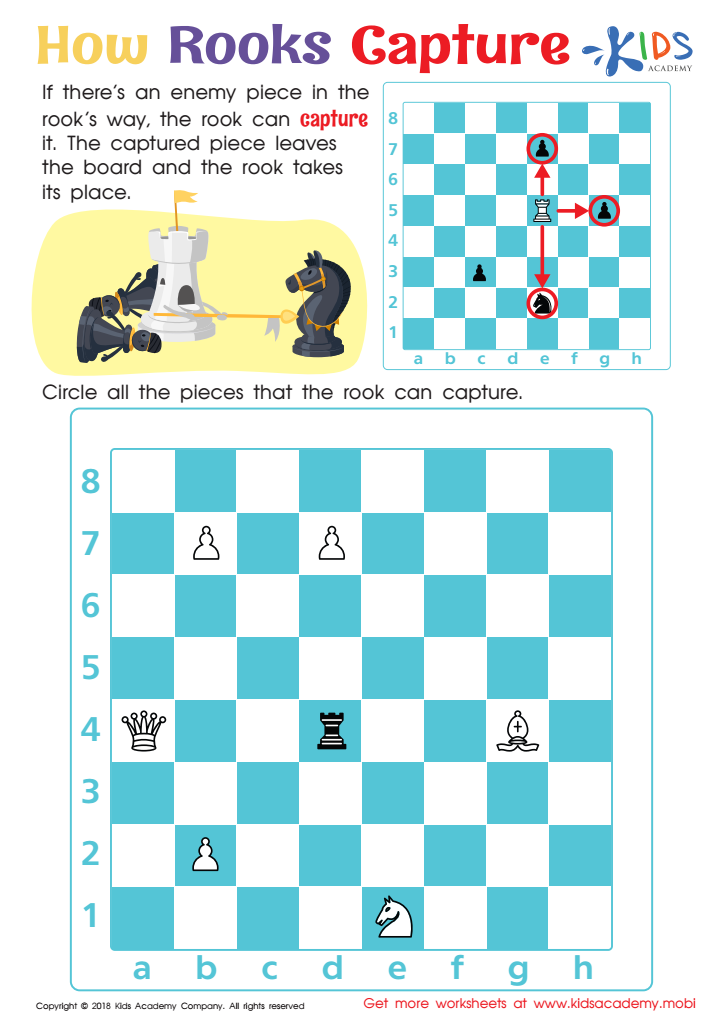
How Rooks Capture Worksheet
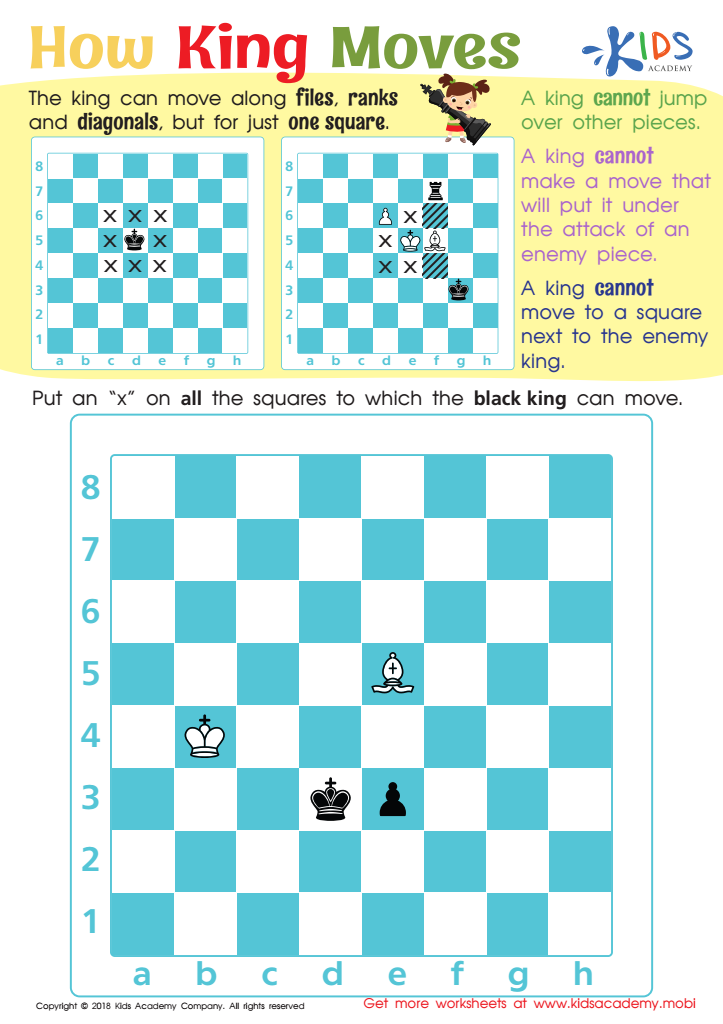
How King Moves Worksheet
 Assign to My Students
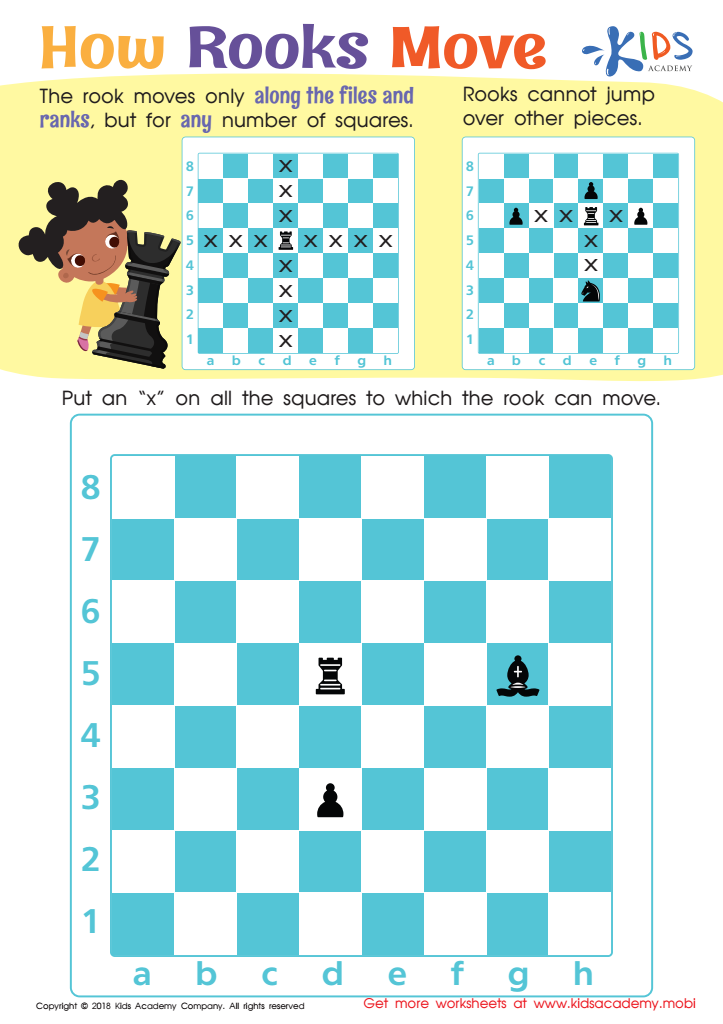
How Rooks Move Worksheet
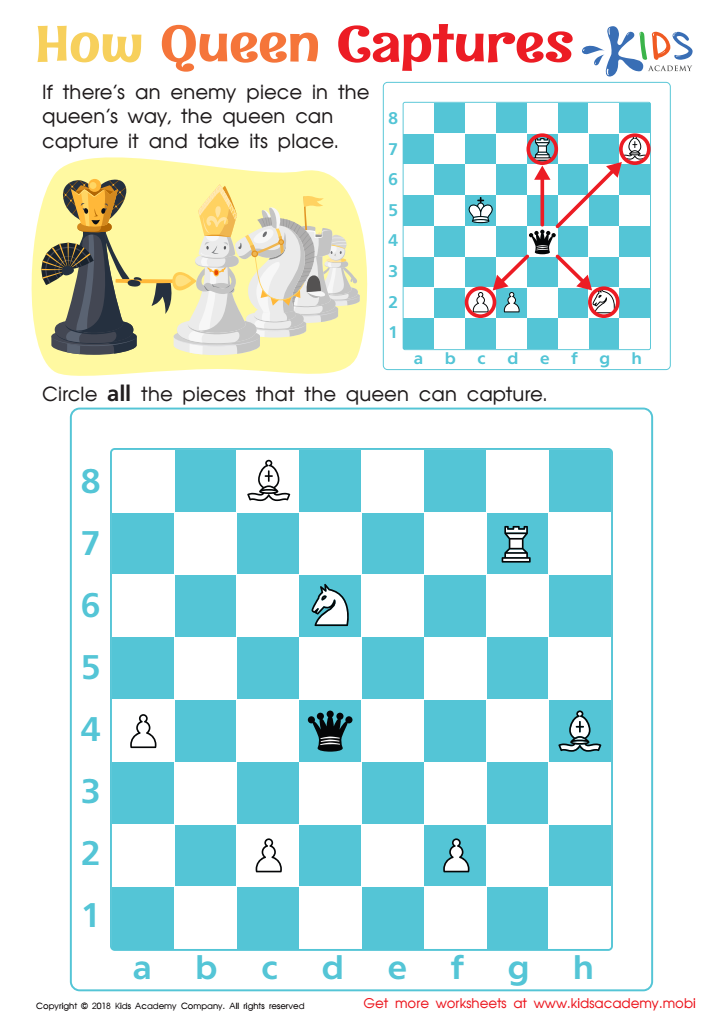
How Queen Captures Worksheet
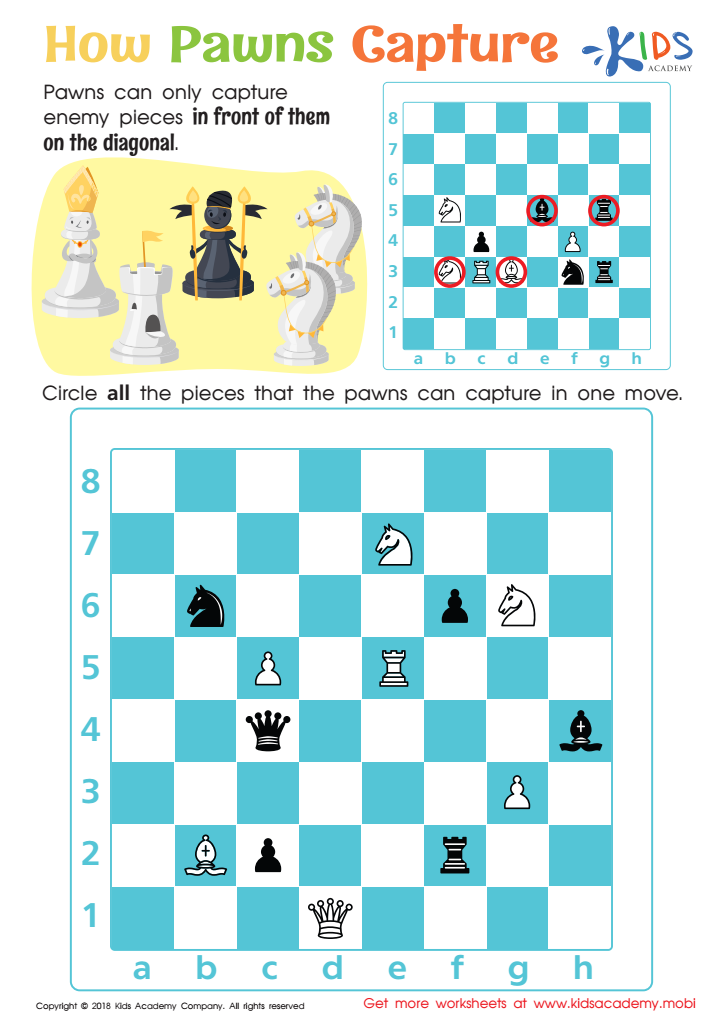
How Pawns Capture Worksheet




Understanding chess rules is important for both parents and teachers, particularly in a Grade 1 setting, because it fosters critical thinking and strategic skills in young children. At this early age, children are developing their cognitive abilities, and chess provides an excellent opportunity for them to learn how to think ahead, make decisions, and solve problems.
Learning and following chess rules also helps promote essential skills such as patience, focus, and sportsmanship. Children will learn to wait their turn, respect their opponent, and understand the consequences of their choices. It encourages them to adapt and re-strategize, contributing to their overall emotional and social development.
Additionally, introducing chess in the classroom can create an engaging atmosphere. It encourages collaboration among students when they work together or compete in friendly matches, thus fostering teamwork and communication skills.
For parents, understanding chess rules allows them to support their children’s learning at home. Playing chess as a family can strengthen bonds while also promoting a culture of learning and intellectual curiosity. Overall, chess embodies values and skills that are beneficial for young learners, making it a focal point for parents and teachers alike.