Understanding ecosystems Normal Grade 1 Worksheets
3 filtered results
-
From - To
Introduce your first graders to the wonders of ecosystems with our comprehensive "Understanding Ecosystems" worksheets. Designed specifically for young learners, these engaging and colorful worksheets help children explore the interconnections between plants, animals, and their environments. Through captivating activities, kids will learn about various habitats, food chains, and the importance of protecting our planet. Each worksheet is tailored to reinforce foundational science concepts while fostering a love for nature. Perfect for classroom use or at-home learning, these resources provide a fun and educational way for first graders to grasp the basics of ecosystems. Explore, learn, and grow with our beautiful, student-friendly worksheets!
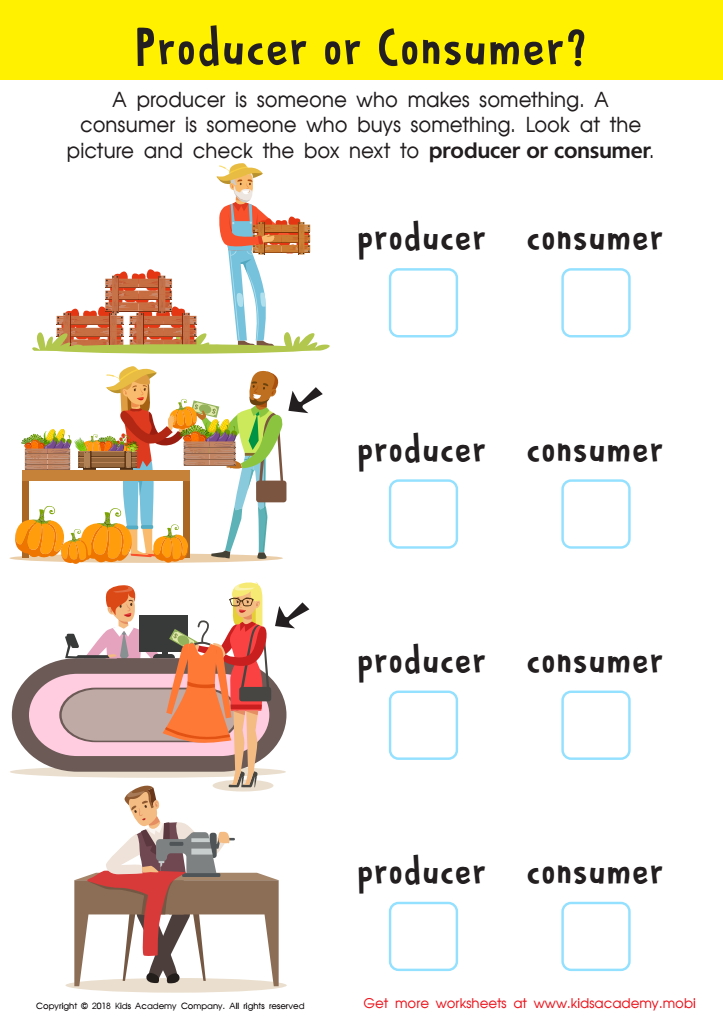
Producer or Consumer? Worksheet
 Assign to My Students
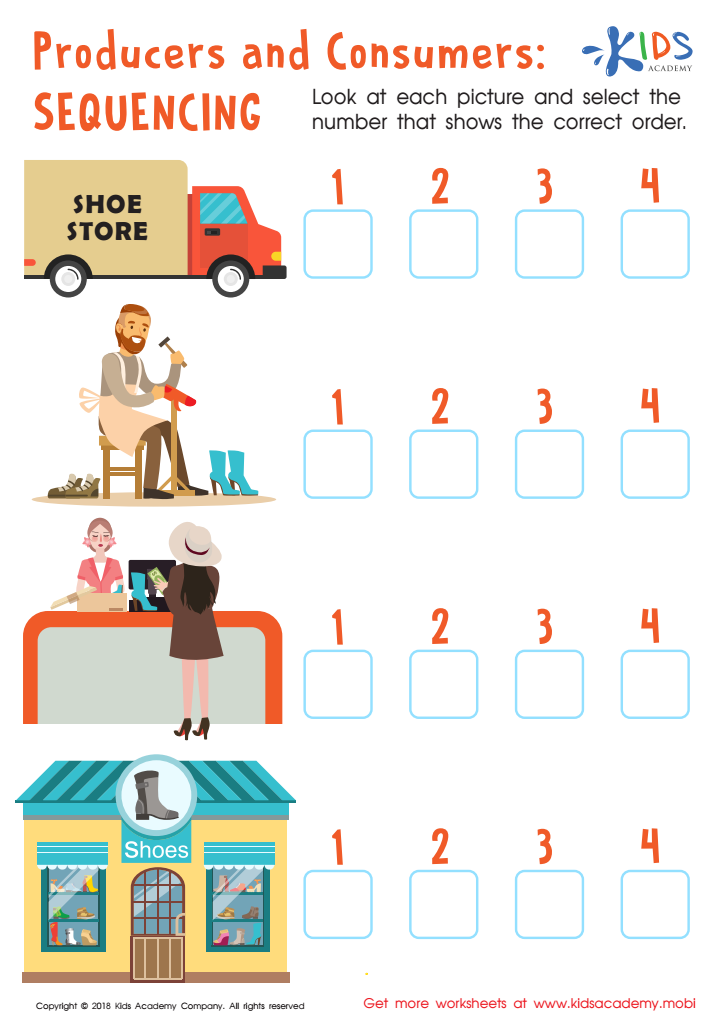
Producers and Consumers: Sequencing Worksheet
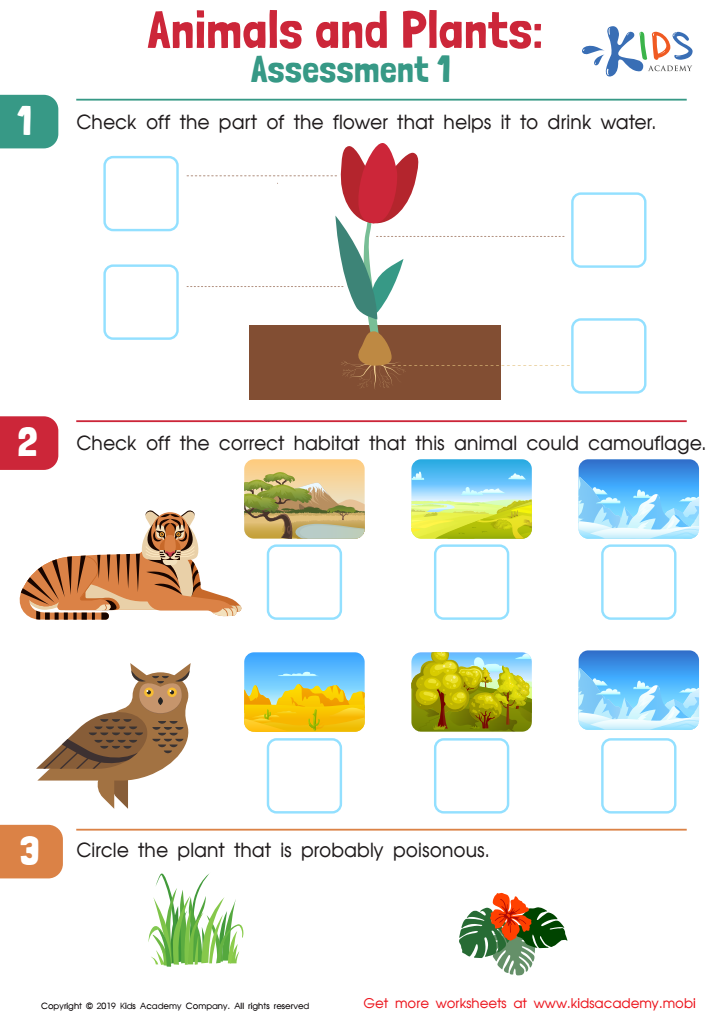
Animals and Plants: Assessment 1 Worksheet








Understanding ecosystems is essential for young students as it introduces them to the interconnections within nature, enhancing their appreciation and sense of responsibility towards the environment. Teaching children about ecosystems can spark a sense of wonder and curiosity, fostering a lifelong interest in science and the natural world. It helps them recognize the importance of each role, from plants and animals to even the tiniest microorganisms.
Early exposure to these concepts can encourage children to adopt eco-friendly habits, such as recycling, conserving water, and caring for wildlife. This foundational knowledge supports essential skills like observation, critical thinking, and problem-solving, which are valuable across all areas of learning.
Moreover, understanding ecosystems aligns with a broad range of academic goals and standards. It incorporates reading (through informational texts), math (through counting species and understanding patterns), and social skills (through group activities and discussions). It also promotes emotional development by helping children understand the balance of life and the impact of their actions.
Therefore, parents and teachers should prioritize ecosystem education to cultivate environmentally responsible individuals and well-rounded learners, who are equipped to tackle future challenges, always keeping in mind the interconnected nature of life on Earth.