Fine Motor Skills Normal Grade 1 Addition & Subtraction Worksheets
3 filtered results
-
From - To
Enhance your first grader’s fine motor skills while mastering essential addition and subtraction concepts with our engaging worksheets! Designed specifically for Grade 1 learners, these printable resources incorporate fun activities that promote dexterity and coordination through various hands-on tasks. Each worksheet not only reinforces mathematical proficiency but also develops critical fine motor skills necessary for writing and other tasks. Children will enjoy connecting dots, drawing shapes, and completing colorful exercises, making learning both effective and enjoyable. Explore our collection of fine motor skills worksheets today to give your young learners the tools they need for academic success!
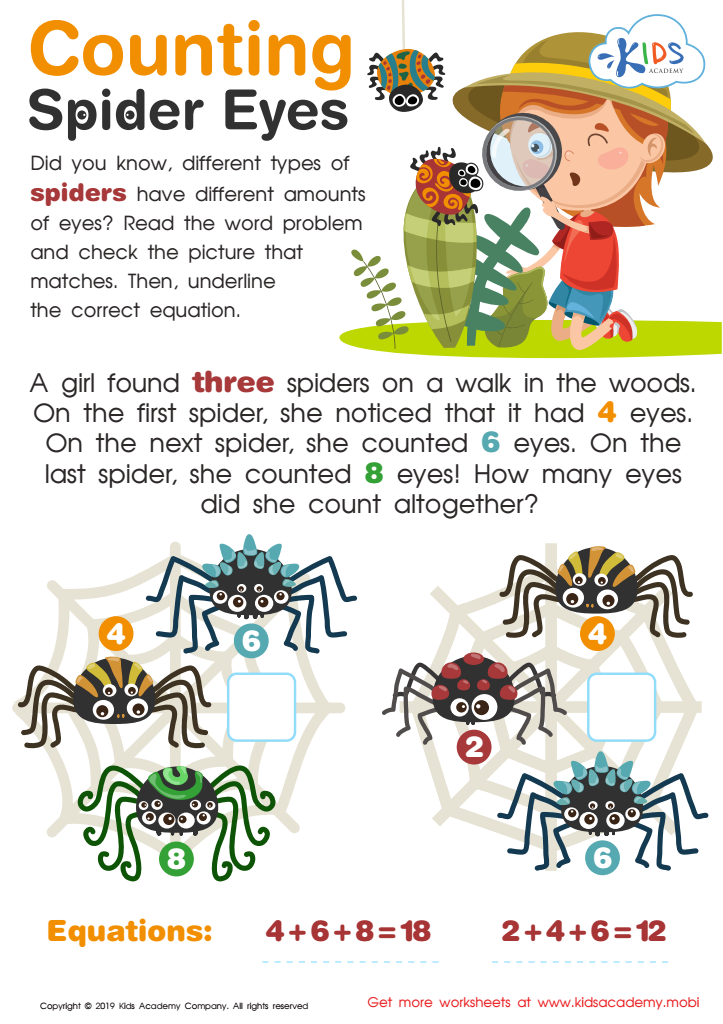
Counting Spider Eyes Worksheet
 Assign to My Students
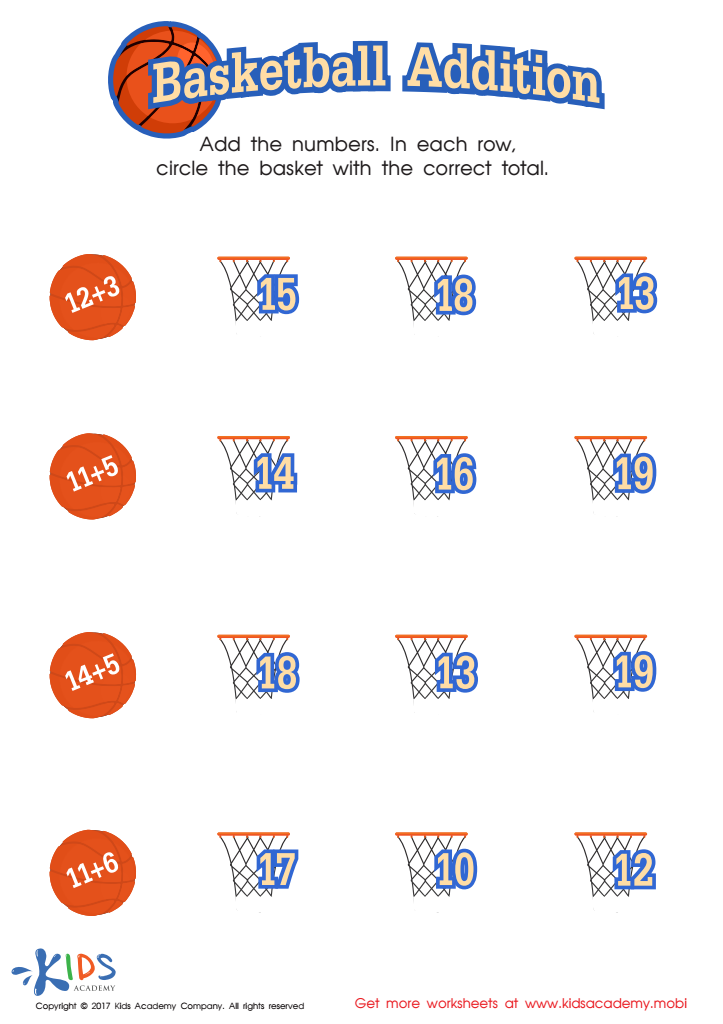
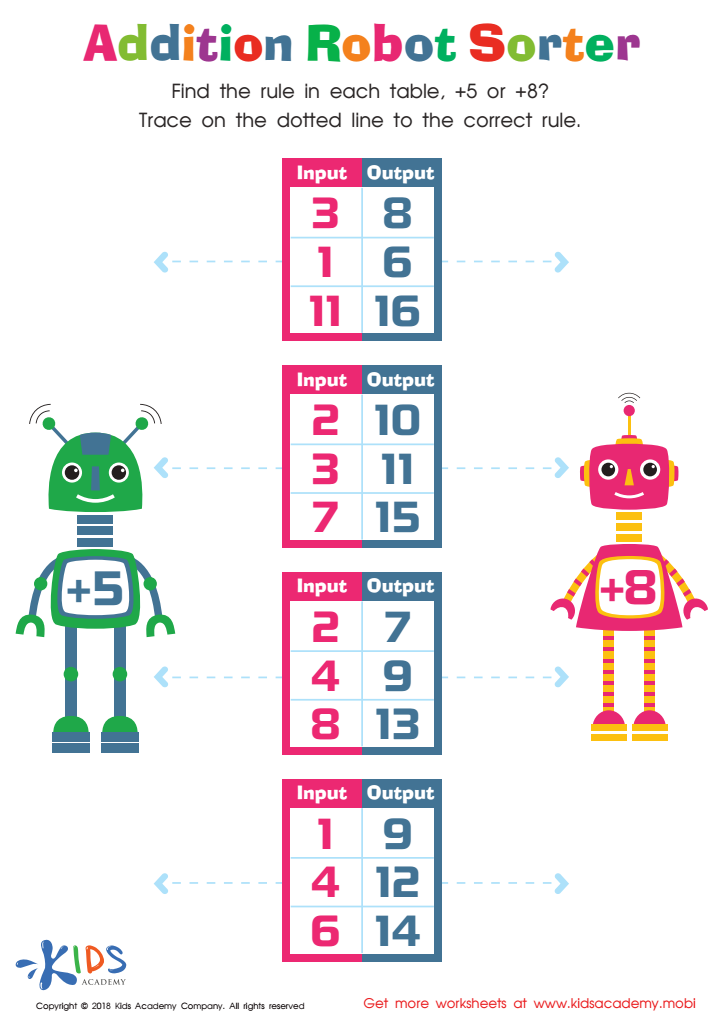
Addition Robot Sorter Worksheet








Fine motor skills are essential for young children as they directly impact their ability to perform tasks that are crucial for academic success, particularly in subjects like math. In the first grade, students are introduced to addition and subtraction, which often involve using manipulatives, drawing, and writing numbers. Well-developed fine motor skills allow children to effectively grasp pencils, use scissors, and manipulate objects, facilitating hands-on learning experiences.
When fine motor skills are strong, students are better positioned to focus on the cognitive aspects of math. They can neatly write numbers and symbols, making it easier to keep track of calculations. This proficiency not only enhances their confidence but also reduces frustration, allowing for more enjoyable learning experiences.
Moreover, when parents and teachers prioritize the development of fine motor skills alongside academic learning, they provide a foundation for further educational growth. Engaging children in activities such as arts and crafts, puzzles, or even simple finger exercises can bolster these skills.
By understanding and supporting the connection between fine motor skills and early mathematical concepts, parents and teachers can empower children to develop a positive relationship with learning, leading to improved performance in both math and other subjects throughout their educational journey.