Filters

6 filtered results

Clear all filters
Favorites
With answer key
Interactive

6 filtered results

Difficulty Level

Grade


Discover our engaging Number Recognition and Addition worksheets designed specifically for Grade 1 students! These printable resources help young learners develop essential number recognition skills while practicing addition in a fun and interactive way. Featuring colorful illustrations and captivating exercises, our worksheets guide children through various activities that reinforce their understanding of numbers and basic math concepts. Perfect for classroom use or at-home learning, these resources encourage independent practice and boost confidence in early math abilities. Help your child build a strong foundation in math with our exciting, interactive Number Recognition Normal Grade 1 Addition worksheets today!

Check out this FREE Grade 1 Trial Lesson on Addition!

Mental Math -Subtract and Add by 10 - Part 2

Favorites
With answer key
Interactive
  • Grade 1
  • Number Recognition
  • Addition
  • Normal
Air Balloon Math Worksheet

Air Balloon Math Worksheet

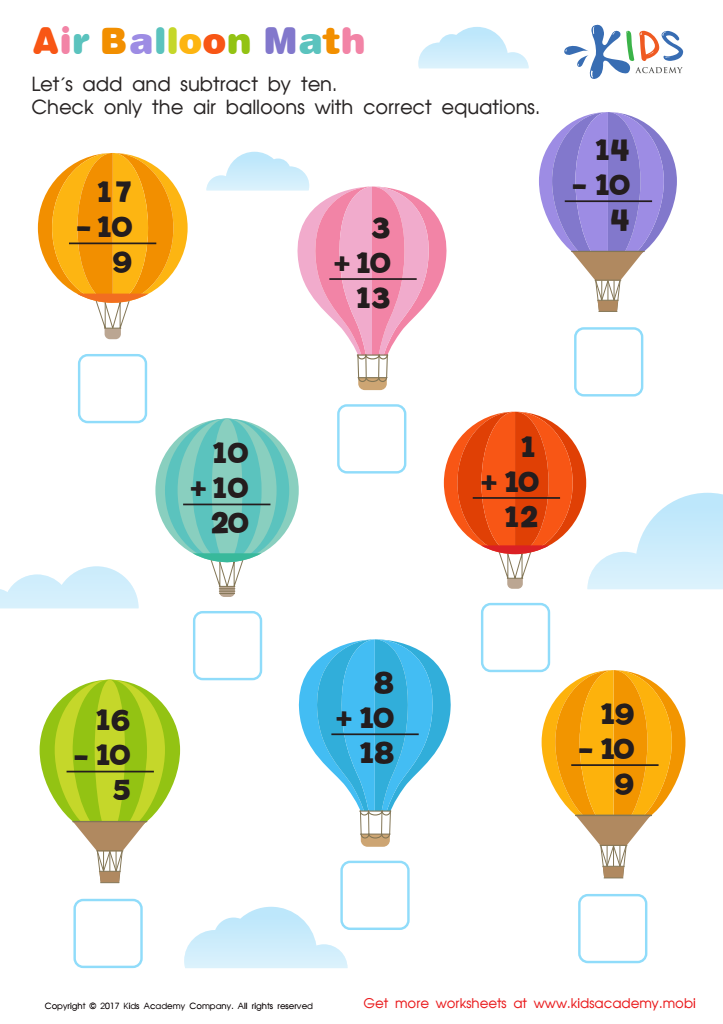
Revised: Review your child's addition and subtraction skills with this fun worksheet. Featuring hot air balloons filled with math equations, help your child add or subtract by ten before ticking the boxes with the right answers. Working through the equations one-by-one is a great way to make math practice enjoyable!
Air Balloon Math Worksheet
Worksheet
Turn Around Dominos Worksheet

Turn Around Dominos Worksheet

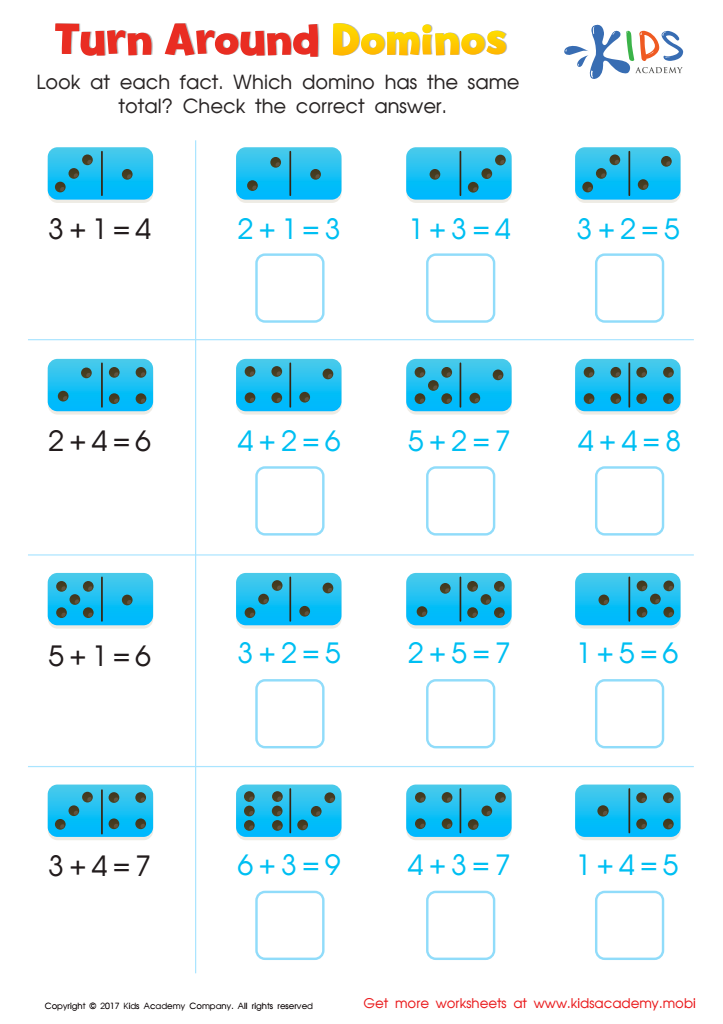
Encourage your child to flex their mental muscles with this math worksheet. Look through the left side's dominos and their values and then check the three boxes on the right. Ask your child if any of the right box's dominos are similar. This requires focus and careful observation.
Turn Around Dominos Worksheet
Worksheet
Valentine’s Day word problems worksheet

Valentines Day Word Problem Worksheet
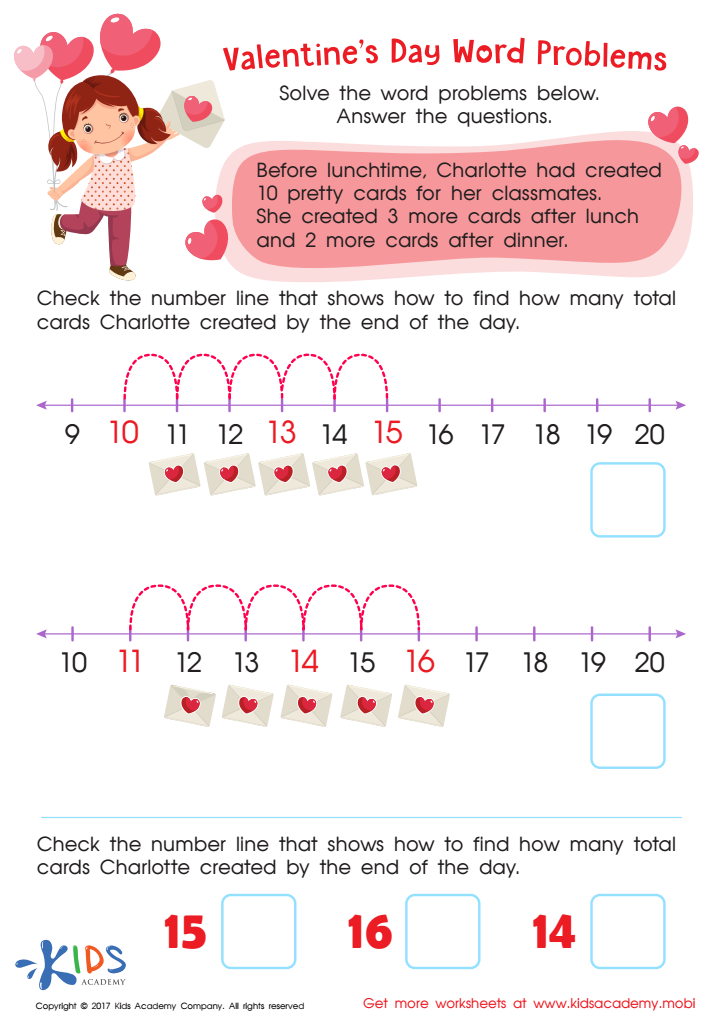
This Valentine's Day worksheet will help your child practice using a number line to solve an addition problem. It's a great way to boost confidence and make solving word problems a breeze.
Valentines Day Word Problem Worksheet
Worksheet
Fact Families: Easter Math Worksheet

Fact Families: Easter Math Worksheet

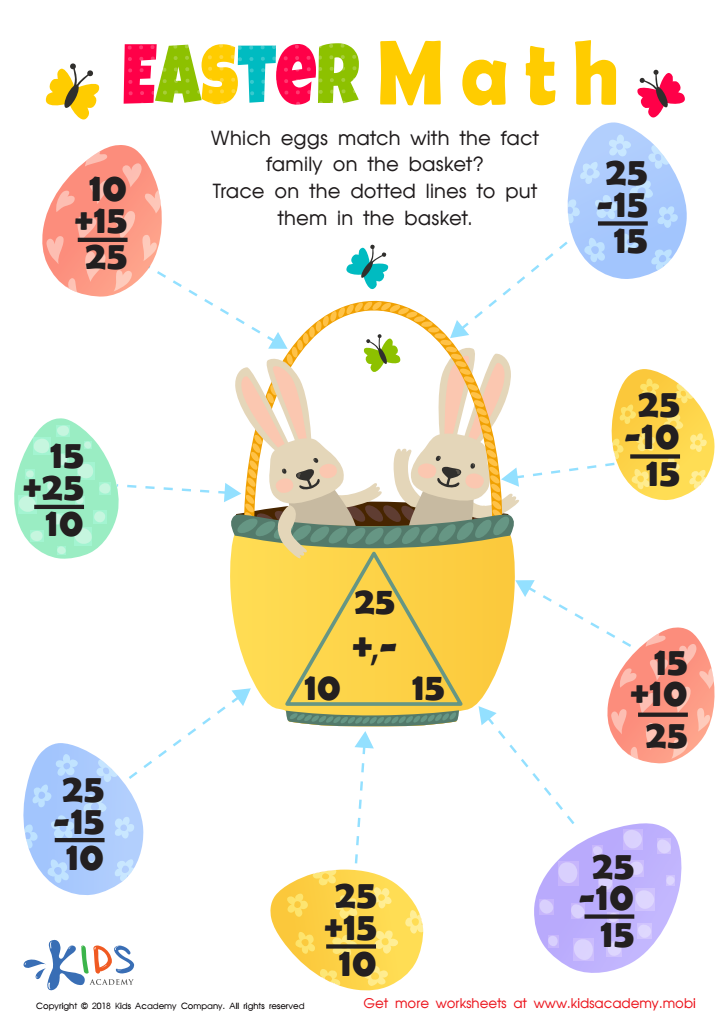
Kids will love this vibrant PDF packed with Easter math fun! Match facts with the colorful eggs, add and subtract multiples of five to boost automaticity, and have a blast with the bunny friends!
Fact Families: Easter Math Worksheet
Worksheet
Addition Facts: Double Dice Worksheet

Addition Facts: Double Dice Worksheet

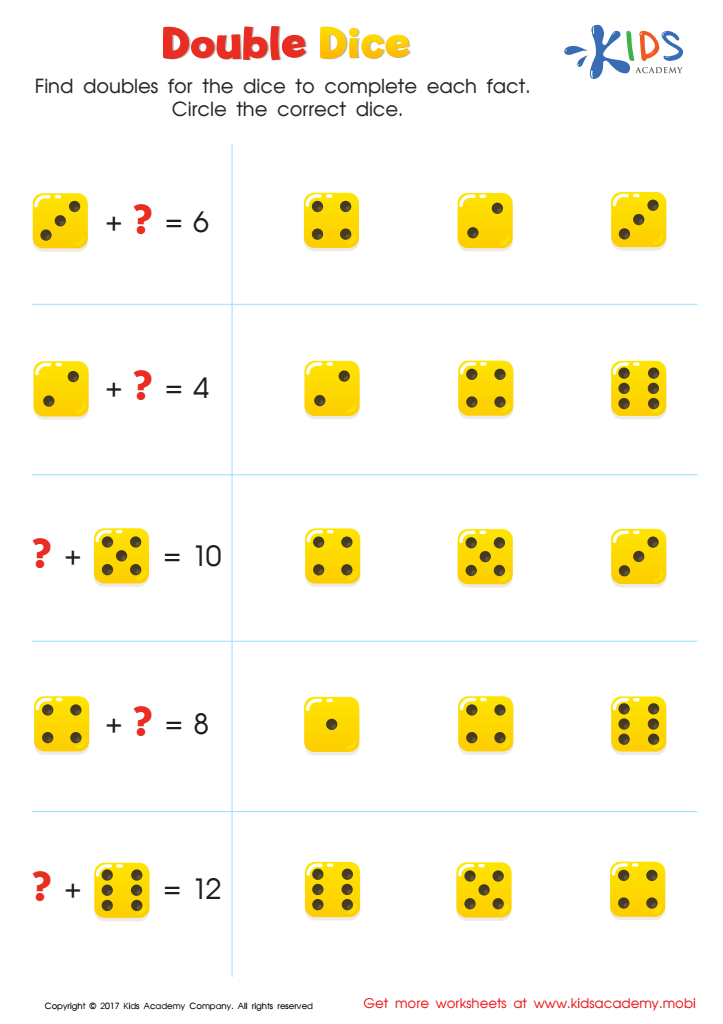
Are you looking for ways to make maths more engaging for kids? Maths can be a bore, but by teaching kids from an early age that it can be fun, they won't struggle with it. This worksheet is a great way to start: your child needs to identify the number on the left dice and find its double on the right. The sum of the two dice is also given.
Addition Facts: Double Dice Worksheet
Worksheet
Addition Robot Sorter Worksheet


Addition Robot Sorter Worksheet

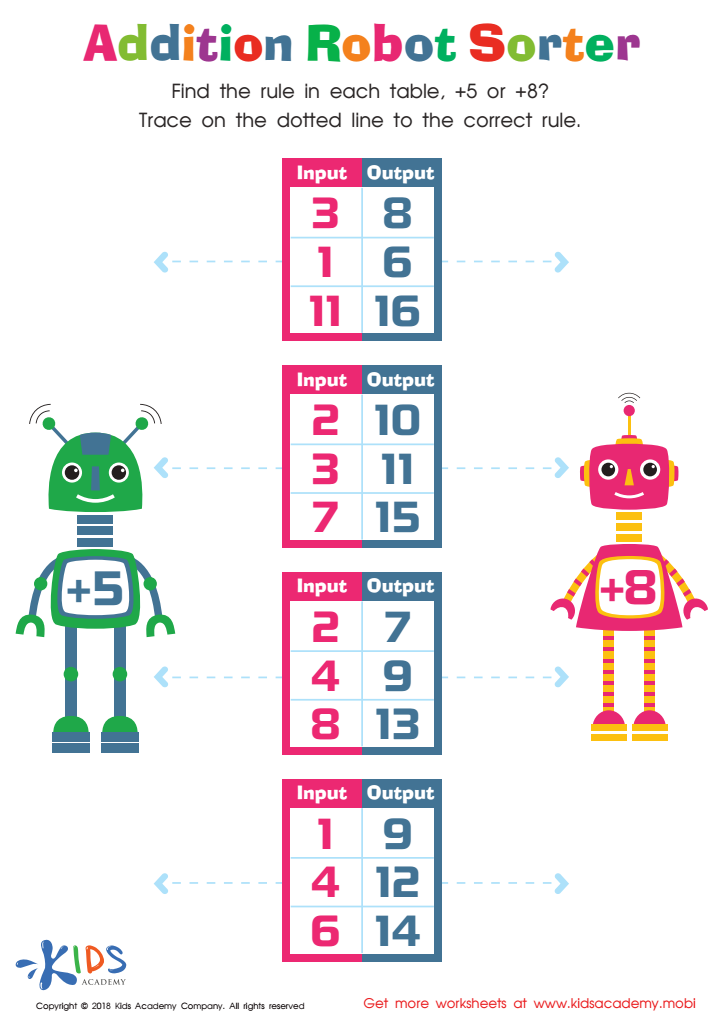
This worksheet helps your child understand addition. Have them trace the dotted lines to the correct equations: +8 and +5. It's a great way to aid their mathematical comprehension and get them comfortable with adding equations.
Addition Robot Sorter Worksheet

Worksheet


Number recognition is a foundational skill crucial for children in Grade 1, particularly in the context of addition and developing a sustainable understanding of mathematics. Parents and teachers should prioritize this skill for several reasons.

First, strong number recognition supports overall mathematical comprehension. When children can easily identify and understand numbers, they are better equipped to perform addition tasks and solve problems accurately. This foundational skill fosters confidence in young learners, encouraging them to engage with mathematics rather than shy away from it.

Second, mastery of number recognition facilitates more complex concepts later in their education. For example, without a strong grasp of basic numbers, students may struggle with tasks such as subtraction or tell time, which rely heavily on an understanding of numbers.

Lastly, encouraging number recognition promotes cognitive development. It enhances critical thinking and problem-solving skills, which are essential not only in academics but also in everyday life.

By investing time and effort into helping children achieve fluency in number recognition and addition, parents and teachers lay the groundwork for their academic success, instilling a positive attitude towards learning and mathematics from an early age.