Understanding place values Normal Grade 1 Numbers Worksheets
4 filtered results
-
From - To
Explore our "Understanding Place Values" worksheets for Grade 1 students to build foundational math skills. These printable materials help young learners grasp the concept of tens and ones, essential for mastering larger number concepts. Our engaging activities simplify complex ideas, ensuring students understand how to break down and construct numbers. With colorful visuals and interactive tasks, students stay motivated and develop their counting and math confidence. Perfect for classroom or at-home practice, these worksheets provide a solid base for future math success. Empower your students today with our expertly designed place value worksheets. Download now from Kids Academy!
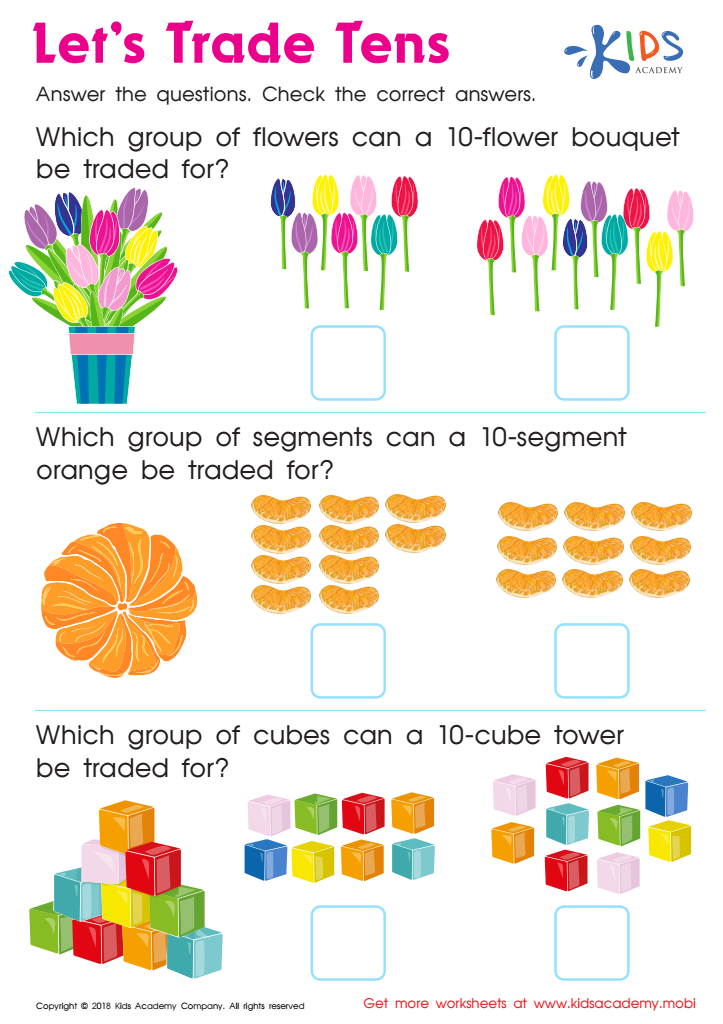
Lets Trade Tens Worksheet
 Assign to My Students
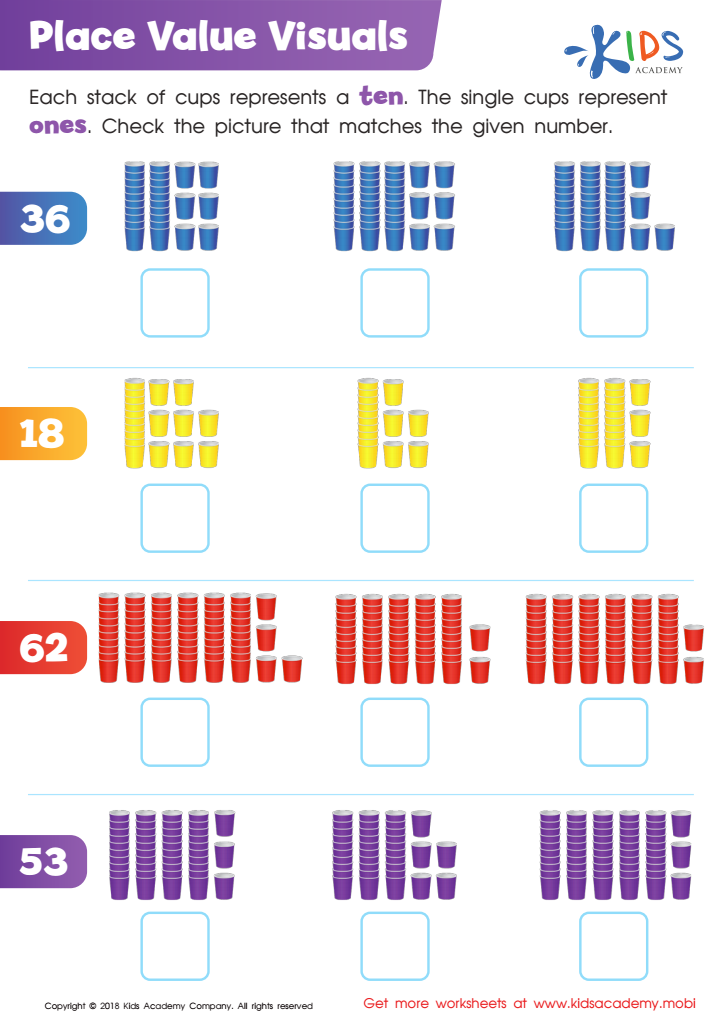
Place Value Visuals Worksheet
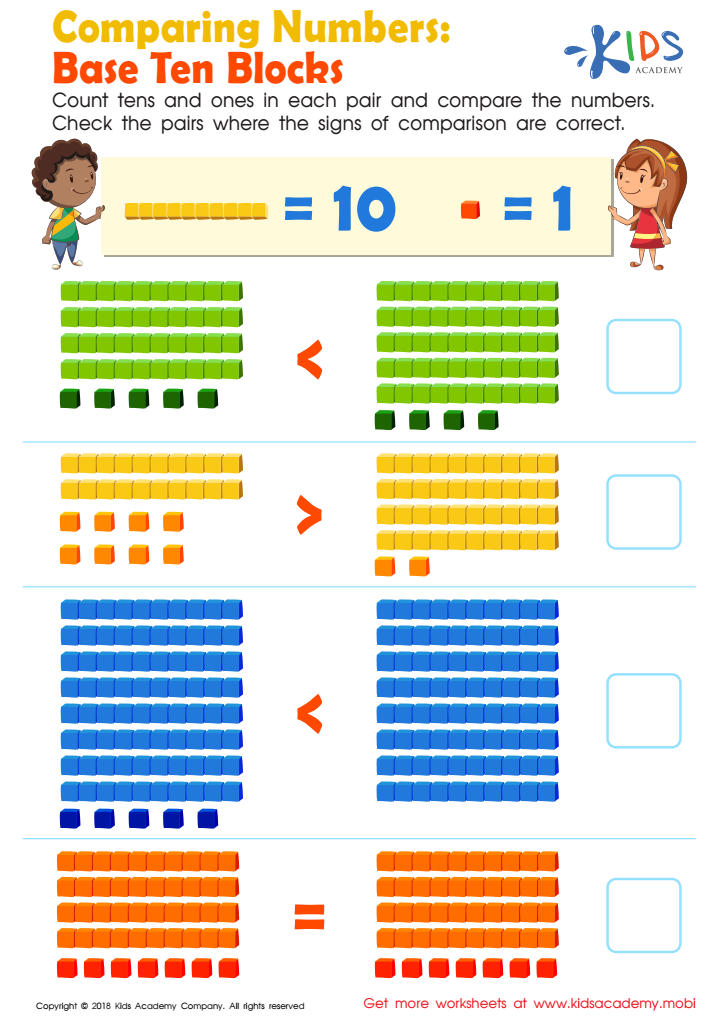
Comparing Numbers: Base Ten Blocks Worksheet
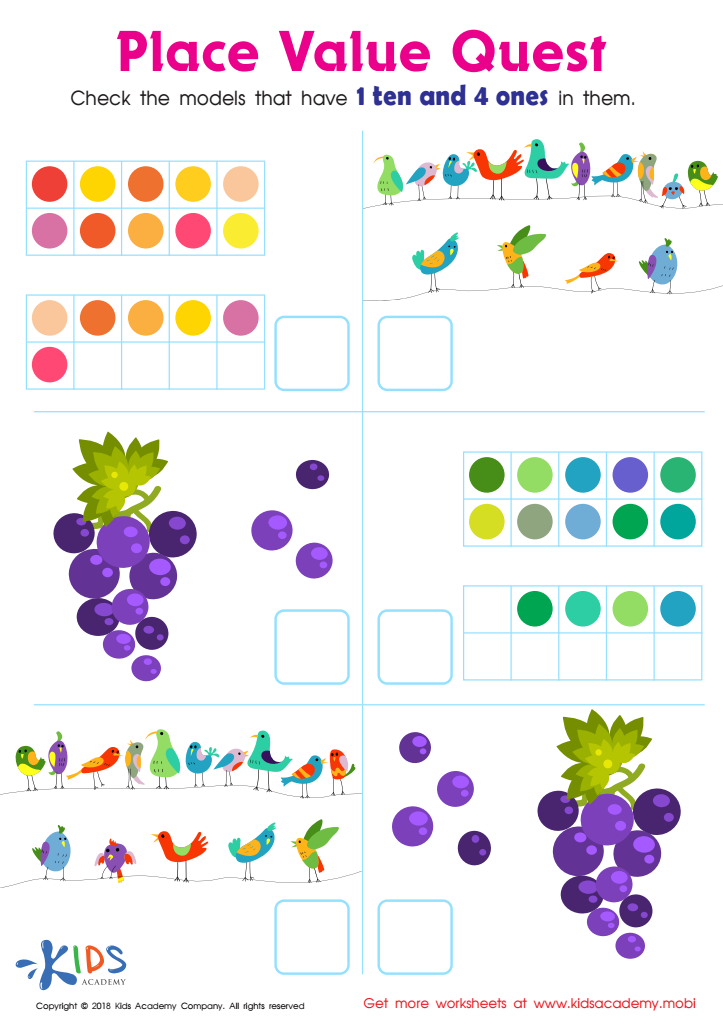
Place Value Quest Worksheet








Understanding place values is essential for young students, as it forms the foundational bedrock for more complex arithmetic and mathematical reasoning. Place value refers to the value of each digit in a number based on its position. For instance, in the number 456, the digit 4 represents 400, not just 4, because of its place value.
For Grade 1 students, comprehending this concept allows them to efficiently break down and rebuild numbers in multiple ways. For example, if a child can understand that 23 consists of 2 tens and 3 ones, they can better grasp addition and subtraction. Learning place values helps in developing mental math skills, making children quicker and more confident in their calculations.
Additionally, mastering place values aids in the transition to more advanced topics like multiplication and division, where understanding of tens, hundreds, and thousands becomes critical. Parents and teachers observing difficulty by children in higher grades often trace the issues back to inadequate understanding of these early-stage concepts.
For educators, investing effort in teaching place values well at Grade 1 extends beyond just fulfilling curriculum requirements; it lays down a strong numerical foundation. For parents, encouraging place value understanding through daily activities like counting money, clock reading, or simple fun games can make math a less daunting and more enjoyable subject for their children as they grow.