Enhance your first grader’s reading skills with our engaging Story Sequencing Worksheets! Designed to improve comprehension, our resources guide students in arranging story events in logical order. Each colorful worksheet captivates young readers while building essential skills like critical thinking and narrative understanding. Beyond simple practice, these worksheets help children recognize story structure, fostering both enjoyment and educational development. Ideal for classroom use or at-home practice, our thoughtfully crafted activities ensure foundational reading skills are set for future success. Explore our collection today and watch your child’s confidence and ability soar as they master the art of sequencing stories.

Check out this FREE Grade 1 Trial Lesson on Reading!

Summarizing a Text

Favorites
With answer key
Interactive
  • Grade 1
  • Story sequencing
  • Reading
  • Normal
Poem: My New Kite Worksheet

Poem: My New Kite Worksheet

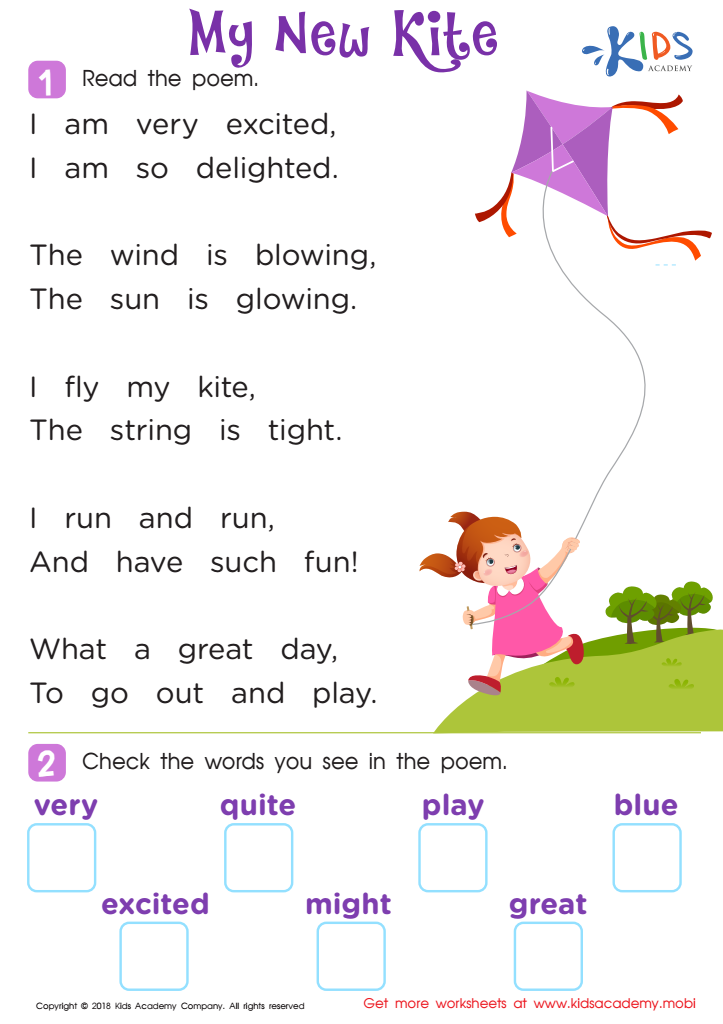
Read a cheerful poem with your child and have them check the boxes next to the words that appear. Then, ask them to identify rhyming words, noting that these won't appear at the bottom of the page. This is a delightful reading activity to help your child remember what they read.
Poem: My New Kite Worksheet
Worksheet
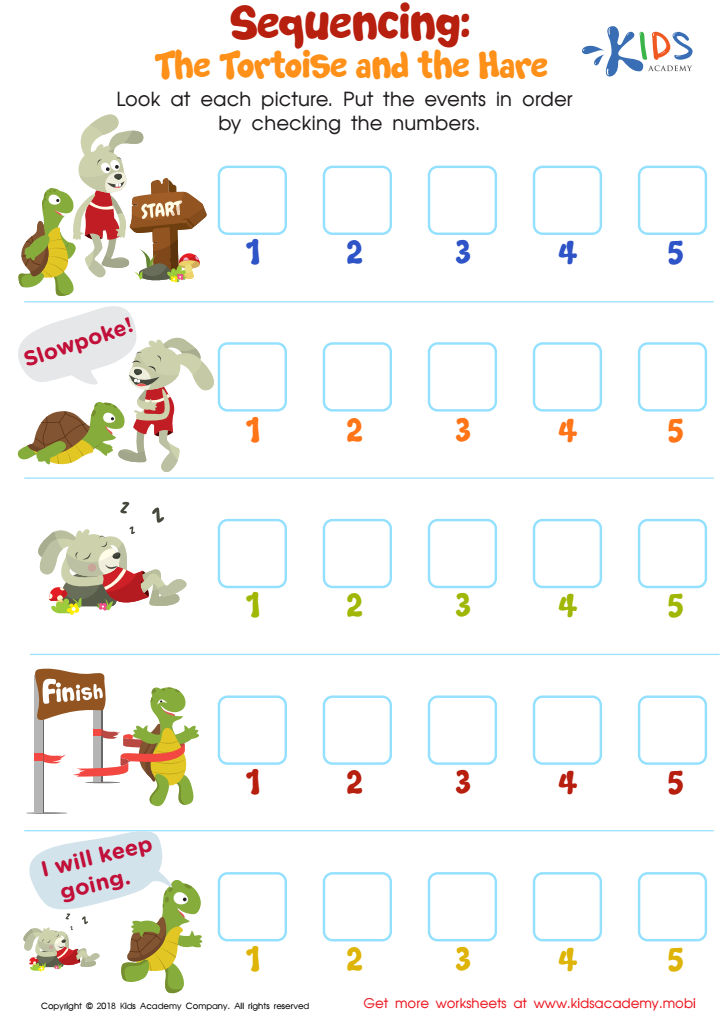
Sequencing: The Tortoise and the Hare Worksheet

Sequencing: The Tortoise and the Hare Worksheet

Help your child become an independent reader and critical thinker with a sequencing worksheet from Kids Academy! Have them read the classic tale of the tortoise and the hare and use the accompanying worksheet to check their understanding of the story's sequence of events. Have kids identify the correct order of events by selecting the box next to the correct number for each image!
Sequencing: The Tortoise and the Hare Worksheet
Worksheet
Worksheet: Little Red Riding Hood

Little Red Riding Hood Printable

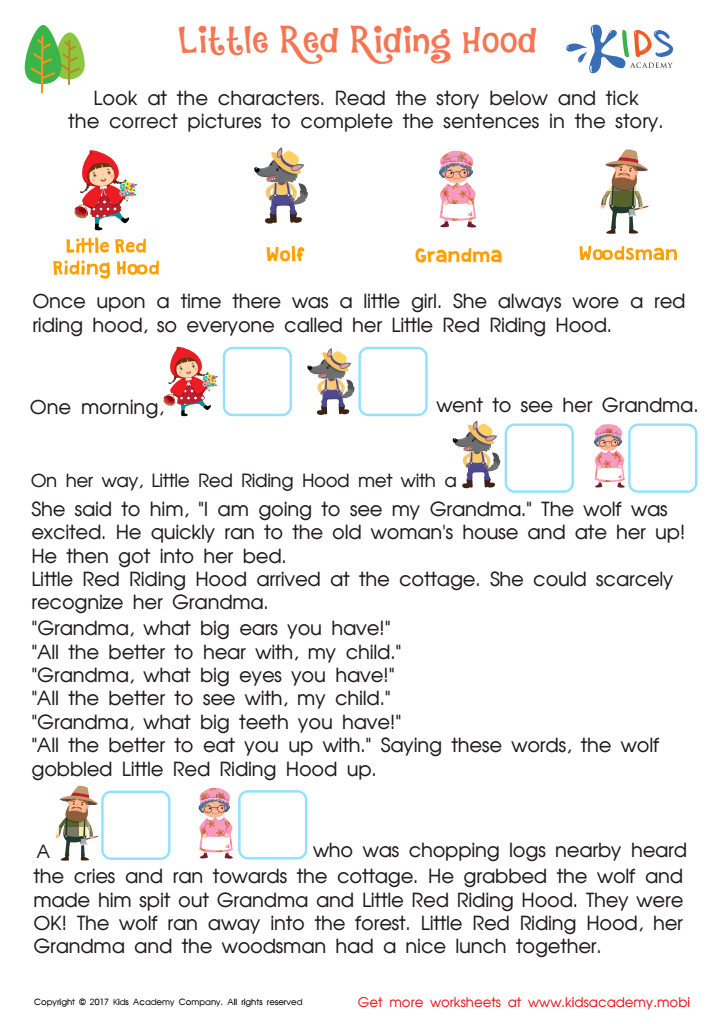
Give them this worksheet to practice. Help your child strengthen their reading skills with this worksheet. It asks them to read Little Red Riding Hood and fill in the missing words using context clues from the text. Encourage your child to look at the surrounding words to determine the answer and get the best results!
Little Red Riding Hood Printable
Worksheet
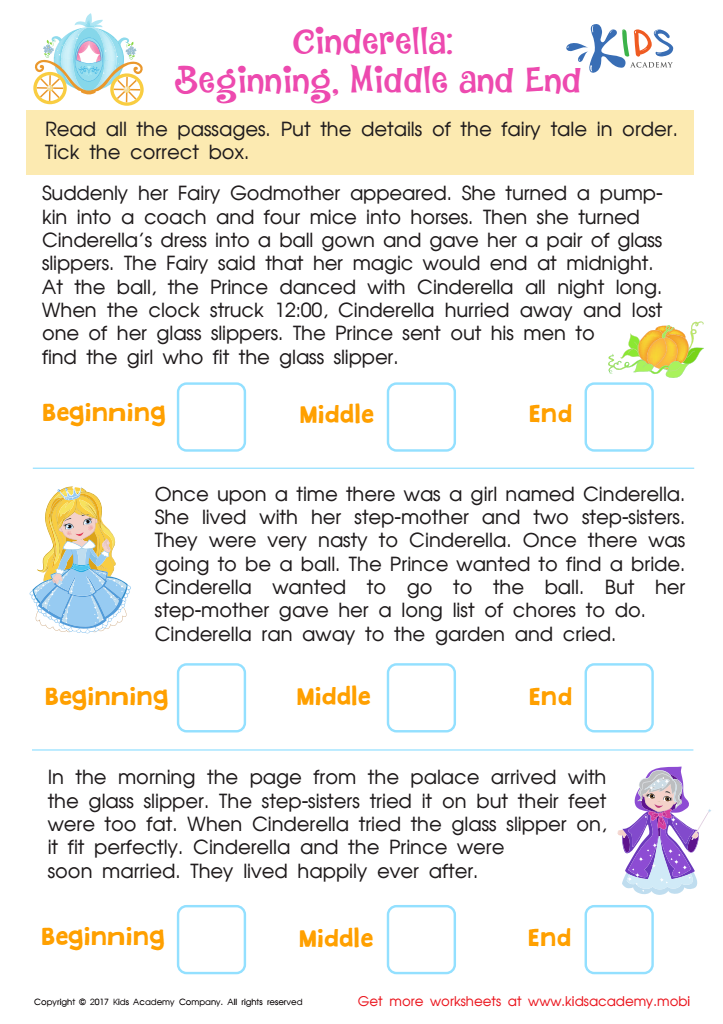
Reading Comprehension Worksheet: Cinderella

Cinderella: Beginning, Middle and End Worksheet
This Cinderella-themed worksheet provides an excellent opportunity for your child to practice reading comprehension and understanding the basics of story structure. Help your child learn a key story concept with this Cinderella-themed reading comprehension worksheet. It's an excellent way for them to practice understanding the different parts of a story, from the beginning to the end. Kids will love getting to know the beloved fairy tale of Cinderella!
Cinderella: Beginning, Middle and End Worksheet
Worksheet
Worksheet: The Boy Who Cried Wolf

The Boy Who Cried Wolf Worksheet

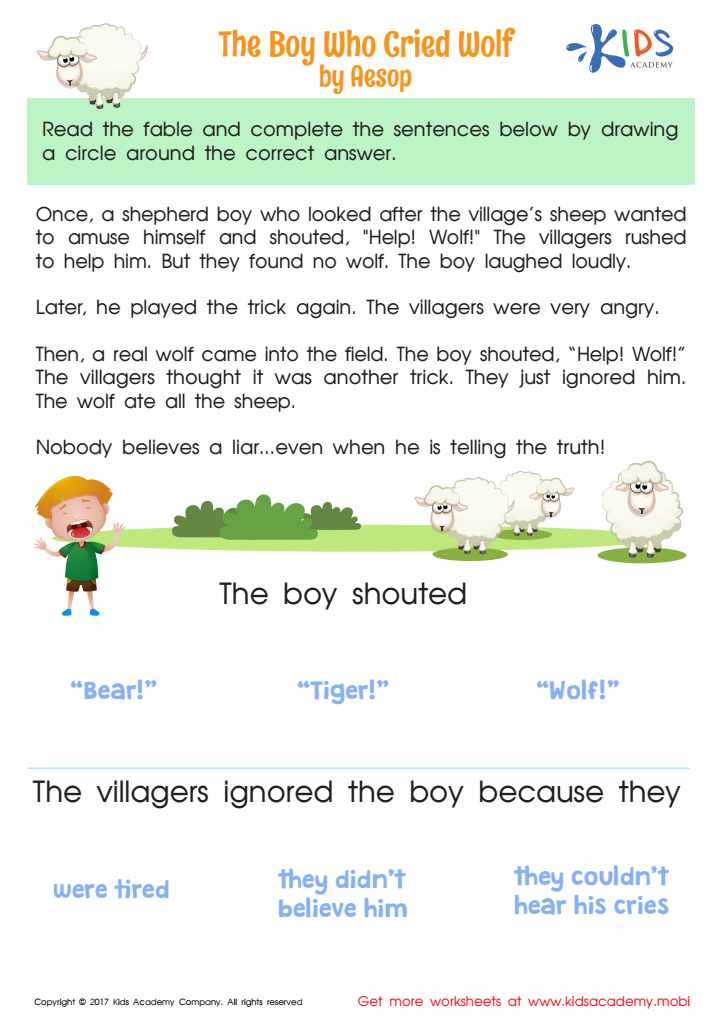
Test your child's reading comprehension with The Boy Who Cried Wolf worksheet. Read the fable, then answer the questions. Use the text to help your child check their answers are correct. Boost reading skills in a fun, interactive way!
The Boy Who Cried Wolf Worksheet
Worksheet
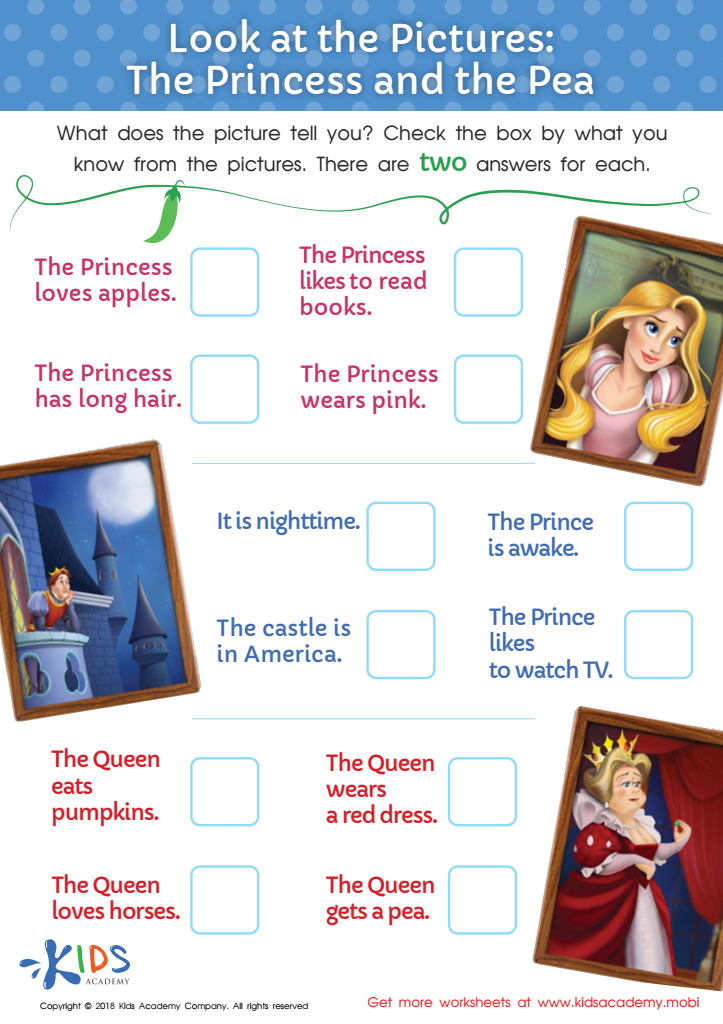
Look at the Pictures: The Princess and the Pea Worksheet


Look at the Pictures: The Princess and the Pea Worksheet
Early readers can benefit from picture clues to understand stories and text. Looking at images helps them learn the meaning of words and comprehend events. Use this worksheet on The Princess and the Pea to let students observe and learn from the pictures. It's a great way to help them comprehend early reading materials.
Look at the Pictures: The Princess and the Pea Worksheet
Worksheet


Story sequencing is a vital skill for young readers, and it's crucial for parents and teachers to guide Grade 1 students in mastering it. At this stage, children are developing foundational literacy skills, and being able to understand the order of events in a story helps them make sense of what they read. When kids identify the beginning, middle, and end of a story, their comprehension improves. This skill also boosts their ability to recall details and understand the narrative flow, which are essential for more advanced reading tasks.

Moreover, sequencing aids in reinforcing memory and cognitive development. By arranging events in the correct order, children practice critical thinking and learn to recognize cause-and-effect relationships. This ability is transferable across subjects, benefiting areas like math and science where procedural steps are vital.

For teachers, assessing a child’s skill in sequencing offers valuable insight into their reading comprehension and cognitive abilities. For parents, supporting this at home can vastly enhance a child’s academic performance and instill a love for reading. Through fun activities like picture sequencing cards or discussing the day's events in order, adults can make sequencing engaging, setting a strong groundwork for successful future learning.