Animal knowledge Normal Grade 1 Reading Comprehension Worksheets
3 filtered results
Difficulty Level
Grade
Age
-
From - To
Subject
Activity
Standards
Explore our "Animal Knowledge Normal Grade 1 Reading Comprehension Worksheets," designed to ignite young learners' curiosity about the animal kingdom. These engaging worksheets help first graders develop reading comprehension skills through fun-filled activities focused on various animals. Students will read short passages, answer questions, and enhance their understanding of animal habitats, behaviors, and classifications. Perfect for classroom use or home learning, these resources foster critical thinking while making reading enjoyable. Encourage your child's love for reading and animals through these interactive worksheets, ensuring they build a strong foundation in literacy while exploring the wonders of the animal world.
Favorites
With answer key
Interactive
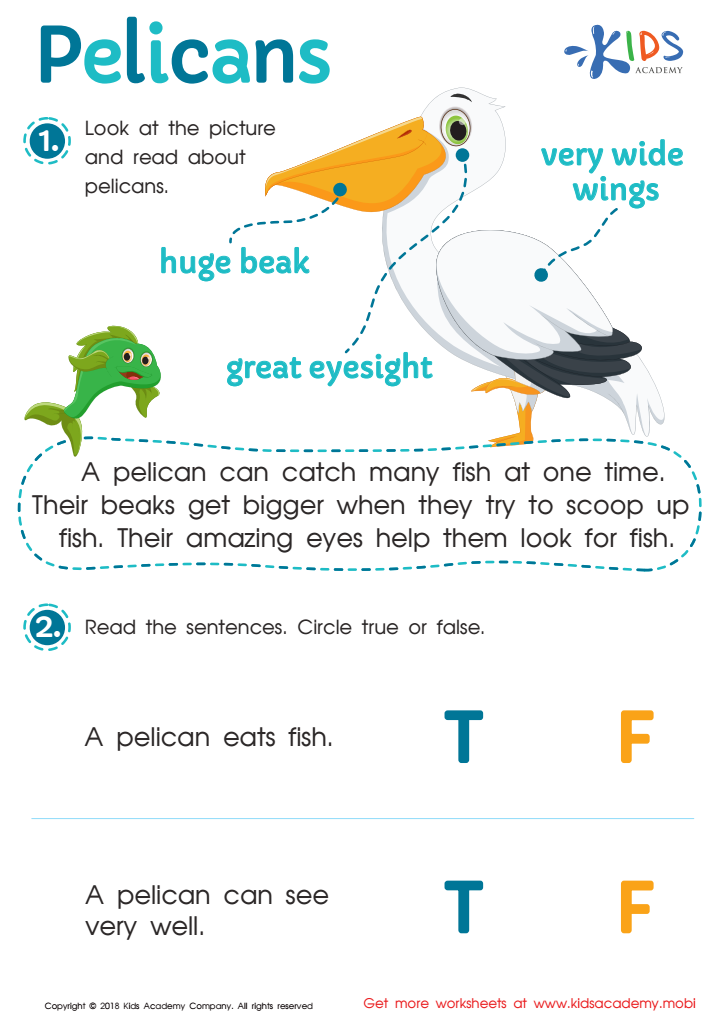
Pelicans Worksheet
This printable worksheet will help your child learn to read and analyze informational passages. It's fun and educational, featuring an animal science topic about pelicans. Read the passage and view the graph, then answer the questions by indicating if the statements are true or false.
 Assign to My Students
Pelicans Worksheet
Worksheet
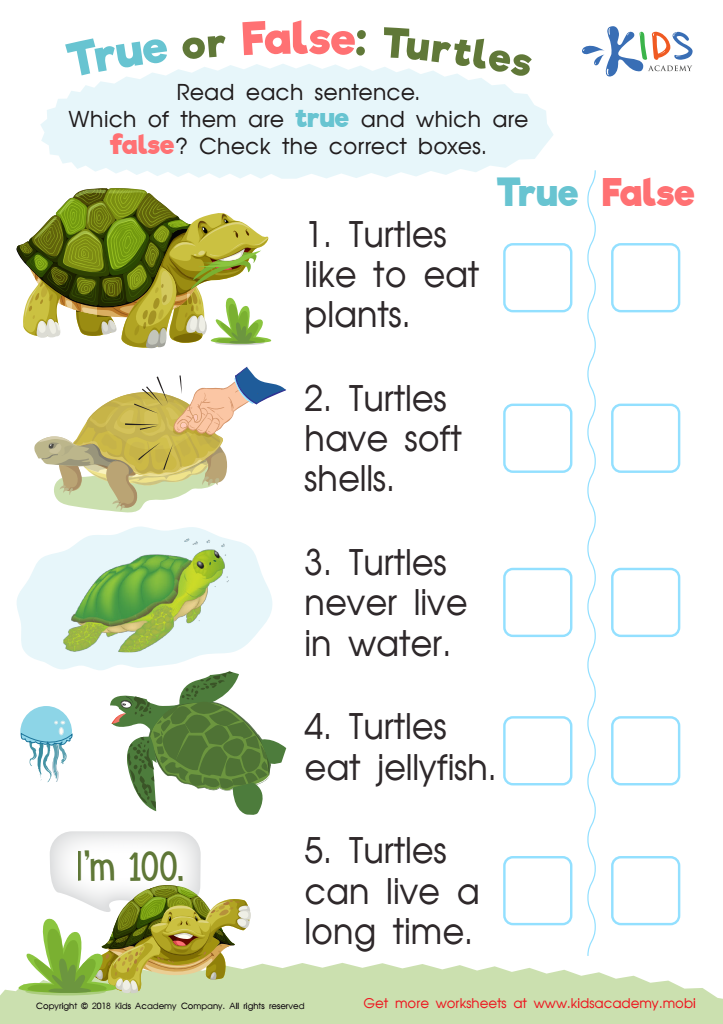
True or False: Turtles Worksheet
Print this free downloadable worksheet to strengthen your child's reading comprehension. Assist them to read each sentence and recall facts about turtles. Check true or false for each statement to verify their knowledge. Perfect for early learners!
True or False: Turtles Worksheet
Worksheet
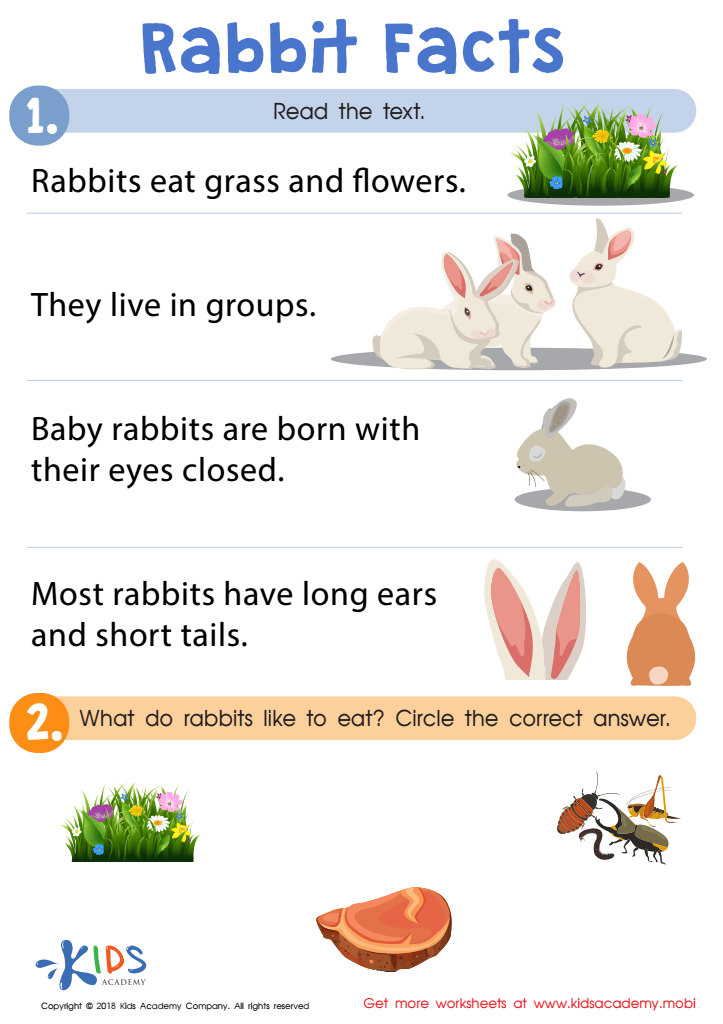
Rabbit Facts Worksheet
Informational texts offer great learning opportunities. Kids Academy's reading worksheet helps children read and recall important details from a text about bunnies. Kids will love it! Simply read the rabbit facts and circle the correct pictures to answer the questions.
Rabbit Facts Worksheet
Worksheet
Join Kids Academy for Free
Who is primarily going to use this learning content?








Animal knowledge is essential for young learners, especially in Grade 1, for several reasons. First and foremost, it nurtures curiosity about the natural world, fostering a sense of wonder and respect for living creatures. Understanding animals helps children develop critical thinking skills as they learn to categorize, compare, and analyze different species based on their characteristics, habitats, and behaviors.
Additionally, animal knowledge can enhance vocabulary and reading comprehension. As children engage with stories and information about animals, they encounter new words and concepts, which contributes to their overall literacy development. This foundational skill in reading sets the stage for greater academic success in the future.
Furthermore, learning about animals promotes empathy and compassion, teaching children the importance of caring for living beings and the environment. Activities related to animals can also serve as engaging ways to teach responsibility, as children may start conversations about pets or wildlife conservation.
Finally, animal knowledge can be interdisciplinary, integrating science, literature, and art, making learning interactive and enjoyable. It encourages exploration and creative expression, which are vital for holistic development. In turn, caring about animal knowledge enriches both parenting and teaching practices, ultimately supporting children's growth and engagement in learning.