
Understanding life cycles Normal Grade 1 Science Worksheets
3 filtered results
Difficulty Level
Grade
Age
-
From - To
Subject
Activity
Standards
"Understanding Life Cycles Normal Grade 1 Science Worksheets" are designed to spark young learners' curiosity about the natural world. Our worksheets are engaging and educational, helping first graders explore the fascinating processes that plants and animals undergo from birth to adulthood. Through a variety of fun activities, students will learn to identify and sequence the stages of different life cycles, assisting in the development of crucial observation and critical thinking skills. These printable resources are perfect for enhancing science lessons, reinforcing classroom learning, and inspiring a lifelong interest in biology and nature. Download today and watch your students discover the magic of life cycles!
Favorites
With answer key
Interactive
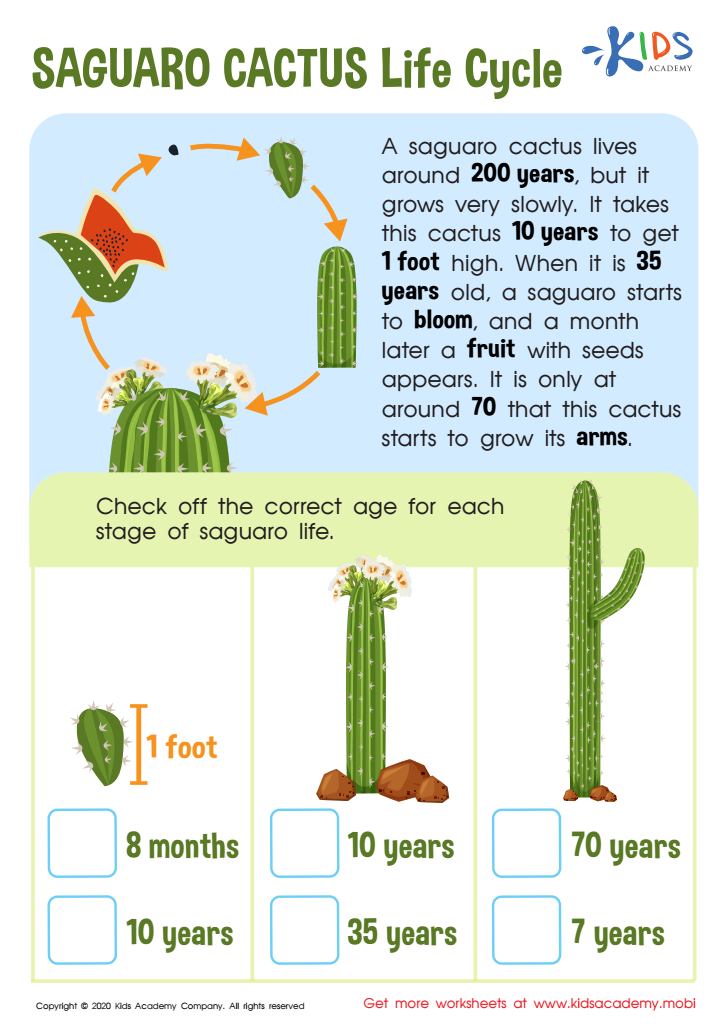
Saguaro Cactus Life Cycle Worksheet
Teach your child about the saguaro cactus, which takes 35 years to bloom and can live up to twice the lifespan of a human! Print this free PDF worksheet to engage learners with an interesting passage. Check off the correct answers to reflect their learning!
 Assign to My Students
Saguaro Cactus Life Cycle Worksheet
Worksheet
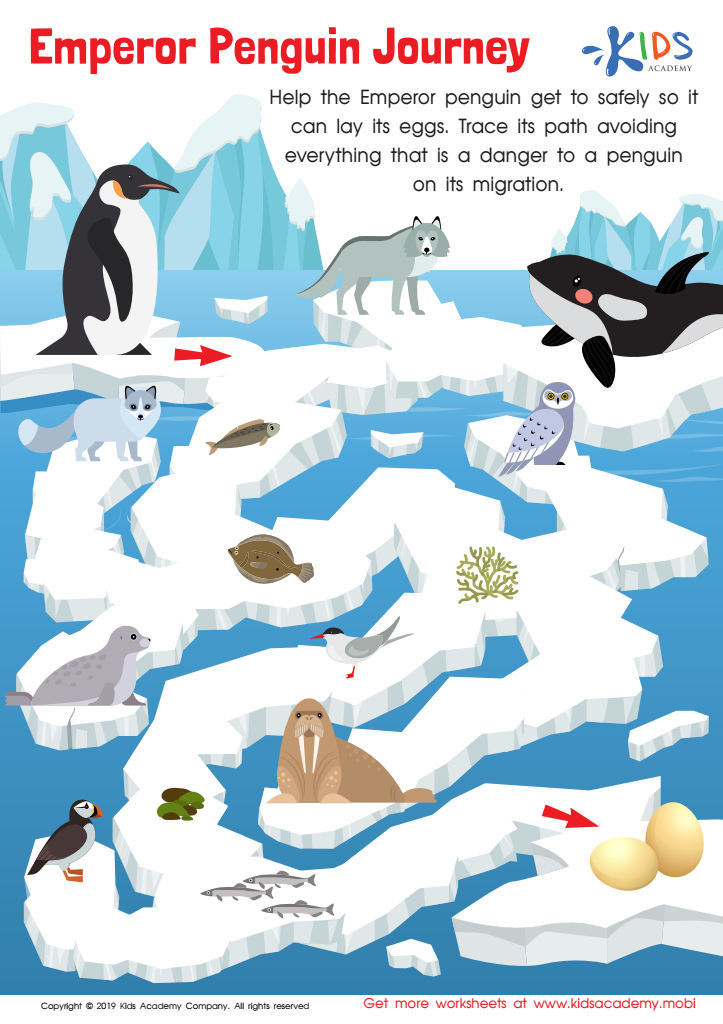
Emperor Penguin Journey Worksheet
Kids love learning about animal habitats! This bright worksheet on Emperor Penguins is a fun way for your child to explore the risks of migration. Download the free PDF and help the penguin make its way through the maze and to its eggs - all while stimulating fine motor skills. Kids will have a blast helping the Emperor Penguin waddle to safety!
Emperor Penguin Journey Worksheet
Worksheet
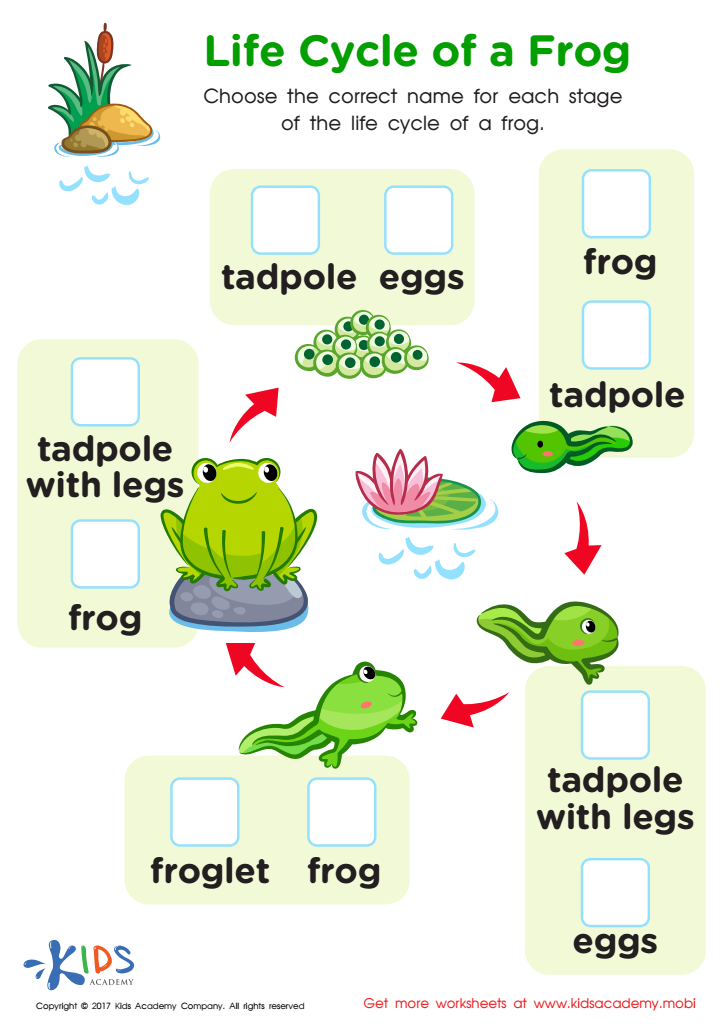
Life Cycle Frog Printable
Kids can explore the life cycle of frog with this fun worksheet! Draw lines from one stage to the next to follow the transformation from tadpole to frog and learn about the cycle of life.
Life Cycle Frog Printable
Worksheet
Join Kids Academy for Free
Who is primarily going to use this learning content?







Understanding life cycles is crucial for young learners, and this foundational knowledge can significantly benefit them. For teachers and parents, incorporating life cycles in Grade 1 science education offers several advantages.
First, it fosters a sense of curiosity and respect for nature. Learning how plants and animals grow and change helps children appreciate the living world around them. They comprehend that all living creatures undergo changes, promoting empathy and a deeper environmental awareness.
Second, understanding life cycles is integral to grasping broader scientific concepts. By recognizing patterns and sequences in the life stages of organisms, children build critical thinking and observational skills. These cognitive skills are essential for more complex scientific inquiry in future studies.
Moreover, discussing life cycles contributes to interdisciplinary learning. It intersects with subjects like math, through counting stages; literacy, by reading life cycle stories; and art, through drawing and labeling diagrams. This holistic approach enhances overall academic skills.
Lastly, being aware of life cycles connects children to real-world experiences. Kids can relate classroom lessons to everyday life, perhaps through gardening or observing insects. These practical connections make science tangible and increase engagement and retention.
Parents and teachers should value teaching life cycles in Grade 1 to develop informed, curious, and empathetic individuals who appreciate the intricate balance of life.







