Lowercase identification Normal Kindergarten Alphabet Worksheets
4 filtered results
-
From - To
Explore our "Lowercase Identification Normal Kindergarten Alphabet Worksheets," designed to enhance young children's literacy skills! These engaging worksheets help kindergarteners recognize and identify lowercase letters through fun activities. Perfect for classroom use or at-home learning, our printable resources offer various formats, including tracing, coloring, and matching exercises. Each worksheet is structured to build confidence in letter recognition while fostering fine motor skills. Ideal for early learners, these resources ensure a solid foundation in the alphabet, supporting their journey to reading and writing. Unlock your child's potential with our interactive and educational worksheets today! Visit us now and start the learning adventure!
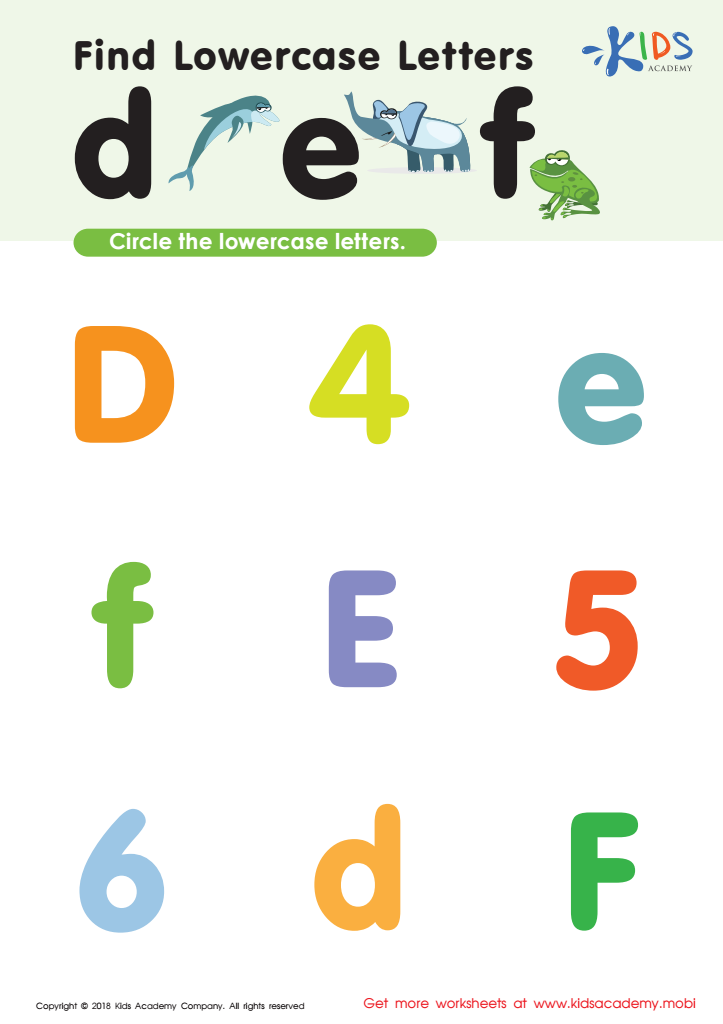
Find Lowercase Letters d e f Worksheet
 Assign to My Students
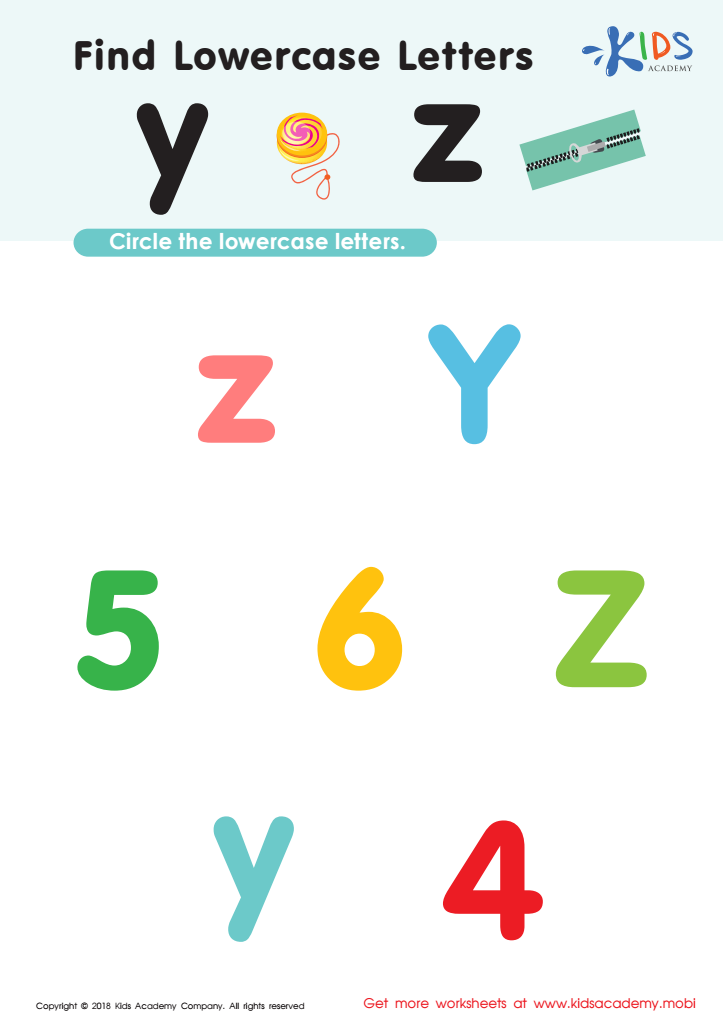
Find Lowercase Letters y z Worksheet
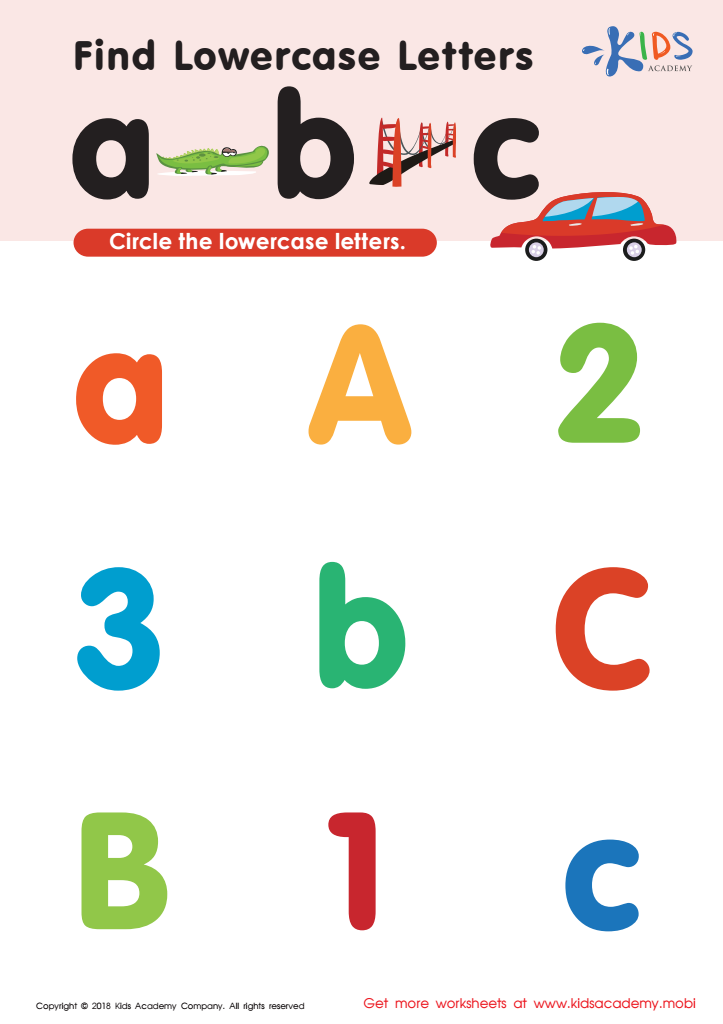
Find lowercase letters a b c Worksheet
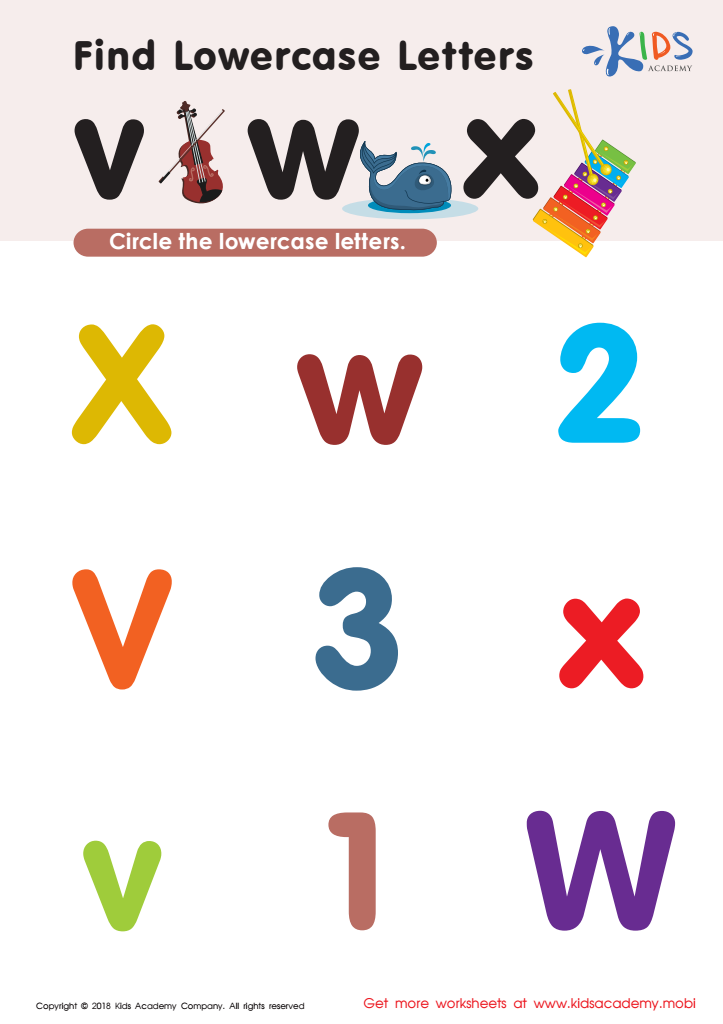
Find Lowercase Letters v w x Worksheet








Lowercase letter identification is a crucial foundational skill for young learners in kindergarten. Understanding lowercase letters allows children to engage more effectively with reading and writing activities. Unlike uppercase letters, which are often visually prominent in isolation, lowercase letters make up the majority of text in children's books and everyday writing. By recognizing and differentiating these letters, children can better decode words and understand how letters form language.
Moreover, learning lowercase letters fosters self-confidence in emerging writers. As students learn to write, they mostly use lowercase letters, and mastering these forms empowers them to express their thoughts and ideas more freely. Teachers and parents play a vital role in this learning process by introducing engaging activities and materials that promote lowercase letter recognition, such as games, flashcards, and stories rich in visual elements.
Additionally, lowercase identification ties into broader literacy goals, influencing vocabulary comprehension, spelling, and overall language skills. Commitment to supporting this developmental stage ultimately prepares children for more complex literacy tasks in grade school. By prioritizing lowercase letter recognition, educators and parents lay a strong foundation for lifelong reading and writing success.