Basic Addition Normal Kindergarten Worksheets
9 filtered results
Difficulty Level
Grade
Age
-
From - To
Subject
Activity
Standards
Explore our engaging Basic Addition Normal Kindergarten Worksheets designed to help young learners master foundational math skills! Perfectly crafted for preschoolers, these worksheets provide colorful and interactive activities that will make learning addition fun and approachable. Students will practice counting, recognizing numbers, and solving simple addition problems through playful illustrations and varied exercises. These worksheets not only enhance math comprehension but also promote critical thinking and problem-solving skills. Great for both classroom settings and at-home practice, our resources make teaching addition an enjoyable experience. Get started today and watch your child's confidence in math blossom!
Favorites
With answer key
Interactive
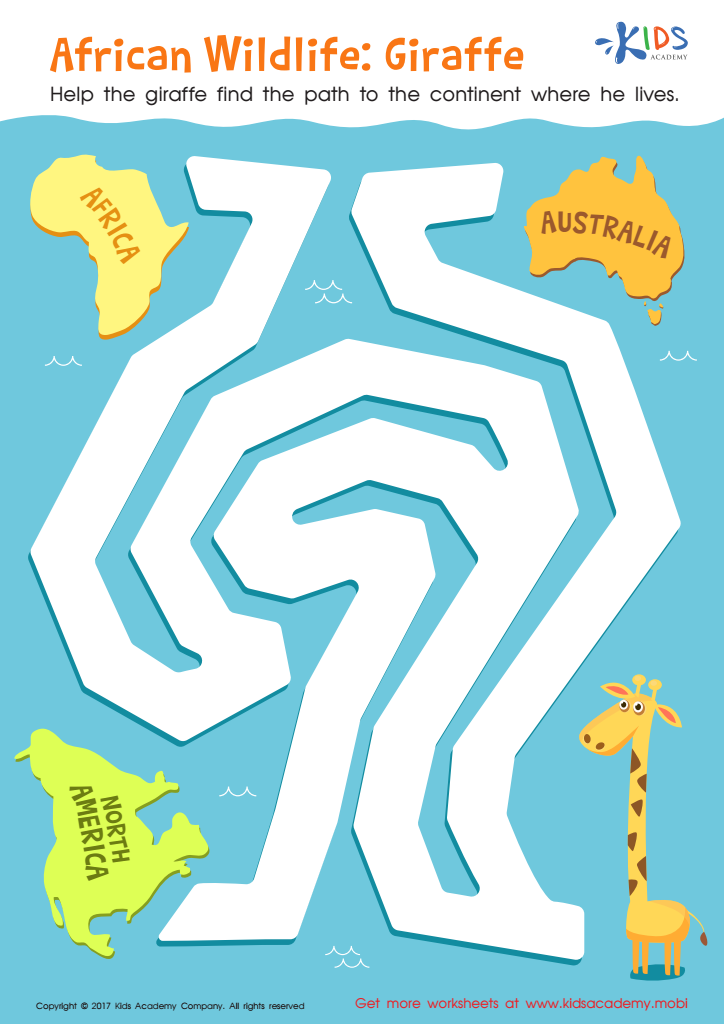
African Wildlife: Giraffe Worksheet
Help the giraffe get home! This African wildlife giraffe worksheet will boost your child's logical reasoning skills while they complete a maze to help the giraffe navigate choppy waters. Learn about different continents and their unique climates, practice problem solving and expand knowledge of the world and its habitats. Perfect for inspiring little learners!
 Assign to My Students
African Wildlife: Giraffe Worksheet
Worksheet
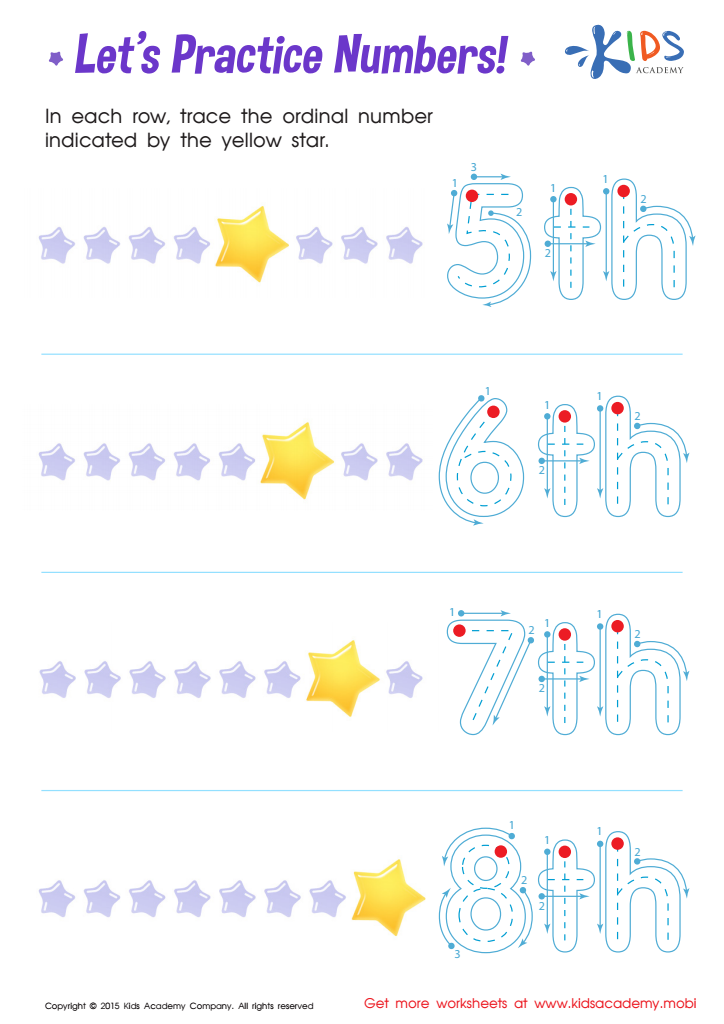
Ordinal Numbers: Let's Practice Numbers Printable
Worksheet
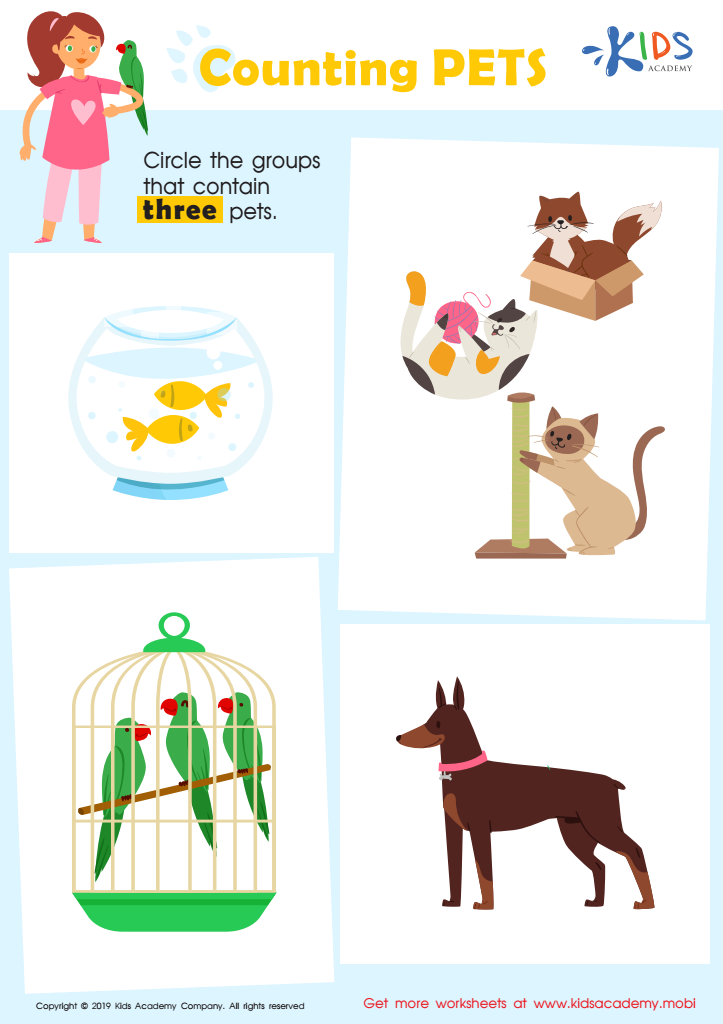
Counting Pets Worksheet
Kids adore their pets, making this free pet counting worksheet the perfect way to combine something they love with math skills. They'll count the number of pets, circle the pictures with three pets, and use one-to-one picture representation to help. This exercise will cultivate their learning and reinforce their love of animals!
Counting Pets Worksheet
Worksheet
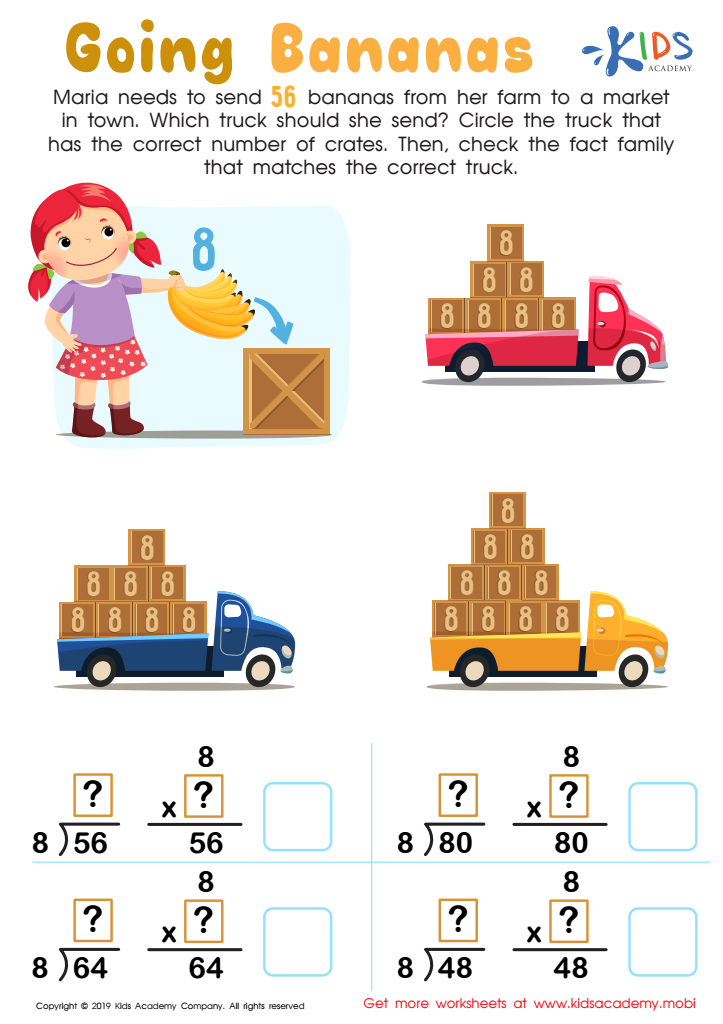
Going Bananas Worksheet
Marla needs to send 56 bananas in batches of 8. Help your child practice division and learn about fact families with this free worksheet. It'll help boost their multiplication skills and increase speed when solving problems.
Going Bananas Worksheet
Worksheet
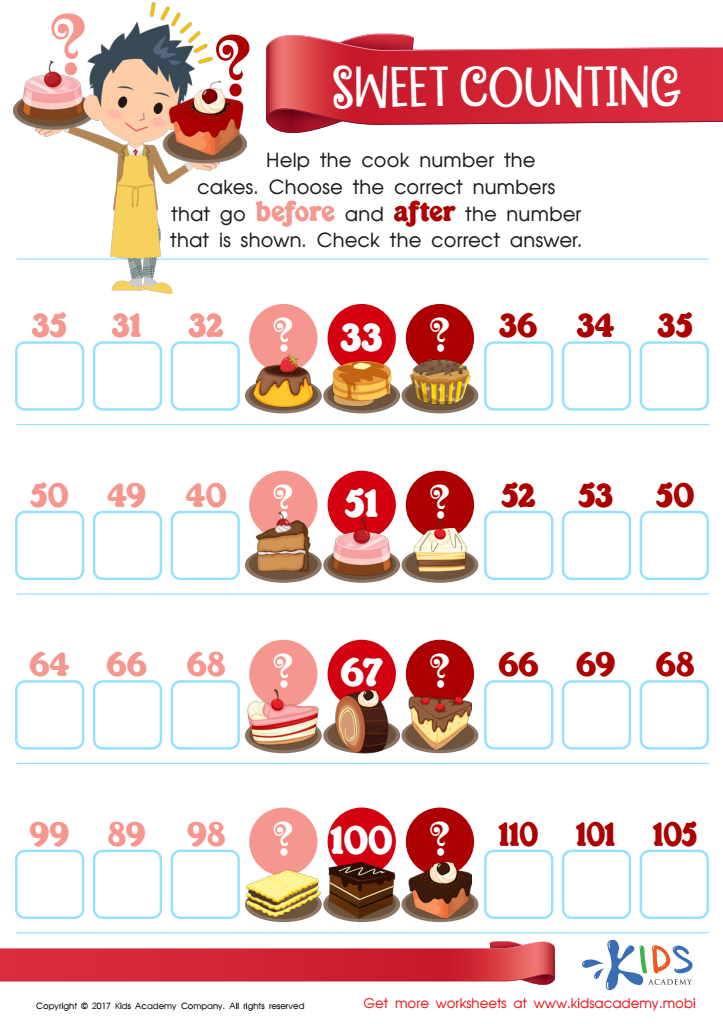
Sweet Counting - Part 1 Worksheet
Help your child learn numbers by counting cakes! Download this fun worksheet and have them fill in the numbers missing in the line of cakes. They'll have fun helping the cook and be learning at the same time!
Sweet Counting - Part 1 Worksheet
Worksheet
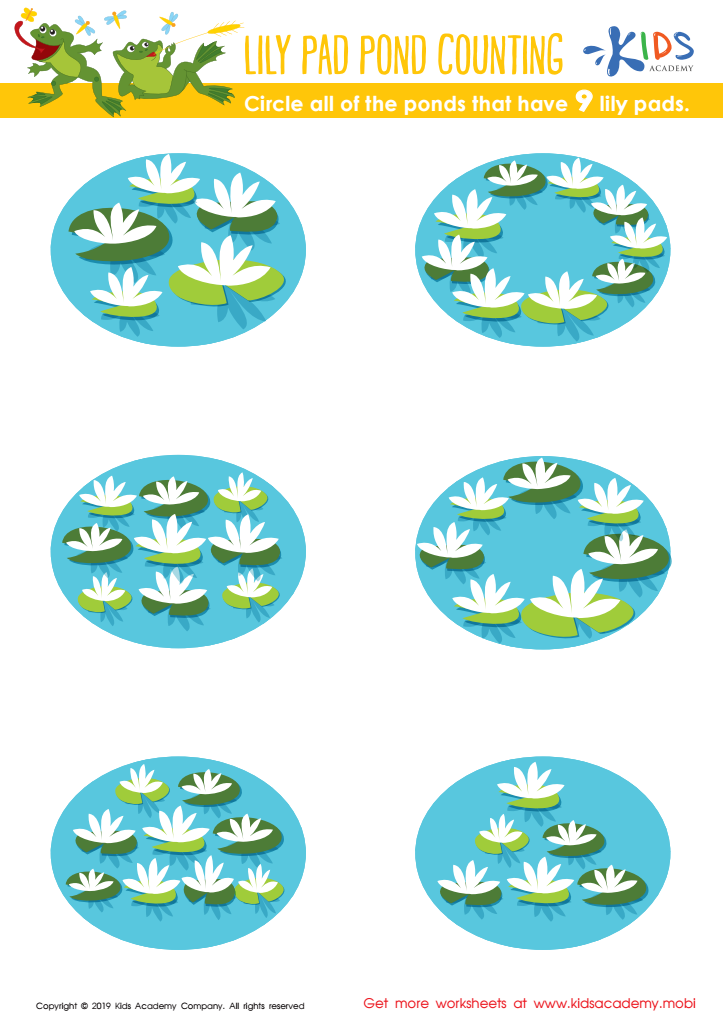
Lily Pad Pond Counting Worksheet
Counting can be fun with this colorful worksheet. Guide and be patient with your kids as they write numbers and count the six groups of lily pads. Help them circle the ponds with 9 lily pads, and watch them learn better and faster.
Lily Pad Pond Counting Worksheet
Worksheet
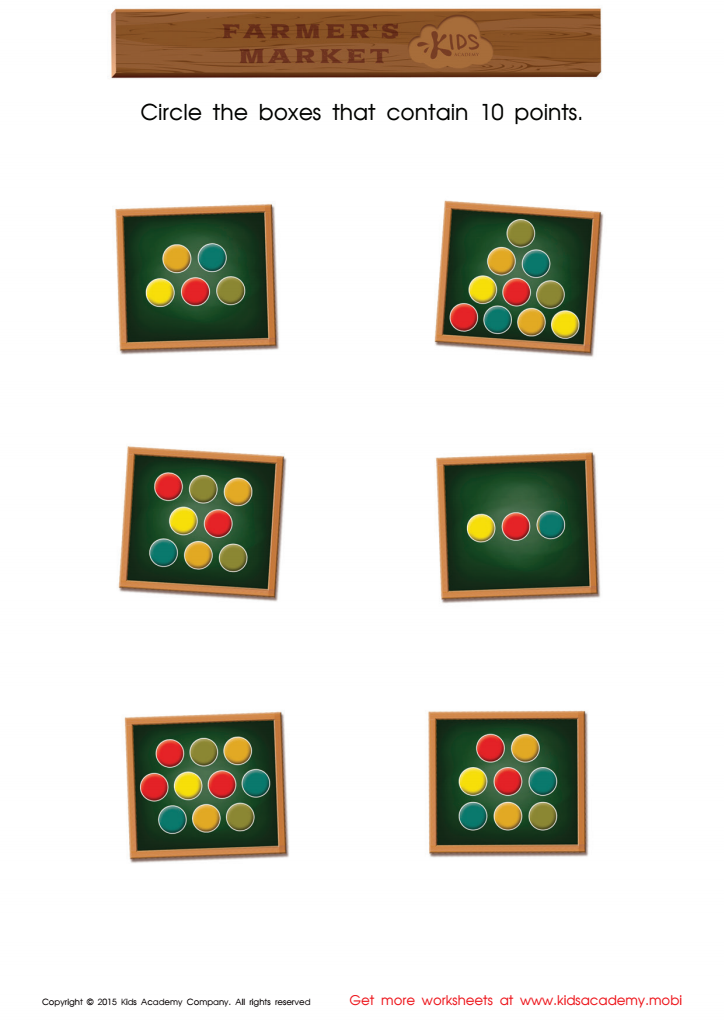
Count and Match Points 10 Math Worksheet
Help your youngster practice counting with this worksheet. Count the points in each box and circle any with up to 10 points. It will improve their counting and matching ability. Forget about addition and subtraction; it's time for a fun exercise for you both!
Count and Match Points 10 Math Worksheet
Worksheet
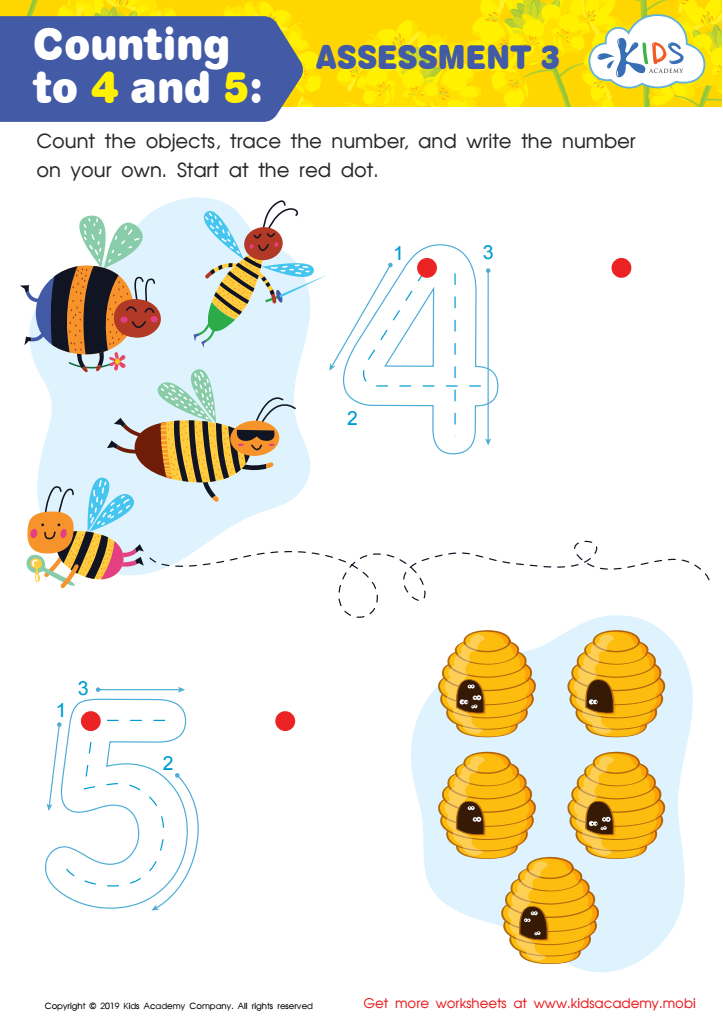
Counting to 4 and 5: Assessment 3 Worksheet
Help your kids learn to count with fun objects and items they like - like the bees in this worksheet. Ask them to count, trace the number, and write it down. Give guidance, starting at the red dot. This is an important first step in math and your kids will love it!
Counting to 4 and 5: Assessment 3 Worksheet
Worksheet
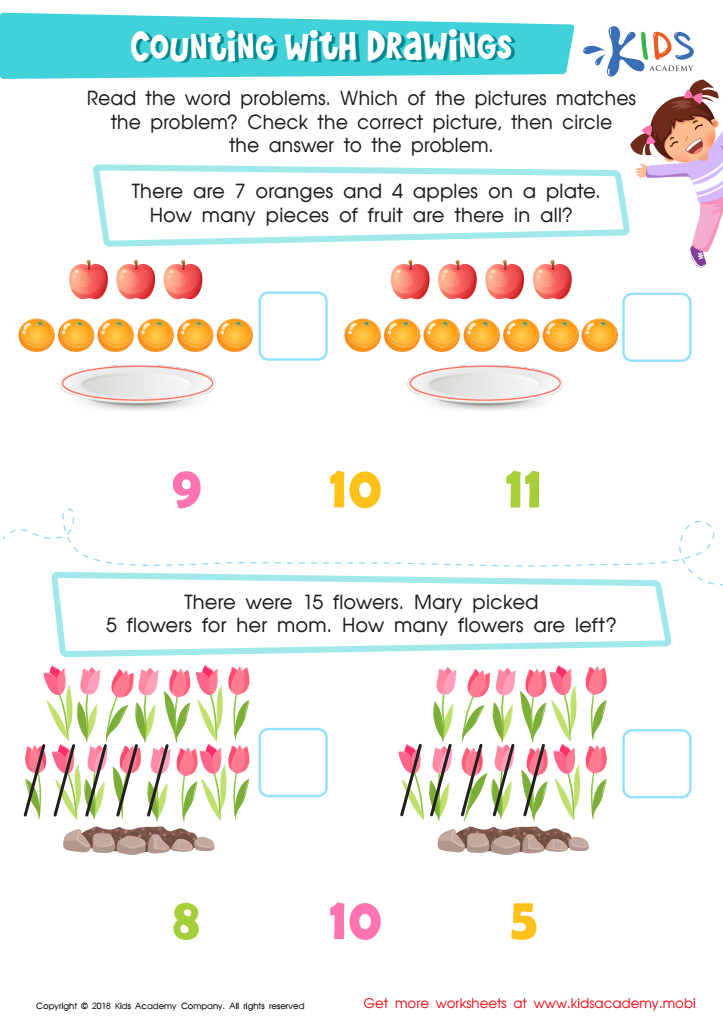
Counting with Drawings:Fruits & Flowers Worksheet
At Kids Academy, we know pictures make math come alive and make sense. This worksheet is perfect for early learners to practice word problems. Kids read each problem and count the images that represent the numbers, then solve the problem with addition or subtraction to get the right answer.
Counting with Drawings:Fruits & Flowers Worksheet
Worksheet
Join Kids Academy for Free
Who is primarily going to use this learning content?






Parents and teachers should care about Basic Addition in Normal Kindergarten because it lays the foundation for a child’s mathematical understanding and cognitive development. Mastering basic addition helps children develop critical thinking and problem-solving skills, which are essential for later academic success. At this early stage, children learn to recognize patterns and relationships between numbers, skills that are pivotal not just in math, but across all subjects.
Moreover, basic addition fosters a love for learning and mathematics. When children engage with addition through games, manipulatives, and interactive activities, they build confidence and a positive attitude toward math. This is crucial, as early attitudes towards math can influence future academic choices and performance.
Additionally, understanding basic addition enables children to relate math to everyday situations—like counting snacks, organizing toys, or measuring ingredients during cooking. This real-world application makes learning relevant and enjoyable.
Lastly, an early grasp of addition signals readiness for more advanced math concepts, ensuring that children don't struggle as they progress through their education. Therefore, parents and teachers should prioritize these foundational math skills to support children's overall learning and development.