Cognitive Development Normal Kindergarten 2D Shapes Worksheets
4 filtered results
-
From - To
Enhance your child's cognitive development with our engaging Kindergarten 2D Shapes worksheets! Designed for young learners, these printable activities foster essential skills such as shape recognition, spatial awareness, and critical thinking. Through fun exercises, children will identify, compare, and manipulate various 2D shapes, laying a solid foundation for future math concepts. Our worksheets encourage interactive learning, making it easy for parents and educators to nurture creativity and problem-solving abilities. Ideal for reinforcing classroom instruction or enriching home study time, these resources spark curiosity and make learning about shapes an exciting adventure! Start your child's journey towards math mastery today with our comprehensive collection!
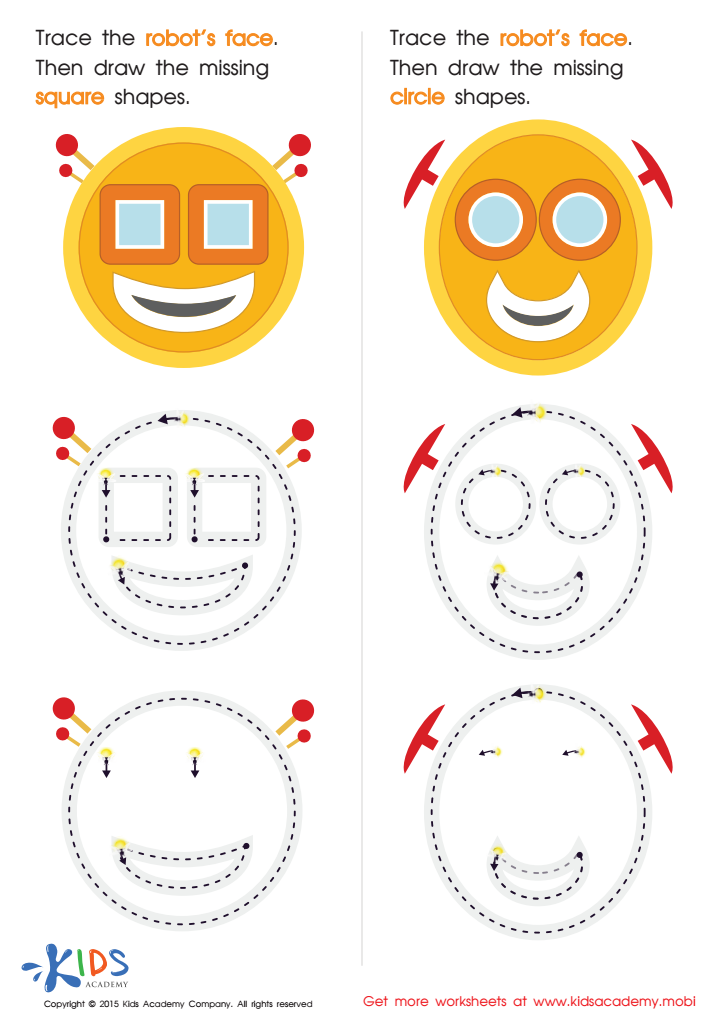
Practicing to Draw Circles And Squares Printable
 Assign to My Students
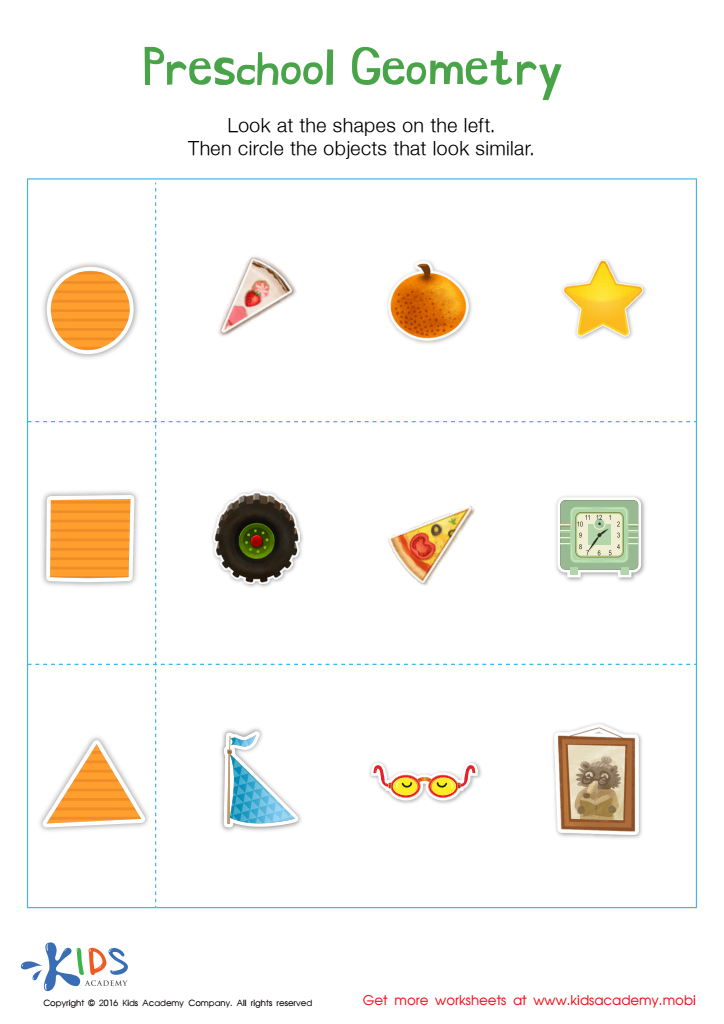
Preschool Geometry Match Up Worksheet

Learning to Draw Crescents And Triangles Worksheet
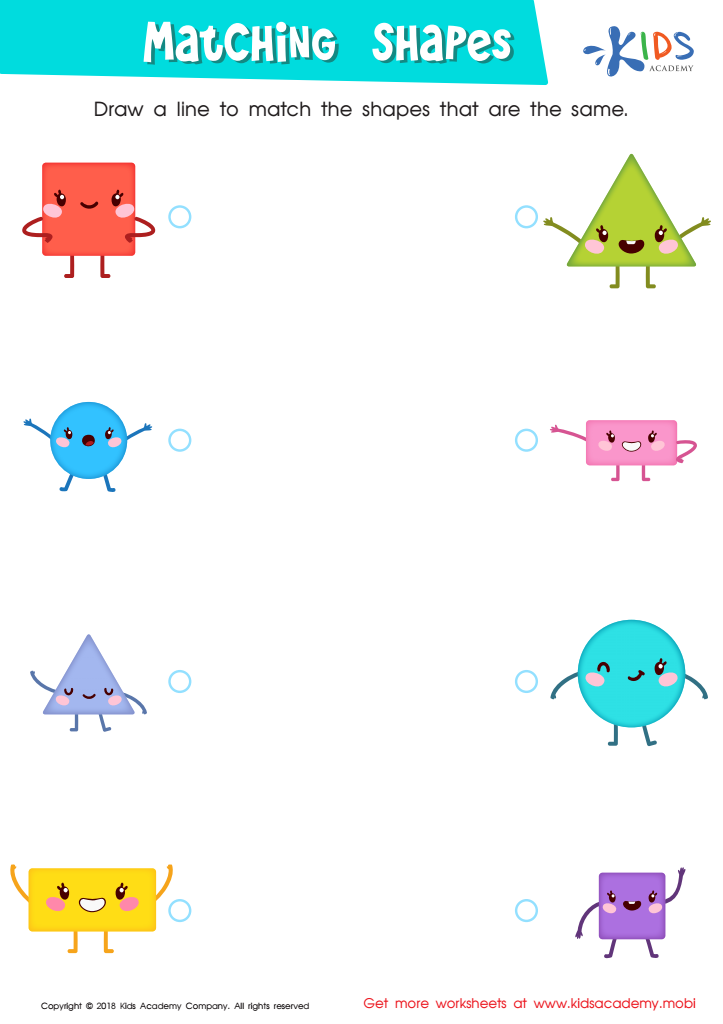
Matching Shapes Worksheet






Parents and teachers should prioritize cognitive development in kindergarten, particularly concerning 2D shapes, for several compelling reasons. Firstly, understanding basic shapes forms the foundation for more complex mathematical concepts. Recognizing shapes helps children develop critical thinking and problem-solving skills, necessary for later scientific and mathematical learning.
Moreover, engaging with 2D shapes enhances spatial awareness, which is essential not only in math but also in reading and writing. Children learn to recognize shapes in their environment, aiding in their observational skills. This, in turn, fosters creativity and allows for self-expression through activities like drawing and building.
Additionally, discussions about shapes can improve language and communication skills as children learn to describe and categorize their observations. It contributes to social skills through group activities like shape sorting games, which promote teamwork and cooperation.
Lastly, being able to identify and manipulate shapes builds confidence. This foundational knowledge can lead to enthusiasm for learning and exploration in other academic areas. Thus, nurturing an understanding of 2D shapes is crucial for holistic development in kindergarten-aged children.