Shape identification Normal Kindergarten Geometry Worksheets
5 filtered results
-
From - To
Introduce young learners to the world of geometry with our "Shape Identification Normal Kindergarten Geometry Worksheets." These engaging and colorful worksheets help children recognize and name basic shapes like circles, squares, triangles, and rectangles. Designed to develop their visual and cognitive skills, each worksheet features fun and interactive activities, including matching, tracing, and coloring. Ideal for home and classroom settings, these worksheets provide a strong foundation in geometric concepts, making learning enjoyable and effective. Perfect for curious minds, our kindergarten geometry worksheets turn shape identification into an exciting educational journey. Explore today at Kids Academy!
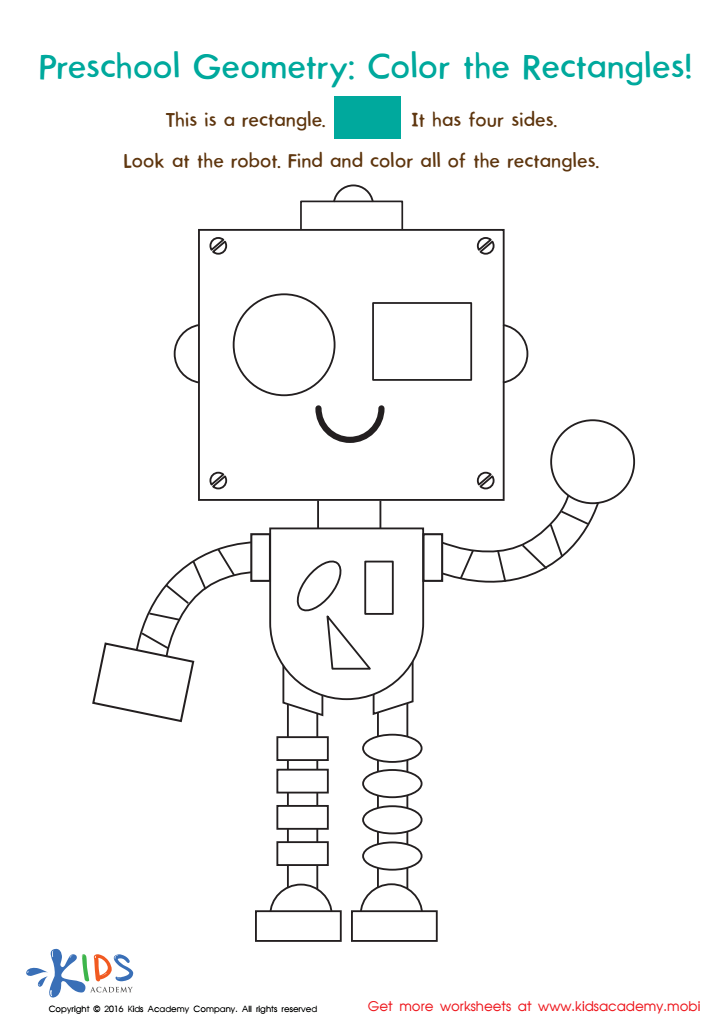
Geometry Worksheet
 Assign to My Students







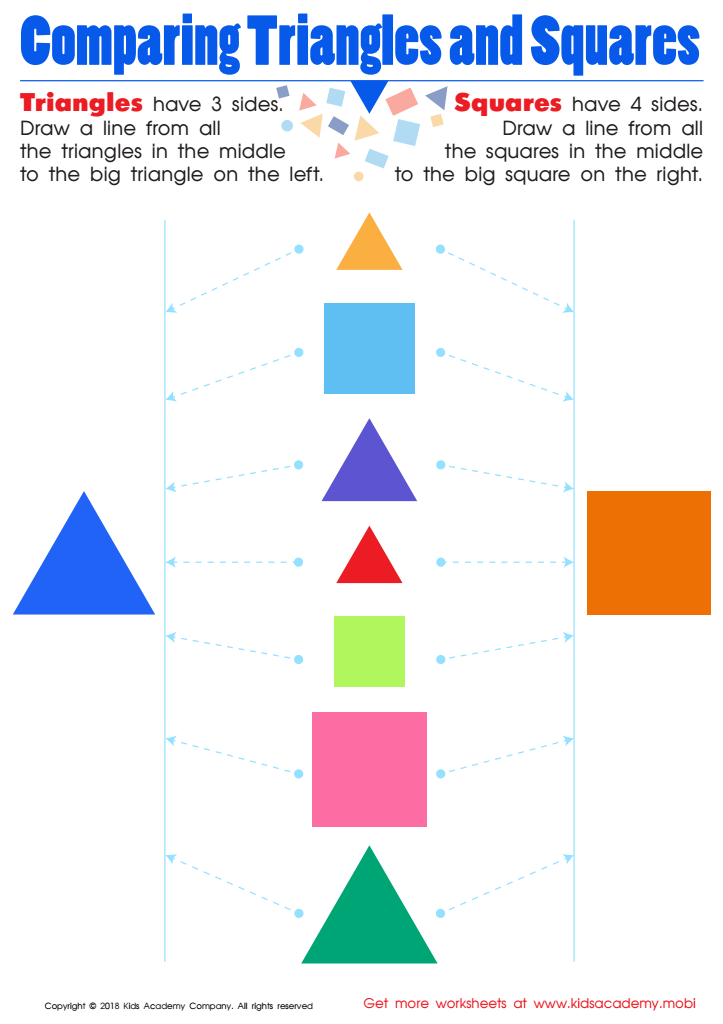
Comparing Triangles Squares Worksheet
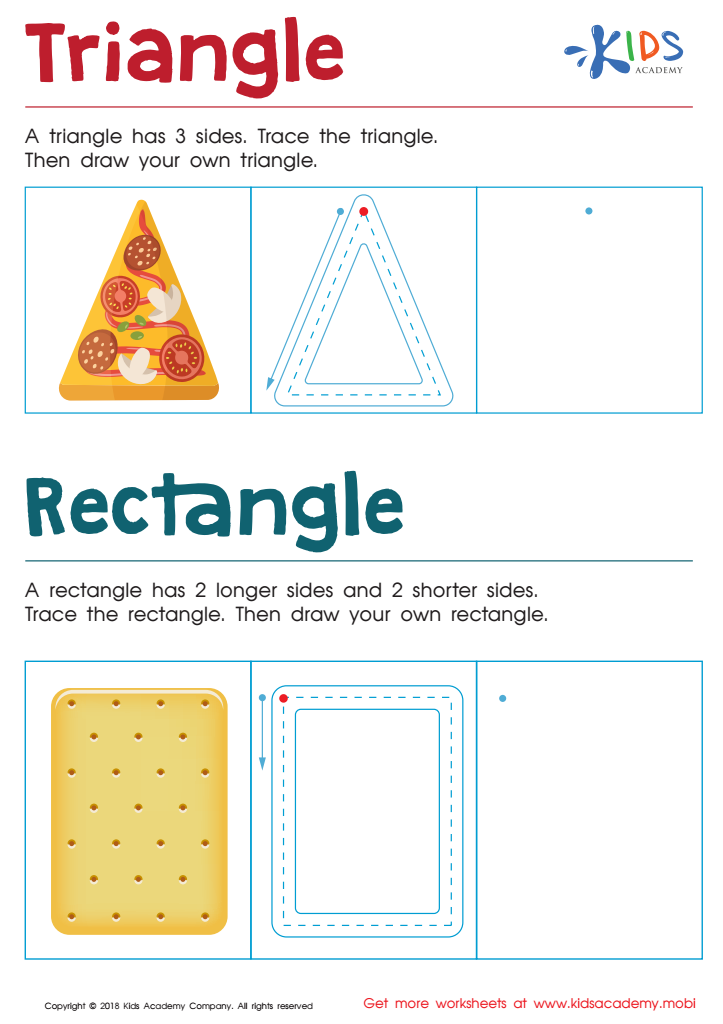
Triangle Rectangle Worksheet
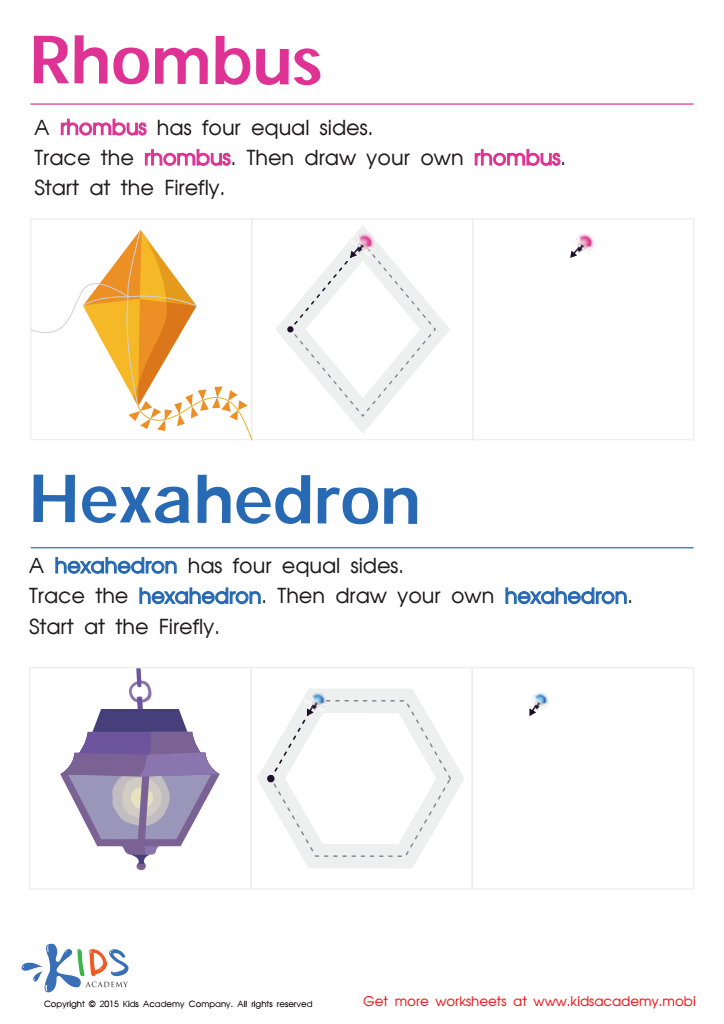
Draw a Rhombus And a Hexahedron Printable
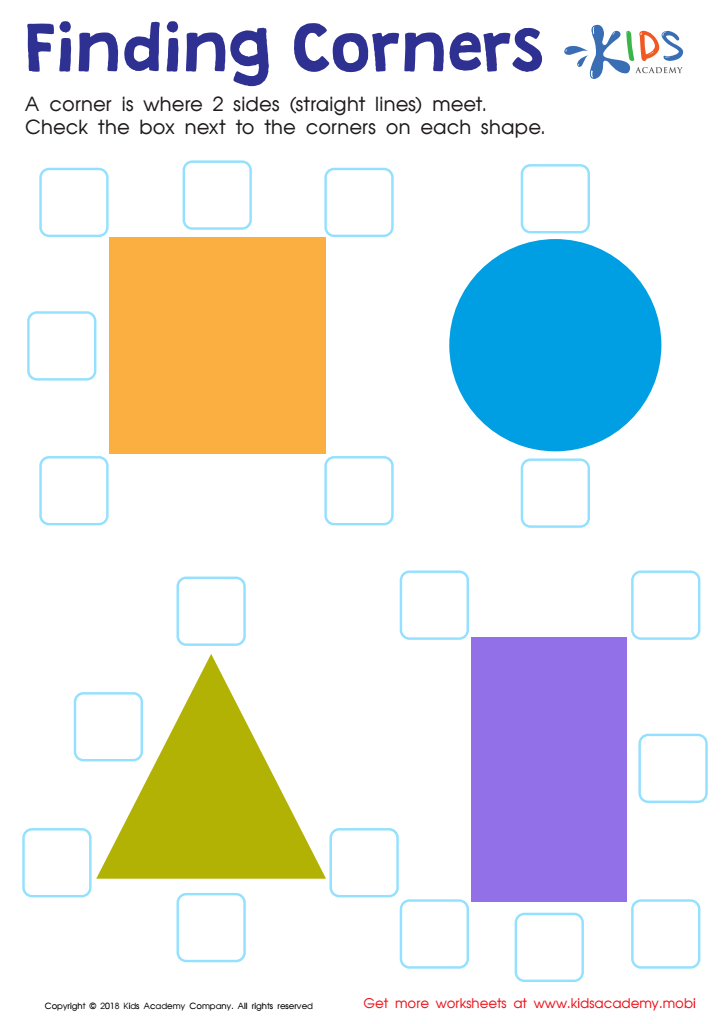
Finding Corners Worksheet








Shape identification is foundational in a child’s cognitive development and serves as a gateway to more complex learning. In kindergarten, introducing children to basic geometry shapes—like circles, squares, triangles, and rectangles—helps them develop critical skills in visual-spatial awareness, problem-solving, and categorical thinking.
● Cognitive Skills: Recognizing and naming shapes enhances cognitive abilities such as memory, attention, and logical reasoning. It lays the groundwork for understanding more abstract mathematical concepts later on.
● Language Development: Learning shapes improves vocabulary and communication skills. Describing shapes with attributes (such as edges, vertices, and faces) enriches their descriptive language, which is crucial for effective communication.
● Problem Solving: Shape recognition allows children to classify and sort objects, an important skill in problem-solving and critical thinking. It also helps in understanding patterns and sequences which are fundamental in mathematical learning.
● Practical Life Applications: Shapes are everywhere—in everyday objects, architecture, and nature. Identifying them helps children make sense of the world around them and can be a practical skill useful in daily life and future learning endeavors.
Moreover, engaging with geometry fosters creativity, as children often use shapes in art and building projects. This interplay between creative and logical thinking nurtures well-rounded intellectual growth. Therefore, both parents and teachers should actively encourage shape identification to build a solid foundation for future educational success.








