Differentiating shapes Normal Kindergarten Math Worksheets
3 filtered results
-
From - To
Enhance your kindergarten math lessons with our Differentiating Shapes worksheets! Designed for young learners, these interactive and engaging activities help children recognize, compare, and classify various geometric shapes. Our printable worksheets feature vibrant illustrations and hands-on exercises that make learning fun and effective. Encouraging kids to think critically about shapes, our resources are perfect for both classroom use and at-home practice. Foster essential math skills in a playful way as children identify, draw, and sort shapes. Perfect for teachers and parents alike, our Differentiating Shapes worksheets are an essential tool for developing foundational math knowledge in young minds!
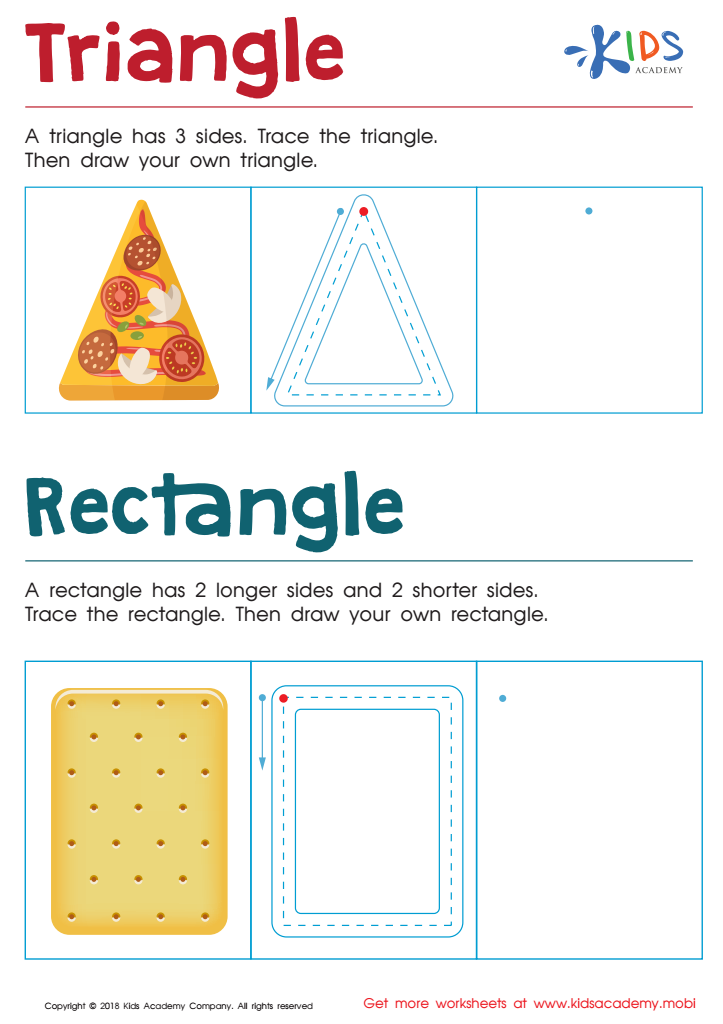
Triangle Rectangle Worksheet
 Assign to My Students
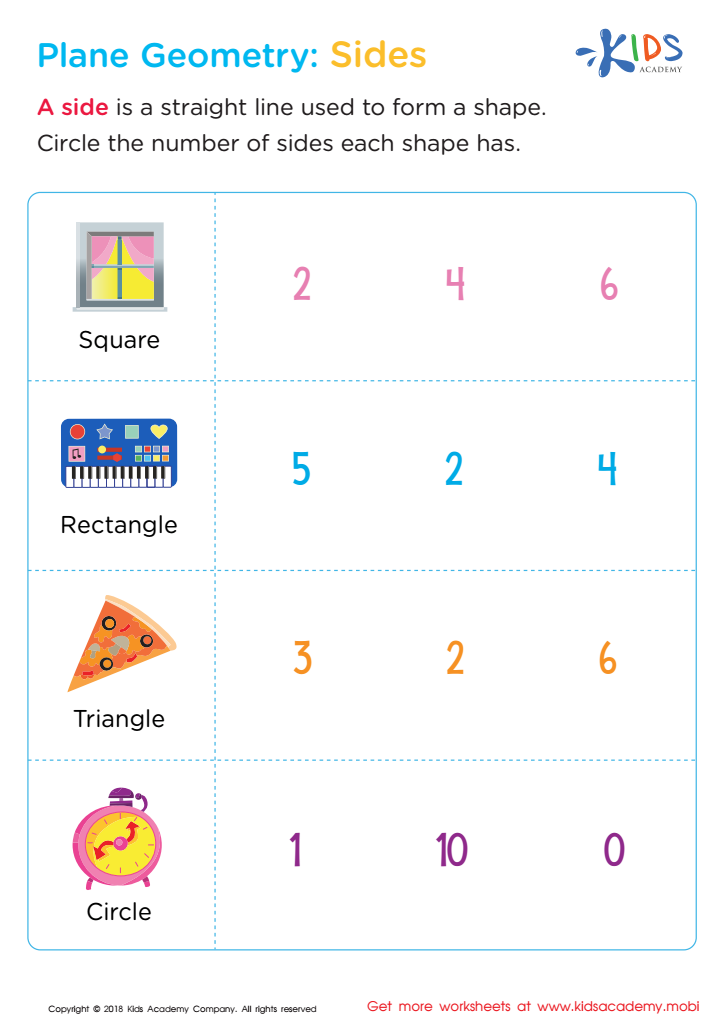
Plane Geometry: Sides Worksheet
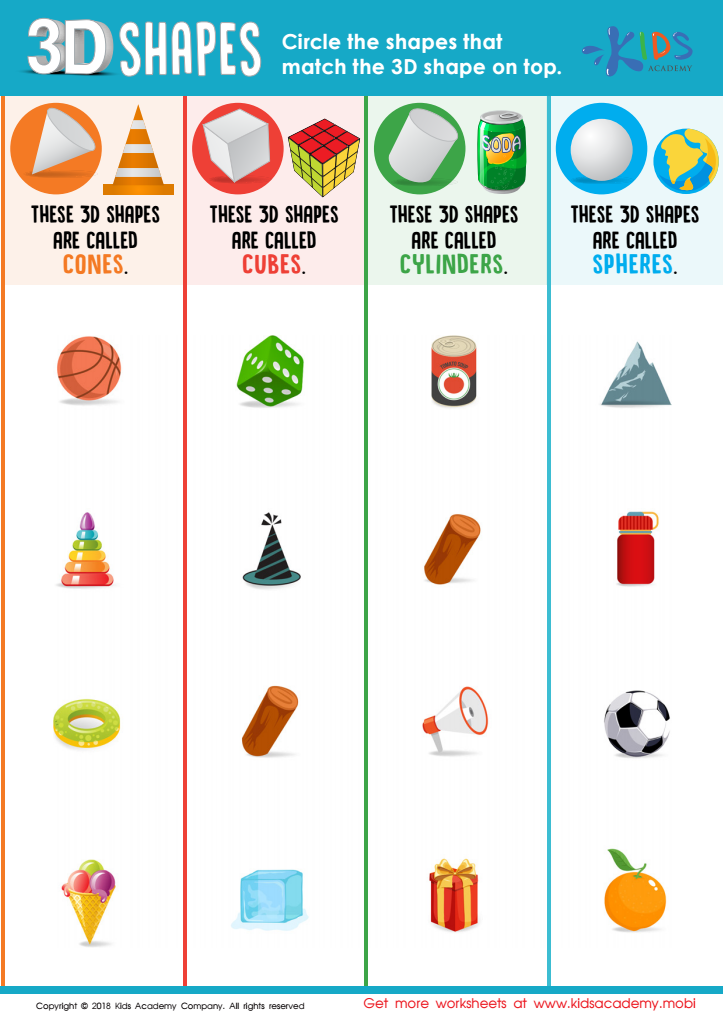
3D Shapes Worksheet


%20(1).jpg)





Differentiating shapes in kindergarten math is crucial for several reasons. First, it lays the foundation for spatial awareness, which is key to understanding more complex math concepts later on. Through activities involving various shapes, children learn to recognize, compare, and manipulate these forms, enhancing their cognitive development.
Moreover, differentiating shapes supports diverse learning styles and paces. Not all children grasp concepts at the same rate; some may excel with visual aids like blocks or drawings, while others might understand better through tactile experiences, such as molding shapes with clay. By providing varied methods of exploration, teachers and parents cater to each child's unique needs.
Furthermore, shape differentiation encourages critical thinking and problem-solving skills. As children identify and categorize shapes, they are engaging in analytical thought processes that can be applied in various contexts both within and outside mathematical boundaries. It also fosters language development, as kids learn the appropriate vocabulary associated with different shapes, enhancing their communication skills.
Ultimately, differentiating shapes is not merely an academic exercise; it plays a significant role in holistic development, preparing children for future educational success and equipping them with essential life skills. Thus, it is imperative for both parents and teachers to value and support this foundational learning experience.








