
Hand-eye Coordination Normal Kindergarten Math Worksheets
6 filtered results
Difficulty Level
Grade
Age
-
From - To
Subject
Activity
Standards
Boost your child's mathematical abilities with our Hand-eye Coordination Normal Kindergarten Math Worksheets. Specially designed to enhance fine motor skills, these worksheets offer engaging activities that blend playful visual exercises with essential math concepts. By tracing shapes, numbers, and patterns, children improve their hand-eye coordination while simultaneously developing foundational math skills. Ideal for classroom settings or at-home practice, our printable worksheets provide a fun and interactive approach to learning that will keep young learners motivated and excited. Help your kindergartener build a strong mathematical foundation with our expertly crafted hand-eye coordination exercises.
Favorites
With answer key
Interactive
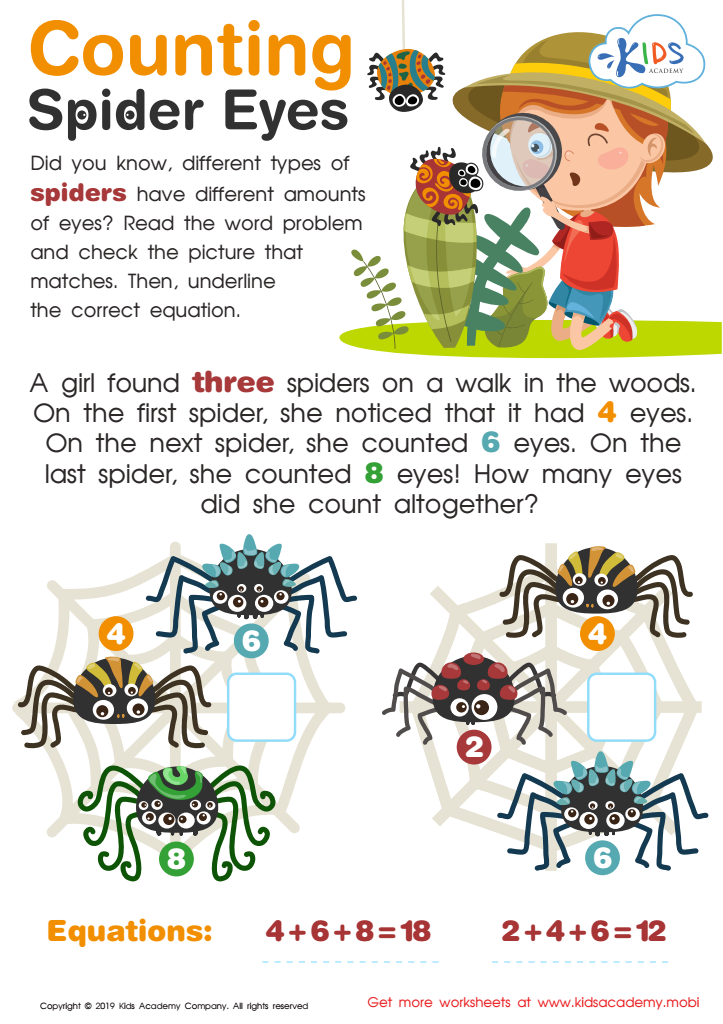
Counting Spider Eyes Worksheet
Did you know different spiders have different eye numbers? Kids will love learning this fact and solving the spider word problems on this free worksheet! Word problems promote a deeper understanding of the concept, plus they get to add up the spiders’ eyes while solving addition problems with more than one addend. Fun and math all in one!
 Assign to My Students
Counting Spider Eyes Worksheet
Worksheet
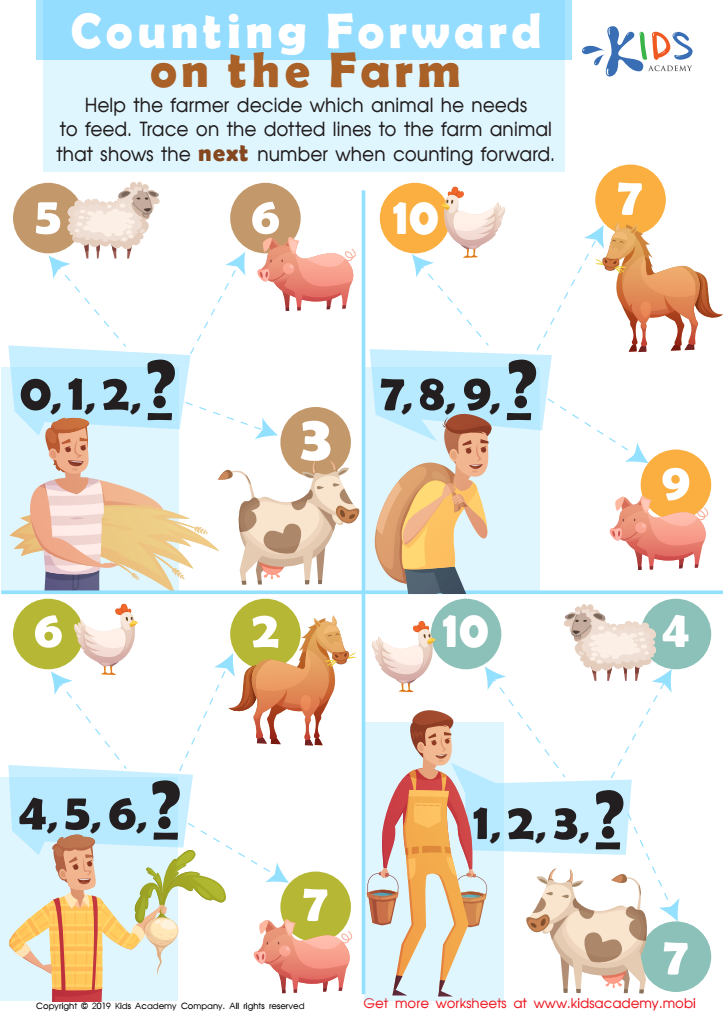
Counting Forward On the Farm Worksheet
Help your child practice counting with this fun worksheet. Have them help a farmer feed the right animal by counting on from a starting point. This activity will help them build number line thinking and refine fine motor skills.
Counting Forward On the Farm Worksheet
Worksheet
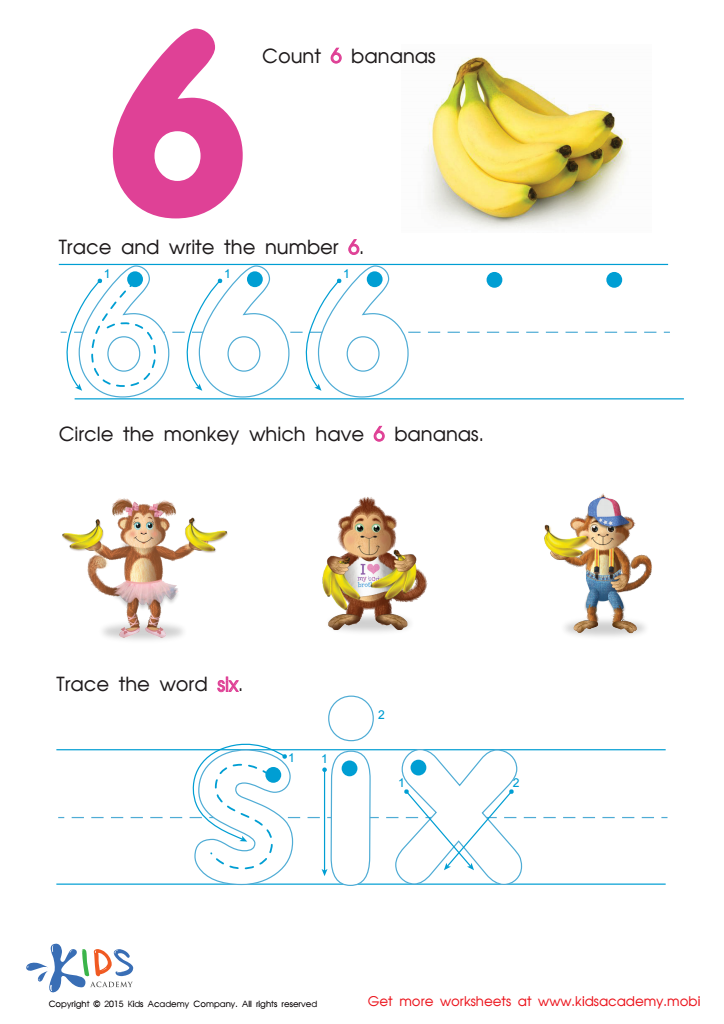
Tracing And Writing Number 6 Worksheet
Learn numbers in a fun way with our preschool number worksheets. Count six bananas, trace and write the number, find the monkey with six bananas, and trace the word "six." Explore more activities at Kids Academy.
Tracing And Writing Number 6 Worksheet
Worksheet
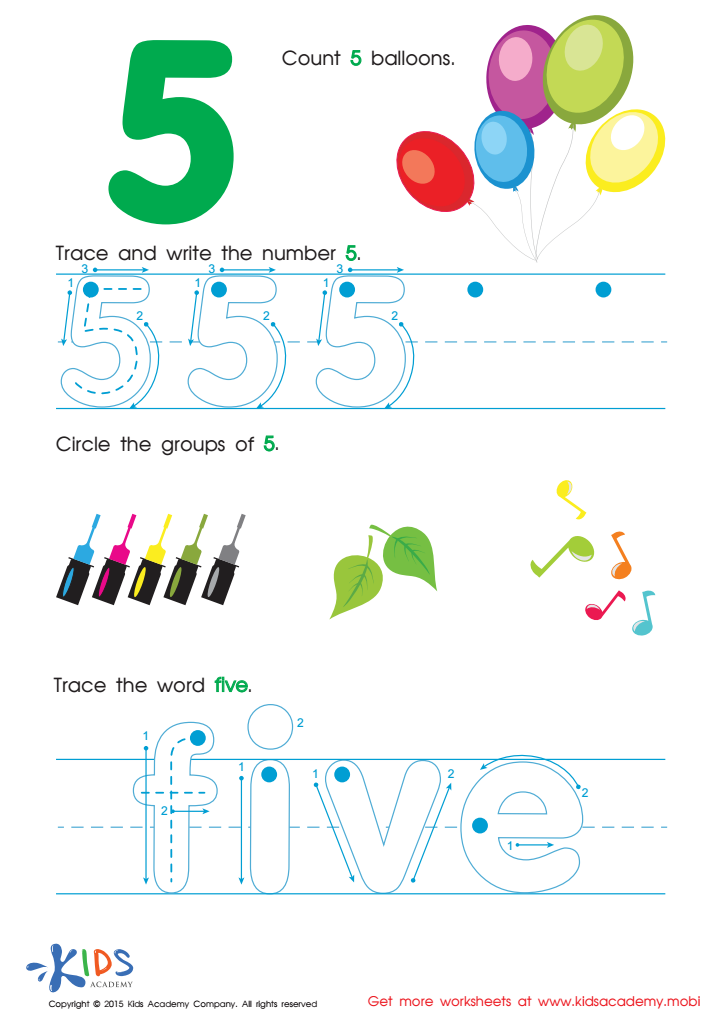
Practice Writing Number 5 Worksheet
Make learning numbers fun! Let your kids count the balloons, trace numbers, and circle the groups with five items. Also, have them trace the word "five" for letter revision. Get the full collection of preschool number worksheets from Kids Academy for a fun and interactive learning experience.
Practice Writing Number 5 Worksheet
Worksheet
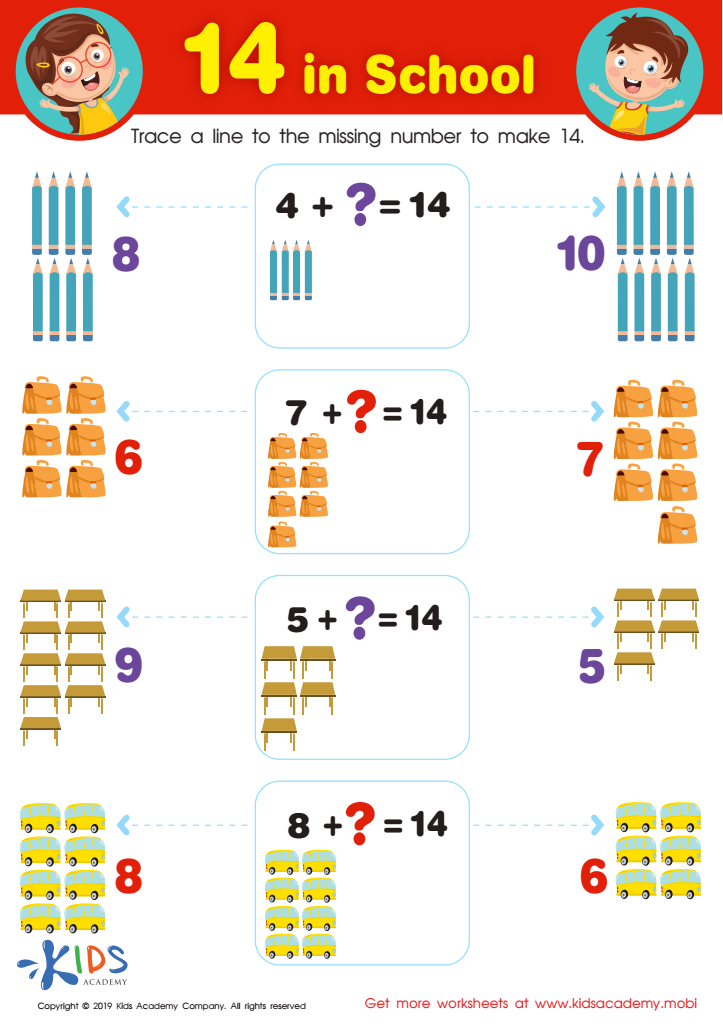
14 in School Worksheet
Remind your kids that adding different sets of numbers can give the same total (e.g. 2+3=5, 4+1=5). Ask them for more examples. Afterwards, work through the exercise. Help them count the objects and trace a line to the missing number that makes the total 14.
14 in School Worksheet
Worksheet
Join Kids Academy for Free
Who is primarily going to use this learning content?






Hand-eye coordination is crucial for a child’s overall development and is particularly important in the context of kindergarten math. This foundational skill enables children to use their visual input to guide their hand movements, which is essential for performing a variety of tasks both in academic and daily life.
In kindergarten math, activities often require fine motor skills linked to hand-eye coordination. For instance, children need to be able to grasp and manipulate objects, write numbers, and place items correctly in sorting or matching games. These activities help in solidifying their understanding of mathematical concepts such as counting, pattern recognition, and spatial awareness.
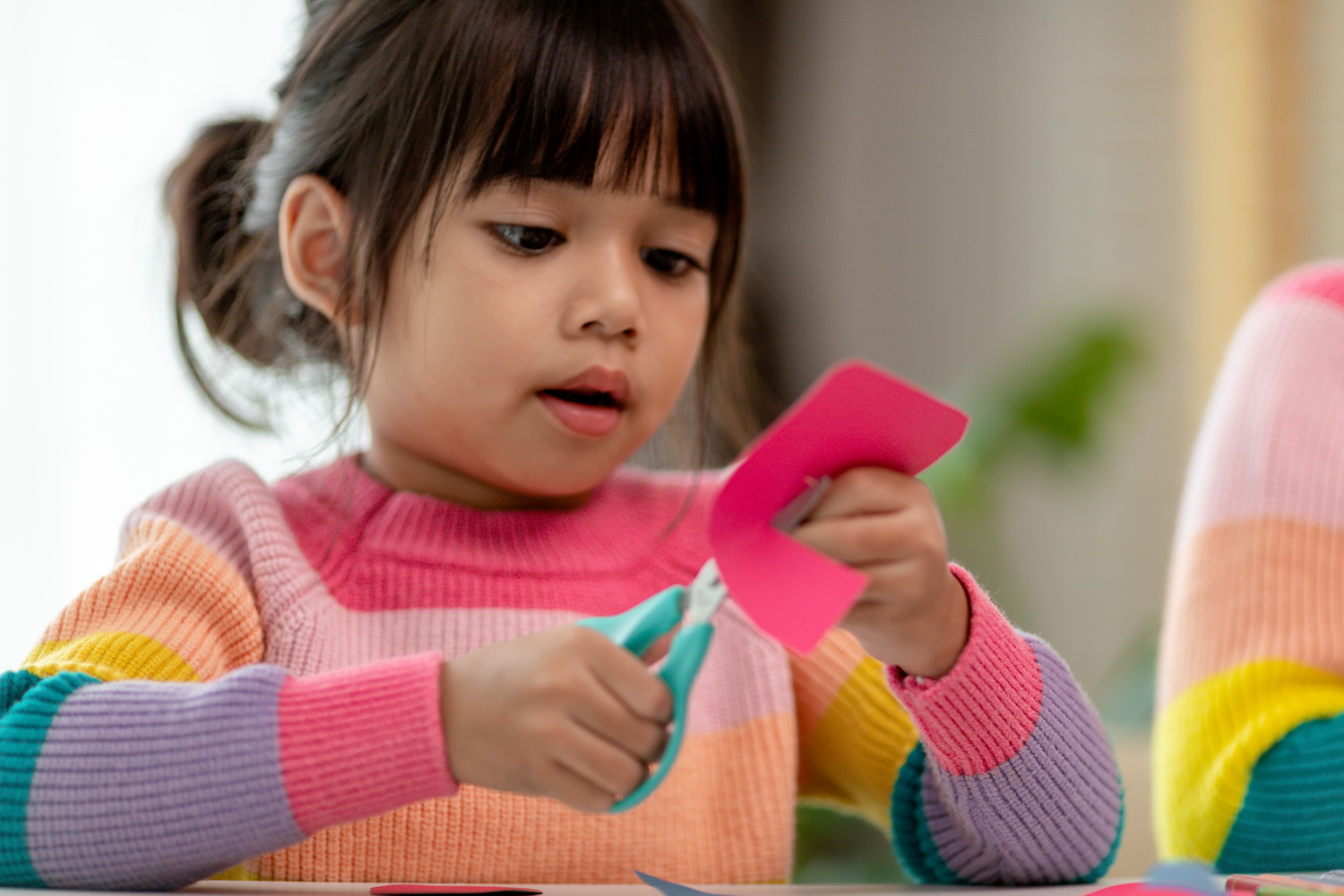
Moreover, good hand-eye coordination enhances a child's ability to interact with their environment efficiently and safely. It plays a role in tasks ranging from tying shoelaces to using scissors, thereby promoting greater independence and confidence. When hand-eye coordination is nurtured, children are more likely to excel not just in math but in other subjects too, as it supports overall cognitive development.
Teachers and parents, therefore, should place emphasis on activities that foster this skill, such as puzzles, building blocks, and age-appropriate sports. Starting early with such developmental activities can provide a strong foundation, positioning children for future academic success and personal growth.








