
Understanding patterns Normal Kindergarten Math Worksheets
3 filtered results
Difficulty Level
Grade
Age
-
From - To
Subject
Activity
Standards
Explore the world of early math with our "Understanding Patterns" Kindergarten Math Worksheets! Designed specifically for young learners, these engaging worksheets help children identify, create, and continue patterns using colors, shapes, and numbers. Developing pattern recognition skills is crucial for foundational math proficiency, fostering logical thinking and observational skills in young minds. Each worksheet is packed with fun activities that promote hands-on learning experiences, ensuring that kids grasp important concepts while enjoying their educational journey. Perfect for classroom use or at-home practice, our worksheets offer a fantastic way for children to build confidence and excitement in math. Start exploring patterns today!
Favorites
With answer key
Interactive
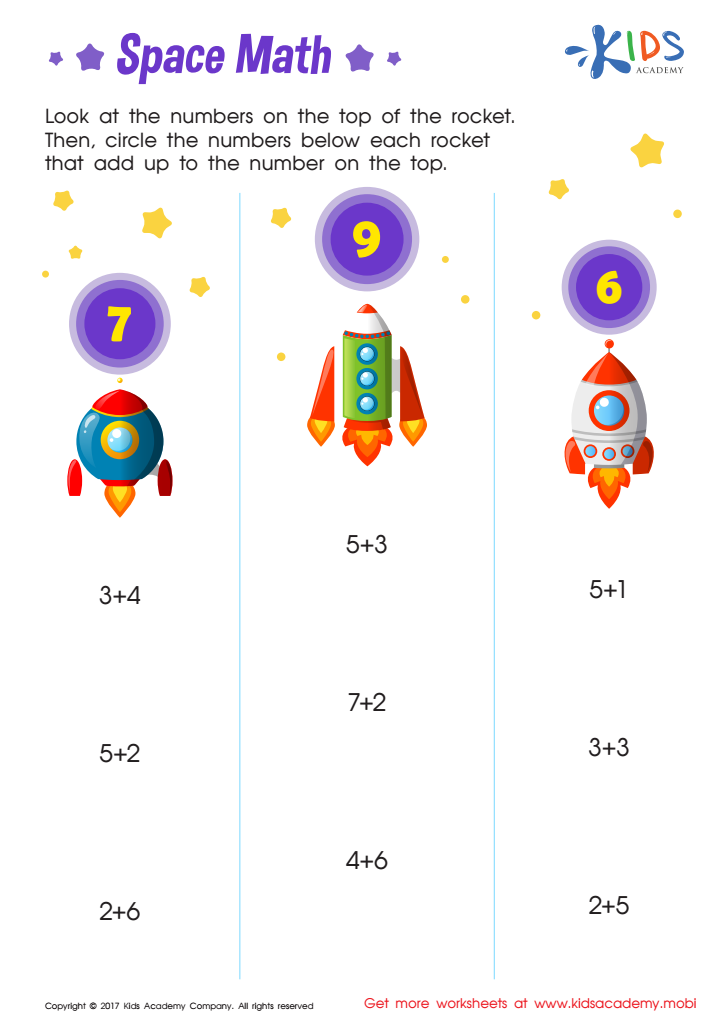
Addition: Space Math Worksheet
Fun and engaging space-themed practice with vivid pictures and matching numbers will make learning more meaningful. Take their math skills out of this galaxy today with Kids Academy!
 Assign to My Students
Addition: Space Math Worksheet
Worksheet
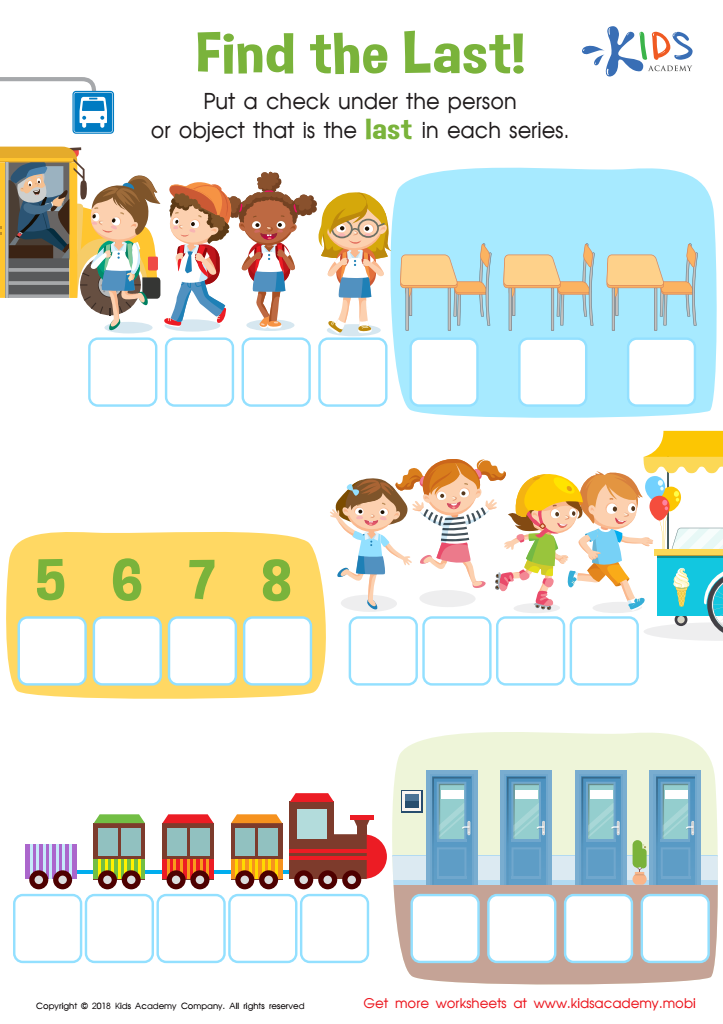
Find the Last! Worksheet
Teach young students about sequence words with this free worksheet. Have them look at sets of people or objects and choose the one that is last. Engage them further by having them describe or act out their day, and what happens last? Enjoy this printout and have fun!
Find the Last! Worksheet
Worksheet
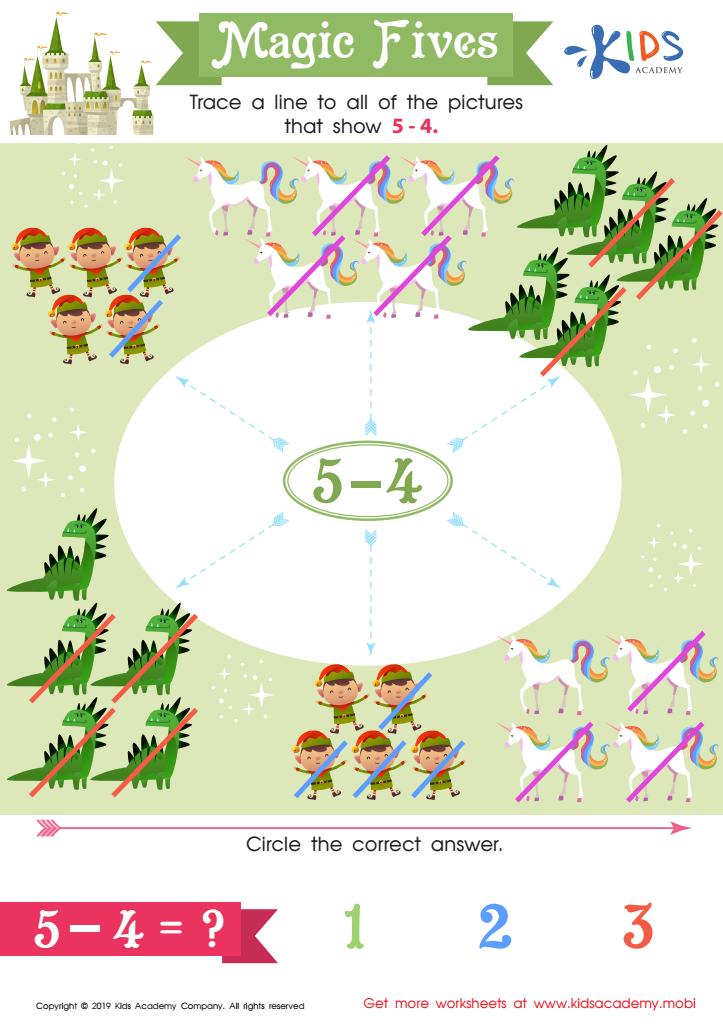
Magic Fives Worksheet
Help your students identify the objects & people in the worksheet. Point to the equation 5 -4 in the center, then get them to count the items and trace a line connecting those that add up to 5 - 4.
Magic Fives Worksheet
Worksheet
Join Kids Academy for Free
Who is primarily going to use this learning content?




%20(1).jpg)

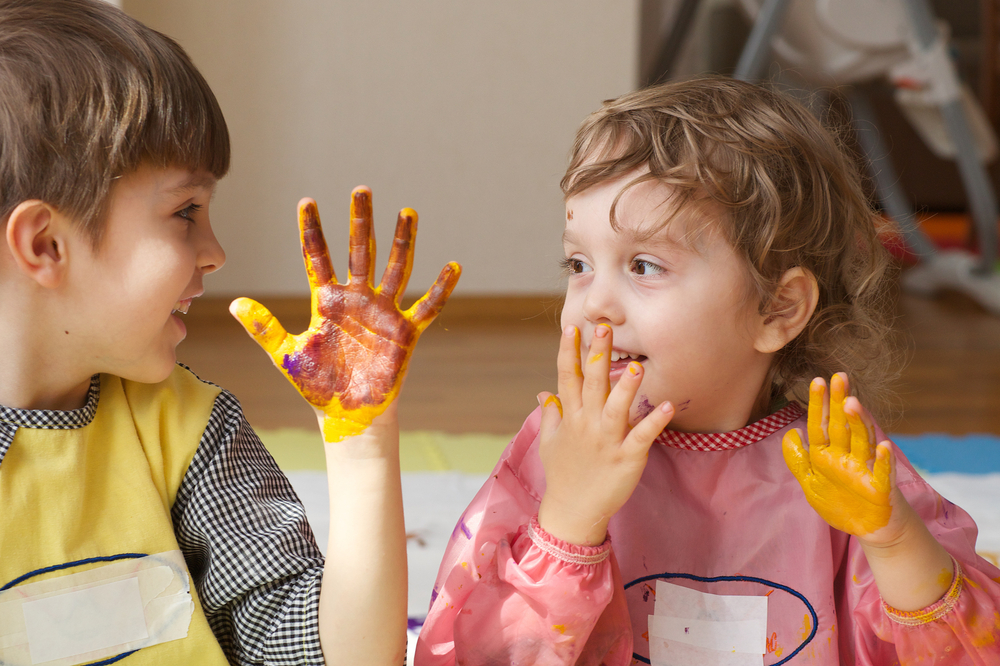
Understanding patterns is an essential aspect of early math education that should not be overlooked by parents and teachers. At the kindergarten level, mastering patterns lays the foundation for more complex mathematical concepts. Children encounter patterns in various forms, including shapes, numbers, and sounds. By recognizing and creating patterns, they develop critical thinking and problem-solving skills that are crucial for later success in math and other disciplines.
Furthermore, engaging with patterns fosters cognitive development. Recognizing patterns helps children make connections between concepts, enhancing their ability to grasp sequences and relationships. This skill is vital not only in math but also in reading and science, where identifying patterns can aid comprehension and analytical skills.
Additionally, working with patterns encourages creativity and expression. Children learn to predict what comes next in a sequence, promoting curiosity and exploration. As they engage with patterns through hands-on activities and fun games, they also cultivate a positive attitude toward mathematics, building confidence as they advance in their learning.
Involving parents in their children's pattern activities amplifies this learning experience and strengthens home-school connections. By prioritizing pattern recognition, we are setting our children on the path to successful mathematical understanding and lifelong learning.








