Counting skills Normal Kindergarten Numbers up to 100 Worksheets
10 filtered results
Difficulty Level
Grade
Age
-
From - To
Subject
Activity
Standards
Our "Counting Skills Normal Kindergarten Numbers up to 100 Worksheets" are expertly designed to help young learners master counting and number recognition. These engaging, colorful worksheets offer various activities that build foundational math skills through counting objects, number sequencing, and identifying numbers up to 100. Perfect for classroom or home use, the printables foster a love for math in an interactive and fun way, suitable for kindergartners. By practicing with these worksheets, children can develop essential counting abilities, paving the way for more advanced arithmetic in future grades. Available for download today, let's make learning fun and effective!
Favorites
With answer key
Interactive
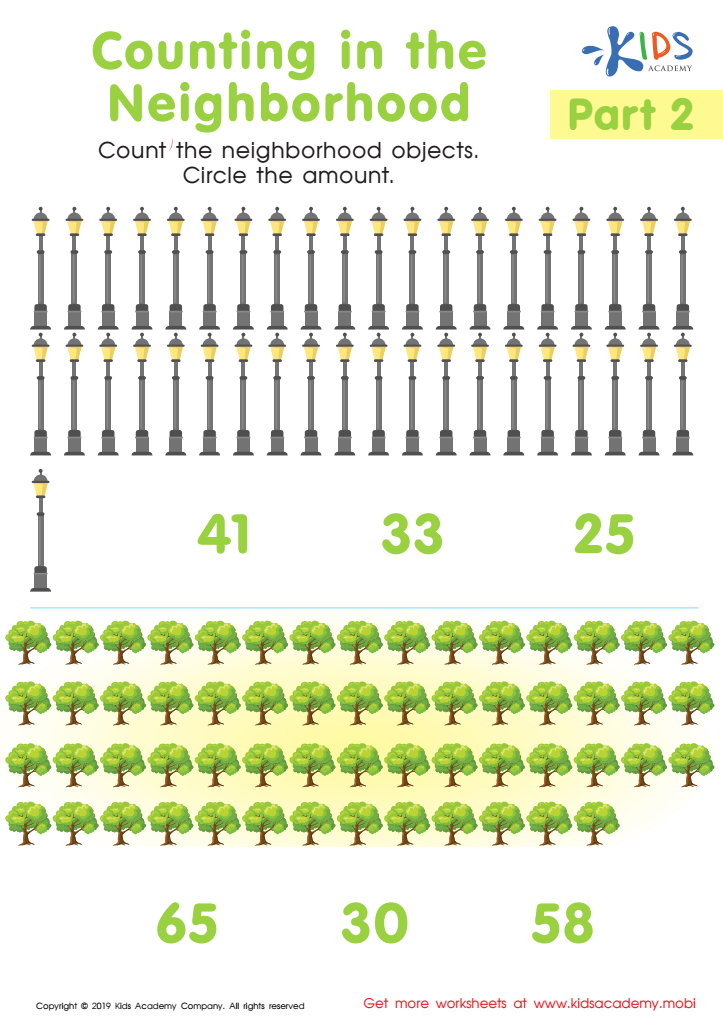
Counting In The Neighborhood Part 2 Worksheet
Download this free worksheet to help your child build number sense and math reasoning skills! It uses pictures of objects they know, letting your child count and match the right numeral to the objects to count past 10. Let them feel successful in mastering numbers.
 Assign to My Students
Counting In The Neighborhood Part 2 Worksheet
Worksheet
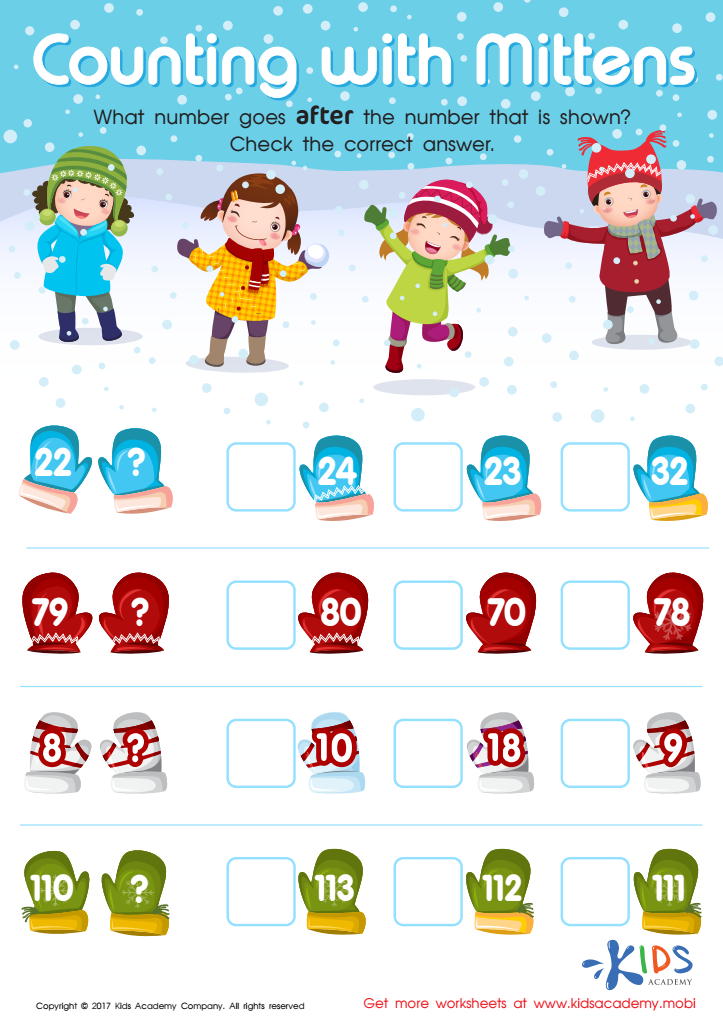
Counting with Mittens Worksheet
Let your kid have fun with this counting worksheet! It encourages them to count numbers and figure out which come next in the picture. Check the box with the correct answer - it's already provided. No more groaning and tears - this is a great way to learn!
Counting with Mittens Worksheet
Worksheet
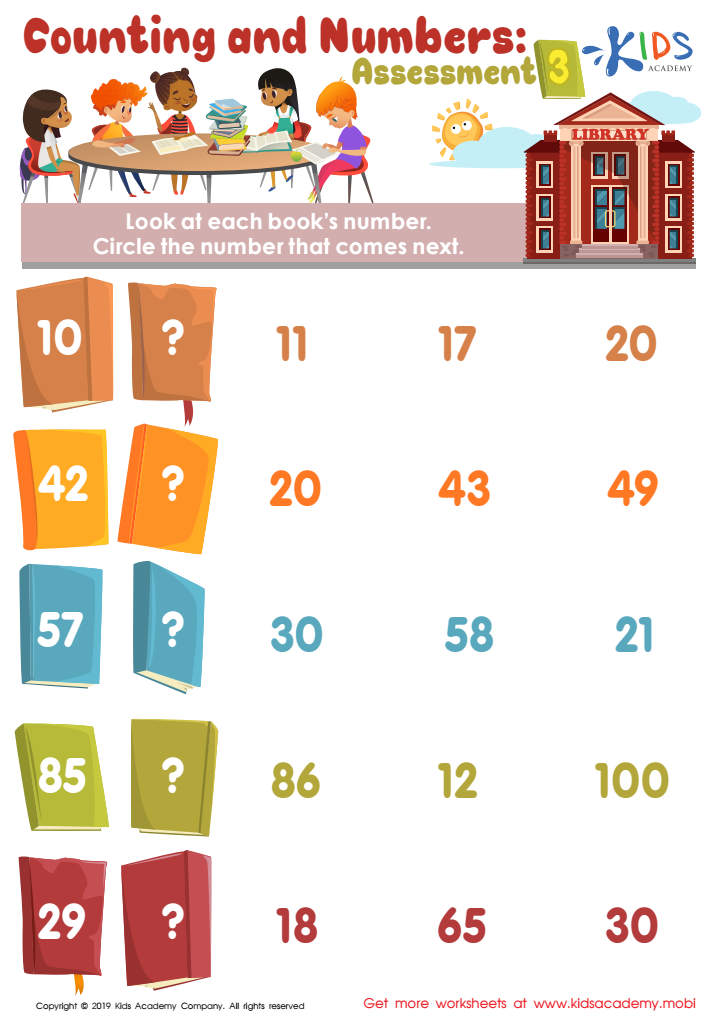
Counting and Numbers: Assessment Worksheet
Number line thinking is an essential math skill. Kids using this skill can compute math problems accurately and quickly. Our free assessment tests number line recognition; have your child pick the right number from the given options to follow the current number on the line. This assessment will give you an idea of their counting skills.
Counting and Numbers: Assessment Worksheet
Worksheet
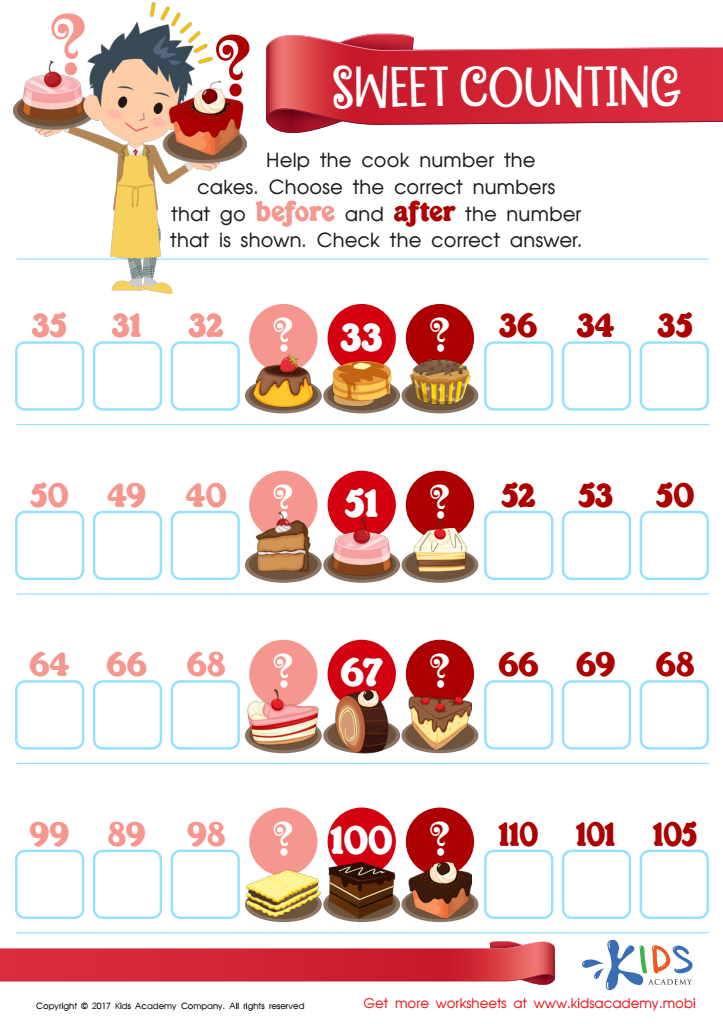
Sweet Counting - Part 1 Worksheet
Help your child learn numbers by counting cakes! Download this fun worksheet and have them fill in the numbers missing in the line of cakes. They'll have fun helping the cook and be learning at the same time!
Sweet Counting - Part 1 Worksheet
Worksheet
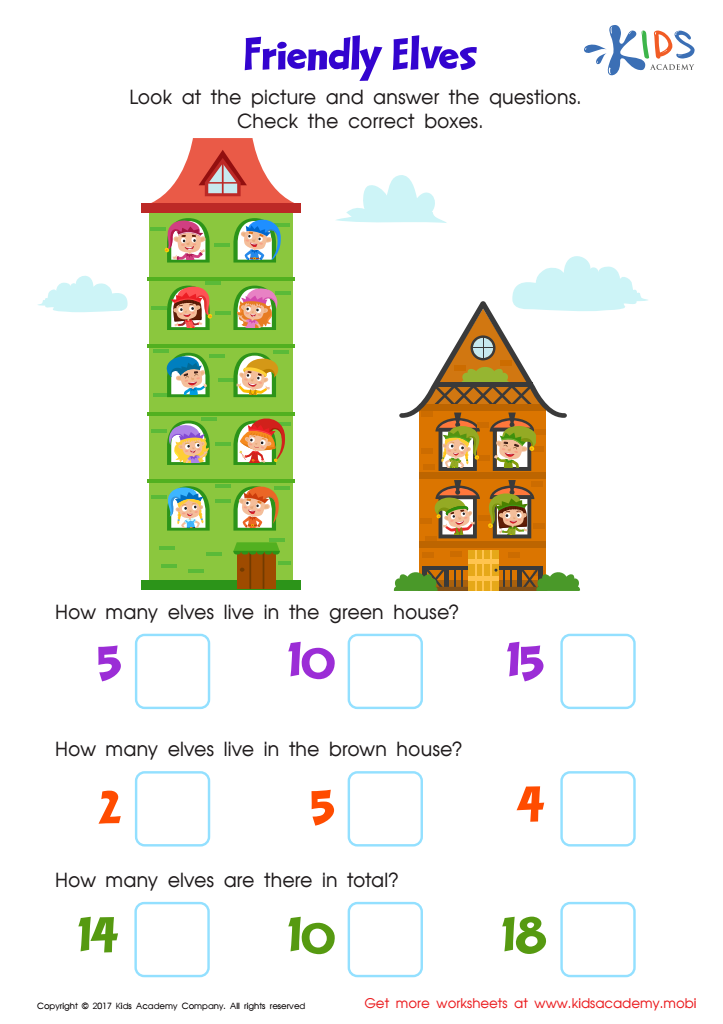
Place Value: Friendly Elves Worksheet
This fun worksheet teaches kids to count elves, answer questions about houses, and practice math! Look at the picture and count the elves in each house. How many are in the green and brown house? Tick the correct answer boxes. Perfect for young learners!
Place Value: Friendly Elves Worksheet
Worksheet
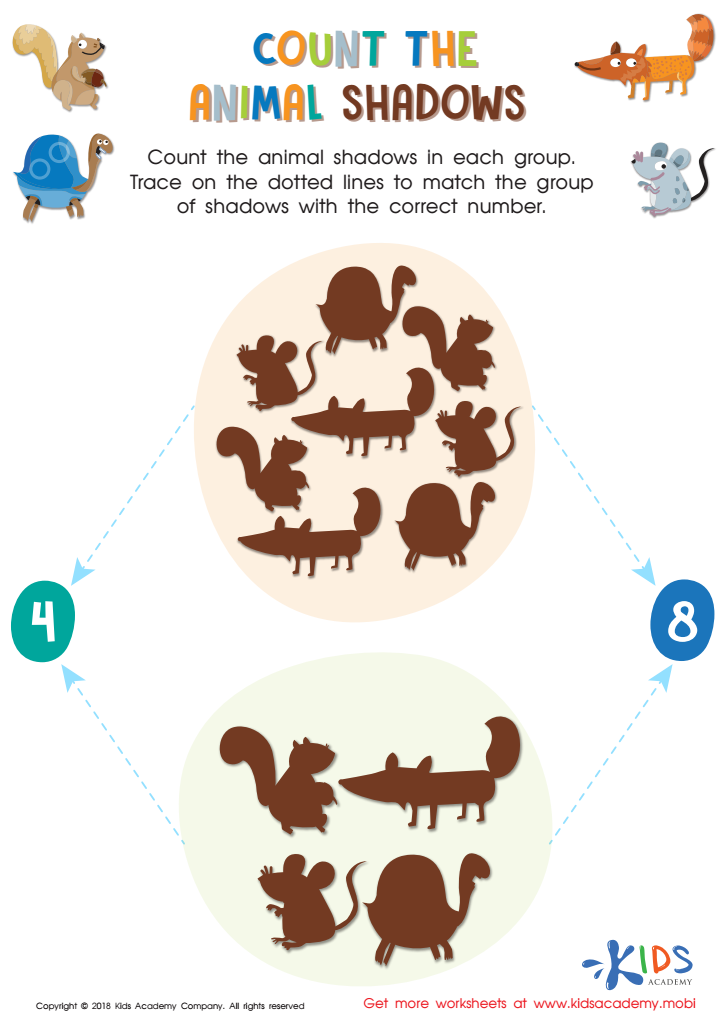
Count the Animal Shadows Worksheet
Our shadows accompany us wherever we go. Even your kids have seen theirs! Did they know that animals have shadows too? Count the animal shadows in each group with this worksheet. Ask your child to identify the animals pictured, then help them trace the dotted lines to match with the right number.
Count the Animal Shadows Worksheet
Worksheet
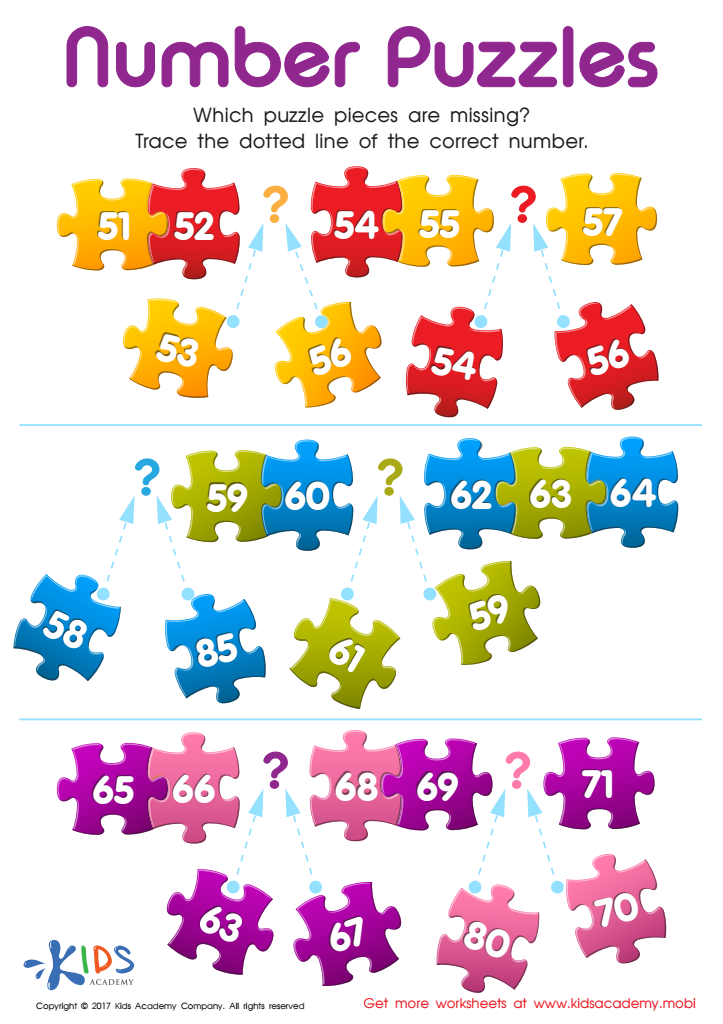
Number Puzzles Worksheet
In this tracing paper, your child must identify the missing numbers in the puzzle. Guide them as they trace the line for the correct number to complete the worksheet. This activity will help boost their problem-solving skills.
Number Puzzles Worksheet
Worksheet
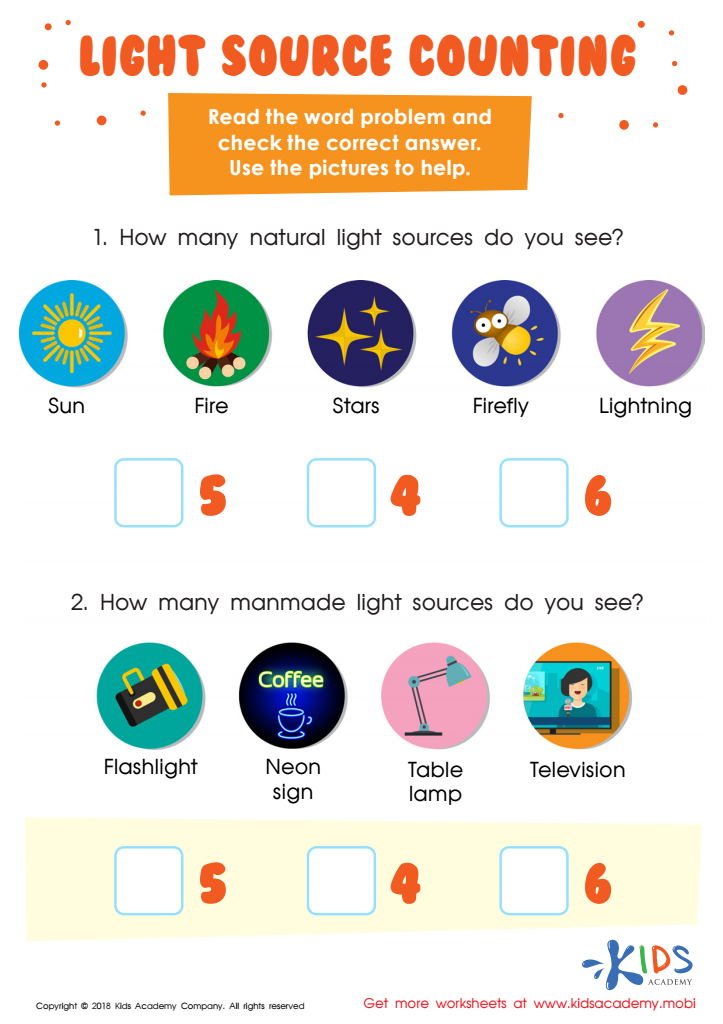
Light Source Counting Worksheet
Help your students properly understand and interpret word problems with this worksheet. Read each problem aloud and have them check the correct answers. Pictures are included to aid in problem-solving. If they're still struggling, be sure to provide guidance and support.
Light Source Counting Worksheet
Worksheet
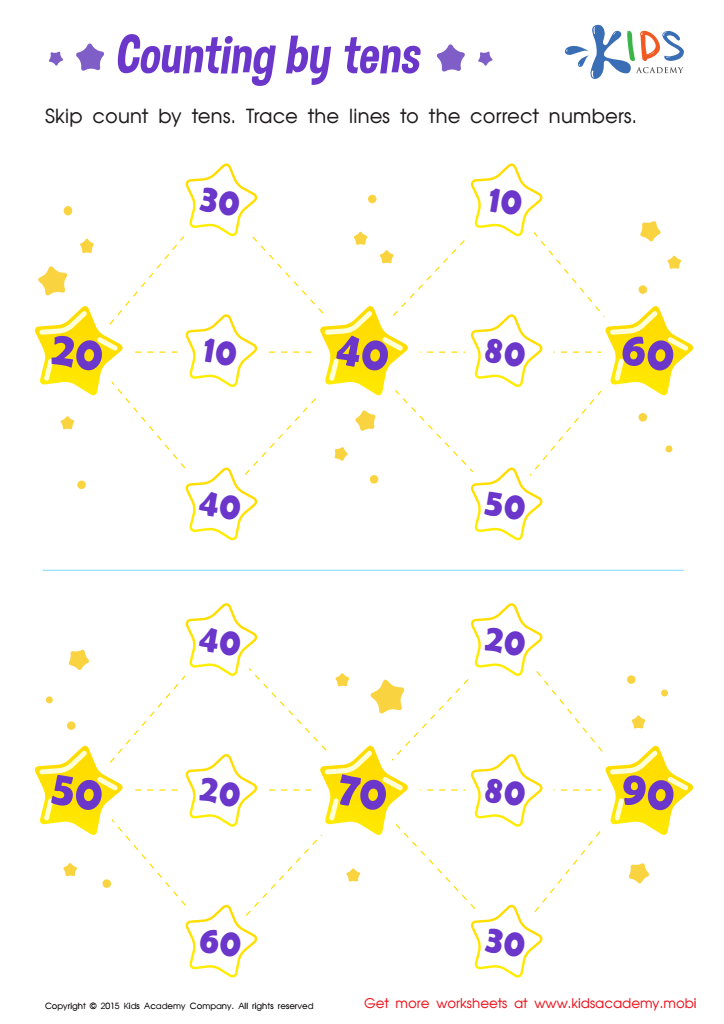
Learn Dozens: Counting by Tens Printable
Kindergartners need to learn skip counting - counting in number groups - to increase number sense and be ready for more advanced math. Our kindergarten worksheet featuring a starry trip to outer space will help your child practice this valuable skill. Your child will choose correct answers to trace the lines to the stars, building fluency in skip counting. They'll also strengthen problem solving and see the pattern it creates. Get your little learner to the next level with this skip counting worksheet!
Learn Dozens: Counting by Tens Printable
Worksheet
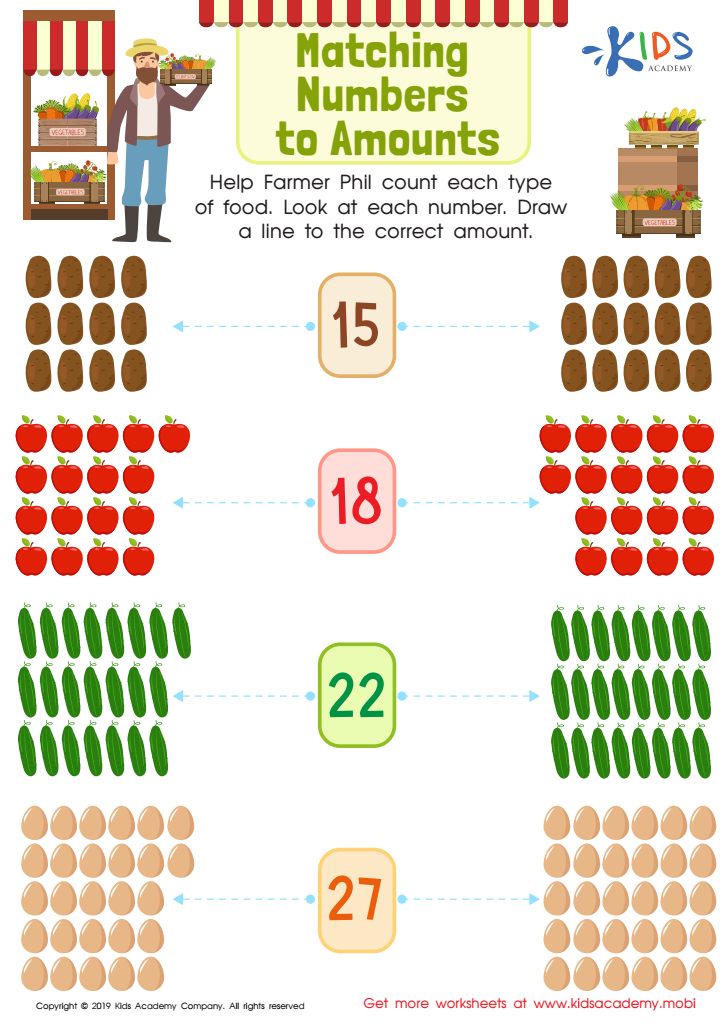
Matching Numbers to Amounts Worksheet
Farmer Phil needs your kid's help! Ensure they know the basics of math such as counting, adding and subtracting. Before beginning, help your child identify and count the different foods in the picture. Then, draw a line to the correct amount.
Matching Numbers to Amounts Worksheet
Worksheet
Join Kids Academy for Free
Who is primarily going to use this learning content?





%20(1).jpg)
Counting skills in kindergarten are foundational for a child's future success in mathematics and beyond. At this early stage, learning to count numbers up to 100 is not just about reciting numbers—it helps children understand numerical order, recognize patterns, and develop a deepening sense of numbers and their relationships.
Proficiency in counting serves as a stepping stone to more complex mathematical concepts. For instance, understanding that numbers follow a sequence helps children grasp addition and subtraction as they learn how numbers can be combined or separated. This fluency also aids in teaching place value, where the position of a digit determines its value, which is essential for operations with larger numbers.
Furthermore, counting up to 100 can enhance cognitive development and problem-solving skills. It encourages attention to detail, organization, and logical thinking. Children also learn to make connections between different numerical concepts, which supports their ability to reason mathematically.
Teachers and parents play a critical role in promoting these counting skills. Their encouragement can make learning numbers a fun and engaging activity, whether through games, songs, or hands-on activities. This support not only boosts a child’s confidence in their ability to handle numbers but also instills a love for learning that can last a lifetime. Addressing these essential early skills ensures that children are well-prepared for more challenging mathematical endeavors in the future.