Story sequencing Normal Kindergarten Reading Fiction Worksheets
5 filtered results
-
From - To
Enhance your kindergarteners' reading comprehension skills with our engaging Story Sequencing worksheets! Designed for young learners, these printable worksheets focus on the essential skill of understanding story structure. Children will practice identifying the correct order of events in fictional narratives, which helps improve their critical thinking and memory. Perfect for classroom use or at-home learning, these worksheets make reading fun and interactive. With bright illustrations and age-appropriate content, kids will love sorting through story elements while developing a deeper understanding of their favorite tales. Explore our collection and empower your child to become a sequential storyteller today!
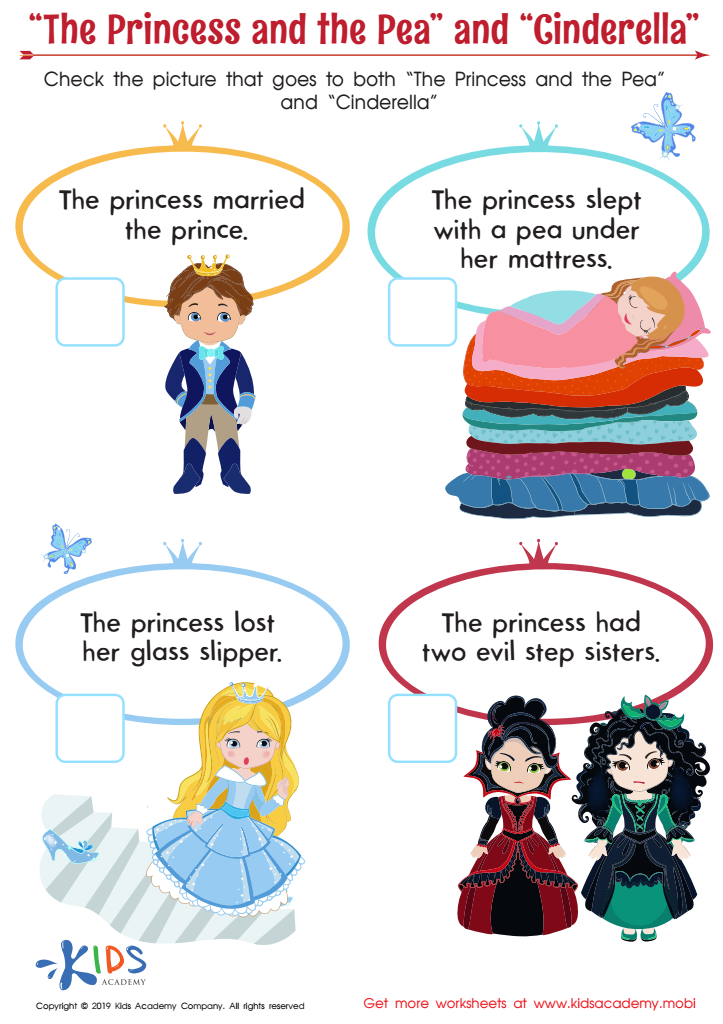
“The Princess and the Pea” and “Cinderella” Worksheet
 Assign to My Students
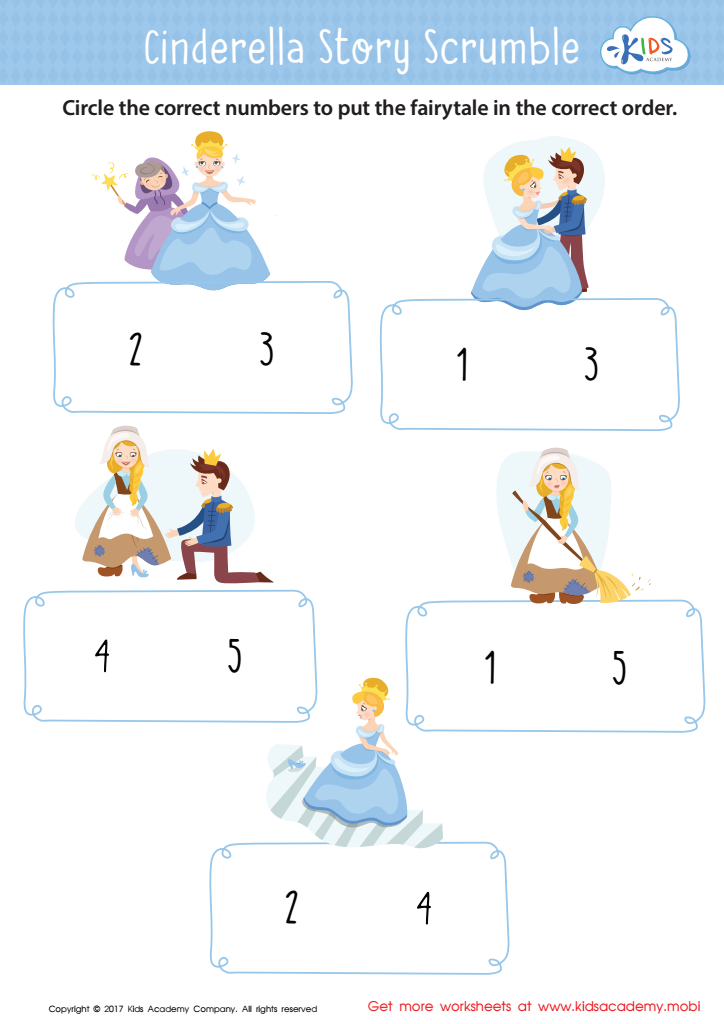
Cinderella Story Sequencing Worksheet
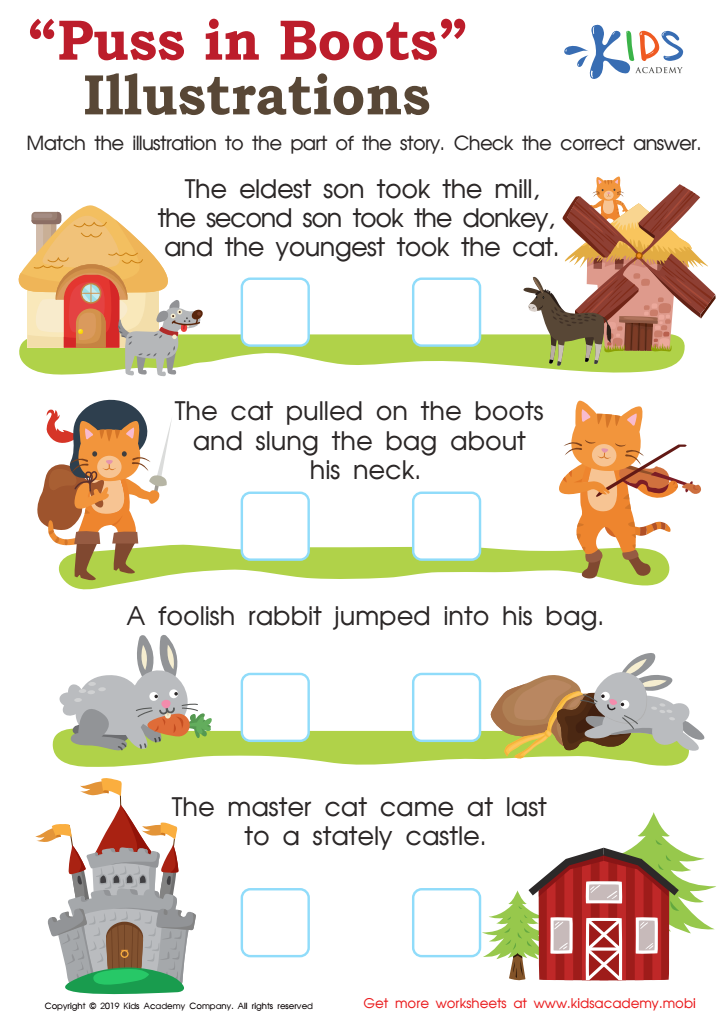
Puss in Boots Illustrations Worksheet
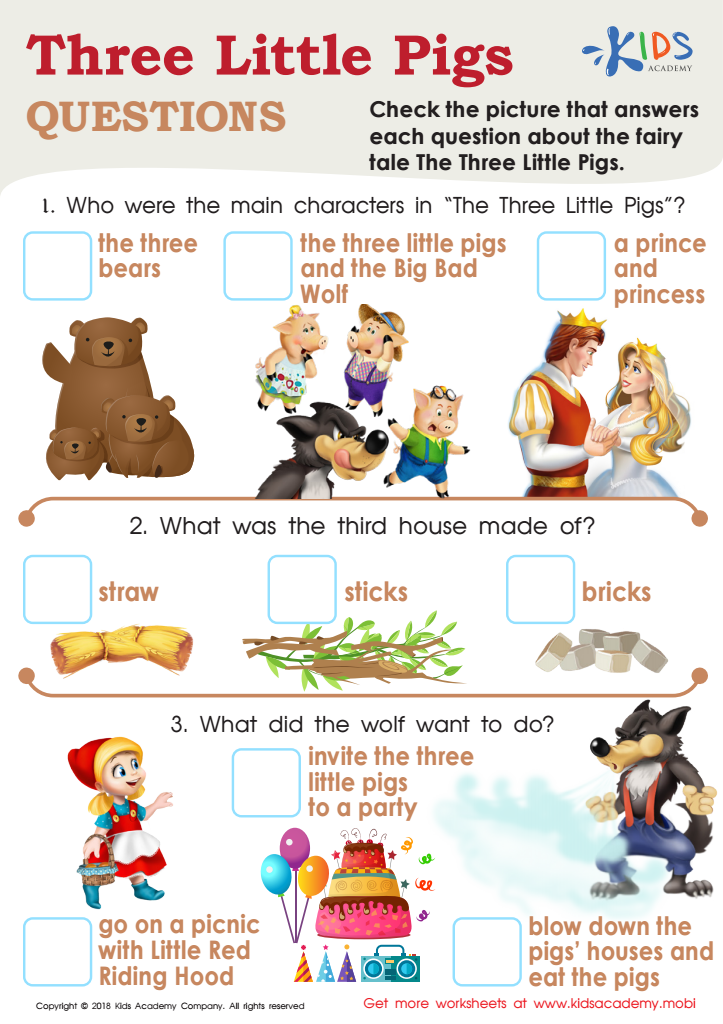
Three Little Pigs Questions Worksheet
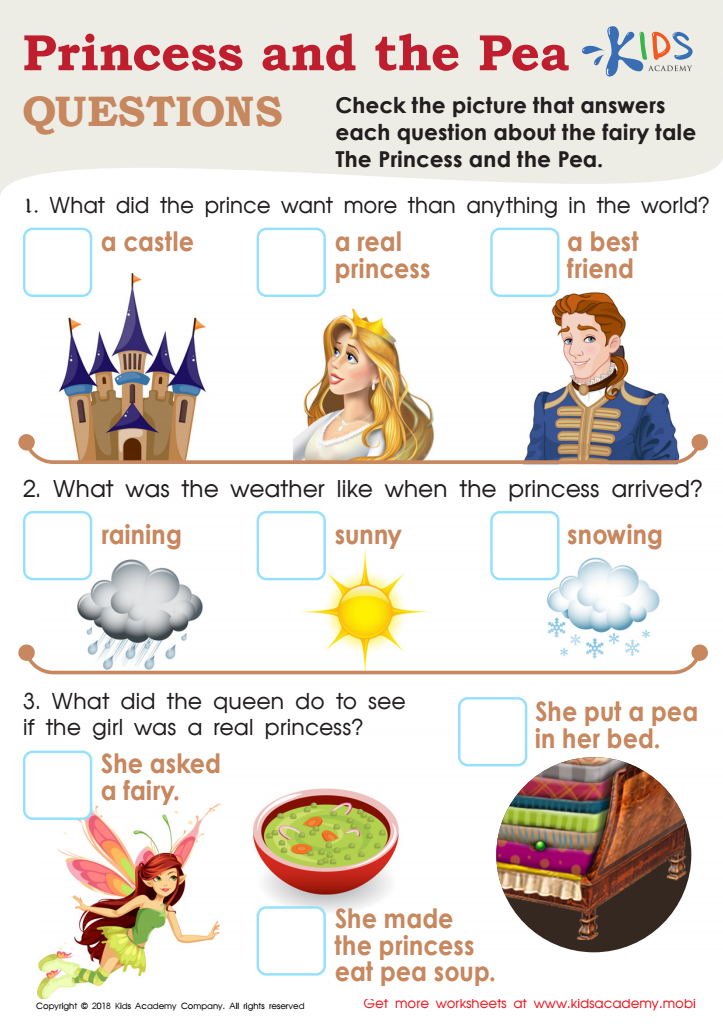
Princess and the Pea Questions Worksheet




.jpg)


Story sequencing is a fundamental skill in early childhood literacy that significantly impacts a child's reading comprehension and critical thinking abilities. For parents and teachers, understanding the importance of story sequencing in normal kindergarten fiction reading is crucial for fostering literacy development.
Firstly, story sequencing helps children organize their thoughts and understand the structure of narratives. By identifying the beginning, middle, and end of a story, children learn to follow the storyline, making it easier to comprehend the content and message. This narrative structure lays the groundwork for more complex literary concepts as they advance in their reading journey.
Additionally, engaging in story sequencing activities cultivates essential cognitive skills, such as memory, prediction, and inference. Children enhance their ability to recall details and make connections between various parts of the story, promoting deeper understanding.
Moreover, when parents and teachers prioritize story sequencing, they encourage a love for reading. As children gain confidence in their comprehension skills, they become more eager to explore new stories, fostering a lifelong appreciation for literature.
Ultimately, story sequencing not only strengthens reading skills but also encourages creativity and communication, essential components for overall academic success in later years. Thus, investing time in this skill is vital for young learners' growth.