Animal Classification Normal Kindergarten Science Worksheets
4 filtered results
-
From - To
Introduce your young learners to the fascinating world of animals with our engaging "Animal Classification Kindergarten Science Worksheets". Designed to ignite curiosity and promote scientific thinking, these printable worksheets help students distinguish between different animal groups, like mammals, birds, reptiles, and more. Through diverse activities, children will learn to categorize animals based on their characteristics, habitats, and behaviors. Perfect for the classroom or at home, our fun-filled worksheets foster critical thinking and a love for nature. Ideal for kindergartners, these resources make learning about animal classification enjoyable and interactive. Start their adventure in animal science today!
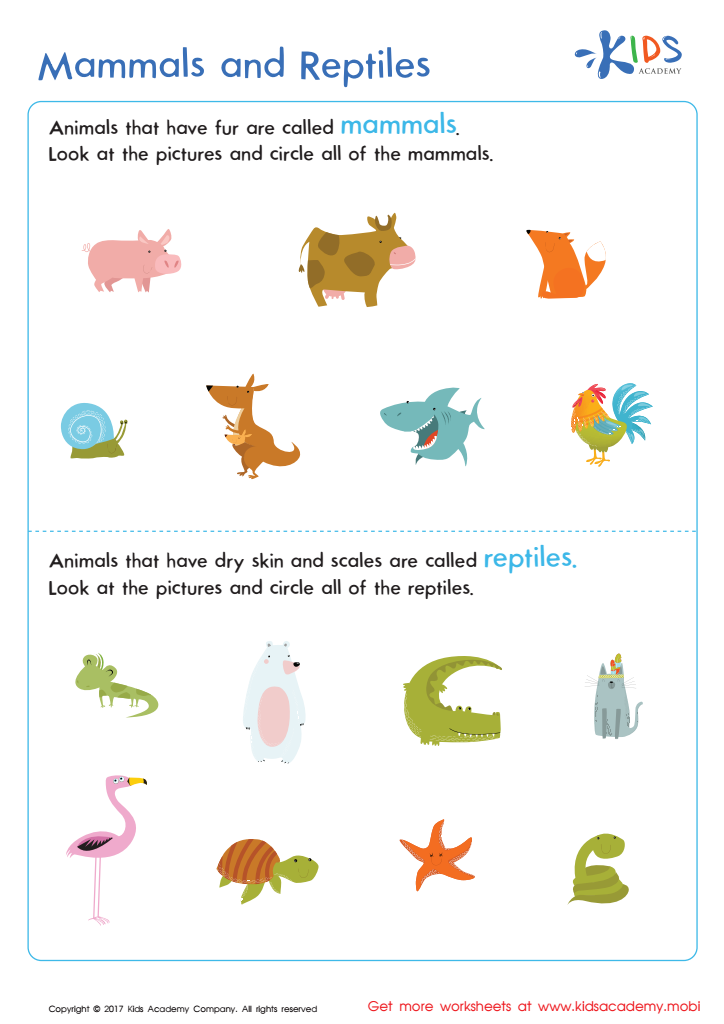
Mammals and Reptiles Worksheet
 Assign to My Students
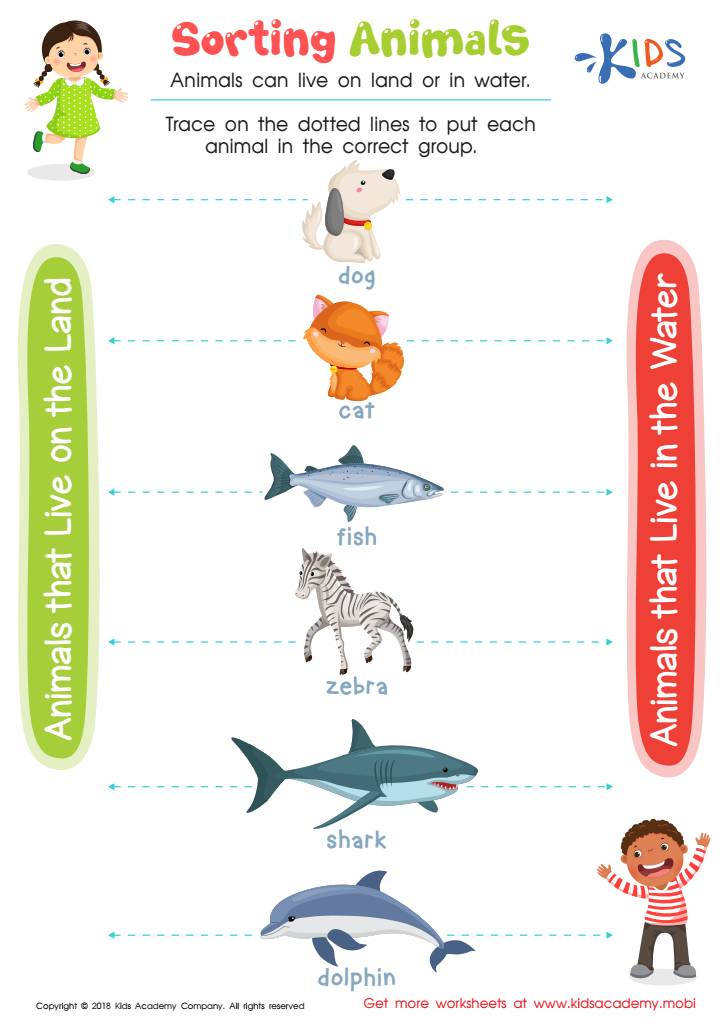
Sorting Animals Worksheet
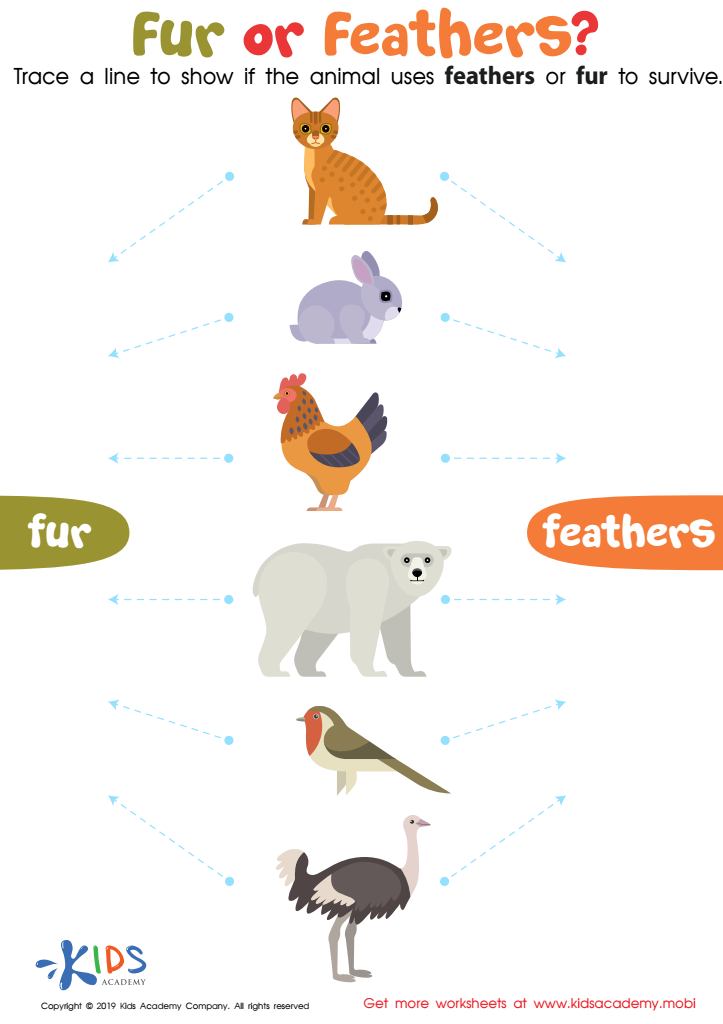
Fur or Feathers? Worksheet
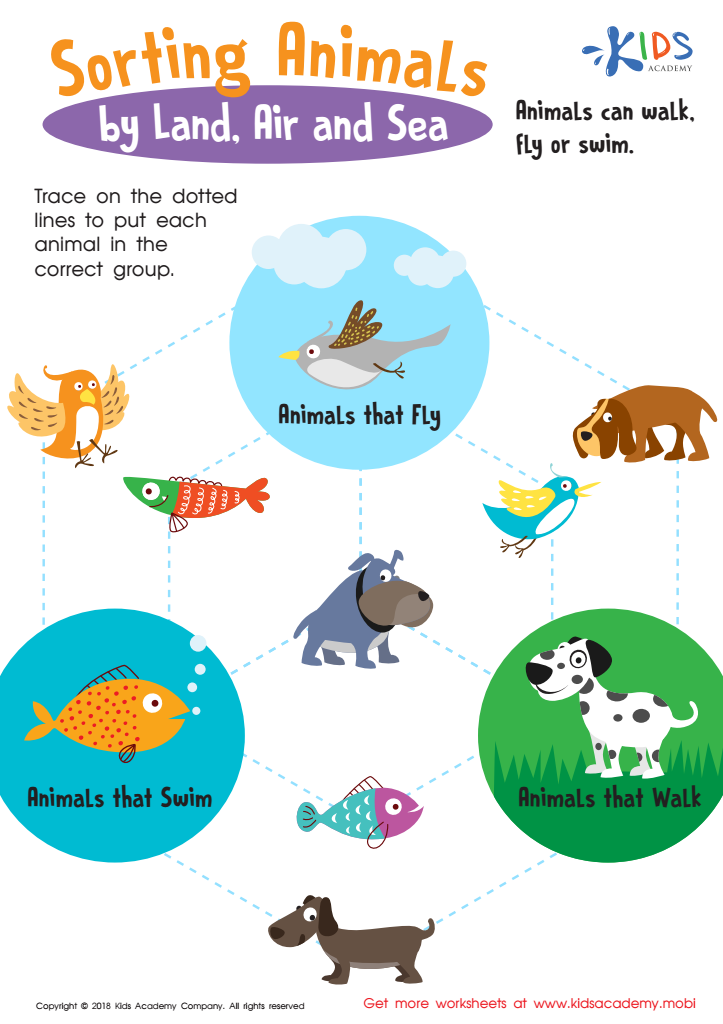
Sorting Animals by Land, Air and Sea Worksheet





Understanding animal classification is a vital part of kindergarten science, benefitting children, parents, and teachers alike. Early exposure to the concepts of animal classification can enhance young learners’ curiosity about the natural world, fueling their innate desire to explore and understand. This basic knowledge lays a foundational understanding of biology and provides children with the ability to categorize and make sense of the diverse life forms they encounter.
For parents and teachers, teaching animal classification offers a structured way to introduce children to scientific thinking. By learning to classify animals based on characteristics such as habitat, diet, and physical features, children develop critical cognitive skills, including observation, comparison, and analytical thinking. These skills are essential not only in science, but across many areas of learning and everyday problem-solving.
Moreover, an understanding of animal classification fosters empathy and a deeper appreciation for wildlife and the environment. When children recognize the unique traits and needs of different animals, they are more likely to develop a sense of responsibility towards conservation and sustainable living.
Therefore, emphasizing animal classification in kindergarten helps nurture well-rounded, curious learners who are equipped with cognitive skills and a compassionate outlook towards the natural world, making it incredibly worthwhile for parents and teachers alike.