Understanding directions Normal Kindergarten Science Worksheets
3 filtered results
-
From - To
Unlock the world of learning with our "Understanding Directions" Normal Kindergarten Science Worksheets! Designed to enhance your child's spatial awareness and comprehension skills, these engaging worksheets help young learners follow instructions, recognize positional words, and apply them in real-life contexts. Each activity encourages exploration and critical thinking, fostering a deep understanding of directions through fun and interactive exercises. Our carefully crafted resources align with educational standards, making learning enjoyable and effective. Perfect for classroom or home use, these worksheets make navigating the world easier for little ones. Dive into a fun journey of discovery with our engaging science worksheets today!
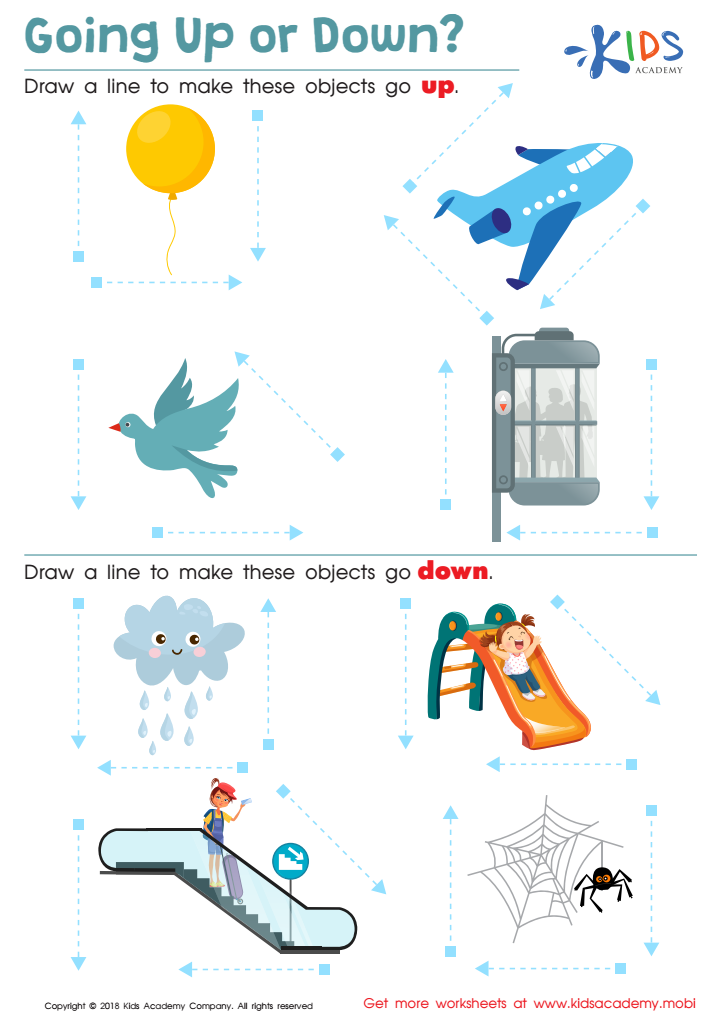
Going up or Down? Worksheet
 Assign to My Students
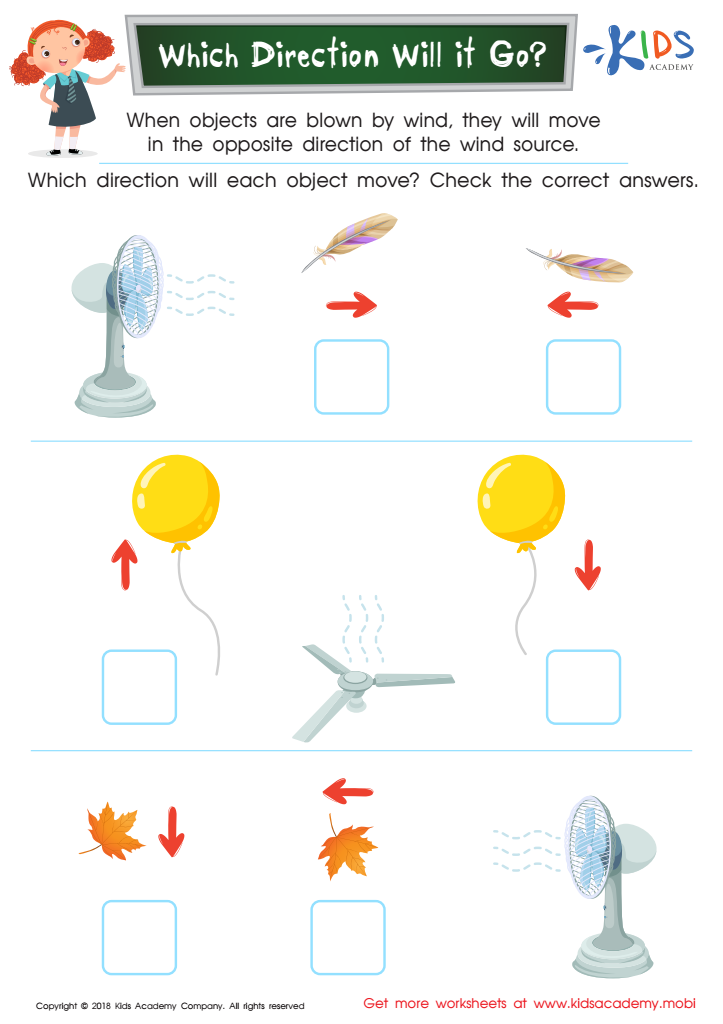
Which Direction Will it Go? Worksheet
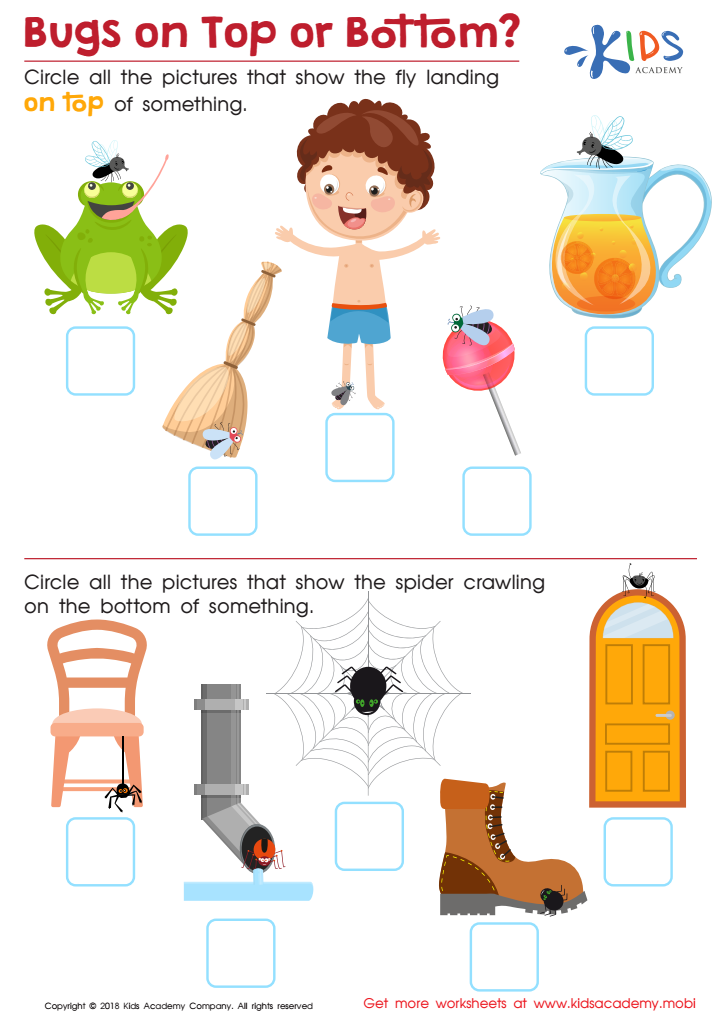
Bugs on Top or Bottom? Worksheet




%20(1).jpg)



Understanding directions is crucial for young kindergarten learners, especially in the realm of science. At this stage, children are developing foundational skills that lay the groundwork for future learning. When parents and teachers prioritize understanding directions in science, they support students in several key areas.
Firstly, clear comprehension of directions promotes critical thinking and problem-solving skills. As children follow instructions for experiments or observations, they begin to analyze steps, make predictions, and reason about outcomes—skills essential not only in science but across all subjects.
Secondly, understanding directions nurtures confidence and independence. When children successfully navigate instructions, they experience a sense of achievement, fostering a positive attitude toward learning and exploration.
Additionally, science often involves collaboration. When students work together on projects, clear communication of directions enhances teamwork and social skills, critical elements of early education.
Lastly, experiential learning through following directions stimulates curiosity and engagement. Whether observing nature, measuring substances, or documenting observations, clear guidance helps children actively participate in their learning journey.
Encouraging strong directional understanding in kindergarten is an investment in children's cognitive and social development, shaping them to become confident, inquisitive, and independent learners.