Critical Thinking Normal Kindergarten Community Worksheets
3 filtered results
-
From - To
Introduce your kindergartner to the joys of critical thinking with our "Critical Thinking Normal Kindergarten Community Worksheets." Designed to engage young minds, these worksheets focus on fostering problem-solving skills and understanding community roles through fun, interactive activities. Each worksheet challenges children to think critically about various social scenarios, helping them develop reasoning abilities and an awareness of their surroundings. Perfect for classroom use or at-home practice, these worksheets lay a strong foundation for lifelong learning. Dive into a world where education meets excitement and watch as your child thrives in a collaborative community of eager young learners!
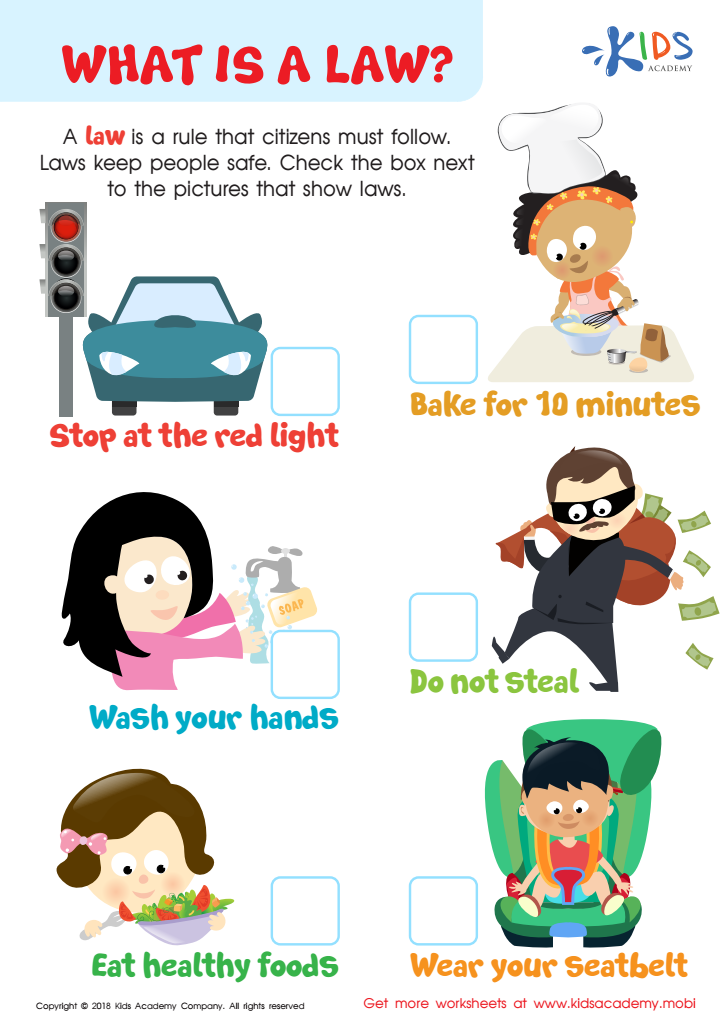
What is a Law? Worksheet
 Assign to My Students
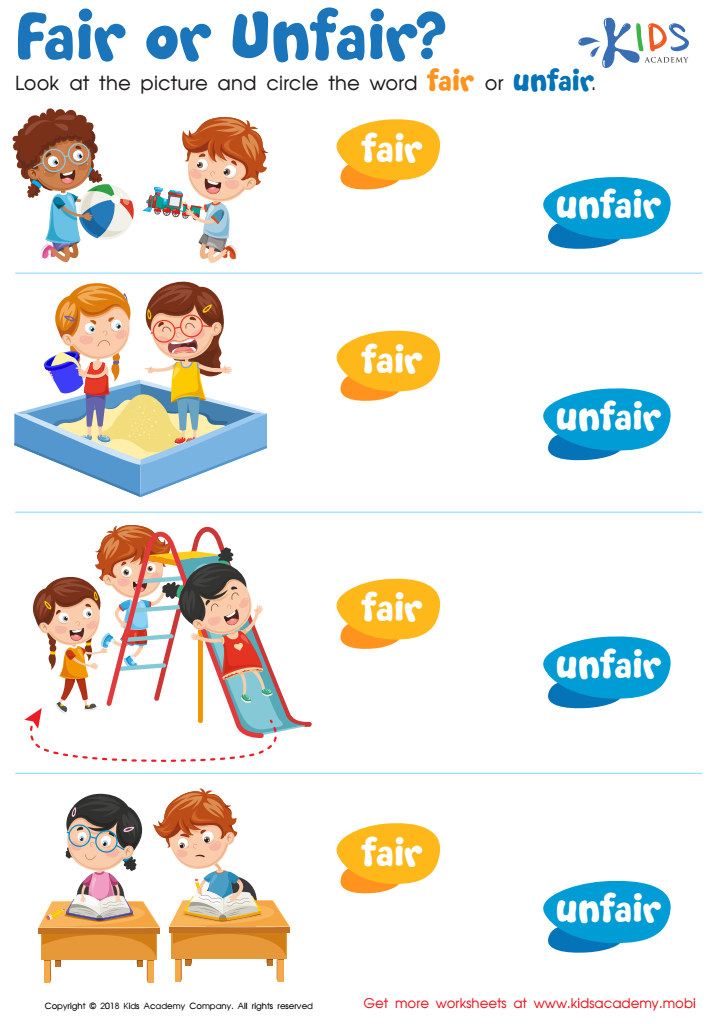
Fair or Unfair Worksheet
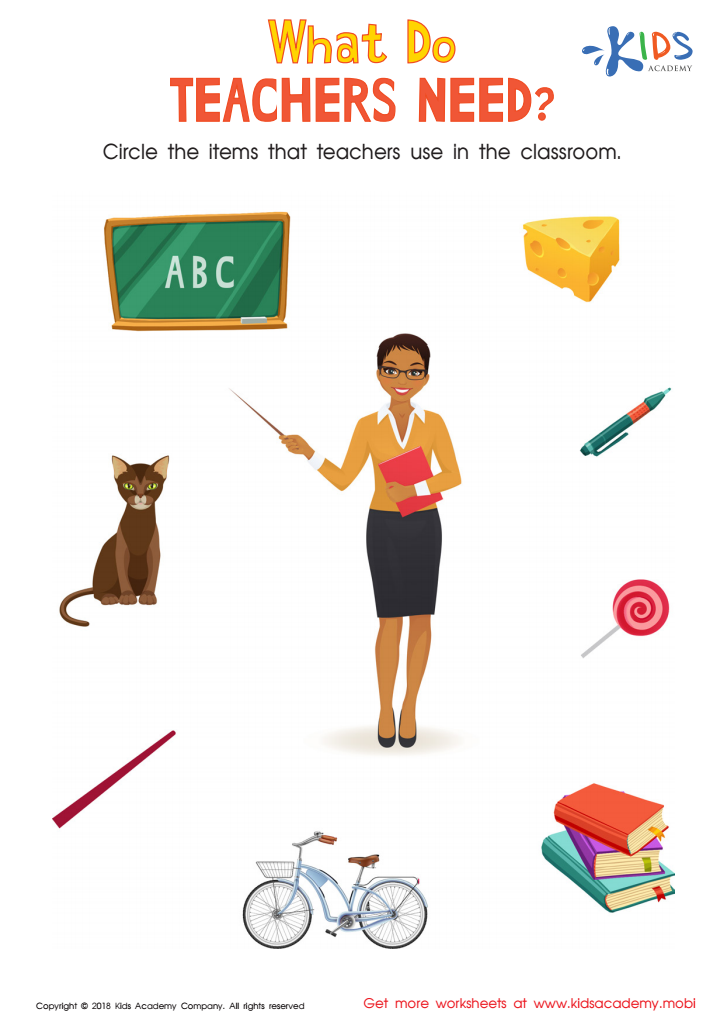
What Do Teachers Need Worksheet







Parents and teachers should care deeply about fostering Critical Thinking in a Normal Kindergarten Community because it lays the foundation for lifelong learning and problem-solving skills. Critical thinking encourages young children to ask questions, evaluate evidence, and make reasoned decisions, fostering independent and reflective minds. In our rapidly changing world, these skills are crucial for adaptation and success.
Engaging in critical thinking at an early age improves cognitive development by enhancing children's ability to analyze situations, recognize patterns, and understand the cause-and-effect relationships. It's not just about acquiring knowledge but also about understanding how to apply that knowledge in diverse contexts. This prepares children for more complex academic challenges ahead, builds resilience, and promotes a growth mindset.
Moreover, critical thinking nurtures creativity and innovation. When children are encouraged to think critically, they're more likely to come up with original ideas and solutions, strengthening their creativity. This can foster a love for lifelong learning and exploration, making them enthusiastic participants in both academic and communal settings.
In essence, cultivating critical thinking in kindergarten prepares children to be thoughtful, informed, and active members of their communities and the world at large. It’s an investment in their future, equipping them with the tools necessary for both personal and academic success.