Basic astronomy knowledge Normal Worksheets
3 filtered results
-
From - To
Explore the wonders of space with our Basic Astronomy Knowledge Normal Worksheets, designed for young learners. These engaging resources introduce fundamental concepts about the planets, stars, moon phases, and more. Perfect for home or classroom use, the worksheets incorporate fun activities that make learning about the universe exciting and accessible. Inspire curiosity and foster a lifelong love for science in your students with these thoughtfully crafted, age-appropriate printables. Download, print, and embark on an interstellar adventure today! Suitable for kids in early grades seeking to expand their understanding of the sky above.
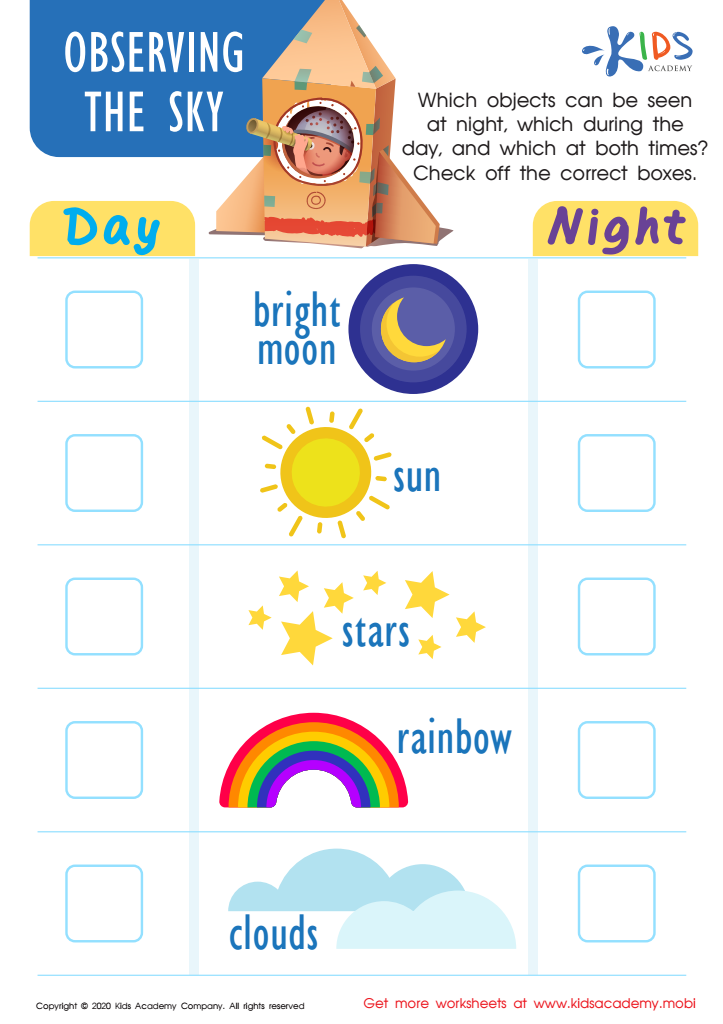
Observing the Sky Worksheet
 Assign to My Students
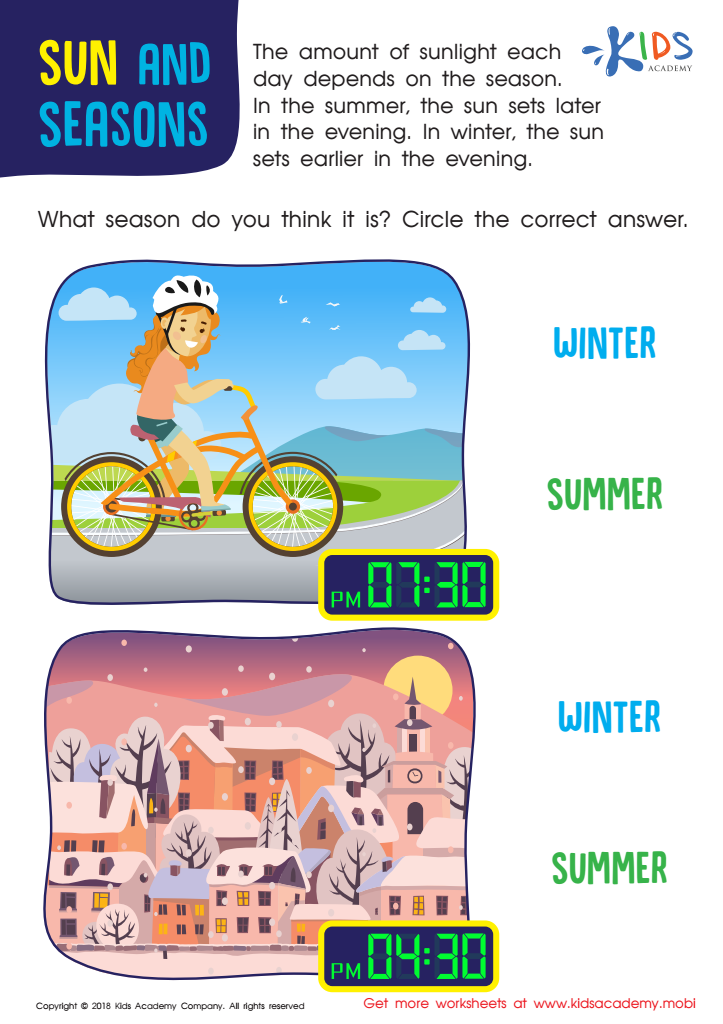
Sun and Seasons Worksheet
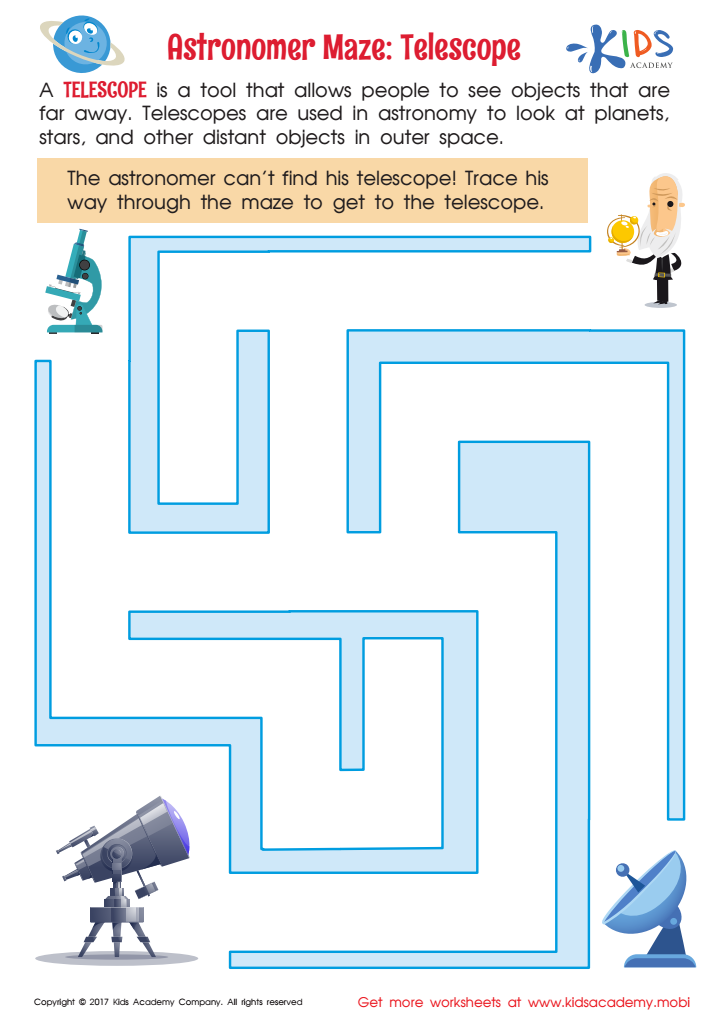
Astronomer Maze: Telescope Worksheet




.jpg)



Basic astronomy knowledge is essential for both parents and teachers as it profoundly enriches learning experiences, heightens curiosity, and connects students with the universe. Introducing astronomy nurtures a sense of wonder and encourages questions, helping children develop a lifelong love for science and exploration.
Astronomy topics, such as the movement of planets, constellations, and lunar phases, foster critical thinking and an understanding of natural cycles, which are fundamental scientific principles. Discussing these concepts can significantly enhance a child's observational skills and reasoning abilities. They learn to make predictions, recognize patterns, and appreciate the vastness of space, enriching their cognitive development.
Moreover, understanding basic astronomy evokes a sense of unity and global citizenship by showing that our small planet is part of a larger cosmic community. It helps children grasp important environmental concepts and our planet's uniqueness, fostering a responsibility toward taking care of Earth.
For teachers, integrating astronomy into the curriculum can add interdisciplinary value by linking it with subjects such as math, history, and even literature. For parents, engaging in astronomy-related activities or discussions helps strengthen the parent-child bond, providing meaningful educational interactions outside the traditional classroom environment. Thus, prioritizing basic astronomy knowledge lays the groundwork for well-rounded, scientifically literate individuals who are better prepared to face our world’s challenges.








