Capitalization rules Normal Worksheets
3 filtered results
-
From - To
Enhance your student’s writing skills with our "Capitalization Rules Normal Worksheets." Carefully designed for early learners, these worksheets provide clear and engaging activities for mastering the essential rules of capitalization. Through various exercises, students will learn to capitalize the first word in a sentence, proper nouns, days of the week, and more. Each worksheet provides practical examples and colorful illustrations to make learning fun and effective. Ideal for classroom or home use, our capitalization worksheets are an excellent resource for reinforcing grammar basics and boosting your child’s confidence in writing. Download today and watch your young writer thrive!
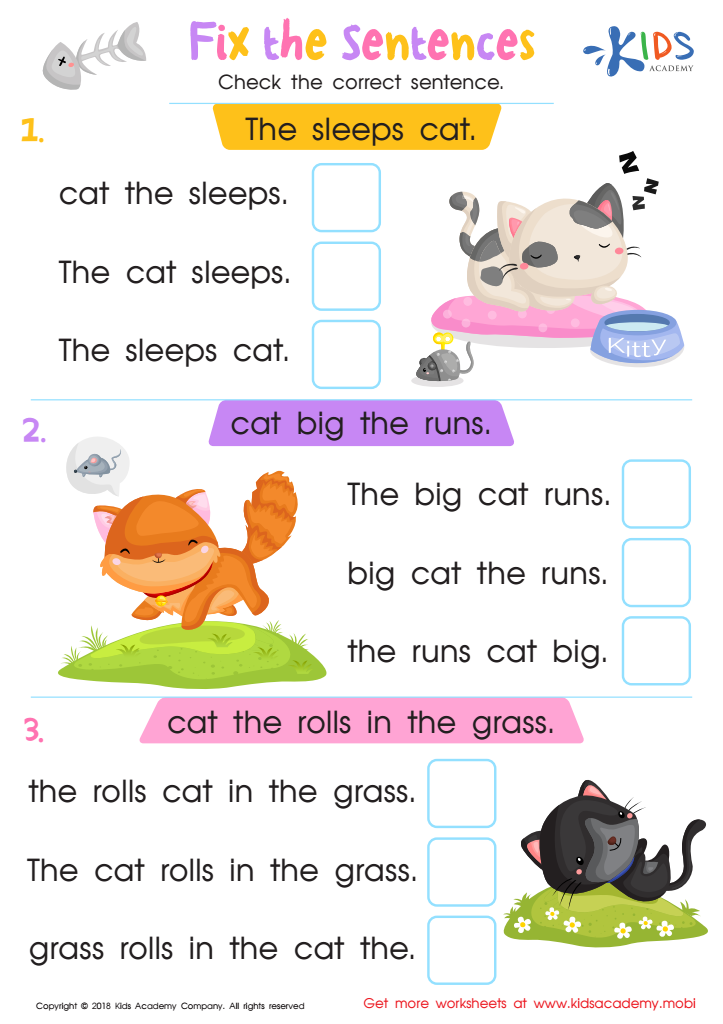
Fix the Sentences Worksheet
 Assign to My Students
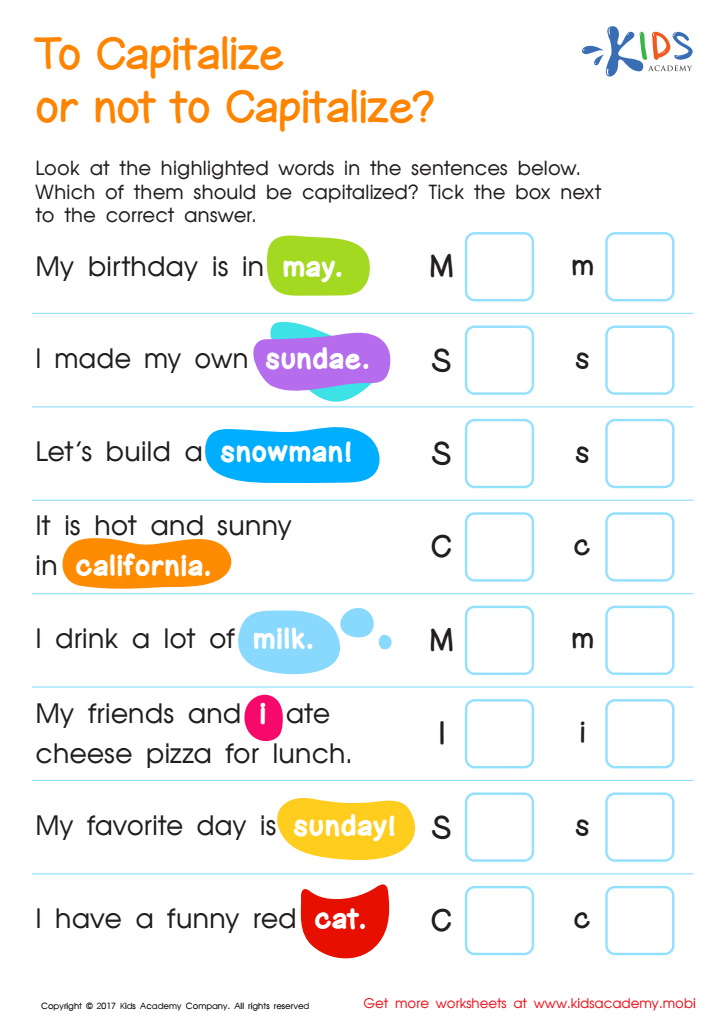
Capitalization: To Capitalize or Not? Printable
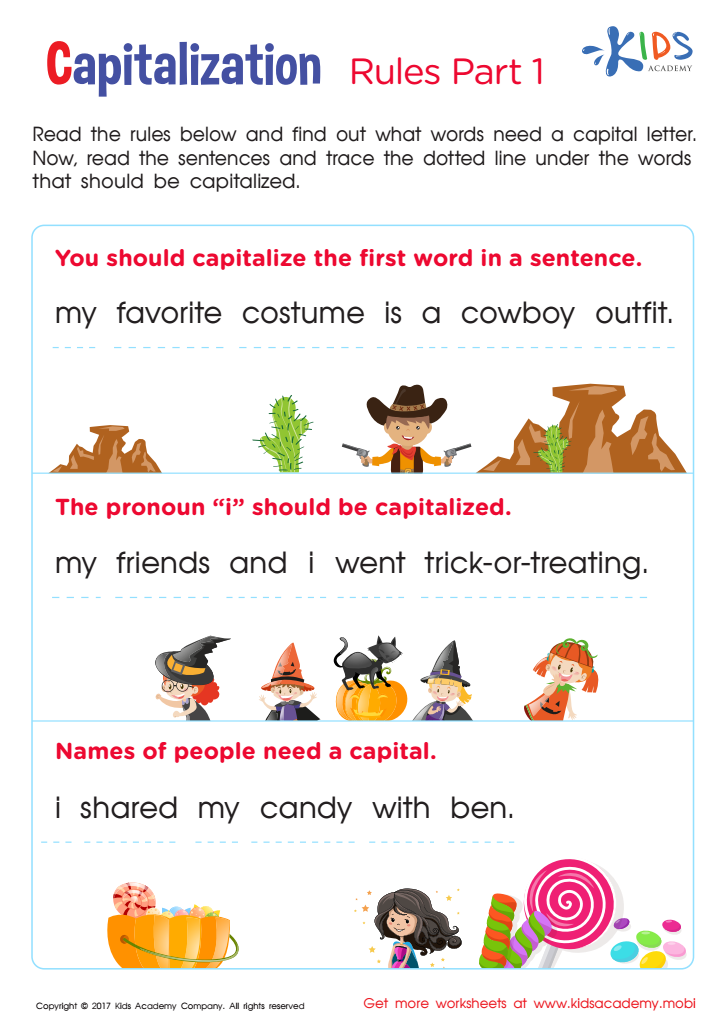
Capitalization Rules: Part 1 Worksheet







Understanding and applying capitalization rules is essential for parents and teachers to ensure that children develop strong written communication skills. Proper capitalization not only enhances readability but also aids in conveying the correct meaning and tone in writing. For instance, capitalizing the first letter of a sentence signals the beginning of a new thought, helping readers understand the structure and flow of the text. It also promotes clarity by distinguishing between common nouns and proper nouns, such as "apple" and "Apple" (the company).
In the context of early education, mastering capitalization rules lays a solid foundation for future academic success. Children who grasp these rules early on are less likely to face difficulties in more advanced writing tasks. Additionally, consistent practice in applying these conventions reinforces attention to detail, an important skill in both academic and real-world scenarios.
Moreover, parents and teachers serve as role models for young learners. By demonstrating proper capitalization in their own writing, adults set a positive example that children are likely to follow. Practicing correct capitalization demonstrates respect for the language, encouraging a greater appreciation for reading and writing. Ultimately, caring about capitalization rules helps cultivate competent, confident communicators who are better prepared for both educational and professional settings.








